Ryusenji Castle (Ryusenji Castle) Complete Guide | The Castle Ruins of Oda Nobuyuki and Historical Heritage of Moriyama Ward, Nagoya City
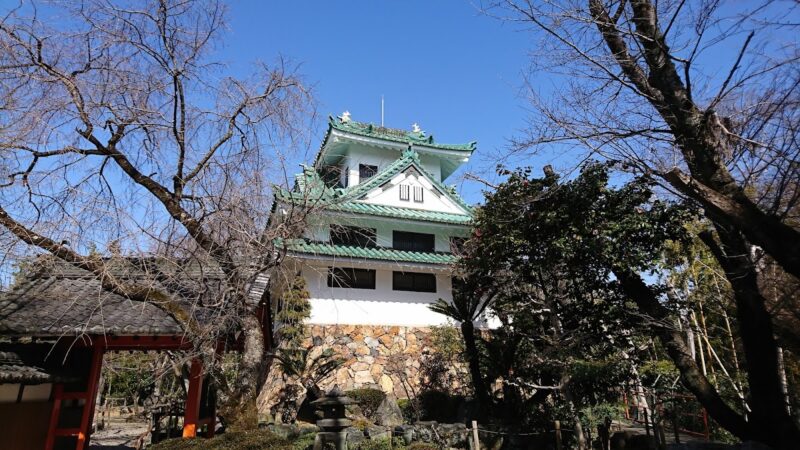
Located in Ryusenji, Moriyama Ward, Nagoya City, Aichi Prefecture, Ryusenji Castle is a valuable castle ruin that conveys the turbulent history of the Sengoku period. Built by Oda Nobuyuki, the younger brother of Oda Nobunaga, during a conflict with his brother, it was later used as a military base in important battles in the Owari and Mino regions, such as the Battle of Okehazama and the Battle of Komaki-Nagakute. Currently known as Ryusenji Temple, an ancient Tendai sect temple, it is also a renowned temple counted among the four Kannon temples of Owari.
Overview and Location of Ryusenji Castle
Ryusenji Castle is a flatland castle built on a hill 72.1 meters above sea level. It boasts a scenic view overlooking the Nobi Plain, and its strategically excellent location, surrounded by the Shonai River, cliffs, and wetlands, makes it a natural stronghold.
The area around Ryusenji Temple in present-day Moriyama Ward, Nagoya City, was once a strategically important location, shaped by the flow of the Shonai River and its complex terrain. This geographical advantage is precisely why it was repeatedly used as a military base during the Sengoku period (Warring States period). From the castle ruins, the Nobi Plain stretches out, and one can see towards Nagoya Castle, highlighting its importance in the defense of Owari Province.
History and Founding Legend of Ryusenji Temple
Ryusenji Temple is said to have been founded approximately 1,200 years ago during the Enryaku era (782-806 AD) by Dengyo Daishi Saicho, the founder of the Tendai sect. Its formal name was Shodozan Daigyoin, and its principal image is Batō Kannon (Horse-Headed Kannon).
The ancient document “Ryusenji-ki,” written in 1755 (Hōreki 5), details the temple’s founding. According to this document, Saicho received a divine message from the dragon god while he was staying at Atsuta Shrine. It is said that when sutras were chanted by the shore of Tatara Pond, where a dragon resided, the dragon ascended to heaven, and at the same time, a Hayagriva (Horse-Headed Kannon) appeared, and this was enshrined as the principal deity.
On the other hand, there is also a tradition that the temple was founded by Kobo Daishi Kukai, the founder of the Shingon sect. A connection to Kukai has also been pointed out, based on the legend that he buried three of the eight swords of Atsuta Shrine at Ryusenji Temple. These two traditions tell the story of how Ryusenji Temple has been revered as a sacred place with miraculous powers since ancient times.
Oda Nobuyuki and the Construction of Ryusenji Castle
Ryusenji Castle first appeared on the historical stage in 1556 (Koji 2). It was built by Oda Nobuyuki (also known as Oda Nobukatsu), the younger brother of Oda Nobunaga, during a succession dispute with his brother.
The Battle of Inō and Ryūsenji Castle
Oda Nobuyuki, with the support of his chief retainers Shibata Katsuie and Hayashi Hidetada, formed a force to oppose his brother, Nobunaga. In August of Kōji 2 (1556), he clashed with Nobunaga’s army at the Battle of Inō, but suffered a defeat.
However, Nobuyuki did not surrender. He recognized the strategic location of Ryūsenji Temple and fortified it, continuing his resistance. Ryūsenji Temple sits on a hill overlooking the Shōnai River, surrounded by cliffs and wetlands, making it a natural stronghold. By utilizing the temple’s existing buildings, he was able to quickly construct defensive structures.
Nobuyuki’s End and the Castle’s Abandonment
Ultimately, Oda Nobuyuki was assassinated by Nobunaga at Kiyosu Castle in Kōji 3 (1557). After Nobuyuki’s death, Ryūsenji Castle ceased to function as a military base and reverted to its original form as a temple. Although Ryusenji Castle functioned as a fortress for only a short period of a little over a year, it became an important stage symbolizing the power struggles within the Oda family.
The Battle of Okehazama and Ryusenji Castle
Ryusenji Castle also played a crucial role in the Battle of Okehazama in 1560. When Imagawa Yoshimoto invaded Owari with a large army, Oda Nobunaga utilized various forts, including Ryusenji Castle, to construct a defensive line.
The location of Ryusenji Castle was ideal for monitoring the movements of the Imagawa army and transmitting information. From its elevated position, it offered a wide view of the Nobi Plain, making it possible to detect enemy movements early.
The Battle of Komaki-Nagakute and the Taiko Moat
In the Battle of Komaki-Nagakute in 1584, Toyotomi Hideyoshi reused Ryusenji Castle as a military base. At this time, Hideyoshi had a dry moat dug around Ryusenji Castle. ### Remains of the Taiko-bori (One-Night Moat)
This moat is called “Taiko-bori” or “One-Night Moat,” and remnants of it still remain in part around the temple grounds. It’s called “One-Night Moat” because of a legend that it was dug in a single night, but in reality, it’s a dry moat constructed in a short period of time.
The Taiko-bori is a valuable relic demonstrating the civil engineering technology of the Sengoku period and is one of the most important sights at the Ryusenji Castle ruins. The depth and shape of the moat reveal the high level of castle-building technology of the time.
The Four Kannon Temples of Owari and Guardians of Nagoya Castle’s Northeast Direction
In the Edo period, Ryusenji Temple came to play an important role as one of the “Four Kannon Temples of Owari” protecting Nagoya Castle. The Four Kannon Temples of Owari are Kannon pilgrimage sites located in the four directions around Nagoya Castle, and include Ryusenji Temple, Arako Kannon (Arako Kannon-ji Temple), Kasadera (Kasafuku-ji Temple), and Jimokuji (Jimokuji Kannon). Ryusenji Temple is located in the northeast (demon’s gate) direction of Nagoya Castle and was revered as a temple protecting the castle and its surrounding town. It also received protection from the Tokugawa family, the lords of the Owari domain, and attracted many worshippers.
Even today, during the Setsubun period, the custom of many worshippers visiting Kannonji temples in the auspicious direction (Eho) continues, and Ryusenji Temple is especially lively in the year of the auspicious direction.
25th Temple of the Owari Thirty-Three Kannon Pilgrimage
Ryusenji Temple is also the 25th temple of the Owari Thirty-Three Kannon Pilgrimage. The Owari Thirty-Three Kannon Pilgrimage is a pilgrimage route that visits Kannon temples scattered throughout Owari Province (present-day western Aichi Prefecture), and has attracted many believers.
The principal image, Hayagriva (Horse-Headed Kannon), is one of the Six Kannon, a Kannon with a wrathful expression and a horse’s head. It is believed to save beings in the animal realm and has been particularly worshipped as the guardian deity of horses.
Cultural Assets of Ryusenji Temple
Ryusenji Temple preserves numerous valuable cultural assets accumulated over its long history.
Niomon Gate
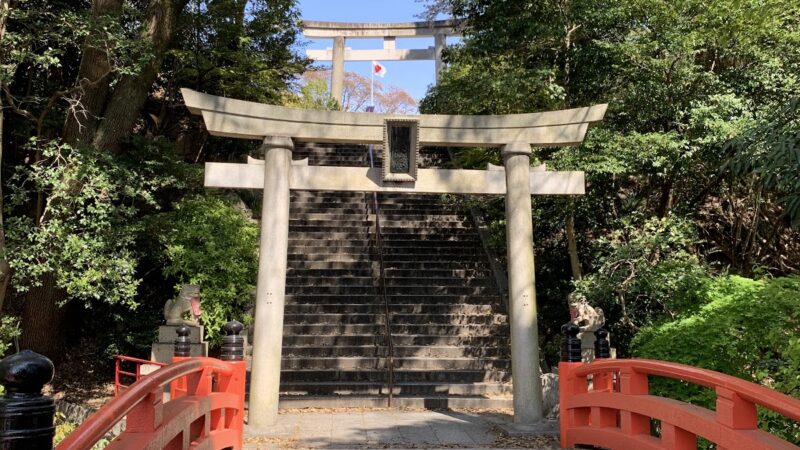
The Niomon Gate, standing at the entrance to the temple grounds, is a symbolic structure of Ryusenji Temple. The imposing gate houses Nio statues welcoming visitors. Passing through the Niomon Gate, a stone staircase leads up to the main hall.
Wooden Standing Statue of Jizo Bodhisattva
The wooden standing statue of Jizo Bodhisattva, preserved at Ryusenji Temple, is known for its outstanding sculptural beauty. Jizo Bodhisattva is a bodhisattva who appears in all six realms to save sentient beings, and has particularly attracted the faith of the common people.
Other Cultural Assets
In addition, Ryusenji Temple possesses many other cultural assets, including ancient documents, paintings, and crafts. These are important materials that tell the story of Ryusenji Temple’s long history and the development of religious culture in the Owari region.
Highlights of Ryusenji Castle Ruins
The current grounds of Ryusenji Temple and its surroundings retain remnants that evoke the atmosphere of a castle from the Sengoku period.
Layout and Topography
The entire grounds of Ryusenji Temple roughly correspond to the former castle grounds. The flat areas where the temple buildings stand are the remains of baileys (kuruwa), and the elevation differences in the surrounding terrain are remnants of the defensive structures of that time.
Looking around from the temple grounds, the steep cliffs towards the Shonai River and the hilly area behind clearly demonstrate the natural fortifications of the site.
Confirmation of the Taiko Moat
The remains of the Taiko Moat can be seen from the north to the east side of the temple grounds. While much of the moat has been filled in, traces remain as depressions and elevation changes in the terrain.
View
The view from the grounds of Ryusenji Temple is a major attraction when visiting the castle ruins. From here, you can enjoy a panoramic view of the Nobi Plain, and on clear days, you can even see as far as Nagoya city and Nagoya Castle. This view truly makes you understand why this location was so important as a military base during the Sengoku period.
Main Annual Events
Ryusenji Temple holds various religious events throughout the year.
Setsubun Festival
The busiest time is during Setsubun (the day before the beginning of spring). As one of the four Kannon temples of Owari Province, it attracts a particularly large number of worshippers in years when the temple is located in the auspicious direction. Events such as bean-throwing are held, and the temple grounds are filled with people praying for protection from evil and for good fortune.
Other Events
Annual Buddhist events such as New Year’s visits, spring and autumn equinox services, and the Obon (Buddhist festival) memorial service are held. Furthermore, on festival days and special memorial services, local people gather, making it a place of faith and community.
Location and Access Information
Location
Ryusenji Temple
Address: 1-902 Ryusenji, Moriyama-ku, Nagoya City, Aichi Prefecture
Access by Public Transportation
Route from the Nearest Station:
- Get off at JR Chuo Main Line “Ozone Station”
- Transfer to the Nagoya Guideway Bus “Yutorito Line”
- Get off at the “Ryusenji-guchi” bus stop
- Climb the stairs north of the bus stop and proceed up the slope to reach the temple gate (approximately 3 minutes on foot)
The Yutorito Line is a new transit system that runs on a dedicated track, providing comfortable access. While there is an uphill slope from the Ryusenji-guchi bus stop to Ryusenji Temple, the distance is short and the path is well-maintained and easy to walk.
Access by Car
Route from Major Roads:
- Approximately 10 minutes from the Obata IC on the Nagoya Expressway Route 11 Komaki Line
- Approximately 20 minutes from the Kasugai IC on the Tomei Expressway
There is parking on the temple grounds or in the surrounding area, but congestion is expected during events such as Setsubun, so we recommend using public transportation.
Points to Note When Visiting
Ryusenji Temple is a temple that still functions as a place of worship. Please note the following points when visiting or praying:
- Maintain silence in the main hall and on the temple grounds
- Take photographs only in designated areas
- Entry into buildings may be restricted
- Visit with ample time during events, as it can get crowded
Nearby Tourist Attractions
When visiting the Ryusenji Castle Ruins, you can gain a deeper understanding of Owari’s history by also visiting nearby historical and cultural spots.
Higashiyama Fruit Park
Located approximately 2 kilometers north of Ryusenji Temple, Higashiyama Fruit Park is a facility where you can enjoy seasonal fruits. Higashiyama is the highest mountain in Nagoya City and a historical area dotted with ancient burial mounds.
Shidami Burial Mounds
In the Shidami district of Moriyama Ward, a large group of burial mounds from the Kofun period are preserved. It is an important historical site for understanding the ancient history of the Owari region and is a popular historical walking course.
Nagoya Castle
Nagoya Castle, guarded by Ryusenji Temple, is a famous castle known as the residence of the Owari Tokugawa family. Located approximately 12 kilometers southwest of Ryusenji Temple, it offers a tangible connection to the four Kannon temples of Owari.
Komakiyama Castle
Komakiyama Castle, where Tokugawa Ieyasu established his headquarters during the Battle of Komaki and Nagakute, also has deep ties to Ryusenji Castle. Located approximately 10 kilometers north of Ryusenji Temple, visiting both castles provides a comprehensive understanding of Sengoku period strategy.
Historical Significance of Ryusenji Castle
Although Ryusenji Castle functioned as a fortress for a short period, it became an important historical stage in Owari Province during the Sengoku period.
Symbol of Internal Conflict within the Oda Family
Oda Nobuyuki’s transformation of Ryusenji Temple into a castle symbolizes the fierce power struggle within the Oda family. It is a historical site that tells the story of the tense situation on the eve of Nobunaga’s path to unifying Japan, a time when even the unification of Owari was not yet complete.
Value as a Strategic Point
The fact that it was used as a military base in important battles such as the Battle of Okehazama and the Battle of Komaki-Nagakute demonstrates the high strategic value of this area. Its location on a hill overlooking the Nobi Plain was valued throughout the ages.
Complex of Temple and Castle
Ryusenji Castle is a valuable example of a castle formed from an existing temple. From the medieval to the early modern period, it was not uncommon for temples to be used as military bases, but examples like Ryusenji, which are clearly recorded as castles and have surviving remains, are limited.
Significance of Visiting Ryusenji Castle
Visiting the Ryusenji Castle ruins in modern times has significance beyond mere historical site sightseeing.
Experiencing Multilayered History
At Ryusenji, you can experience multilayered history all at once: ancient temple founding legends, a castle from the Sengoku period, one of the four Owari Kannon temples from the Edo period, and a modern place of worship. As a place where Japanese history has accumulated, it is an excellent resource for history learning.
Understanding the Relationship Between Topography and History
By actually visiting Ryusenji and experiencing the view from the hilltop, you can gain a tangible understanding of why this location was chosen as a military base and the relationship between topography and history. This allows for a three-dimensional understanding of history that cannot be obtained from maps or documents alone.
Discovering Local History and Culture
Despite being located in the large city of Nagoya, the area around Ryusenji retains a strong historical atmosphere. This is an opportunity to rediscover local history and culture and deepen your understanding of your hometown.
Summary
Ryusenji Castle in Moriyama Ward, Nagoya City, Aichi Prefecture, is the site of a Sengoku period castle built by Oda Nobuyuki, and is also home to Ryusenji Temple, an ancient temple with a history of approximately 1,200 years. Despite functioning as a castle for only a short period, it is a valuable historical site involved in important historical events such as internal conflicts within the Oda family, the Battle of Okehazama, and the Battle of Komaki-Nagakute.
With its remaining structures such as the Taiko-bori (Ichiyabori) moat, panoramic views of the Nobi Plain, and its religious role as one of the four Kannon temples of Owari, Ryusenji Castle ruins possess multifaceted charm and are an indispensable place for understanding Owari during the Sengoku period.
With good access from downtown Nagoya, it is a historical site easily accessible not only to history enthusiasts but also to general tourists and local residents. Please visit Ryusenji Temple, a place of worship that has continued from ancient times to the present day, and a castle site that tells the history of the Sengoku period.