Complete Guide to Hazu Terabe Castle (Nishio City) | Ruins, History, Castle Stamp, and Access Information
Located in Hazu-cho, Nishio City, Aichi Prefecture, Hazuterabe Castle is known as the residence of the Hazu Ogasawara clan, who ruled the Mikawa Bay coastal region during the Sengoku period. Currently, it is maintained as a castle ruins park, with well-preserved remains such as earthworks and dry moats, and is also a popular spot for its spectacular panoramic views of Mikawa Bay.
This article comprehensively introduces information you should know before visiting, from the historical background of Hazu Terabe Castle to the ruins you can see on site, how to obtain a castle stamp, and access information.
What is Hazu Terabe Castle? | Basic Information and Overview
Terabe Castle is a Sengoku period hilltop castle located in Terabe, Hazu-cho, Nishio City, Aichi Prefecture. Also known as “Hazu Terabe Castle,” this castle, built on a small hill overlooking Mikawa Bay, was an important strategic point for monitoring maritime traffic in the region.
Basic Castle Data
- Location: Terabe-domae, Hazu-cho, Nishio City, Aichi Prefecture
- Construction Period: Estimated to be around the Bunmei era (1469-1487)
- Builder: Suzuki Shimotsuke-no-kami Shigetoki (legend)
- Castle Type: Connected-enclosure flatland castle
- Main Remains: Enclosures, earthworks, dry moats, stone monument
- Current Status: Developed as a castle ruins park
- Designation: Nishio City Designated Historic Site
The castle ruins are adjacent to the former Hazu Town Hall (currently the Nishio City Hazu Regional Exchange Center) and are also close to the Nishio City Hazu Historical and Folk Museum.
History of Hazu Terabe Castle | As the Residence of the Hazu Ogasawara Clan
Construction History and Early Period
There are various theories regarding the founding date and builder of Terabe Castle, but tradition holds that it was built during the Bunmei era (1469-1487) by Suzuki Shimotsuke-no-kami Shigetoki. This period coincided with the time of the Ōnin War (1467-1477), a time when the turmoil in the central government spread to the provinces, leading to the construction of castles by local lords throughout the country.
Taking advantage of its location facing Mikawa Bay, Terabe Castle is thought to have functioned as a base for monitoring maritime traffic and for a naval force.
Appointment of Ogasawara Sadamasa as Lord
In Eishō 11 (1514), Ogasawara Sadamasa defeated Hayakawa Saburō, who had previously been based at Terabe Castle, and became its lord. This led to the full development of Terabe Castle as the residence of the Hazu Ogasawara clan. The Ogasawara clan was a branch of the prestigious Ogasawara clan of Shinano Province. After relocating to Mikawa Province, they expanded their influence, establishing their base in the Hazu region.
Serving as Tokugawa Ieyasu’s Naval Forces
The Hazu Ogasawara clan served Tokugawa Ieyasu, playing a particularly important role as naval forces. Utilizing the strategic advantage of Mikawa Bay, they supported the Tokugawa army in maritime transport and naval battles.
The Ogasawara clan’s navy was indispensable for securing control of Mikawa Bay and transporting supplies, contributing significantly to Tokugawa Ieyasu’s unification of Mikawa and subsequent unification of Japan. Terabe Castle, as the headquarters of this navy, held a strategically and economically important position.
Preservation of the Abandoned Castle and Castle Site
In 1590 (Tensho 18), when Tokugawa Ieyasu was transferred to the Kanto region by order of Toyotomi Hideyoshi, the Hazu Ogasawara clan also followed him to Kazusa Province (present-day Chiba Prefecture). As a result, Terabe Castle was abandoned, bringing its approximately 80-year history to an end.
After its abandonment, the castle site was used for a long time as farmland and forest. In recent years, however, it has been developed into a historical park by Nishio City, and is now a historical spot freely accessible to citizens and tourists.
Remains and Highlights of Hazu Terabe Castle
The Terabe Castle site retains many characteristics of a multi-bailey flatland castle, making it a valuable historical site where one can experience the castle structure of the Sengoku period. Here, we introduce the main remains and highlights.
Main Bailey Site and Bailey Layout
The main bailey site, located at the highest point of the castle site, is presumed to be the location of the lord’s residence. The castle’s layout is a series of interconnected enclosures, with the main enclosure (Honmaru) at its center, followed by the second and third enclosures (Ninmaru).
Each enclosure is relatively flat and leveled, and while no building foundations have been found, it allows us to imagine how the space was used at the time. From the main enclosure, one can enjoy a panoramic view of Mikawa Bay, including islands such as Kajishima, Sakushima, and Shinoshima, as well as the Atsumi and Chita Peninsulas.
Earthworks and Defensive Structures
The earthworks surrounding the main enclosure are the most prominent remains of Terabe Castle. Their height varies depending on the location, but in well-preserved sections, they reach over 2 meters in height.
The earthworks not only prevented enemy intrusion but also concealed the interior of the enclosures from outside view. Walking along the top of the earthworks allows one to appreciate the castle’s defensive structure and layout.
Dry Moats and Moats
Dry moats were constructed between the baileys, functioning as important defensive structures to prevent enemy incursions. The dry moats of Terabe Castle are characterized by their relatively deep depth and the fact that many sections remain clearly visible.
In particular, the moat between the main bailey and the second bailey suggests that it played a crucial role as the castle’s defensive line. Visiting the site, one can sense the high level of defensive awareness at the time from the depth and width of the moats.
Spectacular Views of Mikawa Bay
One of the major attractions of the Terabe Castle ruins is the panoramic view of Mikawa Bay. From the main bailey site, you can see the Atsumi and Chita Peninsulas to the left and right, and islands such as Kajishima, Sakushima, and Shinojima directly in front.
This view indicates that the castle functioned as a monitoring base for maritime traffic. On a clear day, you can see as far as Ise Bay, and it is likely that the castle lords of the Sengoku period monitored maritime movements while gazing at this view.
Stone Monument and Information Board
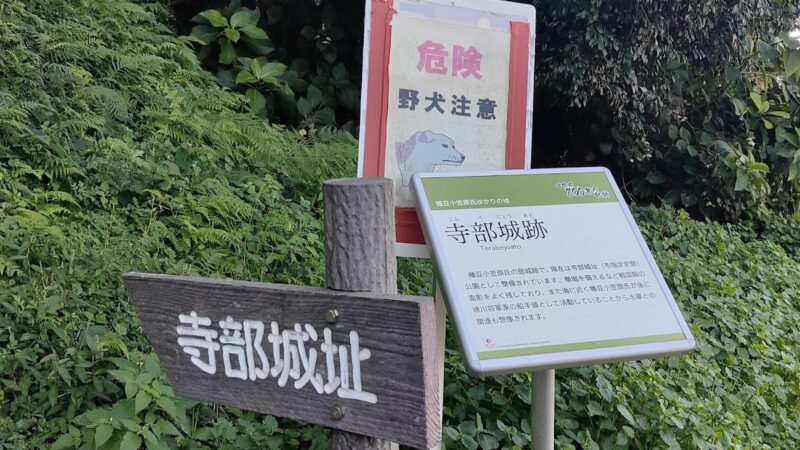
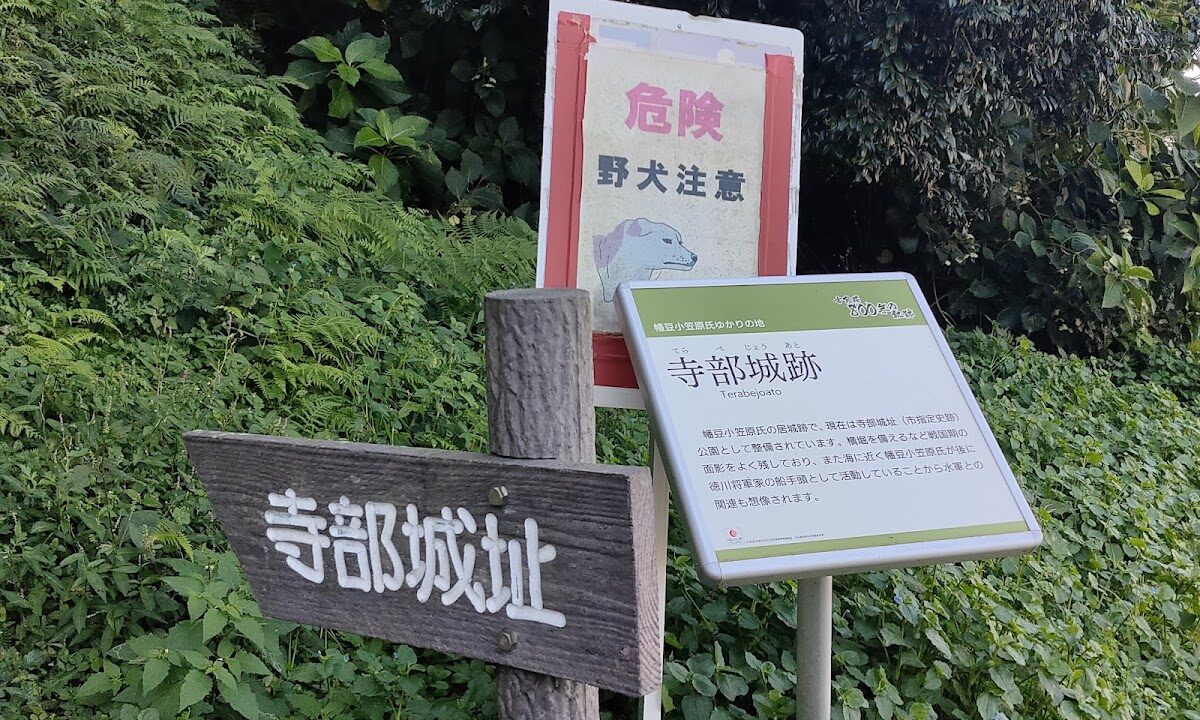
Within the castle ruins stands a stone monument marking “Terabe Castle Ruins,” a popular spot for commemorative photos. Information boards explaining the castle’s history and structure are also installed, allowing first-time visitors to understand the castle’s overview while exploring.
Information on the Castle Stamp of Hazu Terabe Castle
In recent years, castle stamps have become a nationwide trend. Terabe Castle also issues castle stamps, which are popular among castle enthusiasts and collectors.
Types of Castle Stamps
In addition to the regular version, special and commemorative versions of the castle stamp for Terabe Castle (Hazu Terabe Castle) are sometimes issued.
- Standard Castle Stamp: A castle stamp featuring the basic design of Terabe Castle.
- Foil Stamped Version: A deluxe version issued during special events.
- Commemorative Event Version: A limited edition commemorating specific events, such as the “30th Anniversary of the Aichi Prefecture Historic Site Preservation Municipalities Council.”
Where to Purchase Castle Stamps
Terabe Castle stamps can be purchased at the following locations:
Nishio City Museum
- Address: 176-1 Kinjo-cho, Nishio City, Aichi Prefecture (within Nishio City Historical Park)
- Opening Hours: 9:00-17:00 (Last entry at 16:30)
- Closed: Mondays (or the following weekday if Monday is a public holiday), New Year holidays
- Admission Fee: Free (Castle stamps must be purchased separately)
The Nishio City Museum sells castle stamps for Terabe Castle, as well as castle stamps for Nishio Castle and other castles in Nishio City.
Nishio Castle Festival (Limited Time Only)
At the “Nishio Castle Festival,” held around October every year, castle stamps are sold at the Nishio booth. Event-limited editions are sometimes issued, so collectors should definitely check it out.
Castle Stamp Price
Regular castle stamps are sold for approximately 300 yen (tax included). Foil-stamped and special editions are often priced around 500 yen.
Collaboration with Nishio City Hazu Historical and Folk Museum
Located very close to the Terabe Castle ruins is the Nishio City Hazu Historical and Folk Museum, where you can learn about the history and culture of the Hazu region.
Museum Exhibits
The Hazu Historical and Folk Museum exhibits archaeological, folklore, and historical materials from the Hazu region. It also displays materials related to Terabe Castle and explanatory panels about the Hazu Ogasawara clan. Visiting before or after visiting the castle ruins will allow you to understand the history more deeply.
Parking
The museum has a free parking lot, which you can use when visiting the Terabe Castle ruins. The entrance to the castle ruins is just a few minutes’ walk from the parking lot.
Access Information | How to Get to Terabe Castle Ruins
Access by Car
From Nagoya
- Take National Route 23 (Chiryu Bypass) towards Nishio City
- From Nishio city center, take Prefectural Road 317 towards Hazu (approximately 15 minutes)
- Head towards Nishio City Hazu Historical and Folk Museum
From Toyohashi
- Take National Route 23 towards Nishio
- From Nishio city center, take Prefectural Road 317 towards Hazu
Parking: Nishio City Hazu Historical and Folk Museum Parking (Free)
Access by Public Transportation
By Train and Bus
- Get off at “Nishio Station” on the Meitetsu Nishio Line
- Take the Rokumangoku Kururin Bus (Hirasaka/Teratsu Line) and get off at “Hazu Fureai Center,” then walk approximately 5 minutes
Or
- Get off at Mikawa-Toba Station on the Meitetsu Gamagori Line, then walk for about 30 minutes (approx. 2.5 km).
Note: Since bus service is limited, it is recommended to check the timetable in advance.
Points to Note When Visiting
- As the castle ruins are an outdoor facility, please dress appropriately for the weather.
- The path to the castle is well-maintained, but comfortable walking shoes are recommended.
- In summer, it is advisable to bring insect repellent and drinking water.
- There are no toilets within the castle ruins, so it is recommended to use the facilities at the Nishio City Hazu Historical and Folk Museum beforehand.
Nearby Tourist Attractions
When visiting Terabe Castle Ruins, why not also visit the nearby tourist attractions?
Nishio Castle (Nishio City Historical Park)
Nishio Castle, located in the center of Nishio City, was the seat of the Nishio Domain’s government during the Edo period. The main keep’s Ushitora turret and the gate of the second bailey have been restored, and the Nishio City Historical Museum is also located on the premises. ### Islands of Mikawa Bay
Sakushima and Shinoshima, which can be viewed from Terabe Castle Ruins, are accessible by boat from Isshiki Port and Morosaki Port. Sakushima, known as an island of art, is perfect for a day trip.
Kira Onsen
Kira Onsen is located in Kira-cho, Nishio City, where you can enjoy day trips to hot springs or overnight stays at hot spring inns overlooking Mikawa Bay.
Nishio, the Home of Matcha
Nishio City is known as one of Japan’s leading producers of matcha green tea. The city has cafes where you can enjoy matcha sweets and facilities where you can tour matcha factories.
Photo Spots at Terabe Castle Ruins
Terabe Castle Ruins is a great spot for photography. Here are some recommended photo spots.
View of Mikawa Bay from the Main Keep
The view of Mikawa Bay from the main keep ruins is a spectacular sight that represents Terabe Castle Ruins. On sunny mornings, backlighting is less likely, allowing you to take beautiful photos. Especially at dusk, the sunset over Mikawa Bay and the silhouette of the castle ruins create a fantastical atmosphere.
Earthworks and Dry Moats
The well-preserved earthworks and dry moats are valuable subjects for photographs that convey the remains of a castle from the Sengoku period. Photographing from angles that emphasize the curves of the earthworks and the depth of the moats will result in photos that convey the castle’s defensive function.
Commemorative Photos with the Stone Monument
The stone monument at “Terabe Castle Ruins” is a popular photo spot for commemorating your visit. Placing Mikawa Bay in the background of the monument will create a more impressive photograph.
Seasonal Scenery
Enjoy the changing scenery of the four seasons: cherry blossoms in spring, fresh greenery in summer, autumn leaves in fall, and views in the crisp winter air. The castle ruins are especially vibrant during the cherry blossom season in spring.
Model Course for Visiting Terabe Castle Ruins
We suggest a model course for efficiently visiting Terabe Castle Ruins and its surroundings.
Half-Day Course (Approx. 2-3 Hours)
- Nishio City Hazu Historical and Folk Museum (30 minutes)
- Park your car and first learn about the history of the Hazu region at the museum.
- Terabe Castle Ruins Climb (60 minutes)
- From the castle path to the main keep.
- View the remains such as earthworks and dry moats.
- Enjoy the view of Mikawa Bay from the main keep.
- Surrounding Area Stroll (30 minutes)
- Stroll through the historical townscape around the castle ruins.
- Lunch (60 minutes)
- Enjoy matcha or seafood cuisine in Nishio city center.
Full-Day Course (Nishio City Historical Tour)
Morning:
- Nishio City Historical Park (Nishio Castle)
- Purchase a castle stamp at the Nishio City Museum
Afternoon:
- Nishio City Hazu Historical and Folk Museum
- Visit Terabe Castle Ruins
- Day Trip to Kira Onsen
This course allows you to visit the main historical sites of Nishio City in one day.
The Aftermath of the Hazu Ogasawara Clan
Let’s also touch upon the fate of the Hazu Ogasawara clan after they left Terabe Castle.
Following Tokugawa Ieyasu’s relocation to the Kanto region in 1590, the Hazu Ogasawara clan moved to Kazusa Province (present-day Chiba Prefecture). They continued to serve the Tokugawa family and survived as hatamoto (direct retainers of the shogun) during the Edo period.
The Ogasawara family, utilizing their tradition as naval personnel, often held positions related to shipping and naval affairs in the Edo shogunate. Their maritime knowledge and experience cultivated during their time in Mikawa were highly valued even in the Edo period.
Summary | The Charm of Hazu Terabe Castle
Hazu Terabe Castle in Nishio City, Aichi Prefecture, is a valuable historical site that preserves the appearance of a flatland castle from the Sengoku period. This castle, which played an important role as the residence of the Hazu Ogasawara clan and as a base for Tokugawa Ieyasu’s naval forces, captivates visitors with its spectacular views overlooking Mikawa Bay and its well-preserved remains.
With the issuance of castle stamps and the development of the castle ruins as a park, it has become a popular spot not only for history buffs but also for general tourists. When you visit Nishio City, be sure to stop by Terabe Castle Ruins and experience the atmosphere of the Sengoku period and the beautiful scenery of Mikawa Bay.
The views from the castle ruins, the remains such as earthworks and dry moats, and the historical story of the Hazu Ogasawara clan will surely create an unforgettable experience.