Uri Castle Ruins (Shinshiro City, Aichi Prefecture) Complete Guide | History, Highlights, and Access Information
Located in Nakauri, Shinshiro City, Aichi Prefecture, Uri Castle Ruins is a historically significant mountain castle, the first in Aichi Prefecture to be designated a prefectural historical site. Built on a mountaintop 165m above sea level, this castle served as an important base in the Mikawa region during the Sengoku period and was the stage for numerous historical events. This article provides a thorough explanation of Uri Castle Ruins, from its history and highlights to actual visitor information.
History of Uri Castle Ruins
Construction during the Bunmei Era and Kumagai Shigezane
Uri Castle is said to have been built during the Bunmei era (1469-1487). This period corresponds to the late Muromachi period, a time when Sengoku daimyo (feudal lords) began to rise to power throughout the country. The first lord of Uri Castle is believed to have been Kumagai Shigezane, a warrior feared for his nickname “Kuma” (bear).
The Kumagai clan was a family based in Kumagai, Musashi Province. A branch of the Kumagai clan expanded into the Mikawa region and built a castle in Uri. Located on a mountaintop at an altitude of 165 meters, with a relative elevation difference of approximately 90 meters from the foot of the mountain, it was a formidable fortress protected on three sides by natural defenses.
The Capture by Matsudaira Kiyoyasu
The most important event in the history of Uri Castle is its capture by Matsudaira Kiyoyasu in 1529 (Kyoroku 2). Matsudaira Kiyoyasu was the grandfather of Tokugawa Ieyasu and was conquering castles throughout Mikawa Province in his quest for unification.
Kiyoyasu displayed exceptional military talent from a young age, inheriting the family headship at just 17 years old. He successively brought various forces within Mikawa under his control. The siege of Uri Castle was part of this Mikawa unification project.
The then-lord of Uri Castle, Kumagai Shigezane, offered fierce resistance, but ultimately succumbed to the Matsudaira army’s relentless attack, and the castle fell. This battle demonstrated the bravery of the young Kiyoyasu and illustrated the strategic importance of Uri Castle.
Changes in the Sengoku Period
After the death of Matsudaira Kiyoyasu, Uri Castle changed hands amidst the power struggles of various Sengoku daimyo, including the Imagawa, Oda, and Tokugawa clans. Especially after the Battle of Okehazama (1560), as the Imagawa clan’s power declined, it is believed that Uri Castle came under Tokugawa control as Tokugawa Ieyasu consolidated his rule over the Mikawa region.
In the Edo period, Uri Castle was abandoned and its role came to an end. However, the remains of this sturdy mountain castle are well-preserved, conveying the atmosphere of the Sengoku period to this day.
Structure and Remains of Uri Castle Ruins
Characteristics of the Main Enclosure (Honmaru)
The main enclosure (Honmaru), the heart of Uri Castle, is located on the mountaintop at an altitude of 165m. This enclosure measures approximately 40m east-west and 30m north-south, and is surrounded by an earthen rampart. The rampart is about 1-2m high and can still be clearly seen today.
The interior of the main enclosure is relatively flat and leveled, suggesting that the lord’s residence and important facilities were located there. While archaeological excavations have been limited, artifacts such as pottery fragments and roof tile fragments have been unearthed, indicating traces of life during the Sengoku period (Warring States period).
Arrangement of Enclosures
Uri Castle is a mountain castle of the Renkuro (connected enclosure) type, with multiple enclosures (kuruma) arranged in a stepped pattern around the main enclosure. Enclosures are located to the east, west, and north of the main enclosure, strengthening its defenses.
The eastern enclosure, in particular, is large and is thought to have served a role similar to a second enclosure (Ninomaru). These enclosures are defensive structures designed to prevent enemy incursions in stages, exhibiting the unique layout (design) of mountain castles.
Each enclosure has a difference in elevation, allowing for overlooking of lower enclosures from higher ones. This structure allowed the defenders to attack from advantageous positions.
Earthworks and Moats
The best-preserved remains at Uri Castle are the earthworks. The earthworks surrounding the main enclosure still maintain a height of 1-2 meters, giving a glimpse into the defensive structure of the time. Earthworks are not merely mounds of earth; they were crucial defensive structures designed to prevent enemy incursions and protect against arrows and gunfire.
Moats dividing the ridge have also been identified. Moats are structures designed to stop enemies advancing along the ridge and are a typical defensive structure of mountain castles. At Uri Castle, a moat was located behind the main enclosure (north side), preventing incursions from the ridge.
Traces of Stone Walls
At the Uri Castle ruins, traces of stone walls have been partially confirmed. While full-fledged stone walls were rare in mountain castles of the Sengoku period, and defenses were primarily based on earthen ramparts, stone reinforcements were sometimes used in important areas.
The stone walls at Uri Castle are found around the entrances and at the base of the earthen ramparts, indicating that efforts were made to enhance defensive capabilities. These stone walls are constructed using natural stones in a rough-hewn style, different from the more refined stone walls of later periods, but they are valuable remains for understanding the castle-building techniques of the time.
Well Sites and Living Facilities
Securing water was a matter of life and death for mountain castles. Traces of wells and other facilities remain at Uri Castle, suggesting they played an important role as a water source during sieges.
Within the main enclosure, there is a depression presumed to be the site of a well, suggesting that water may have been obtained from here. However, securing a water source at the mountaintop was difficult, so it is presumed that water was carried up from settlements at the foot of the mountain during peacetime, and that limited water sources were carefully used during sieges.
Value as an Aichi Prefecture Designated Historic Site
The First Mountain Castle Designated Historic Site in Aichi Prefecture
Uri Castle Ruins were designated as an Aichi Prefecture Historic Site on September 6, 1957. This was the first designation for a mountain castle in Aichi Prefecture, and it holds an extremely important position in the study of medieval castles in the prefecture.
This designation was based on the evaluation of the well-preserved state of Uri Castle Ruins, the clear demonstration of the structure of a Sengoku period mountain castle, and its historical significance as the stage for the conquest by Matsudaira Kiyoyasu.
Importance of Medieval Mountain Castle Research
Uri Castle Ruins provide valuable materials for understanding the structure and defenses of Sengoku period mountain castles. The remains, such as earthworks, baileys, and moats, are well-preserved, and a key feature is that the castle’s structure can be understood simply by observing the ground surface, without the need for archaeological excavation.
In recent years, research into medieval mountain castles has progressed nationwide, and Uri Castle ruins, as a representative mountain castle in Aichi Prefecture, have attracted the attention of researchers and castle enthusiasts. Layout maps have been created and surveys have been conducted, and the results are widely publicized.
Highlights of Uri Castle Ruins
Ascent Route and Time Required
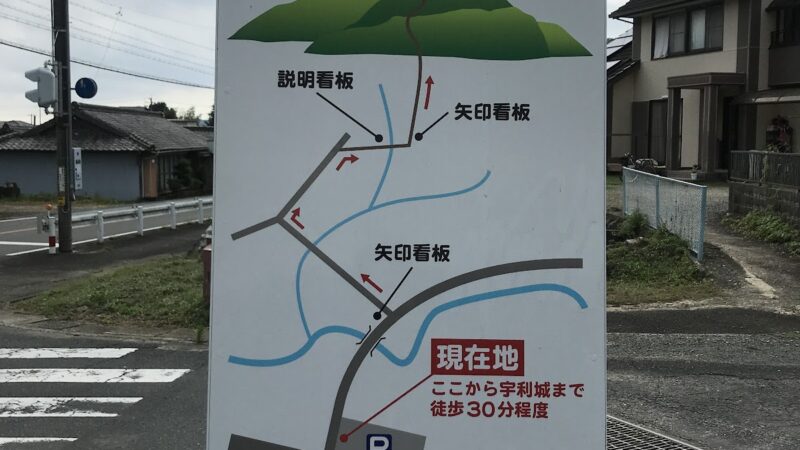
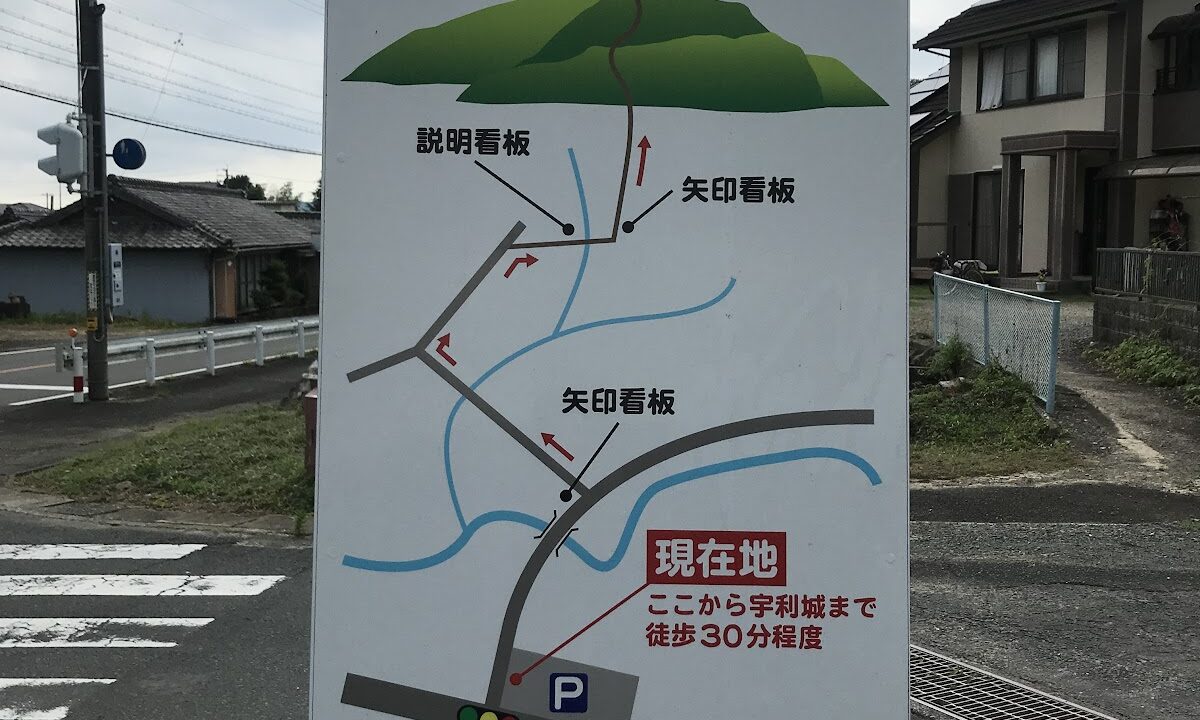
To ascend Uri Castle ruins, start from the free parking lot next to the Nakauri intersection along Prefectural Road 81. An information board is installed in the parking lot, clearly showing the ascent route.
The ascent path is well-maintained, making it relatively easy even for beginners. It takes about 15-20 minutes to walk from the parking lot to the main enclosure at a leisurely pace. While there are some slightly steep sections along the way, overall it is a mountain castle that can be easily climbed.
The ascent route follows the ridgeline, and along the way, you can see traces of enclosures and earthworks. Depending on the season, the vegetation can be overgrown, making some areas difficult to walk on. Therefore, we recommend visiting in long sleeves, long pants, and sturdy shoes.
View from the Main Enclosure
Upon reaching the main enclosure, the surrounding view opens up. While the elevation of 165m is not particularly high, the relatively low surrounding land provides excellent visibility.
To the east, you can see the city of Shinshiro; to the south, the Toyokawa area; and to the west, Mount Hongu. This view demonstrates the strategic importance of Uri Castle’s location in monitoring transportation routes in the Mikawa region and controlling the surrounding area.
Points for Observing the Remains
When visiting the Uri Castle ruins, pay attention to the following points when observing the remains:
- Earthworks surrounding the Main Enclosure: Walk around the main enclosure and observe the height and shape of the earthworks. The height varies depending on the location, with the earthworks higher in directions that were strategically important for defense.
- Differences in Terraces Between Enclosures: When descending from the main enclosure to the lower enclosures, a clear difference in elevation can be observed. This elevation served as a defensive line.
- Moat: The moat behind the main enclosure clearly shows the traces of a deep digging into the ridge. It gives a real sense of the scale of civil engineering during the Sengoku period.
- Location of the Entrance Gate: Observe the location of the entrance gate to the enclosures. The curved, rather than straight, design enhances defensive capabilities.
Seasonal Scenery
Uri Castle Ruins can be visited throughout the four seasons, each offering a different charm.
Spring (March-May) is beautiful with fresh greenery, and wildflowers bloom along the path to the castle. The climate is mild, making it the most suitable season for visiting.
Summer (June-August) sees denser greenery, but the dense vegetation can make the ruins difficult to see. Insect repellent is necessary. Autumn (September-November) offers beautiful autumn foliage and excellent views. Along with spring, it’s a great season for visiting.
Winter (December-February) is ideal for observing the ruins as the vegetation has withered. However, sunset is early, so we recommend visiting earlier in the day.
Basic Information
Location and Access
Location: 36 Nita, Nakauri, Shinshiro City, Aichi Prefecture 441-1334
Access by Car:
- Approximately 25 minutes from Toyokawa IC on the Tomei Expressway via National Route 151
- Approximately 15 minutes from Shinshiro IC on the Shin-Tomei Expressway via Prefectural Road 32 and Prefectural Road 81
- Free parking available next to the Nakauri intersection on Prefectural Road 81 (approximately 10 cars)
Access by Public Transportation:
- From Shinshiro Station on the JR Iida Line, take the Toyotetsu Bus “Taguchi-Shinshiro Line” and get off at the “Uri” bus stop, then walk approximately 5 minutes.
- Bus service is limited, so please check the timetable in advance.
Notes for Visitors
- Clothing: As it is a mountain castle, comfortable clothing and non-slip shoes are essential. In the summer, insect repellent spray and long-sleeved shirts and long pants are recommended.
- Drinking Water: There are no vending machines or water sources at the castle ruins. Please be sure to bring your own drinking water.
- Toilets: There are no toilets at the castle ruins. It is recommended to use the restroom before visiting.
- Estimated Time Required: Please allow approximately 1 to 1.5 hours for the round trip from the parking lot and viewing the ruins.
- Opening Hours: There are no specific restrictions, but please descend before sunset.
- Weather: The path to the castle can become slippery during rainy weather or immediately after rain, so please be careful.
Nearby Tourist Attractions
When visiting Uri Castle Ruins, you can enjoy a more fulfilling sightseeing experience by also visiting other tourist attractions in Shinshiro City.
Nagashino Castle Ruins: Famous for the Battle of Nagashino. Approximately 20 minutes by car from Uri Castle. A nationally designated historical site with an attached museum.
Shinshiro Shitaragahara Historical Museum: Exhibits materials related to the Battle of Nagashino and Shitaragahara. Approximately 25 minutes by car from Uri Castle.
Horaiji Mountain: A sacred mountain with an elevation of 695m, featuring numerous sights including the Toshogu Shrine and the Niomon Gate. Approximately 30 minutes by car from Uri Castle.
Yutani Onsen: A hot spring resort along the Ure River. Perfect for relaxing after exploring the castle ruins. Approximately 20 minutes by car from Uri Castle.
Recommended Itinerary for Visiting Uri Castle Ruins
Half-Day Course
Morning: Learn about the history of Mikawa during the Sengoku period at the Shinshiro Shitaragahara Historical Museum (1 hour)
↓
Lunch: Enjoy local cuisine such as Goheimochi and handmade soba noodles in Shinshiro City (1 hour)
↓
Afternoon: Stroll around Uri Castle Ruins (1.5 hours)
↓
Return Trip: Purchase souvenirs at the “Mokkuru Shinshiro” roadside station
Full-Day Course
Morning: Visit Nagashino Castle Ruins and the Nagashino Castle Ruins Historical Preservation Museum (2 hours)
↓
Lunch: Lunch in Shinshiro City (1 hour)
↓
Early Afternoon: Stroll around Uri Castle Ruins (1.5 hours)
↓
Late Afternoon: Stroll around Horaiji Mountain or take a bath at Yutani Onsen (2-3 hours)
↓
Return Trip: Depart in the evening
The Charm and Future Prospects of Uri Castle Ruins
The greatest charm of Uri Castle Ruins lies in its remarkably well-preserved appearance as a mountain castle from the Sengoku period (Warring States period). Because it has largely retained its original layout without undergoing major alterations, it offers a direct opportunity to learn about Sengoku-era castle construction techniques and defensive philosophies.
Furthermore, its appeal lies in the fact that it is an easily accessible mountain castle while still offering the opportunity to observe authentic historical remains. It’s a spot that can be enjoyed by a wide range of people, including castle enthusiasts, history buffs, and hikers.
Shinshiro City is focusing on the preservation and utilization of castle ruins within the city, including Uri Castle Ruins, and is working on improving information boards and disseminating information. It is hoped that even more people will visit Uri Castle Ruins in the future and recognize its historical value.
Walking through the quiet mountains while contemplating the battles fought at this mountain castle during the Sengoku period will be a valuable opportunity for modern people to engage with history. When you visit Aichi Prefecture, be sure to visit Uri Castle Ruins and feel the spirit of the Sengoku period.
Summary
Uri Castle Ruins in Shinshiro City, Aichi Prefecture, is a mountain castle with a history dating back to the Bunmei era, when it was built by Kumagai Shigemitsu and captured by Matsudaira Kiyoyasu in 1529. Located on a mountaintop at an altitude of 165m, the remains, including the main enclosure, baileys, earthworks, and moats, are well-preserved.
As the first designated historical site of Aichi Prefecture, it has high cultural value and is an important site for learning about the structure of mountain castles during the Sengoku period. The main enclosure can be reached in about 15-20 minutes from the parking lot along Prefectural Road 81, making it an easily accessible and authentic mountain castle experience.
Shinshiro City has many other historical sites from the Sengoku period, such as the Nagashino Castle Ruins and the Shitaragahara Historical Museum. Visiting them together will allow for a deeper understanding of the Sengoku history of Mikawa during that time. It’s a recommended spot not only for history enthusiasts but also for those who enjoy nature walks.