Iwazu Castle (Okazaki City, Aichi Prefecture) Complete Guide | History and Highlights of a Mountain Castle that Became a Base for the Matsudaira Clan’s Development
What is Iwazu Castle? | An Important Base in Mikawa Tracing the Roots of Tokugawa Ieyasu
Iwazu Castle is a medieval mountain castle located in Higashiyama, Iwazu-cho, Okazaki City, Aichi Prefecture. Built on a hill approximately 75 meters above sea level and 50 meters above ground level, this castle played an extremely important role in the expansion of power of the Matsudaira clan, ancestors of Tokugawa Ieyasu, in Mikawa Province.
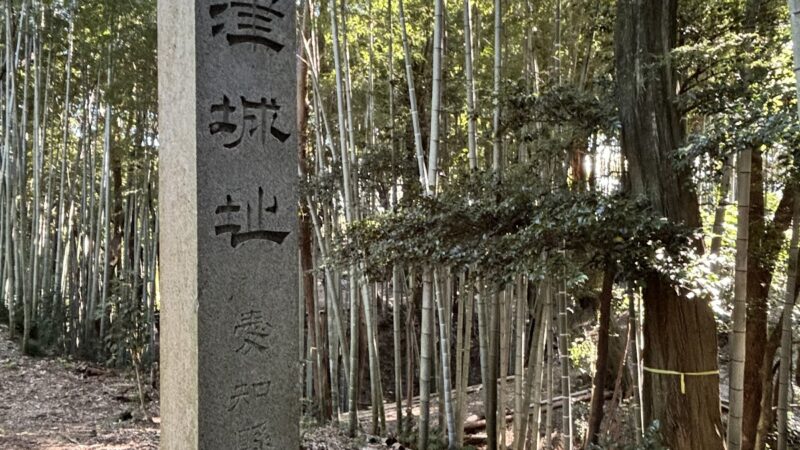
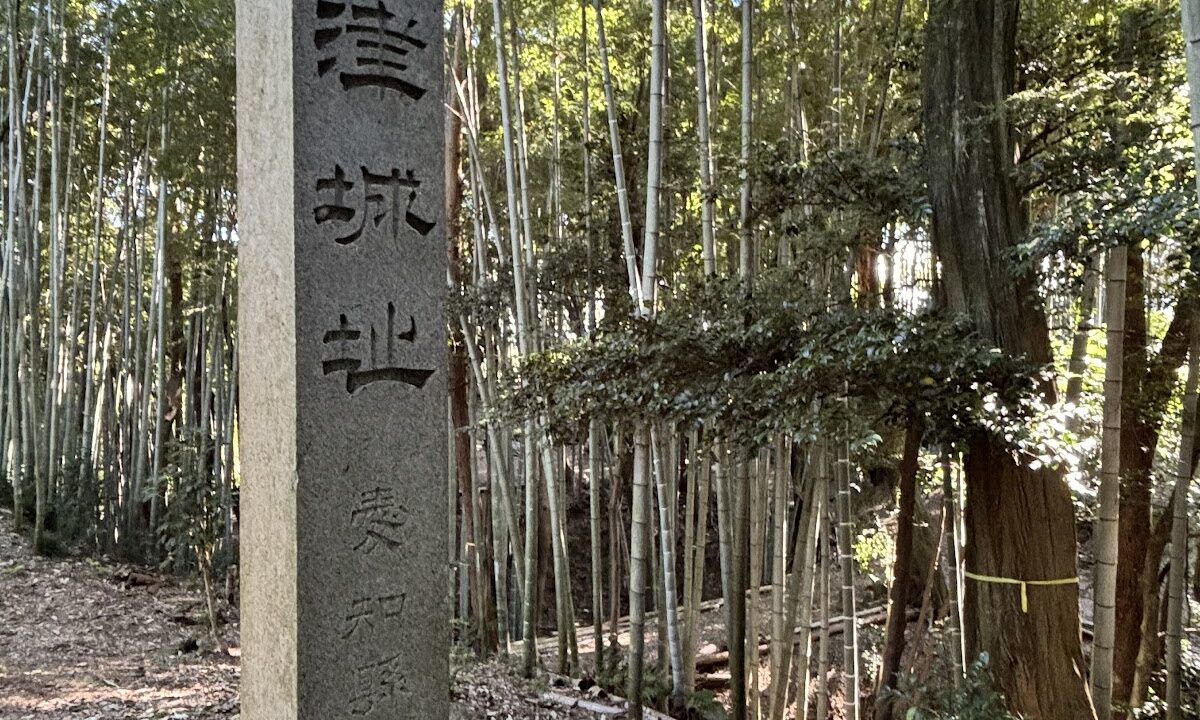
Currently designated as a historical site by Okazaki City, its layout, which strongly retains the characteristics of the Sengoku period, is valued as a valuable historical site in the study of medieval castles. Almost all elements of a medieval mountain castle, such as earthworks, baileys, and moats, are preserved in good condition, earning high praise from castle enthusiasts and history lovers.
History of Iwatsu Castle | The Castle That Became the Starting Point of the Matsudaira Clan’s Rise
Construction History and the Matsudaira Clan’s Expansion into Iwatsu
There are various theories regarding the construction date of Iwatsu Castle, but the most likely theory is that it was built around 1421 (Oei 28). It is said to have been built when Matsudaira Yasuchika, the second head of the Matsudaira clan, expanded from Matsudaira-go in Kamo District (present-day Toyota City, Aichi Prefecture) to Iwatsu.
The Matsudaira clan originally had their base in Matsudaira-go, located in the mountainous area of Toyota City. However, expanding to Iwatsu, which was closer to the plains and a transportation hub, was strategically important for the expansion of the clan’s power. Iwatsu was located in a position that allowed them to utilize the Yahagi River’s water transport, making it an ideal location for expansion towards Okazaki, the central part of Mikawa Province.
Castle Improvements by Matsudaira Nobumitsu
During the time of Matsudaira Nobumitsu, the third head of the Matsudaira clan, Iwatsu Castle was further expanded and improved. Nobumitsu is sometimes called the “restorer of the Mikawa Matsudaira clan,” and he established various branches of the Matsudaira family, such as the Anjo Matsudaira and Sakurai Matsudaira families, solidifying the Matsudaira clan’s position in Mikawa Province.
Using Iwatsu Castle as his base, Nobumitsu strengthened his influence over the surrounding areas, successfully expanding the Matsudaira clan’s sphere of influence significantly. During this period, the Iwatsu Matsudaira family was established, and Iwatsu Castle became one of the Matsudaira clan’s important strongholds.
Iwatsu Castle in the Sengoku Period
With the arrival of the Sengoku period (Warring States period), Iwatsu Castle became a battleground for conflicts with surrounding forces. Especially in Mikawa Province, sandwiched between powerful Sengoku daimyo such as the Imagawa and Oda clans, the Matsudaira clan was forced to fight fiercely for survival.
During the Eiroku era (1558-1570), Iwatsu Castle is believed to have played an important role in the process by which the young Tokugawa Ieyasu (then Matsudaira Motoyasu) unified Mikawa. Ieyasu was unifying Mikawa Province while gaining control of various castles belonging to the Matsudaira clan, and it is possible that Iwatsu Castle was also renovated and strengthened as part of this strategy.
Abandonment and Aftermath
When Tokugawa Ieyasu was transferred to the Kanto region in 1590, many castles in Mikawa Province ceased to serve their purpose. It is believed that Iwatsu Castle was abandoned around the same time. Afterward, it remained as a castle ruin, and the remains from that time have been well preserved to this day.
Layout and Structure of Iwatsu Castle | Typical Elements of a Medieval Mountain Castle
Structure of the Main Enclosure (Honmaru)
The main enclosure of Iwatsu Castle is located at the highest point of the castle and is surrounded by earthen ramparts. While the main enclosure is not particularly large, defensive design is evident throughout.
From the main enclosure, one can see a panoramic view of Okazaki city and the Yahagi River basin, indicating that it also functioned as a military observation post. On a clear day, one could see as far as Mikawa Bay, and the castle lords of the time likely contemplated the management of their domains while gazing at this view.
Layout of the Enclosures (Kuruwa)
Iwatsu Castle has multiple enclosures (kuruma) arranged around the main enclosure. Each enclosure is cleverly positioned to utilize the terrain, incorporating ingenious methods to effectively prevent enemy incursions.
The enclosures are separated by moats and steep slopes, creating a multi-layered defensive structure where even if one enclosure is breached, the next can provide defense. This type of layout is typical of mountain castles from the Sengoku period, indicating that Iwatsu Castle was a full-fledged military facility built with actual combat in mind.
Moats and Earthworks
Particularly noteworthy as a defensive feature of Iwatsu Castle are the moats (horikiri) located throughout the castle. These moats are trench-like defensive structures dug to cut across ridges, playing a crucial role in preventing enemy advances.
Earthen ramparts remain throughout the castle grounds, some exceeding 2 meters in height. These ramparts likely served not only as simple defensive walls, but also as a means of further enhancing defense by allowing for the construction of fences and walls on top.
Access Routes and Entrances
Currently, two main entrances to Iwatsu Castle have been identified. There are routes from the east and west, each with distinct characteristics.
The entrances to the castle, known as “koguchi,” are designed to prevent enemy intrusion, featuring a curved rather than straight structure. This design prevents the enemy from rapidly entering the castle, giving the defenders an advantage.
Highlights and Attractions of Iwatsu Castle
Well-Preserved Remains
The greatest appeal of Iwatsu Castle is that, even after approximately 600 years since its construction, the remains from that time are remarkably well-preserved. Major defensive structures such as earthen ramparts, moats, and baileys are clearly visible, allowing visitors to experience the appearance of a Sengoku period mountain castle.
The earthworks around the main enclosure, in particular, are well-preserved, making them valuable resources for understanding the scale and structure of the castle at the time. For castle researchers and history enthusiasts, Iwatsu Castle is an excellent resource for learning about medieval mountain castles.
Stunning Views
The view from the main enclosure, at an altitude of 75 meters, is one of the greatest pleasures of visiting Iwatsu Castle. Below, the city of Okazaki spreads out, and on clear days, you can even see as far as Mikawa Bay.
This view is not only beautiful, but also a valuable opportunity to experience the strategic importance of why the Matsudaira clan built their castle in this location. While gazing at the flow of the Yahagi River and the surrounding terrain, you can relive the perspective of the feudal lords of the Sengoku period.
Nature Through the Seasons
Iwatsu Castle ruins are located in a rich natural environment, allowing visitors to enjoy the changing scenery of each season. In spring, the fresh greenery is beautiful; in summer, it is enveloped in deep green; and in autumn, the autumn leaves color the castle ruins. Strolling through the castle ruins in the crisp winter air is also a special experience. The space where nature and history harmonize offers visitors peace and inspiration. The charm of Iwatsu Castle lies in the fact that you can enjoy both historical and nature walks simultaneously.
Access and Basic Information to Iwatsu Castle
Location
Address: Higashiyama, Iwatsu-cho, Okazaki City, Aichi Prefecture
Iwatsu Castle ruins are located in the Iwatsu district, in the northern part of Okazaki City. It is relatively easy to access, about a 15-minute drive from the city center.
Access by Car
- Tomei Expressway: Approximately 20 minutes from Okazaki Interchange
- National Route 248: Head towards Iwatsu and follow the signs
- Parking: There are several parking spaces near the castle ruins (free)
Access by Public Transportation
- Meitetsu Nagoya Main Line: Get off at “Otogawa Station” or “Higashi-Okazaki Station”
- From the station, take a taxi or local bus (it’s a long walk)
- Meitetsu Bus: Take a bus bound for Iwatsu, get off at the nearest bus stop, and walk for approximately 15 minutes
Estimated Visiting Time
Allow approximately 30 minutes to 1 hour to explore the castle ruins. If you want to carefully observe the remains and enjoy taking photographs, we recommend allocating more than 1 hour.
Points to Note When Visiting
- Attire: As it is a mountain castle, comfortable shoes and clothing suitable for walking are essential.
- Season: In summer, be sure to take precautions against insects; in winter, take precautions against the cold.
- Safety: There are areas with uneven footing, so please walk carefully.
- Manners: To protect the historical site, please be considerate and avoid damaging the remains.
Tourist Spots Around Iwatsu Castle
Iwatsu Tenmangu Shrine
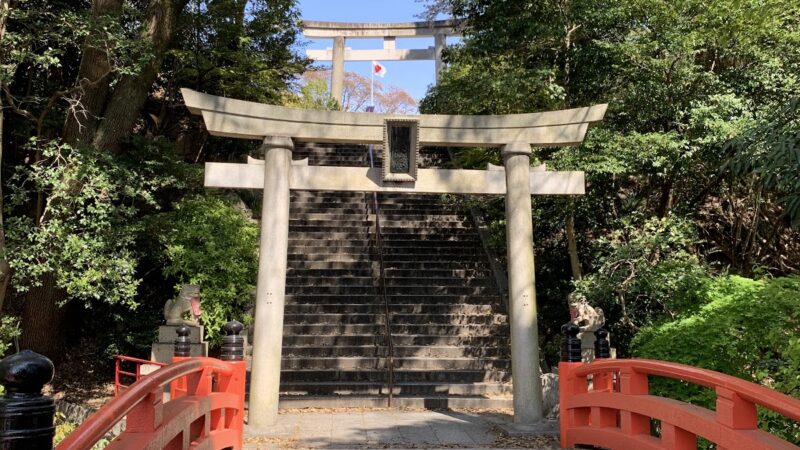
Located very close to Iwatsu Castle, Iwatsu Tenmangu Shrine is a shrine dedicated to Sugawara no Michizane, the god of learning. It is a historical shrine that developed under the patronage of the Matsudaira clan, and even today, many worshippers visit during exam season. It is an ideal spot to visit in conjunction with a visit to Iwatsu Castle.
Okazaki Castle
Okazaki Castle, known as the birthplace of Tokugawa Ieyasu, is about a 20-minute drive from Iwatsu Castle. The castle tower has been restored, and the interior houses a historical museum. A recommended historical tour is to first learn about the early history of the Matsudaira clan at Iwatsu Castle, and then deepen your understanding of Ieyasu’s life at Okazaki Castle.
Matsudaira Village (Toyota City)
Matsudaira Village, the birthplace of the Matsudaira clan, is located in Toyota City and is about a 40-minute drive from Iwatsu Castle. Visiting the origins of the Matsudaira clan will give you a deeper understanding of the significance of their expansion into Iwatsu. There are many sights to see, including Matsudaira Toshogu Shrine and Matsudaira Village Museum.
Takiyama-ji Temple and Takiyama Toshogu Shrine
Takiyama-ji Temple, located about a 15-minute drive from Iwatsu Castle, is an ancient temple with deep ties to the Matsudaira clan. The adjacent Takiyama Toshogu Shrine is a shrine dedicated to Tokugawa Ieyasu and is considered one of the “Three Great Toshogu Shrines,” alongside Nikko Toshogu Shrine and Kunozan Toshogu Shrine.
Historical Significance of Iwatsu Castle | Why is it Important?
The Starting Point of the Matsudaira Clan’s Rise
The most important aspect of Iwatsu Castle’s historical significance is that it served as the starting point for the Matsudaira clan’s rise. The Matsudaira clan, initially a minor lord in a mountainous region, gained a foothold in the plains through their expansion into Iwatsu, eventually growing into a powerful daimyo in Mikawa Province. Iwatsu Castle played a crucial role in this process.
If the Matsudaira clan had not expanded into Iwatsu, the rise of Tokugawa Ieyasu might not have occurred, and Japanese history might have been vastly different. In that sense, Iwatsu Castle can be considered one of the important turning points in Japanese history.
Value in Medieval Castle Research
Iwatsu Castle possesses typical characteristics of a medieval mountain castle and holds high value in castle research. Because almost all elements of a medieval castle, such as earthworks, moats, and baileys, are well-preserved, it is a valuable resource for studying the castle construction techniques and defensive philosophies of the Sengoku period.
Iwatsu Castle is indispensable for understanding the development process of medieval castles, particularly in the Mikawa region. It is attracting academic attention as a prime example of the changes in castle architecture accompanying the expansion of the Matsudaira clan’s power.
Value as a Regional Historical Heritage Site
For Okazaki City, Iwatsu Castle is an important historical heritage site connected to the roots of Tokugawa Ieyasu. While Okazaki Castle is widely known as Ieyasu’s birthplace, Iwatsu Castle offers a deeper historical background as the place where his ancestors built their power.
Iwatsu Castle is highly valued as a resource for regional history education and tourism. Local history enthusiasts and researchers continue their efforts to preserve and utilize the site, ensuring its transmission to future generations.
Recommended Points When Visiting Iwatsu Castle
Photography Spots
The Iwatsu Castle ruins are an ideal spot for photography. There are various subjects to photograph, including the view from the main enclosure, the well-preserved earthworks, and the cross-section of the moat. Especially in the early morning or evening light, the three-dimensional nature of the remains is emphasized, allowing for impressive photographs.
The combination of the changing seasons and historical remains is captivating, and you’ll be able to take particularly beautiful photos during the fresh greenery of spring and the vibrant autumn foliage.
Tips for Historical Walks
When visiting Iwatsu Castle, gaining some basic knowledge about the history of the Matsudaira clan and the castle’s structure beforehand will allow you to enjoy it more deeply. Studying books and websites related to castles beforehand will make it easier to understand the meaning and intention behind the placement of the remains.
Bringing a castle layout map (a blueprint of the castle) with you will be helpful. By checking the relative positions of each enclosure and defensive structure while walking, you can gain a three-dimensional understanding of the castle’s overall structure.
Seasonal Ways to Enjoy
Spring: The season of fresh greenery is mild and ideal for walks. A historical walk while listening to the birdsong is exceptional.
Summer: The greenery deepens, and the castle ruins are enveloped in a deep forest. Visiting in the cool early morning hours is recommended.
Autumn: The autumn foliage season is the most beautiful time of year. The contrast between the colorful trees and the historical ruins is magnificent.
Winter: With the leaves fallen, the outlines of the ruins are clearly visible, making it the perfect season to observe the castle’s structure. The clear air also provides a wonderful view.
Efforts to Preserve and Utilize Iwatsu Castle
Okazaki City is working to preserve and utilize the Iwatsu Castle ruins as a valuable historical heritage site. Regular mowing and preservation work on the ruins are carried out, creating a safe environment for visitors.
Local history research groups and castle enthusiast groups are also actively working to spread awareness of the value of Iwatsu Castle. They hold events such as tours and study sessions, contributing to local history education.
It is hoped that the Iwatsu Castle ruins will continue to be properly preserved and used as a place to convey the history of the Matsudaira clan and the charm of medieval castles to many people.
Summary | Iwatsu Castle: A Treasure Trove of History Tracing the Roots of Tokugawa Ieyasu
Iwatsu Castle, located in Okazaki City, Aichi Prefecture, is a mountain castle that played a crucial role in the expansion of power in Mikawa Province by the Matsudaira clan, ancestors of Tokugawa Ieyasu. Built around 1421 by Matsudaira Yasuchika and further improved during the time of Matsudaira Nobumitsu, this castle became the starting point for the Matsudaira clan’s rise to power.
The well-preserved remains, including earthworks, moats, and baileys, exhibit typical characteristics of medieval mountain castles and hold high value in castle research. From the main bailey, at an altitude of 75 meters, you can see as far as Okazaki city and Mikawa Bay, allowing you to relive the perspective of the feudal lords of the Sengoku period.
Iwatsu Castle ruins, located in Higashiyama, Iwatsu-cho, Okazaki City, are easily accessible by car, approximately 20 minutes from the Okazaki Interchange. Allow 30 minutes to an hour for your visit, and comfortable walking attire is recommended.
The surrounding area is dotted with sites associated with the Matsudaira clan and Tokugawa Ieyasu, such as Iwatsu Tenmangu Shrine, Okazaki Castle, and Matsudaira Village. Visiting them together will allow you to gain a deeper understanding of history. Why not visit Iwatsu Castle on a historical journey tracing the roots of Tokugawa Ieyasu?