A Complete Guide to the History and Highlights of Hazusaki Castle (Minamichita-cho, Chita-gun)
Located on the hills of Hazusaki Cape, the southernmost tip of the Chita Peninsula in Minamichita-cho, Chita-gun, Aichi Prefecture, Hazusaki Castle is a historical fortress that played an important role from the Nanboku-cho period to the Sengoku period. Currently preserved as a castle site, it has become a hidden gem visited by history buffs and castle enthusiasts. This article provides a thorough explanation of Hazusaki Castle’s detailed history, highlights, and access methods.
What is Hazusaki Castle?
Hazusaki Castle (also known as Hazu Castle or Hazusaki Castle) is a medieval castle built on the Myojin-yama mountain area in Morosaki, Minamichita-cho, Chita-gun, Aichi Prefecture. Strategically important at the southernmost tip of the Chita Peninsula, it functioned as a key point for maritime traffic overlooking Ise Bay and Mikawa Bay.
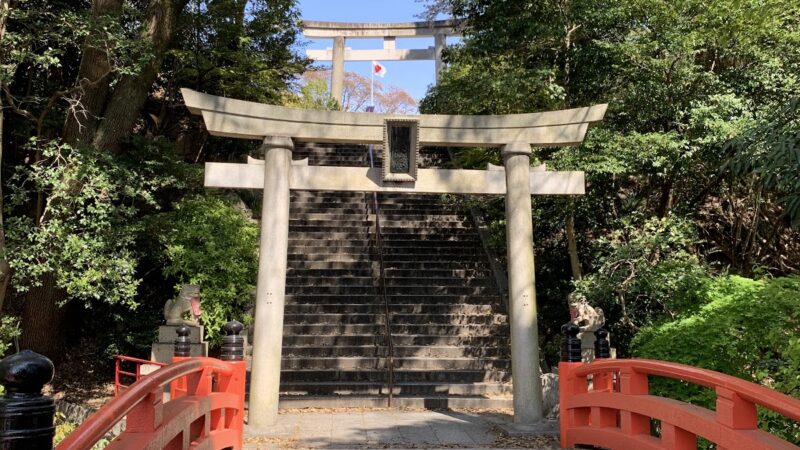
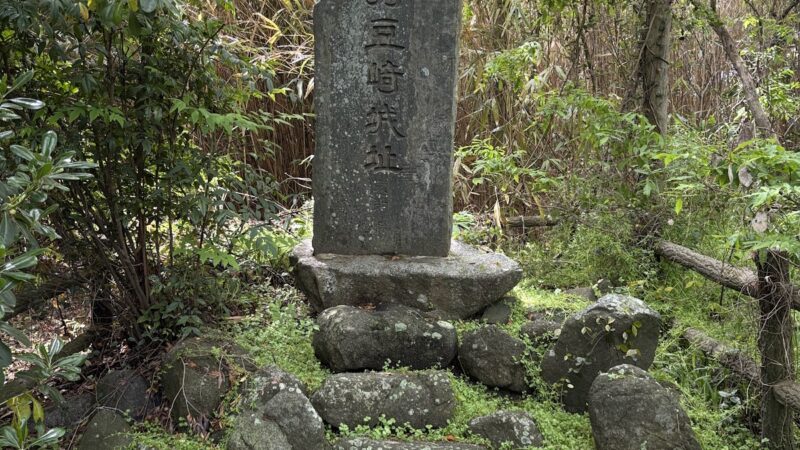
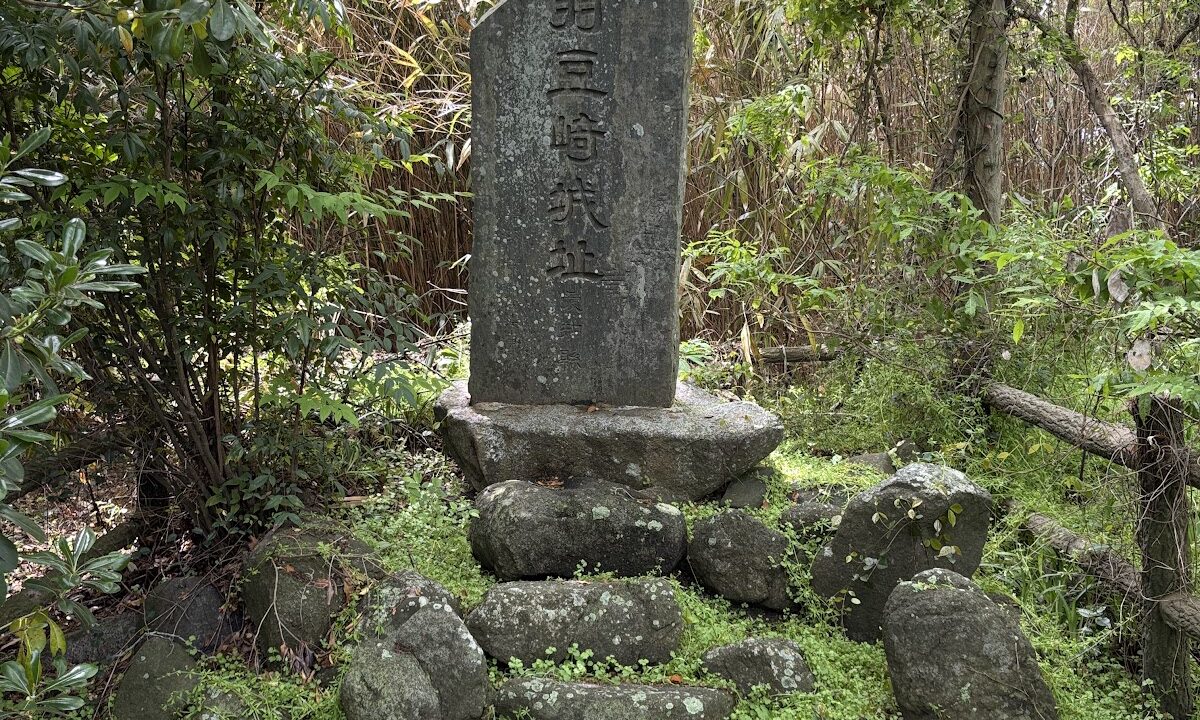
The castle ruins are located on a hill south of the current Morozaki Ferry Terminal, adjacent to the tourist attractions of Hazu Shrine and Hazu Cape. A stone monument stands at the castle site, commemorating the former existence of a castle.
History of Hazuzaki Castle
Construction during the Nanboku-cho Period
There are several theories regarding the construction period of Hazuzaki Castle, but the most widely accepted is that it was built during the early Nanboku-cho period, specifically between the Genko era (1321-1324) and the Enbun era (1356-1361).
According to the history of Hazu Shrine, the castle was built at Hazuzaki by Atsuta Grand Priest Settsu-no-kami Chikamasa and his adopted son, Chiaki Masayoshi. The Chiaki family was a prestigious family that served as the Grand Priest of Atsuta Shrine and was an important force that sided with the Southern Court during the turbulent Nanboku-cho period.
There are various theories regarding the builder of the castle, including theories attributing it to Chiaki Sueuji, Chiaki Masayoshi, and even the Hachiya clan. However, all theories confirm that a castle was built in this location during the early to mid-Nanboku-chō period (Northern and Southern Courts period). It is believed that the Chiaki clan, who served as the chief priest of Atsuta Shrine, chose this location at the southern tip of the Chita Peninsula as a base for the Southern Court, with the strategic intention of controlling maritime traffic and maintaining communication with the Ise region.
Hazusaki Castle in the Sengoku Period
After the end of the Nanboku-chō period and the beginning of the Sengoku period (Warring States period), Hazusaki Castle remained under the control of the Chiaki clan. Chiaki Suetada is known as the castle’s lord during the Sengoku period.
Chiaki Suetada is said to have served under Imagawa Yoshimoto in the Battle of Okehazama in 1560 (Eiroku 3) and died in the battle. The Battle of Okehazama is known as a historical battle in which Oda Nobunaga defeated Imagawa Yoshimoto, but it was in this battle that Chiaki Rizhong, a powerful figure in the Chita Peninsula, also lost his life.
After Chiaki Rizhong’s death, it is believed that the Senga clan resided in Hazusaki Castle. The Senga clan were local lords who controlled the southern part of the Chita Peninsula and subsequently managed Hazusaki Castle.
The Castle’s Demise
There are no clear records of when Hazusaki Castle was abandoned, sometime between the late Sengoku period and the early Edo period. However, given that many medieval castles were abandoned during Oda Nobunaga’s unification of Owari Province and Toyotomi Hideyoshi’s unification of Japan, it is presumed that Hazusaki Castle met a similar fate.
During the Edo period, it completely lost its function as a castle and remains the grounds of Hazusaki Shrine to this day.
Structure and Characteristics of Hazusaki Castle
Location and Layout
Hazusaki Castle was built on a hill near Hazusaki Cape, the southernmost point of the Chita Peninsula, at an elevation of approximately 30 meters. Taking advantage of its topography, surrounded by the sea on three sides, it was a natural stronghold, offering excellent views of both Ise Bay and Mikawa Bay.
The castle was relatively small for a medieval mountain castle, and is thought to have had a simple layout centered around the main enclosure (honmaru). While no clear remains exist today, judging from the topography, it is believed to have been a typical medieval mountain castle, with the hilltop leveled to form the main enclosure, surrounded by moats and earthworks.
A Key Point for Maritime Traffic
The most distinctive feature of Hazusaki Castle lies in its location. Situated at the southernmost tip of the Chita Peninsula, it played a crucial role in monitoring and controlling maritime traffic passing through Ise Bay. During the Nanboku-cho period (Northern and Southern Courts period), sea routes were extremely important both militarily and economically, and Hazusaki Castle was a strategic base controlling these key points.
In particular, it is believed that this castle played a crucial role in communication with the Ise region across the strait, as well as with remote islands such as Himakajima and Shinojima.
Highlights of Hazusaki Castle Ruins
Castle Site Monument and Historical Traces
A stone monument marking the castle’s existence stands at the current Hazusaki Castle site. This monument is located near the grounds of Hazu Shrine and conveys medieval history to visitors.
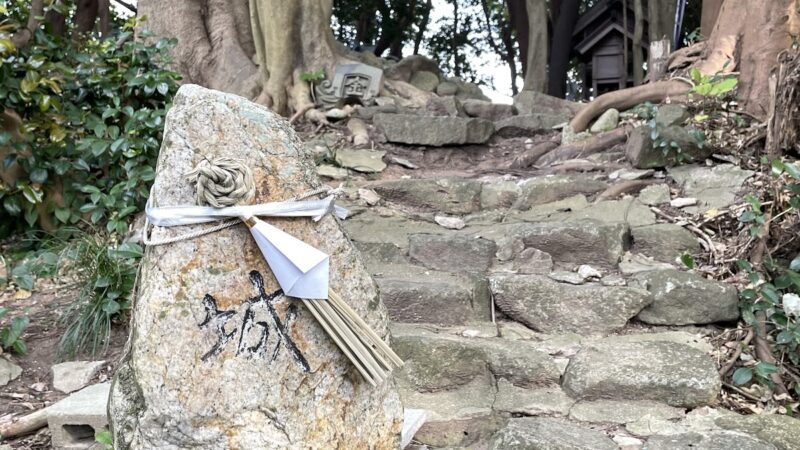
While clear remains of stone walls and moats are not present, careful observation of the terrain reveals traces of the castle, such as artificially leveled areas and slight elevation changes. Although the castle ruins are not in perfect condition, exploring the site while using your historical imagination allows you to experience the atmosphere of a medieval castle.
Relationship with Hazu Shrine
Hazusaki Castle Ruins have a close relationship with Hazu Shrine. Hazu Shrine has long been a center of faith at the southern tip of the Chita Peninsula, and it is believed that there was a time when the castle and shrine coexisted.
Within the grounds of Hazu Shrine are giant trees estimated to be hundreds of years old, and a primeval forest of Ubame oaks, designated as a national natural monument, creating a historical atmosphere. When visiting the castle ruins, visiting Hazu Shrine as well will allow you to feel the long history of this area more deeply.
View from Hazu Cape
Hazu Cape, located near Hazusaki Castle Ruins, is known as a scenic spot at the southernmost tip of the Chita Peninsula. From the cape, you can see Himakajima and Shinojima islands, and on clear days, even the opposite shore of Ise Bay.
The former lords of the castle likely gazed upon this same view while monitoring maritime traffic and formulating their strategies. Currently, an observation deck has been built, and visitors can enjoy both history and nature while walking along the approximately 800-meter Ubamegashi (Japanese evergreen oak) promenade.
Around the Morozaki Ferry Terminal
Just north of the Hazuzaki Castle ruins is the Morozaki Ferry Terminal, where ferries depart for Himakajima and Shinojima islands. This modern hub of maritime traffic evokes the role that Hazuzaki Castle once played in controlling maritime traffic.
The area around the ferry terminal is well-developed as a tourist destination, with ample parking, restaurants, and souvenir shops. Visitors can enjoy resting or dining in this area before or after exploring the castle ruins.
Basic Information
Location/Address
- Location: Myojinyama area, Morosaki, Minamichita-cho, Chita-gun, Aichi Prefecture
- Postal Code: 470-3503
- Management: Minamichita-cho (castle site), Hazu Shrine (shrine grounds)
Visiting Information
- Visiting Hours: Always open (according to Hazu Shrine’s visiting hours)
- Admission Fee: Free
- Estimated Time Required: Approximately 30 minutes to 1 hour (including Hazu Shrine and Hazu Cape)
- Facilities: Parking available (use of the Morosaki Ferry Terminal parking lot), restrooms available
Castle Data
- Classification: Mountain Castle
- Construction Period: Early Nanboku-cho period (Genko era to Enbun era, around 1321-1361)
- Builder: Masayoshi Chiaki (most likely theory)
- Main Lords: Chiaki clan, Chiga clan
- Date of Abandonment: Unknown (estimated late Sengoku period to early Edo period)
- Remains: Part of the topography (few clear remains)
- Designated Cultural Property: None
Access
Access by Public Transportation
By Train and Bus:
- From Meitetsu Chita Shinsen Line “Utsumi Station”:
- Take the Umikko Bus Toyohama Line or Nishikaigan Line
- Get off at the “Morosaki Port” bus stop, approximately 5 minutes on foot
- Travel time: Approximately 20 minutes by bus + 5 minutes on foot
- From Meitetsu Chita Shinsen Line “Kowa Station”:
- Take the Umikko Bus Morosaki Line
- Get off at the “Morosaki Port” bus stop, approximately 5 minutes on foot
- Travel time: Approximately 30 minutes by bus + 5 minutes on foot
Notes:
- The Umikko Bus (Minamichita Town Community Bus) has limited service, so it is recommended to check the timetable in advance.
- It may be particularly crowded on holidays and during tourist seasons.
Access by Car
From Nagoya:
- Approximately 20 minutes from the Minamichita IC on the Chita Peninsula Expressway
- Head south on National Route 247 towards Morozaki
- Distance: Approximately 15km from Minamichita IC
Parking Information:
- Parking is available at the Morozaki Ferry Terminal
- Capacity: Approximately 100 cars
- Fee: Free (however, there may be a charge during peak hours)
- There is also parking available for visitors to Hazu Shrine (a few spaces)
Distance from Major Surrounding Cities
- From central Nagoya: Approximately 50km, about 1 hour 15 minutes by car
- From Toyota City: Approximately 60km, about 1 hour 30 minutes by car
- From Okazaki City: Approximately 55km, about 1 hour 20 minutes by car
Nearby Tourist Attractions
Hazu Shrine
An ancient shrine adjacent to the castle ruins, dedicated to Takehayasusano-no-Mikoto. Records indicate the shrine building was restored between 1322 and 1355, giving it a history contemporary to Hazusaki Castle. The grounds are home to centuries-old giant trees, creating a sacred atmosphere.
Hazu Cape
A scenic spot at the southernmost tip of the Chita Peninsula, offering panoramic views of Ise Bay, Mikawa Bay, Himakajima Island, and Shinojima Island from the observation deck. An approximately 800-meter-long Ubamegashi walking trail allows visitors to stroll through a primeval forest of Ubamegashi trees, designated a national natural monument. The sunset view is particularly spectacular.
Morosaki Port (Morosaki Ferry Terminal)
A bustling port serving as a gateway to Himakajima Island and Shinojima Island. This area boasts a variety of markets and restaurants offering fresh seafood, allowing visitors to enjoy the bounty of the Chita Peninsula’s sea. It’s also an ideal starting point for day trips to the surrounding islands.
Noma Daibo (Omidōji Temple)
Located approximately 10km north of Hazusaki Castle, this ancient temple is known for housing the tomb of Minamoto no Yoshitomo. Minamoto no Yoshitomo, father of Minamoto no Yoritomo, met a tragic end here after being betrayed by his retainers following his defeat in the Heiji Rebellion. A must-see spot for history buffs.
Himakajima and Shinojima Islands
These islands are about 10-20 minutes by ferry from Morozaki Port. Himakajima is famous for its octopus and pufferfish, while Shinojima is known for its whitebait, offering a chance to savor fresh seafood. Popular tourist destinations offer a relaxed island atmosphere.
Points to Note When Visiting Hazusaki Castle
Best Season for Visiting
Hazusaki Castle Ruins are open year-round, but the best times to visit are:
- Spring (March-May): The weather is mild and ideal for strolling. The fresh greenery around Hazu Shrine is beautiful.
- Autumn (October-November): The season for autumn leaves, when the old-growth forest of Ubame oak trees changes color.
- Winter (December-February): The air is clear and the views are excellent. However, the sea breeze is strong and it is cold, so warm clothing is essential.
Summer is hot and sunny, so early morning or evening visits are recommended.
Estimated Time Required
- Visiting only the castle ruins: Approximately 30 minutes
- Visiting the castle ruins + Hazu Shrine: 45 minutes to 1 hour
- Visiting the castle ruins + Hazu Shrine + Hazu Cape stroll: 1 hour 30 minutes to 2 hours
- Including sightseeing in the surrounding area: Half a day to a full day
Clothing and Items to Bring
- Comfortable walking shoes: The walking paths are well-maintained, but some areas are uneven.
- Hat and sunscreen: There are areas with little shade.
- Warm clothing: The sea breeze is strong, so it’s essential, especially in winter.
- Camera: The views are magnificent, so photography is recommended.
- Drinks: Vending machines are limited, so it’s best to bring your own.
Precautions
- There are few clearly defined remains at the castle ruins, so having some historical knowledge will enhance your experience.
- As it is along the coast, the wind can be strong and the waves high depending on the weather.
- Due to the limited number of public transportation options, please check the timetable in advance.
- Parking lots can be crowded during tourist seasons and with ferry users.
History of Hazusaki Castle and the Chita Peninsula
Hazusaki Castle is one of the important castles for understanding the medieval history of the Chita Peninsula. The Chita Peninsula flourished as a key point for maritime traffic from ancient times and had deep ties to Atsuta Shrine.
During the Nanboku-cho period, the Chiaki clan, who served as the chief priest of Atsuta Shrine, were a powerful force on the Southern Court side, and Hazusaki Castle played a crucial role as their maritime base. It is believed that they contributed to maintaining the Southern Court’s power by coordinating with the Ise region across Ise Bay.
With the arrival of the Sengoku period, the Chita Peninsula became a border region between the spheres of influence of the Oda and Imagawa clans, and Hazusaki Castle continued to maintain its strategic importance. The death of Lord Chiaki Yoshitada in the Battle of Okehazama indicates that this region was caught up in the turmoil of the Sengoku period.
Hazusaki, now a quiet tourist destination, was once the stage for a turbulent history.
Summary
Hazusaki Castle, located in Minamichita-cho, Chita-gun, Aichi Prefecture, is a castle from the Nanboku-cho period to the Sengoku period, situated at the southernmost tip of the Chita Peninsula. Built by the Atsuta Grand Priest, Chiaki, it played an important role as a key point for maritime traffic.
Although there are few clear remains today, a castle site monument has been erected, and by visiting it along with surrounding tourist spots such as Hazu Shrine and Hazusaki Cape, you can enjoy both medieval history and beautiful nature.
Hazusaki Castle Ruins, approximately 1 hour and 15 minutes by car from Nagoya and accessible by public transport, is a worthwhile spot to visit not only for history buffs but also as part of a Chita Peninsula sightseeing trip. Why not plan a fulfilling Chita Peninsula trip by combining it with island hopping from Morozaki Port or a gourmet trip enjoying fresh seafood?
Hazusaki Castle Ruins is a hidden gem where you can enjoy a luxurious time while feeling the history of the Chita Peninsula and gazing at the magnificent view of Ise Bay.