Complete Guide to the History and Highlights of Nandaiyama Castle (Kasama City, Ibaraki Prefecture) | Visiting the Remains of a Mountain Castle from the Nanboku-cho Period
Nandaiyama Castle, located in the mountainous area of Kasama City, Ibaraki Prefecture, is a valuable mountain castle site that conveys the turbulent history of the Nanboku-cho period. Built near the summit of Mt. Nandai (553 meters above sea level), this castle is designated as a historical site of Ibaraki Prefecture as the stage for the last resistance of the Southern Court. This article comprehensively introduces information useful for castle fans and history enthusiasts, from the detailed history of Nandaiyama Castle and the characteristics of its remains to how to access it and nearby attractions.
Basic Information on Nandaiyama Castle
Before visiting Nandaiyama Castle, let’s first understand some basic information.
Common Name/Alternate Name
Nandaiyama Castle is also known as Nantai-jo. This alternative name is thought to originate from the old name of Mt. Nandai, “Mt. Nantai.” Locally, it is commonly called “Nandaisan-jo.” ### Location
Located in Kamigo, Kasama City, Ibaraki Prefecture, on Mt. Nandai. It is situated in a mountainous area approximately 10 kilometers northwest of Kasama city center, with the castle ruins remaining along the Mt. Nandai hiking trail. Currently, the remains are scattered within a mixed forest and can be accessed via the hiking trail.
Former Provincial Name
It belonged to Hitachi Province. Hitachi Province was a vast region encompassing most of present-day Ibaraki Prefecture, and in the Middle Ages, powerful warlords such as the Satake and Oda clans held sway there. Nandai Castle was located in the central part of Hitachi Province, within the sphere of influence of the Oda clan.
Classification and Structure
It is classified as a mountain castle. It has a structure with multiple baileys, with baileys arranged on the summit of Mt. Nandai (approximately 450 meters above sea level) and on Kannon-daira (approximately 350 meters above sea level) on the mountainside. Utilizing its steep terrain, it is a natural stronghold and possesses typical characteristics of mountain castles from the Nanboku-cho period.
Castle Tower Structure
There was no castle tower. The architectural style of castle towers had not yet been established during the Nanboku-cho period (14th century) when Nandaiyama Castle was built. Castle towers only appeared in Japanese castles from the late Sengoku period to the Azuchi-Momoyama period.
Builder
Oda Goro Fujitsuna is considered the builder. Fujitsuna was the son of Oda Takatomo, the 8th head of the Oda clan, a powerful warlord family in Hitachi Province, and sided with the Southern Court against the Northern Court (Ashikaga).
Year of Construction
It was built in Genchū 4th year/Kakei 1st year (1387)**. This year was towards the end of the Nanboku-cho period, a time when the power of the Southern Court was rapidly declining. The Southern Court used the Genchū era name, while the Northern Court used the Kakei era name, so both notations remain.
Main Renovators
No major renovations have been confirmed in records. Since Nandaiyama Castle fell shortly after its construction in 1387, there is no evidence of large-scale renovations. It is believed to have been a temporary military base used for only a short period.
Main Lords
Oda Gorō Fujitsuna was the sole lord of the castle. Fujitsuna sided with Wakainumaru, the third son of Oyama Yoshimasa of the Southern Court, and holed up in this castle fighting against the large Northern Court army. His tenure as lord was very short, estimated to be only a few months.
Year of Abandonment
The castle fell and was abandoned in 1387 (Genchū 4th year/Kakei 1st year). It fell in the same year it was built. Fujitsuna was forced to surrender due to a siege and siege by a large army led by Uesugi Tomomune of the Northern Court. There are no records of the castle being reused after its fall.
Remains
Currently, the remaining remains include enclosures (kuruwa), earthworks, and traces of stone walls. A flat area, believed to be the main enclosure, is located at the summit, surrounded by multiple enclosures. Enclosure traces also remain on the mountainside, known as Kannon-daira, indicating a two-tiered defensive system. Slight traces of stonework remain within the grove, offering a glimpse into the stone-laying techniques of the time. However, due to over 600 years of history, many of the remains are obscured by weathering and vegetation.
Designated Cultural Property
It is designated as a Ibaraki Prefecture Designated Historic Site. Its official name is “Nantaisan Castle Ruins,” and it is protected as a valuable historical heritage from the Nanboku-cho period. It is designated as one of Kasama City’s important cultural properties and serves as an important site for conveying the region’s history.
Reconstructed Structures
There are no reconstructed structures. Excavation and maintenance of the Nandaiyama Castle ruins have been limited, and no restoration or reconstruction of buildings has been carried out. Currently, the remains are preserved within a natural forest, and visitors will be exploring while imagining its former appearance.
History of Nandaiyama Castle and the Background of the Nanboku-cho Period
To understand the history of Nandaiyama Castle, it is essential to know the turbulent historical background of the Nanboku-cho period.
What is the Nanboku-cho Period?
The Nanboku-cho period (1336-1392) was a time of conflict between the Southern Court (Yoshino Court), centered on Emperor Go-Daigo, and the Northern Court (Kyoto Court), supported by Ashikaga Takauji. Warlords throughout Japan were divided into Southern and Northern Court factions, and fierce battles raged across the country.
The Conflict Between the Northern and Southern Courts in Hitachi Province
In Hitachi Province, the Satake clan rose to prominence as a central force on the Northern Court side, while parts of the Oda and Oyama clans sided with the Southern Court. The Oda clan was a powerful warlord in southern Hitachi Province, maintaining its power centered around its base, Oda Castle (present-day Tsukuba City). However, their allegiance to the Southern Court deepened their conflict with the Northern Court.
The History of the Construction of Nandaiyama Castle
In 1387 (Genchū 4th year/Kakei 1st year), as the Southern Court’s power declined nationwide, Oyama Yoshimasa of Shimotsuke Province (present-day Tochigi Prefecture) raised an army on the Southern Court side. His third son, Wakainumaru, also raised an army with his father, and Southern Court warlords in Hitachi Province responded in kind.
Oda Goro Fujitsuna, son of Oda Takatomo, decided to support Wakainumaru and built a castle utilizing the rugged terrain of Nandaiyama. Mount Nandai is one of the highest peaks in the Kasama region and a strategically important location offering panoramic views of the surrounding area. Fujitsuna holed up in this castle, preparing to resist the large army of the Northern Court.
The Battle of Nandai Castle
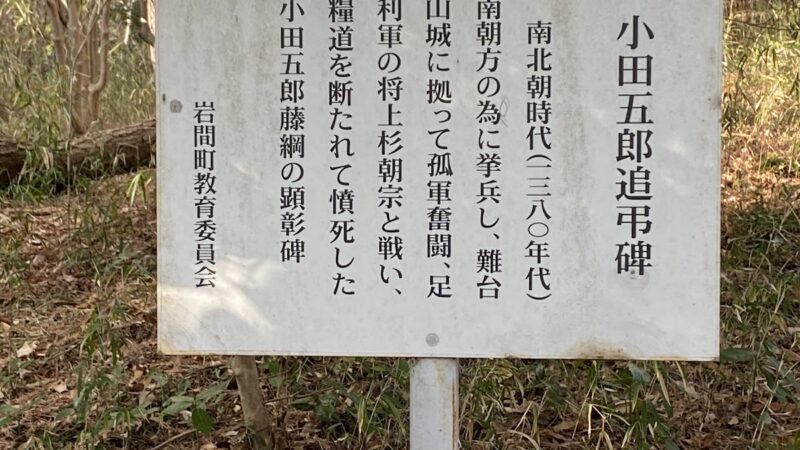
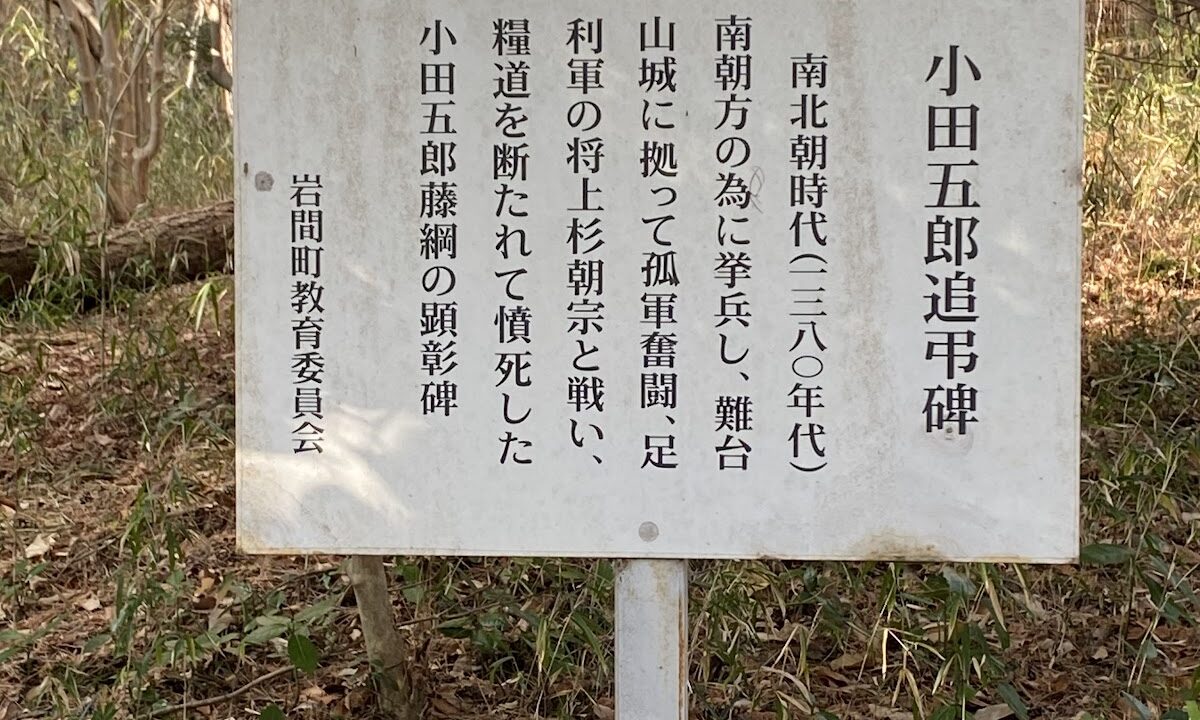
Upon learning of Fujitsuna’s uprising, the Ashikaga forces (Northern Court) dispatched an army under the command of Uesugi Tomomune. Under Uesugi Tomomune’s command were prominent warlords from Hitachi Province, including Satake Yoshinobu, Onozaki Michisato, and Edo Michitaka, who formed a large army that besieged Nandai Castle.
Oda Goro Fujitsuna fought valiantly, making the most of the castle’s rugged terrain, and fought bravely for the Southern Court. However, the Northern Court avoided a frontal attack and adopted a tactic of siege warfare, cutting off the castle’s supply lines and starving the defenders. Satake Yoshinobu and his forces seized control of the surrounding villages, completely cutting off the supply of food and provisions to the castle.
After a long siege, Fujitsuna, whose provisions ran out, was forced to surrender, and Nandaiyama Castle fell. This battle is recorded as one of the last large-scale resistances by the Southern Court at the end of the Nanboku-chō period.
Nandaiyama after the fall of the castle
After the fall of Nandaiyama Castle, there are no records of the castle being used again as a military base. The power of the Southern Court rapidly declined, and in 1392, the Nanboku-chō period ended with the unification of the Northern and Southern Courts. Nandaiyama returned to being a quiet mountain, and the castle ruins gradually returned to nature over time.
Layout and structure of Nandaiyama Castle
Nandaiyama Castle is a mountain castle with a complex layout that takes advantage of the difference in elevation. Its structure is gradually being revealed through on-site surveys and research.
Main Enclosure at the Summit
The main enclosure (honmaru) is believed to have been located near the summit of Mt. Nandai, at an altitude of approximately 450 meters. This main enclosure was a relatively large, flat area and served as the central function of the castle. Traces of earthworks remain around it, indicating that defensive civil engineering works were carried out.
From the main enclosure, one could see a wide expanse of the surrounding mountains and plains, making it an excellent position for monitoring enemy movements. On clear days, it was possible to see as far as Mt. Tsukuba and the Yamizo Mountains.
Enclosures at Kannon-daira
Several enclosures were also located at a place called Kannon-daira, slightly below the summit at an altitude of approximately 350 meters. Kannon-daira was a relatively large, flat area and is presumed to have been used as a soldier’s encampment and a storage area for supplies.
The enclosures at Kannon-daira likely served as a secondary enclosure protecting the main enclosure at the summit, functioning as a defensive line to intercept enemies before they reached the summit.
Stone Masonry Remains
Throughout the castle ruins, traces of stone masonry remain. While full-fledged stone walls were not yet developed in mountain castles of the Nanboku-cho period, important sections were reinforced with stone masonry. The stone masonry at Nandaiyama Castle, though small in scale, is a valuable relic demonstrating the castle-building techniques of the time.
Currently, it is covered with trees and fallen leaves, so it may be easily overlooked if not carefully observed. When visiting the castle ruins, be sure to look carefully for the traces of stone masonry.
Moats and Cut Slopes
Traces of moats (ditches cutting across the mountain ridge) and cut slopes (artificially carved steep slopes), important defensive structures for mountain castles, have also been confirmed. These were measures to prevent enemy intrusion, indicating that Nandaiyama Castle, despite its short construction period, possessed a reasonable level of defensive facilities.
Access to Nandaiyama Castle and Climbing Route
To visit the Nandaiyama Castle ruins, you will need to be equipped with hiking gear and climb the mountain trails.
Access by Car
It’s about a 20-minute drive from the Tomobe Interchange on the Kita-Kanto Expressway. Head north on National Route 355 towards the Kamigo area of Kasama City. There is a small parking area at the trailhead of the Nandaiyama hiking course, but spaces are limited, so early arrival is recommended on weekends.
If using a car navigation system, searching for “Nandaiyama Hiking Course Entrance” or “Kamigo, Kasama City” is recommended.
Access by Public Transportation
The nearest station is Kasama Station on the JR Mito Line, but it’s about 8 kilometers from the station to the trailhead, making public transportation difficult. Consider taking a taxi or renting a car.
Hiking Route
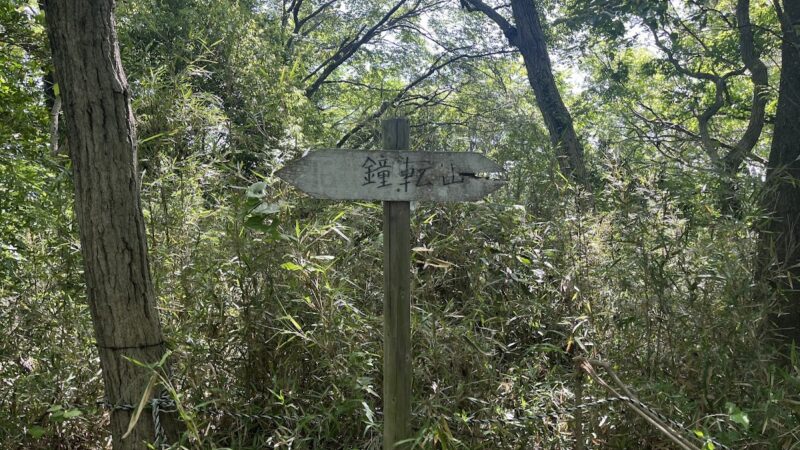
The climb to the castle is via the Nandaiyama hiking course. The hike from the trailhead to the summit takes about 2 hours. The most common route is via Kannon-daira to the castle ruins at the summit.
The hiking trail is well-maintained, but there are steep slopes and rocky areas, so we recommend wearing sturdy shoes such as trekking boots. Also, be sure to carry drinking water, snacks, and rain gear.
Precautions When Visiting the Castle
- Season: Spring to autumn is the best time to visit the castle. There is a possibility of snow and ice in winter.
- Clothing: Wear long sleeves, long pants, a hat, gloves, and bring insect repellent.
- Time: Plan your trip with plenty of time to descend before sunset.
- Solo Travel: It is recommended to visit the castle in a group if possible. If traveling alone, inform family or friends of your destination.
- Protection of Remains: The castle ruins are a valuable cultural asset. Please be careful not to damage the remains or take away stones or soil.
Attractions and Related Historical Sites Around Nandaiyama Castle
When visiting Nandaiyama Castle, be sure to also explore the surrounding historical sites.
Kasama Castle Ruins
Located approximately 9.6 kilometers from Nandaiyama Castle, Kasama Castle is a famous medieval castle built by the Kasama clan. Built on the summit of Mt. Sabashiro, it served as the administrative center of the Kasama Domain during the Edo period. Currently, remnants such as the castle tower base and stone walls remain, and a turret designated as a prefectural cultural property is also preserved. Kasama Castle is larger in scale than Nandaiyama Castle and boasts more extensive remains, making it a must-see spot for castle enthusiasts.
Shishido Castle Ruins
Located approximately 7.3 kilometers away, Shishido Castle was the residence of the Shishido clan, a powerful warlord family of Hitachi Province. A flatland castle used from the medieval to early modern periods, remnants of earthworks and moats remain. The Shishido clan was a branch of the Satake clan and played an important role in controlling northern Hitachi Province.
Kakioka Castle Ruins
Located approximately 7.7 kilometers away, Kakioka Castle is a medieval castle ruin in Ishioka City (formerly Yasato Town). Known as the residence of the Kakioka clan, it was the site of conflicts between the Oda and Satake clans during the Sengoku period. Currently, it is maintained as Shiroyama Park, where remnants such as earthworks and dry moats can be seen.
Kasama Inari Shrine
Kasama Inari Shrine, a representative tourist spot in Kasama City, is an ancient shrine counted as one of Japan’s three great Inari shrines. While not directly related to Nandaiyama Castle, it’s a must-visit spot when visiting Kasama. You can enjoy the beautiful shrine buildings and the atmosphere of the grounds.
Kasama Pottery Village
Kasama City is famous as a production area for Kasama pottery. At Kasama Craft Hill and the Kasama Pottery Cooperative, you can admire traditional pottery works and even try your hand at pottery making. Combining a castle tour with a visit to Kasama’s culture is highly recommended.
How to Enjoy Visiting Nandaiyama Castle
Nandaiyama Castle ruins are not a well-maintained tourist attraction, but that’s precisely why it’s a place where you can feel the romance of history.
Imagine the Stage of History
As you walk through the castle ruins, let your thoughts wander to the Nanboku-cho period, over 600 years ago. Imagining Oda Goro Fujitsuna building the castle on this mountain and fighting for the Southern Court while surrounded by a large army will make the ruins before you feel even more vibrant.
Enjoying Oneness with Nature
Nandaiyama is a mountain blessed with abundant nature. Hiking while observing the plants and wild birds of each season is refreshing for both mind and body. The scenery is especially beautiful during the fresh greenery of spring and the vibrant autumn foliage.
Photography Tips
Taking photos of the castle ruins and the surrounding scenery is another way to enjoy the experience. There are various subjects to photograph, such as the view from the mountaintop, the stone walls, and the topography of the baileys. Try taking photos that capture the historical atmosphere.
As a Resource for Castle Research
For those interested in castle research, Nandaiyama Castle is a valuable study subject as an example of a mountain castle from the Nanboku-cho period. Bringing a castle layout map and comparing it with the site, or recording the condition of the remains, will lead to a deeper understanding.
Historical Significance of Nandaiyama Castle
Although not large in scale, Nandaiyama Castle holds significant importance in Japanese history.
A Witness to the End of the Nanboku-cho Period
The construction and fall of Nandaiyama Castle occurred during the period when the Nanboku-cho period was drawing to a close. As one of the last resistances by the Southern Court, the history of this castle symbolizes the end of the Nanboku-cho turmoil. While the Southern Court’s power declined nationwide, the figures of the warriors who fought for the Southern Court to the end in Hitachi Province represent an important episode marking a turning point in history.
The Historical Position of the Oda Clan
The Oda clan was a powerful family in southern Hitachi Province, maintaining their influence from the Kamakura period to the Sengoku period. The battle at Nandaiyama Castle, fought by Oda Goro Fujitsuna, is one piece of evidence that the Oda clan acted on the side of the Southern Court, and is an important event in understanding the history of the Oda clan.
Research Materials on Medieval Mountain Castles
Nandaiyama Castle, a mountain castle built during the Nanboku-cho period (Northern and Southern Courts period), is a valuable resource for understanding the castle construction techniques and tactics of that time. Because it was abandoned after a short period of use, it may have undergone few later alterations and retain almost its original form from the Nanboku-cho period. Further excavations and research are expected to yield even more information.
As a Regional Historical Heritage Site
For Kasama City, the Nandaiyama Castle ruins are an important historical heritage site. It is protected as a prefecturally designated historical site, and its value as a resource for local history education and tourism is recognized. Local history enthusiasts and mountain climbing enthusiasts continue their efforts to preserve and utilize the castle ruins.
Voices of Visitors to Nandaiyama Castle
Various impressions have been received from people who have actually visited Nandaiyama Castle.
Many visitors have commented that “the castle ruins, quietly nestled in the woods, evoke the atmosphere of the fierce battles of that time,” “the hiking trail is somewhat steep, but the view from the summit is magnificent, making it clear why a castle was built here,” and “the remains are modest, but it’s a place where you can feel the weight of history.”
On the other hand, some have pointed out that “there are few signs, making it difficult to find the remains,” and “the site is not well-maintained, making it difficult for beginners.” When visiting Nandaiyama Castle, it is important to gather sufficient information and prepare beforehand.
Summary: Nandaiyama Castle is a valuable historical site where you can experience the Nanboku-cho period
Nandaiyama Castle in Kasama City, Ibaraki Prefecture, is a valuable mountain castle site that conveys the turbulent history of the late Nanboku-cho period. It holds historical significance as the stage where Oda Goro Fujitsuna raised an army on the Southern Court side and fought against the large army of the Northern Court.
Built near the summit of Mt. Nandai, at an altitude of 553 meters, this castle retains remnants such as baileys, earthworks, and stone walls, offering a glimpse into the appearance of a mountain castle from the Nanboku-cho period. Protected as a prefectural historical site, this castle ruin is a must-visit for castle enthusiasts and history buffs.
Access requires hiking, but the reward lies in the opportunity to experience historical romance amidst nature. Other castle ruins, such as Kasama Castle, Shishido Castle, and Kakioka Castle, are scattered throughout the surrounding area, making it an ideal stop on a tour of Ibaraki Prefecture’s medieval history.
Visiting Nandai Castle allows you to experience living history beyond textbooks and reflect on the lives of the people who lived during the turbulent Nanboku-cho period. When visiting Ibaraki Prefecture, be sure to visit this historical site.