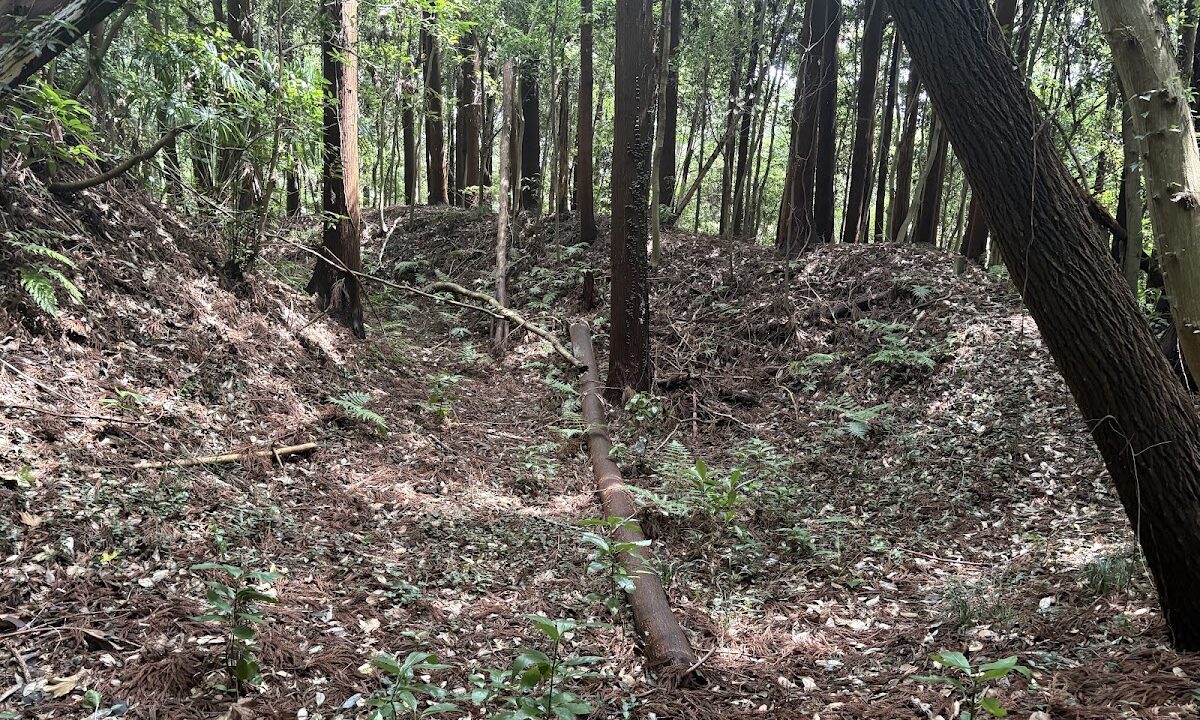
A Thorough Explanation of the History and Remains of Mikawa Castle (Mito City, Ibaraki Prefecture) | With Access and Map Information
Mikawa Castle was a medieval castle located in Mikawa, Mito City, Ibaraki Prefecture. Built in the early Kamakura period, it served as an important subsidiary castle of Mito Castle. This article provides a comprehensive explanation of Mikawa Castle, including its detailed history, the relationship between the Baba and Haruaki clans (the castle’s builders), existing remains, and information about the current Mikawa area.
Overview and Historical Positioning of Mikawa Castle
Mikawa Castle was a flatland castle located in the Mikawa area of present-day Mito City, Ibaraki Prefecture. It survived from the early Kamakura period through the Sengoku period, playing a crucial role in the defense of Mito Castle in Hitachi Province.
Geographical Characteristics and Location
Mikawa Castle was built on a plateau located on the south bank of the Naka River. This location was a strategic point protecting the western side of Mito Castle, and together with Kawada Castle, it played a part in the Mito Castle defense network. The current Migawa district is located west of the center of Mito City and has developed as a residential area.
The postal code is 〒310-0912, and the place name is pronounced “Migawa.” In English, it is written as “Migawa” or “Migawa Castle.” The Migawa district is home to the Migawa Community Center (2-179-1 Migawa, Mito City), which serves as the center of the local community.
History of Migawa Castle Construction and the Baba Clan
Baba Suketomo and the Construction of Mito Castle
To understand the history of Migawa Castle, we must first begin with the construction of Mito Castle. In the early Kamakura period, Baba Suketomo entered Hitachi Province and built Mito Castle in what is now the center of Mito City. The Baba clan was a samurai family descended from the Taira clan, and they gained the trust of Minamoto no Yoritomo and were granted territory in Hitachi Province. ### Construction of Mikawa Castle by Baba Nagamoto
Mikawa Castle was built by Baba Nagamoto, the fourth son of Baba Suketomo. It is believed that Nagamoto built the castle in Mikawa as a branch castle following his father’s construction of Mito Castle. This was part of a strategy to build a defense network centered around Mito Castle.
The exact date of construction is unclear, but it is estimated to be the first half of the 13th century, during the early Kamakura period. The Baba clan expanded their power in northern Hitachi Province, using Mito Castle as their base, and solidified their control over their territory by placing family members in various locations. Mikawa Castle was one of their important strongholds.
The Era of the Shunju Clan and its Role as a Branch Castle of Mito Castle
Entry of the Shunju Clan
After the Baba clan’s rule, Mikawa Castle came under the control of the Shunju clan. The Shunjū clan was a powerful samurai family based at Kawada Castle (present-day Kawada-cho, Mito City) in the Mito region.
With the Shunjū clan establishing a base at Mikawa Castle, Mikawa Castle strengthened its function as a relay point on the defensive line connecting Kawada Castle and Mito Castle. During this period, Mikawa Castle was not merely a subsidiary castle, but a crucial node in the political and military network of the Mito region.
Function as a Subsidiary Castle of Mito Castle
The primary role of Mikawa Castle was to prepare for invasions from the west as a subsidiary castle of Mito Castle. In the medieval castle system, the “multi-castle system,” which involved arranging multiple subsidiary castles around a main castle, was a common defensive strategy. Mikawa Castle is thought to have performed the following functions within this system:
- Outpost Function: To detect enemy movements from the west early and report them to Mito Castle.
- Supply Base: To stockpile provisions and weapons to support Mito Castle in times of emergency.
- Shelter: To provide a place for surrounding residents to evacuate during times of conflict.
- Territorial Administration: A base for managing the administration and military affairs of the Mikawa area.
Structure and Layout of Mikawa Castle
Basic Structure of the Castle
Mikawa Castle was built as a hilltop castle and had a structure that skillfully utilized the natural terrain. Like many medieval castles, it is presumed to have consisted mainly of defensive structures such as earthworks and dry moats.
The following elements are thought to have been typical of a medieval castle structure:
- Main Enclosure (Honmaru): The central area where the lord’s residence and command post were located.
- Second and Third Enclosures: Defensive structures surrounding the main enclosure.
- Earthwork: Earthen walls to prevent enemy intrusion.
- Dry Moat: Defensive moats dug outside the earthwork.
- Tiger’s Mouth (Entrance): A gate with a complex structure designed with defense in mind.
Characteristics of Defensive Structures
The defenses of Mikawa Castle reflected the general castle construction techniques of Hitachi Province at the time. The structure, primarily based on earthworks rather than stone walls, is a common characteristic of castles in eastern Japan from the Kamakura to Muromachi periods.
It is also thought that natural cliffs utilizing the edge of the plateau were used for defense. This resulted in a structure that could effectively defend even with a small number of troops.
Remains and Current State of Mikawa Castle
Existing Remains
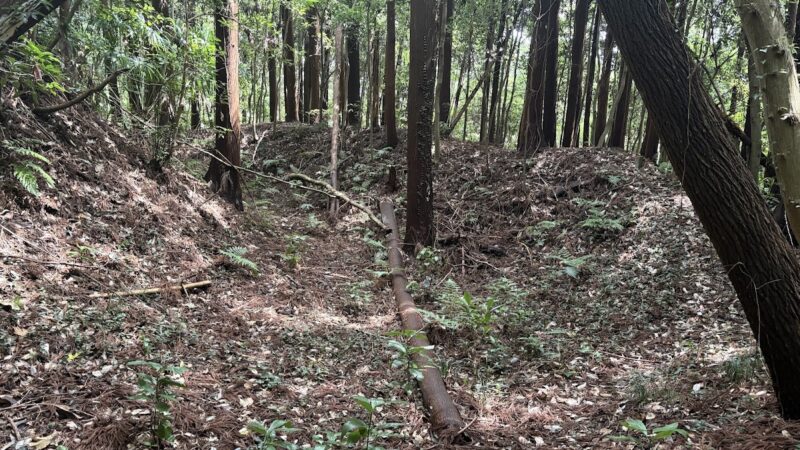
Currently, most of the clear remains of Mikawa Castle have been lost. Over long periods of time and urbanization, traces of the castle have almost completely disappeared from the surface. However, through detailed topographical surveys and comparison with old maps, it is possible to estimate the former castle grounds to some extent.
Some parts of the Mikawa area may still retain slight undulations that suggest the topography of the past. Local historians and castle researchers are continuously conducting investigations.
The Current State of the Castle Site
The site where Mikawa Castle once stood is now developed as a residential area. While there are various theories regarding the exact location of the castle, it is certain that it was on a plateau within the Mikawa area.
It has been suggested that the area around the Mikawa Community Center may have been part of the castle grounds, and visiting this area allows visitors to experience the former castle’s location.
The Decline and Abandonment of Mikawa Castle
The Turmoil of the Sengoku Period
With the arrival of the Sengoku period, Hitachi Province came under the influence of the Satake clan. The Satake clan, based in Kuji County, advanced the unification of Hitachi Province, and the Mito region gradually came under their control.
There are no clear records regarding the role Mikawa Castle played during this process, nor when it was abandoned. However, it is believed that the strategic importance of Mikawa Castle relatively declined as Mito Castle became an important base for the Satake clan.
After the Edo Period
In the Edo period, Tokugawa Yorifusa, the eleventh son of Tokugawa Ieyasu, became the lord of the Mito domain and extensively renovated Mito Castle. By this time, Mikawa Castle had already been abandoned, and its function as a castle had completely disappeared.
The Mikawa area became an agricultural area within the Mito domain, and traces of the castle gradually transformed into fields and residential areas.
Present State of the Mikawa District in Mito City
Regional Overview
The current Mikawa district is a residential area located in the western part of Mito City. The postal code is 〒310-0912, and it comprises districts from Mikawa 1-chome to 5-chome. The place name is pronounced “Migawa” and is written as “Migawa” in English.
Main Facilities and Access
Mikawa Community Center
Address: 2-179-1 Mikawa, Mito City, Ibaraki Prefecture 310-0912
Phone: 029-243-6733
Services: Support for local community activities, promotion of lifelong learning activities, issuance of various certificates, etc.
Access to the Mikawa area is approximately 15 minutes by bus or car from Mito Station on the JR Joban Line. The route west along National Route 50 from the center of Mito City is convenient.
Historical Sites in the Surrounding Area
The Mikawa area has numerous facilities where you can experience the history of the Mito Domain:
- Kairakuen: One of Japan’s three most famous gardens, created by Tokugawa Nariaki, the 9th lord of the Mito Domain.
- Mito Castle Ruins: The main castle of the Mito Domain; remains such as the Kodokan school still exist today.
- Kodokan: The domain school of the Mito Domain, designated as a National Special Historic Site.
Historical Relationship Between Mikawa Castle and Mito
Castle Network Centered Around Mito Castle
Mikawa Castle functioned as part of a castle network centered around Mito Castle. This network included the following castles:
- Mito Castle: The central main castle
- Mikawa Castle: A subsidiary castle defending the west
- Kawada Castle: The base of the Shunjū clan, a strategic point in the southwest
- Naka-Nishi Castle: A subsidiary castle defending the north
These castles worked in conjunction with each other, forming the power base of the Baba and Shunjū clans in northern Hitachi Province.
Position in Hitachi Province
Hitachi Province was a region where many samurai families vied for power from the Heian period to the Sengoku period. While Mikawa Castle was not large in scale, it played a significant role in the politics and military affairs of the Mito region, making it important in local history.
Current Status and Challenges of Mikawa Castle Research
Limitations of Historical Sources
Primary sources concerning Mikawa Castle are extremely limited. Detailed information on the castle’s structure, the genealogies of successive lords, and specific battle records are almost nonexistent. Therefore, much of the history of Mikawa Castle is indirectly inferred from historical materials related to Mito Castle and the Shunjū clan.
The Need for Archaeological Investigation
Archaeological excavation is effective in clarifying the actual state of Mikawa Castle. However, given that the castle site is currently a residential area, large-scale investigations are difficult. In the future, small-scale investigations accompanying development and research utilizing non-destructive technologies such as ground-penetrating radar are expected.
The Importance of Local History Research
Small and medium-sized castles in rural areas like Mikawa Castle are important for understanding Japanese medieval history. By accumulating research not only on large castles but also on these subsidiary castles and regional strongholds, the realities of medieval society become clearer.
Regional Information and Living Environment of the Mikawa Area
Population and Number of Households
The Mikawa area is a densely populated residential area within Mito City. It consists of five districts, each with many households. Due to its good access to the center of Mito City, it has the characteristics of a commuter town.
Educational and Medical Facilities
The Mikawa district and its surrounding areas have well-developed educational facilities, including elementary and junior high schools. Medical facilities are also abundant, with the Mito City Medical Association Visiting Nurse Station Mito supporting local healthcare.
Transportation Access
The Mikawa district is connected to Mito City’s main road network, making it easily accessible by car. Public transportation includes bus routes from Mito Station. The nearest train station is Kairakuen Station on the JR Joban Line; while not within walking distance, it is accessible by bus or bicycle.
Nearby Commercial and Sports Facilities
The following facilities are located near the Mikawa district:
- Adastria Mito Arena: Mito City’s general gymnasium (2-3-10 Midorimachi, Mito City)
- Noble Home Stadium Mito (Mito Citizens’ Baseball Stadium): A baseball stadium that also hosts professional baseball games (2256 Mikawacho, Mito City)
These facilities enrich the living environment of the Mikawa district and serve as a hub for sports and recreation. ## Points to Note When Visiting Mikawa Castle
Tips for Exploring Castle Ruins
While no clear remains of Mikawa Castle exist, those interested in history should keep the following points in mind when visiting:
- Around Mikawa Community Center: This area may have been part of the castle grounds.
- Observing the Topography: Paying attention to the edge of the plateau and subtle undulations can help you imagine the castle’s former location.
- Relationship with Mito Castle: Check the direction from Mito Castle to Mikawa Castle and imagine the defensive line.
Visiting Related Historical Sites
Visiting the following related historical sites in addition to Mikawa Castle will give you a deeper understanding of the medieval history of the Mito region:
- Mito Castle Ruins: Remains of the main gate and earthworks remain.
- Kodokan: You can see an Edo-period domain school building.
- Kairakuen: You can experience the history and culture of the Mito domain.
- Ibaraki Prefectural Museum of History: There is an exhibit on the history of Hitachi Province.
Summary: The Historical Significance of Mikawa Castle
Mikawa Castle was built in the early Kamakura period by Baba Nagamoto and later served as a branch castle of Mito Castle, which was the stronghold of the Shunjū clan. Although not large in scale, it played an important role in the defense of the Mito region.
Currently, very few remains of the castle exist, but the place name Mikawa and the history etched into the land are still preserved. When visiting the Mikawa area, why not remember that a castle once stood here and that medieval samurai were active here?
Research on Mikawa Castle will continue, and new discoveries may be made. Having an interest in local history and cherishing local cultural heritage leads to the preservation of history.
Mikawa in Mito City, Ibaraki Prefecture, is not merely a residential area, but a region with a rich history. Learning about the history of Mikawa Castle will deepen your understanding of and affection for this region.