Complete Guide to Yorigami Castle (Daigo Town, Ibaraki Prefecture) | A Thorough Explanation of History, Remains, Access, and Nearby Sightseeing
Located in Daigo Town, Kuji District, Ibaraki Prefecture, Yorigami Castle is a mountain castle built by a branch of the Satake clan, who ruled Hitachi Province during the medieval period. Also known as “Hanawayakata,” this castle functioned as the Yorigami clan’s residence from the Muromachi period to the Sengoku period, playing a significant role in the region’s history. This article provides a detailed explanation of Yorigami Castle’s historical background, structure and remains, highlights, and helpful access information and nearby sightseeing spots.
Overview and Basic Information of Yorigami Castle
Yorigami Castle is a mountain castle located near the center of Daigo Town, Kuji District, Ibaraki Prefecture, built on a hilly area along the Kuji River. Its strategic location, controlling a key transportation hub, made it a base for the Satake clan’s power in northern Hitachi Province.
Basic Data
- Location: Hanawa, Daigo-machi, Kuji-gun, Ibaraki Prefecture
- Alternate Name: Hanawa-yakata
- Castle Structure: Mountain Castle
- Construction Period: Muromachi period (details unknown)
- Builder: Yorikami Akiyoshi
- Lord: Yorikami clan (branch family of Kitazake clan)
- Abandonment Period: Late Sengoku period
- Remains: Enclosures, earthworks, moats, etc.
- Designated Cultural Property: None
Yorikami Castle is among the best-preserved medieval castles in Ibaraki Prefecture and is recognized locally as an important historical heritage site in Kuji-gun.
History of Yorikami Castle
Background of Construction and Establishment of the Yorikami Clan
While Yorikami Castle is believed to have been built during the Muromachi period, many points remain unclear regarding the exact timing due to limited historical records. The castle’s builder, Iogami Akiyoshi, was the head of the Iogami clan, a branch of the Kitazakeide clan, a collateral branch of the Satake clan, who served as the governor of Hitachi Province.
The Satake clan was a prominent family that ruled northern Hitachi Province from the late Heian period, and expanded its power from the Kamakura period to the Muromachi period. During this process, the family dispersed to various regions, each developing independently. The Kitazakeide clan was one such branch, and the Iogami clan, which further branched off from them, established its base in Iogami-go (the area around present-day Daigo Town).
The place name Iogami is ancient, already appearing in documents as “Iogami-go” in the first half of the 10th century, and was called “Iogami-no-ho” in the medieval period. This region was a strategic point where water transport on the Kuji River and land transport intersected, making it an important base both militarily and economically.
Iogami Castle and the Activities of the Iogami Clan in the Muromachi Period
During the Muromachi period, the Iogami clan maintained their relationship with the main Satake family while maintaining their power as local lords in the region. In particular, the activities of the Yorikami clan begin to appear in historical records during the Oei era in the early 15th century.
During the Uesugi Zenshu Rebellion, which occurred from 1416 to 1417, samurai in the Kanto region were divided into those supporting the Kamakura Shogunate and those supporting Uesugi Zenshu. During this period, internal conflicts arose within the Satake clan, with a branch known as the Yamairi clan rebelling against the main Satake family. The Yorikami clan was also forced to act amidst this complex political situation.
Yorikami Yoshinaga was one of the influential heads of the Yorikami clan and played a crucial role in their relationship with the Satake clan. Having no biological children, he attempted to maintain the family line by adopting a son, but this adoption later became the seed of a succession dispute.
The Sengoku Period and the Decline of Yorikami Castle
With the arrival of the Sengoku period, the environment surrounding the Yorikami clan became even more difficult. The conflict between the Satake clan and the Yamairi clan became prolonged, and an internal strife known as the “Yamairi Rebellion” continued for approximately 60 years. This conflict engulfed the entire northern part of Hitachi Province, forcing many local lords to side with one of the two factions.
During the time of Yorikami Muneyoshi, Yorikami Castle functioned as an important military base, but conflicts with surrounding forces intensified. In particular, a conflict with Satomi Iemoto is recorded, and some theories suggest that Yorikami Castle temporarily fell during this battle.
In the late Sengoku period, the Satake clan expanded their power under Yoshishige and Yoshinobu, father and son, and achieved the unification of Hitachi Province. However, in 1602, after the Battle of Sekigahara, the Satake clan was ordered to relocate to Akita, leaving Hitachi Province. It is believed that the Yorikami clan also moved to Akita with the Satake clan, and Yorikami Castle is presumed to have ceased to exist and been abandoned.
Structure and Layout of Yorikami Castle
Location and Topographical Features of the Castle
Yorikami Castle is a typical mountain castle built on a hilly area along the Kuji River. Although the elevation is not particularly high, the castle has a significant difference in height from the surrounding plains, resulting in a defensive structure that skillfully utilizes the natural terrain.
The castle’s location is ideal for monitoring and controlling transportation routes, strategically situated to control both water transport on the Kuji River and land routes. Furthermore, the presence of mountains behind the castle ensures a retreat route in emergencies.
Arrangement and Structure of the Enclosures
The heart of Iekami Castle is the main enclosure (honmaru), where the lord’s residence is believed to have been located. Multiple enclosures are arranged around the main enclosure, forming a tiered defensive line.
The arrangement of the enclosures is irregular, following the terrain, but they are organically interconnected, demonstrating ingenuity in enhancing defensive capabilities. Each enclosure is surrounded by earthen ramparts, and moats are provided between them to prevent enemy intrusion.
Characteristics of Defensive Facilities
Iekami Castle possesses defensive facilities typical of medieval mountain castles. The following remains are particularly noteworthy:
Earthworks: Earthworks surrounding the baileys are still clearly visible in some places. Their height varies, but the highest points are over 2 meters high.
Moats: Moats, constructed to cut across the ridge, were important defensive structures to prevent enemy intrusion. Multiple moats have been identified at Iekami Castle, particularly strategically placed to block access to the main bailey.
Gate Entrances: The gate entrances to the baileys were considered weak points in defense and were therefore constructed with particularly strong fortifications. Iekami Castle’s gates feature ingenious designs such as staggered gates and square-shaped gates, enhancing their defensive capabilities by preventing direct advances.
Castle Scale
While the total area of Iekami Castle has not been precisely measured, the core area centered around the main bailey alone is considerably large. It is a standard size for a local lord’s residence, but the structure with multiple baileys indicates that it maintained a certain level of military strength.
Castle Scale
The total area of Iekami Castle has not been precisely measured, but even the core area centered around the main bailey is quite large. ## Highlights and Current Status of Igami Castle
Remains Visible on Site
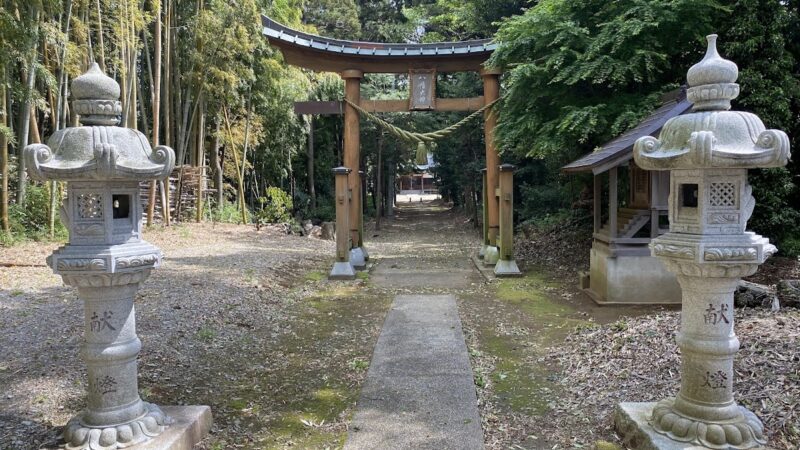
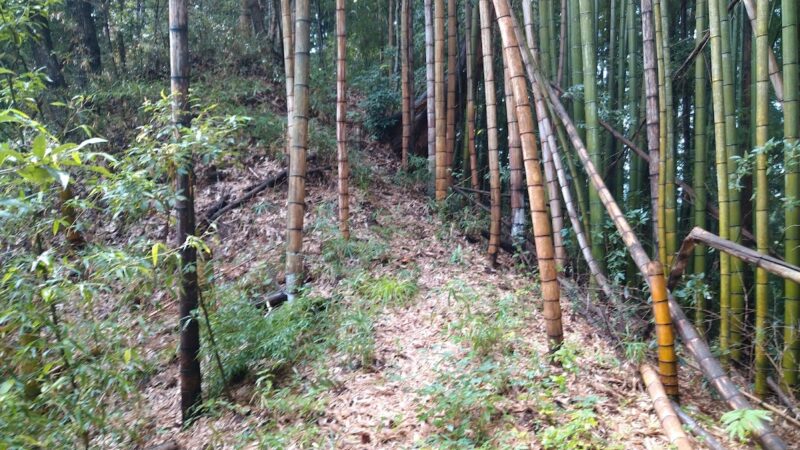
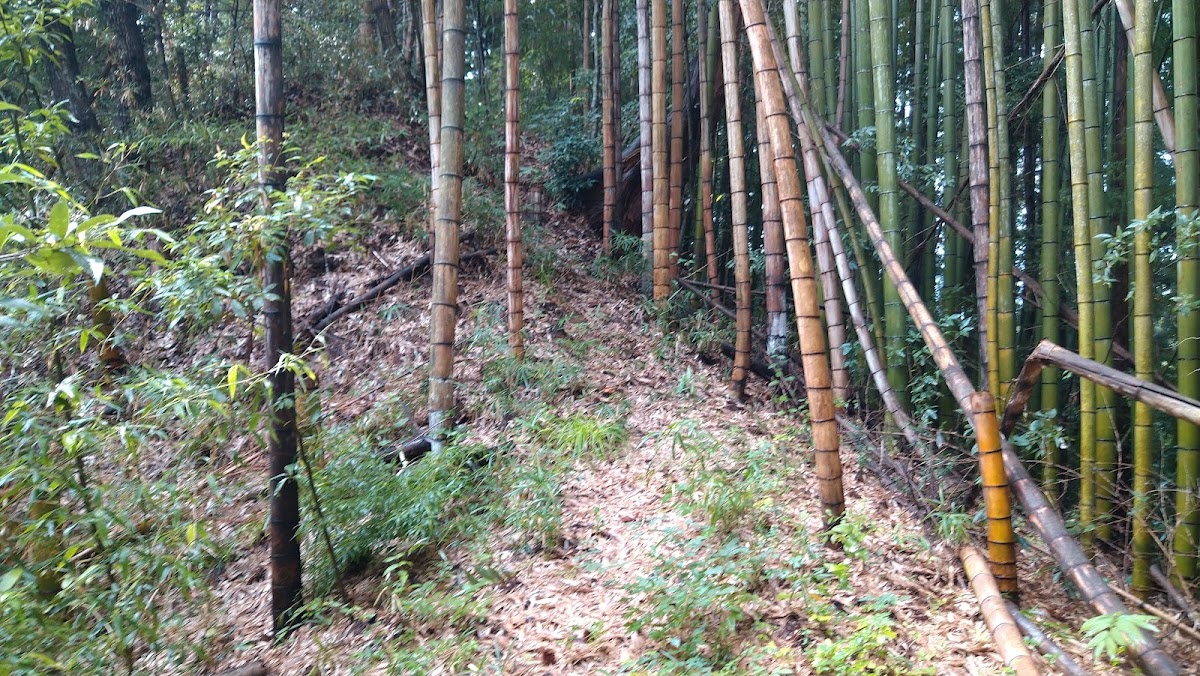
Currently, the Igami Castle site is a forest, and no buildings remain. However, the civil engineering remains such as earthworks and moats are well-preserved. When visiting the castle site, paying attention to the following points will give you a deeper understanding of the structure of a medieval mountain castle.
Main Enclosure Site: The main enclosure, the central part of the castle, still retains a flat terrain, suggesting that buildings once stood there. Parts of the surrounding earthworks also remain, allowing us to estimate the scale at the time.
Earthworks and Moats: The earthworks and moats remaining throughout the castle are the greatest highlights of Igami Castle. The earthworks around the main enclosure, in particular, are well-preserved, allowing you to experience medieval castle construction techniques. While some of the moats are filled in by natural erosion, they can still be clearly seen as distinct cuts.
Terrain of the Enclosures: The enclosures, arranged along the mountain slope, still remain as terraced fields. Observing these elevation changes allows you to understand the castle’s three-dimensional structure.
Points to Note When Visiting
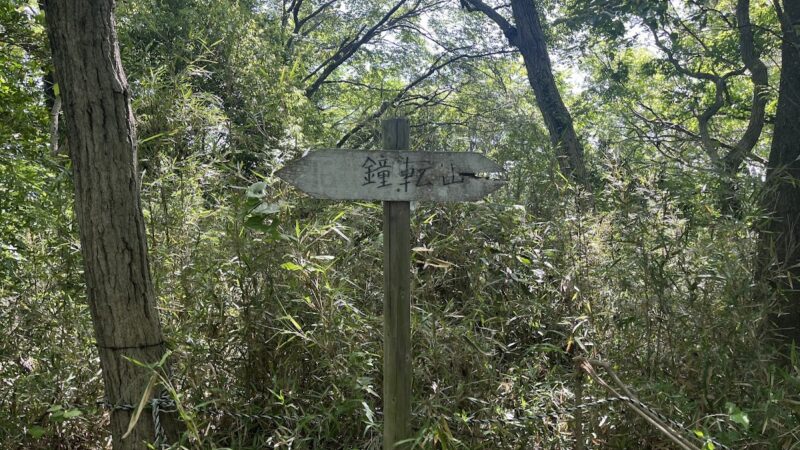
Iegami Castle Ruins is not a well-maintained tourist spot, but a historical site located in a forest. Please note the following points when visiting:
- Clothing: Appropriate clothing and shoes for mountain walking are necessary. Especially after rain, the ground becomes slippery, so hiking boots or trekking shoes are recommended.
- Insect Repellent: From spring to autumn, there are many insects such as mosquitoes and bees, so insect repellent spray and long-sleeved clothing are advisable.
- Weather: The ground is very slippery and dangerous during and immediately after rain. It is recommended to visit on a sunny day.
- Avoiding Solo Visits: To prepare for accidents in the forest, it is safer to visit with multiple people whenever possible.
- Take Your Trash With You: To protect the historical site, please be sure to take your trash with you.
Photo Spots
Iegami Castle Ruins is also an attractive subject for photography. The following points are particularly recommended. – Cross-section of the earthwork: The cross-section of the earthwork, exposed by erosion, is a valuable document demonstrating the civil engineering techniques of the time the castle was built.
- Panoramic view of the moat: The panoramic view of the moat cutting across the ridge provides a visual understanding of the defensive philosophy of medieval mountain castles.
- View from the main enclosure: From the main enclosure, you can overlook the surrounding terrain and appreciate the strategic importance of the castle’s location.
- Elevation differences in the enclosures: The elevation differences of the consecutive enclosures make for an excellent subject for photographing the castle’s three-dimensional structure.
Access Information
For those planning a visit to the Yorikami Castle Ruins, we provide detailed access information.
Access by Train and Bus
Nearest Station: JR Suigun Line “Hitachi-Daigo Station”
Hitachi-Daigo Station is the gateway to Daigo Town and a major station on the Suigun Line. You can access the Yorikami Castle Ruins from the station using the following methods.
Access from the Station:
- Walking: Approximately 25-30 minutes (approx. 2km)
- Taxi: Approximately 5 minutes
- Rental Bicycle: Rental bicycle service is available near the station; approximately 10 minutes by bicycle.
Access from Major Cities:
From Tokyo:
- Take the JR Joban Line to Mito Station (approx. 1 hour by limited express)
- Transfer to the JR Suigun Line at Mito Station and go to Hitachi-Daigo Station (approx. 1 hour 30 minutes)
- Total travel time: Approximately 2 hours 30 minutes to 3 hours
Using Highway Bus:
Highway buses to Daigo Town operate from Tokyo Station Yaesu South Exit.
- Boarding: Tokyo Station Yaesu South Exit
- Alighting: Ibaraki Kotsu Daigo Bus Depot or Daigo Driving School
- Travel Time: Approximately 3 hours
- Fare: Around 3,000 yen one way (varies depending on the season)
Access by Car
Access by car is the most convenient. The following routes are common.
Via Joban Expressway:
- Exit at Naka IC
- Head north on National Route 118
- Approximately 40 minutes to the center of Daigo Town
- Approximately 50 km from Naka IC to Igami Castle Ruins, approximately 50 minutes
Via Tohoku Expressway:
- Exit at Yaita IC or Nishinasuno-Shiobara IC
- Take National Route 461 or National Route 400 to Daigo Town
- Approximately 1 hour to 1 hour 30 minutes
Car Navigation Settings:
Igami Castle Ruins may not be registered as a tourist destination, so it is recommended to set the following facility as your destination.
- Destination: Daigo Town Hall (662 Kitadaike, Daigo-machi, Kuji-gun, Ibaraki Prefecture)
- Phone number: 0295-72-1111
There may not be signs from the town hall to the castle ruins, so it is recommended to check a map beforehand.
Parking Information:
There is no dedicated parking lot for the Igami Castle Ruins. Please consider the following options when visiting:
- Use the Daigo Town Hall parking lot and walk to the site.
- Use parking lots at nearby public facilities (prior confirmation with the facility is recommended).
- Avoid street parking as it obstructs traffic.
Best Time to Visit
Igami Castle Ruins are accessible year-round, but conditions vary depending on the season.
Spring (April-May):
- Beautiful fresh greenery and mild weather
- Few insects, making for a comfortable stroll
- Recommended: ★★★★★
Summer (June-August):
- Overgrown vegetation can make the ruins difficult to see
- Many insects and intense heat
- Early morning visits are recommended
- Recommended: ★★☆☆☆
Autumn (September-November):
- Beautiful autumn foliage and pleasant weather
- Fewer insects, making for a comfortable stroll
- The most suitable season for visiting
- Recommended: ★★★★★
Winter (December-March):
- Fallen leaves make the ruins easier to see
- Cold weather precautions are necessary
- Footing can be dangerous during snowfall
- Recommended: ★★★☆☆
Nearby Tourist Attractions
When visiting the Igami Castle Ruins, you can also enjoy the tourist attractions in Daigo Town and the surrounding area.
Fukuroda Falls
Overview: A magnificent waterfall, considered one of Japan’s three most famous waterfalls, boasting a height of 120m and a width of 73m. It’s also known as “Four-Tiered Waterfall” due to its four-tiered descent, offering beautiful scenery throughout the seasons.
Access: Approximately 15 minutes by car from the Iegami Castle Ruins.
Highlights:
- View from the observation deck
- Spectacular scenery during the autumn foliage season (November)
- Icefall in winter (mid-winter)
- Observation facility inside the tunnel
Daigo Onsen
Overview: A hot spring located along the Kuji River, with excellent day-trip bathing facilities. Perfect for relaxing after exploring the castle ruins.
Access: Approximately 10 minutes by car from the Iegami Castle Ruins
Spring Water Quality: Alkaline simple hot spring
Ayu Fishing on the Kuji River
Overview: The Kuji River is known as one of the cleanest rivers in the Kanto region and is a famous spot for ayu fishing. Many anglers visit during the summer.
Season: June to October
Fishing Permit: A daily fishing permit is required (available for purchase at local fishing tackle shops, etc.)
Apple Picking
Overview: Daigo Town is one of the leading apple-producing areas in Ibaraki Prefecture. Apple picking is available at tourist apple orchards in the autumn.
Season: September to November
Access: Tourist apple orchards are scattered throughout the town.
Daigo Town Roadside Station
Roadside Station Okukuji Daigo:
- Sells local specialties and fresh agricultural products.
- Enjoy dishes made with local ingredients at the restaurant.
- Convenient for obtaining tourist information.
Access: Approximately 10 minutes by car from Yorikami Castle Ruins
Other Castle Ruins
Besides Yorikami Castle, there are several other medieval castle ruins scattered around Daigo Town.
Namaze Castle: The residence of the Namaze clan, and like Yorikami Castle, a castle related to the Satake clan.
Kurosawa Castle: The residence of the Kurosawa clan, located at a strategic point along the Kuji River.
Planning your own “castle ruins tour course” to visit these castle ruins is recommended for history buffs.
History and Culture of Daigo Town
From Yorikami Village to Daigo Town
Daigo Town has a long history, appearing in historical documents as early as the first half of the 10th century as “Yorikami Village.” Originally belonging to Shirakawa District in Mutsu Province, it was later incorporated into Kuji District in Hitachi Province.
In the Middle Ages, it was called “Yorikami-ho” and was ruled by local lords, including the Yorikami clan. During the Edo period, it became part of the Mito Domain. After the abolition of the feudal system and the establishment of prefectures in the Meiji era, several villages, including Daigo Village, Yorikami Village, and Kurosawa Village, were established in 1889 (Meiji 22) with the implementation of the municipal system.
The current Daigo Town was formed in 1955 (Showa 30) through the merger of Kamiogawa Village, Kurosawa Village, Sahara Village, Namaze Village, Fukuroda Village, Miyagawa Village, Yorikami Village, and a part of Shimoogawa Village. The town name “Daigo” originates from Daigo Village, which was the central village in this region.
Geography and Climate of Daigo Town
Daigo Town is located in the northwesternmost part of Ibaraki Prefecture, bordering Fukushima Prefecture to the north and Tochigi Prefecture to the west. The town center sits at an elevation of approximately 103 meters, nestled in a mountain basin surrounded by the Yamizo mountain range.
Most of the town is covered in forests, with the Kuji River and its tributaries flowing through it. This rich natural environment forms the foundation of agriculture, forestry, and tourism.
The climate is continental, characterized by relatively cool summers and harsh winters. These climatic conditions are ideal for cultivating local specialties such as apples and konjac.
Local Specialties of Daigo Town
Apples: Daigo Town is the largest apple-producing area in Ibaraki Prefecture, known for its “Oku-Kuji apples.”
Konjac: Daigo Town is a production area for konjac potatoes, the raw material for konjac, and handmade konjac is a local specialty.
Okukuji Shamo: A type of free-range chicken with excellent meat quality, used in hot pot dishes and other cuisines.
Kuji River Ayu: Ayu (sweetfish) raised in the clear stream have firm, delicious flesh.
Tea: Daigo Town also cultivates tea, which is sold as “Okukuji Tea.”
Relationship between Irigami Castle and the Satake Clan
The Satake Clan’s Rule of Hitachi Province
The Satake clan was a branch of the Minamoto clan that settled in Hitachi Province at the end of the Heian period. They grew into a powerful samurai group in northern Hitachi Province from the Kamakura period to the Muromachi period. During the Muromachi period, they were appointed as the governors of Hitachi Province, becoming the de facto and de jure rulers of Hitachi Province.
The Satake clan established their base in Ota, Kuji District (present-day Hitachiota City), and solidified their control by deploying family members throughout the region. The Yorikami clan was entrusted with Yorikami-go, a strategically important area in the upper reaches of the Kuji River, as part of this Satake family deployment.
The Kitazakeide and Yorikami Clans
The Kitazakeide clan, from which the Yorikami clan originated, was a branch of the Satake clan and was based in Sakaide (around present-day Hitachiota City). The Yorikami clan, a further branch of the Kitazakeide clan, was granted Yorikami-go and built Yorikami Castle there, establishing it as a base for local rule.
While maintaining relations with the main Satake family, the Yorikami clan maintained a degree of independence in their regional rule. However, during the Yamairi Rebellion in the late Muromachi period, they became embroiled in internal conflicts within the Satake clan, placing them in a difficult position.
The Satake Clan’s Transfer to Akita and the Fate of the Yorikami Clan
In 1602, Satake Yoshinobu, reprimanded for his ambiguous stance during the Battle of Sekigahara, was ordered by Tokugawa Ieyasu to relocate to Akita. This transfer resulted in many members of the Satake clan and their families moving to Akita.
It is believed that the Yorikami clan also moved to Akita following the Satake clan’s relocation, but detailed records are not available. Yorikami Castle was abandoned at this time and subsequently disappeared from the historical stage.
The Satake clan, having moved to Akita, continued as the lords of the Akita domain throughout the Edo period and remained so until the Meiji Restoration. Further research is needed to understand the Yorikami clan’s position in Akita.
Current Status and Challenges of Yorikami Castle Research
Limitations of Historical Sources
Historical sources concerning Yorikami Castle are extremely limited, making it difficult to unravel the castle’s detailed history. Many fundamental details remain unknown, including the castle’s construction date, the lineage of its lords, and the changes in its structure over time.
Much of the currently known information is based on local histories and genealogies compiled during the Edo period; however, the reliability of these historical materials requires careful consideration.
The Need for Archaeological Investigation
No full-scale archaeological excavation has been conducted at the Yorikami Castle site. An excavation could potentially yield new insights into the castle’s structure and age.
In particular, the following points are expected to be clarified through excavation:
- The layout and structure of buildings in the main enclosure
- Identification of the castle’s usage period based on excavated artifacts
- Detailed structure of defensive facilities
- The existence and extent of the castle town
Challenges of Preservation and Utilization
The Yorikami Castle site currently lacks any specific preservation measures and is left in its natural state. While this has desirable aspects from the perspective of preserving the remains, it also raises concerns about weathering and damage from tree roots.
In order to preserve and utilize the Irigami Castle ruins as a regional historical heritage site in the future, the following initiatives will be necessary:
- Creation of current status records through detailed surveying
- Preservation measures for important remains
- Installation of information boards and explanatory signs
- Development of viewing paths
- Preservation activities in cooperation with local residents and schools
- Consideration of strategies for utilizing it as a tourist resource
Summary
Irigami Castle is a medieval mountain castle located in Daigo Town, Ibaraki Prefecture. As the residence of the Irigami clan, a branch of the Satake clan, it played an important role in the region’s history from the Muromachi period to the Sengoku period. Even today, remains such as earthworks and moats are well-preserved, making it a valuable historical site for learning about medieval castle construction techniques.
The castle ruins can be accessed on foot or by car from Hitachi-Daigo Station on the JR Suigun Line. There are also many other tourist attractions nearby, including Fukuroda Falls. A trip to visit the medieval castle ruins while enjoying the nature and history of Daigo Town will be a fulfilling experience for history buffs and others alike.
While the Irigami Castle Ruins are not a developed tourist destination, this is precisely why it offers a more intimate glimpse into its past. With appropriate equipment and preparation, a visit here offers a valuable opportunity to trace the remains of a castle built by medieval samurai.
If you are interested in the history of Ibaraki Prefecture or enjoy visiting castles, be sure to visit the Irigami Castle Ruins and reflect on the medieval history that flourished in this mountainous region along the Kuji River.