Complete Guide to Shimokoike Castle (Ami Town, Ibaraki Prefecture) | History, Remains, and Access Information for a Border Castle
What is Shimokoike Castle?
Shimokoike Castle is a medieval hilltop castle located in Ami Town, Inashiki District, Ibaraki Prefecture. Currently, it is maintained as “Koike Castle Ruins Park,” and remains such as earthworks and dry moats are well-preserved. As a valuable historical site where one can experience the castle structure of the Sengoku period, it attracts attention from castle enthusiasts and history lovers.
The castle ruins are built on the edge of a plateau overlooking the Otogawa River to the south, boasting a vast scale of approximately 15 hectares. The layout, which skillfully utilizes the tongue-shaped plateau topography, conveys the high level of castle-building technology of the Sengoku period.
Location and Geographical Characteristics
Ami Town, Inashiki District, Ibaraki Prefecture, is located in the southern part of Ibaraki Prefecture and faces south of Lake Kasumigaura, the second largest lake in Japan. Located approximately 60km south of Tokyo, 40km north of Mito (the prefectural capital), and 30km southeast of Narita International Airport, it is about an hour’s journey using the JR Joban Line and Joban Expressway.
Shimo-Koike Castle is built on a plateau in Ami Town, characterized by its defensive location that takes advantage of the surrounding terrain. A natural moat, the Otogawa River, is positioned to the south, and the castle’s layout maximizes the use of the plateau to the north.
History of Shimo-Koike Castle
Background and Purpose of Construction
The exact construction date of Shimo-Koike Castle is unknown, but it is believed to be a “border castle” built by the Edosaki clan (Edosaki Toki clan) to defend the border with the Tagaya clan. Border castles were defensive strongholds positioned at the border with enemy forces during the Sengoku period, playing a crucial role in protecting the security of the territory.
The Edosaki Toki clan was a branch of the prestigious Toki clan of Mino Province, based in Edosaki in southern Hitachi Province. From the mid-to-late 16th century, powerful daimyo such as the Satake and Tagaya clans expanded their influence in this region, and the Edosaki Toki clan needed to maintain their territory amidst tensions with these forces.
Relationship with the Later Hojo Clan
Based on the characteristics of the remains found at the castle site, it is believed that Shimo-Koike Castle underwent extensive renovations after coming under the control of the Later Hojo clan. In particular, the sophisticated defensive structures such as the ridged moats and flanking defenses strongly reflect the influence of the Later Hojo clan’s castle-building techniques.
The Later Hojo clan was a Sengoku period daimyo based in Sagami Province (present-day Kanagawa Prefecture) that expanded its influence throughout the Kanto region. Their castle-building techniques were highly developed, and these techniques were introduced to the castles under their control. The remains of Shimo-Koike Castle strongly reflect these Later Hojo clan-related castle-building techniques.
Role as a Border Fortress
Shimo-Koike Castle functioned as a border fortress against the forces of the Satake and Tagaya clans to the west. The Satake clan was a powerful Sengoku-period daimyo in northern Hitachi Province, while the Tagaya clan was a powerful local family based in Yuki District, Shimosa Province. Located on the border with these forces, Shimo-Koike Castle served as the frontline base for the Edosaki Toki clan’s territorial defense.
Border castles were not merely defensive strongholds; they also played a role in monitoring enemy movements and gathering information. Furthermore, they functioned as refuges for the local population in times of emergency, making them crucial for regional security.
Structure and Remains of Shimo-Koike Castle
Characteristics of the Castle Layout
The main enclosure of Shimo-Koike Castle is built on a tongue-shaped plateau, with a layout that skillfully utilizes the natural terrain. Its vast size, covering approximately 15 hectares, suggests that it was not merely a military base, but also likely housed the lord’s residence and the residences of his retainers during peacetime.
The castle’s basic structure is a concentric layout with multiple enclosures (kuruwa) arranged around a central enclosure. Each enclosure is demarcated by moats and earthworks, designed to enhance defensive capabilities through interconnectedness.
Remains of Earthworks
One of the greatest highlights of Shimo-Koike Castle is its well-preserved earthworks. These earthworks, surrounding the castle, served to prevent enemy intrusion and ensure visibility from within.
The earthworks currently visible are approximately 2-3 meters high, and it is presumed that fences or walls were built on top. Examining the cross-section of the earthworks reveals careful compaction using a technique called rammed earth construction, demonstrating the advanced civil engineering techniques of the time of its construction.
Dry Moats and Ridge Moats
Dry moats played a crucial role as defensive structures for the castle. Several large dry moats, demarcating the enclosures, have been identified at Shimo-Koike Castle. These dry moats were approximately 3-5 meters deep and 5-10 meters wide, serving as a powerful barrier to hinder enemy advances.
Of particular note is the presence of the ridged moats. These ridged moats are a special type of moat with ridge-like undulations at the bottom, a characteristic feature of castles built by the Later Hojo clan. These ridged moats restricted the movement of enemies who entered the moat and facilitated attacks from the flanks. The ridged moats at Shimo-Koike Castle are important evidence of modifications made under the influence of the Later Hojo clan.
Koguchi (gateway entrance) and flanking fire
A koguchi is the entrance to a castle and one of the most important defensive structures. Shimo-Koike Castle features a koguchi with a bend, designed to prevent direct enemy advances and give the defenders an advantage.
A bent koguchi is a structure where the passage is bent at a right angle or close to it, slowing the enemy’s advance and allowing for attacks from the flanks. This technique is considered one of the characteristics of the castle-building techniques of the Later Hojo clan.
Furthermore, projections called “yokoyagakari” (flanking fire positions) were incorporated into the castle walls and earthworks, allowing for attacks on approaching enemies from the flanks. These defensive structures represent the pinnacle of castle-building technology during the Sengoku period.
Corner Turret Ruins and Horse Washing Pond
The remains of a corner turret (sumiyagura) have also been confirmed within the castle grounds. Corner turrets were built at the corners of the baileys, serving as a base for monitoring the surroundings and defending the area. Currently, only earthen mounds remain, indicating that a turret once stood here.
The remains of a horse washing pond have been confirmed in the lower areas, indicating that horses were kept and managed within the castle. In Sengoku period castles, securing and managing warhorses was a crucial issue, and dedicated facilities were established for this purpose. The existence of the horse washing pond indicates that Shimo-Koike Castle was a practical military base.
Development as Koike Castle Ruins Park
Park Overview
Currently, the Shimo-Koike Castle ruins have been developed by Ami Town as “Koike Castle Ruins Park” and are open to the public. Walking paths are maintained within the park, allowing visitors to observe the remains, such as earthworks and dry moats, up close.
Thanks to the development as a castle ruins park, the remains are well-preserved. Information boards and explanatory signs are also installed, allowing visitors to deepen their understanding of the castle’s history and structure.
Points to Note When Visiting Koike Castle Ruins Park
Here are some points to note when visiting Koike Castle Ruins Park.
Earthworks of the Main Enclosure: This is the best-preserved section, allowing visitors to experience the appearance of earthworks from the Sengoku period. Visitors can walk on top of the earthworks, experiencing the perspective of the castle soldiers of that time.
Large Dry Moat: The deep dry moat that demarcates the enclosures is impressive. There are places where you can descend to the bottom of the moat, allowing you to truly appreciate its depth and scale.
Bent Gate: You can observe the bent structure of the gate, the entrance to the castle. This is a valuable historical site where you can actually experience the defensive ingenuity by walking through it.
Ridge Moat: The ridge moat, a technique of the Later Hojo clan, is one of the most distinctive features of Shimo-Koike Castle. Examine the undulations of the moat bottom and imagine its defensive effect.
Points to Note When Visiting
Since the castle ruins park utilizes the natural terrain, please note the following points when visiting:
- Wear comfortable shoes (sneakers or trekking shoes are recommended)
- Be careful as the ground can be slippery in rainy weather or after rain
- Insect repellent is recommended in summer
- Allow ample time for your visit in winter as the sun sets early
- Actions that could damage the earthworks or moats are strictly prohibited to protect the historical remains.
Access Information
Access by Public Transportation
If using the JR Joban Line, the nearest stations are “Arakawaoki Station” or “Tsuchiura Station”. From the station, you will need to use a local bus or taxi.
From Arakawaoki Station:
- Take the Kanto Railway bus bound for “Ami Central Community Center,” get off at the “Koike” bus stop, and walk for about 10 minutes.
- Take a taxi for about 15 minutes.
From Tsuchiura Station:
- Take the Kanto Railway bus bound for “Ami Central Community Center,” get off at the “Koike” bus stop, and walk for about 10 minutes.
- Take a taxi for about 20 minutes.
Using public transportation takes time, so we recommend checking the timetable in advance.
Access by Car
Access by car is the most convenient.
From the Joban Expressway:
- Approximately 20 minutes from “Sakura-Tsuchiura IC”
- Approximately 25 minutes from “Inashiki IC”
From Tokyo:
- Approximately 1 hour 30 minutes via National Route 6
Car Navigation Settings:
- Address: Koike, Ami-machi, Inashiki-gun, Ibaraki Prefecture
- Landmark: Koike Castle Ruins Park
Parking
Koike Castle Ruins Park has a dedicated parking lot. It is free to use and can accommodate approximately 10 regular-sized cars. It may get crowded on holidays and during castle-related events, so we recommend visiting earlier in the day.
The entrance to the castle ruins is a 1-2 minute walk from the parking lot, making access easy. There are also signs in the parking lot, so you won’t get lost even on your first visit.
Nearby Tourist Attractions
Ami Town Highlights
Here are some tourist attractions around Ami Town that you can enjoy in conjunction with your visit to Shimo-Koike Castle.
Naval Air Training School Peace Memorial Museum: A memorial museum that tells the history of the former Imperial Japanese Navy Air Corps. Ami Town was the location of the Kasumigaura Naval Air Corps before the war, and you can learn about its history here.
Lake Kasumigaura: The second largest lake in Japan. You can enjoy strolling along the lakeside or cycling.
Megmilk Snow Brand Ami Factory: A factory that manufactures processed cheese and margarine, with a tour course available (reservations required). You can also enjoy a visual experience using VR technology and cheese tasting.
Nearby Castles
For those who enjoy visiting castles, we recommend visiting the surrounding castle ruins.
Edosaki Castle: The base of the Edosaki Toki clan, who built Shimokoike Castle. Located in Inashiki City, the remains of earthworks and moats remain.
Kihara Castle: A medieval castle located in Miho Village. The earthworks and dry moats are well-preserved, allowing for a comparison of the castle construction techniques of the same period as Shimokoike Castle. Ushiku Castle: A hilltop castle located in Ushiku City. It was the residence of the Okami clan, and the layout of earthworks and baileys can still be seen.
These castles are located within a 30-minute to 1-hour drive of each other, making it possible to visit several castles in a single day.
The Charm and Value of Shimo-Koike Castle
Historical Value
Shimo-Koike Castle is a valuable historical site that conveys the history of power struggles in southern Hitachi Province during the Sengoku period. It played an important role as a border castle in a region where various forces such as the Edosaki Toki clan, the Later Hojo clan, the Satake clan, and the Tagaya clan were intricately intertwined.
The remains at the castle site concretely demonstrate the construction techniques and tactical ideas of the time, and have high archaeological and historical value. In particular, the remains influenced by the construction techniques of the Later Hojo clan provide important clues to understanding the history of castles in the Kanto region.
Excellent State of Preservation
A major attraction of Shimo-Koike Castle is the excellent state of preservation of its remains. While many medieval castles have been lost or drastically altered due to development, Shimo-Koike Castle retains its main structures, including earthworks, dry moats, gates, and terraced moats, in excellent condition.
This is a result of the castle site being recognized as a target for preservation from an early stage and being protected from the waves of development. The local Ami Town’s efforts in cultural property protection have also greatly contributed to this excellent state of preservation.
Experiencing the Sengoku Period
At Shimo-Koike Castle, which has been developed as Koike Castle Ruins Park, you can actually walk around and experience a Sengoku period castle. Walking along the earthworks, looking down at the deep dry moats, and passing through the winding gates offers a sense of realism that cannot be obtained from books or videos.
Especially for castle enthusiasts and history buffs, a castle site with such well-preserved remains and that can be freely visited is invaluable. The explanatory signs are also comprehensive, allowing even first-time visitors to deepen their understanding.
How to Enjoy Your Visit to Shimo-Koike Castle
Photography Tips
Shimo-Koike Castle is a castle ruin well-suited for photography. The following photography spots are recommended:
Panoramic View of the Earthworks: Photograph the entire earthworks surrounding the bailey. Beautiful photos can be taken during the fresh green of spring and the vibrant autumn foliage.
Depth of the Dry Moat: Photographing from an angle looking up from the bottom of the moat conveys its depth and impressive presence.
Bend of the Entrance: Photograph from an angle that shows the passageway, allowing you to see the structure of the bent entrance.
Undulation of the Ridged Moat: Find an angle that emphasizes the distinctive undulation of the ridged moat. The time of day when the light hits from an angle is recommended.
Seasonal Highlights
Shimo-Koike Castle shows different expressions throughout the four seasons.
Spring (March-May): Cherry blossoms, which are also the official tree of Ami Town, bloom profusely in the surrounding area. The earthen ramparts are beautiful in the fresh green of spring, and this is the season with the most visitors.
Summer (June-August): The greenery becomes denser, and the earthen ramparts and dry moats are covered in deep green. Insect repellent and heatstroke prevention measures are necessary.
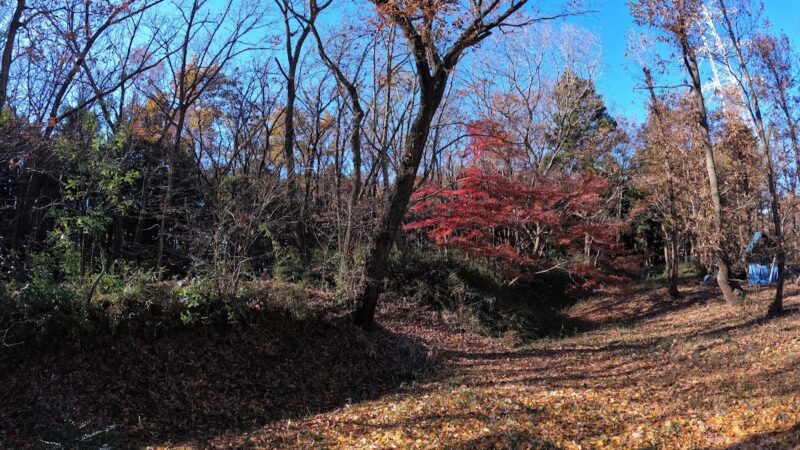
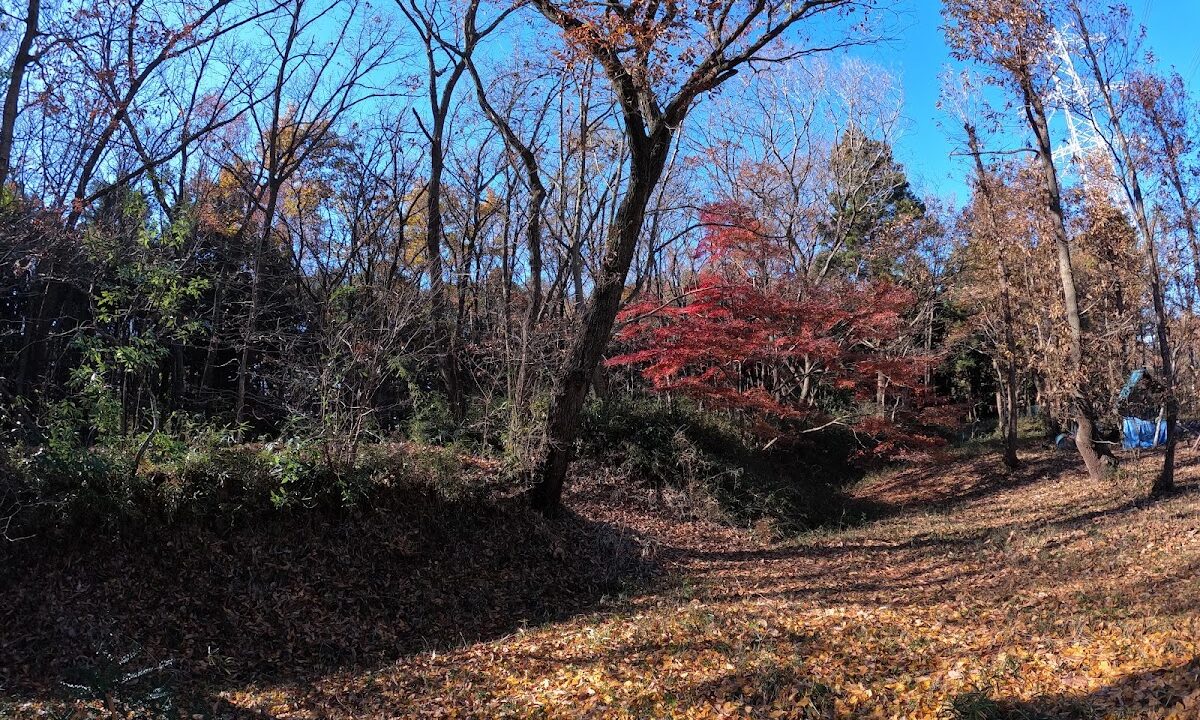
Autumn (September-November): The autumn leaves are beautiful, and the entire castle site is dyed in autumn colors. The weather is mild, making it an ideal time for visiting.
Winter (December-February): The structure of the remains can be seen more clearly due to the fallen leaves. The air is clear, making it suitable for long-distance photography.
Estimated Time Required
The time required to visit Shimo-Koike Castle varies depending on how you view the site.
- Short Visit: 30 minutes to 1 hour (main remains only)
- In-depth Visit: 1 hour 30 minutes to 2 hours (detailed examination of all remains)
- Photography-Focused Visit: 2 hours to 3 hours (photography from various angles)
If combining with nearby tourist attractions, we recommend allocating half a day to a full day.
Summary
Shimokoike Castle in Ami-machi, Ibaraki Prefecture, was built as a border castle during the Sengoku period (Warring States period) and is a valuable castle ruin that combines the castle-building techniques of the Edosaki Toki clan and the Later Hojo clan. The vast castle site, covering approximately 15 hectares, preserves remains such as earthworks, dry moats, bent gates, and ridged moats in excellent condition and has been developed as Koike Castle Ruins Park.
The castle’s location on a plateau overlooking the Otogawa River, the ridged moats demonstrating the techniques of the Later Hojo clan, and the bent gates for defense, represent the pinnacle of Sengoku period castle-building technology and are well worth seeing, even for those who are not castle enthusiasts. Easily accessible from Arakawaoki Station and Tsuchiura Station on the JR Joban Line, and only about 20 minutes by car from the Sakura-Tsuchiura Interchange on the Joban Expressway, this castle boasts convenient access. Free parking is also available, making it easy to visit.
When visiting southern Ibaraki Prefecture, why not stop by Shimokoike Castle and experience the atmosphere of the Sengoku period? The well-preserved remains will eloquently tell the story of that era.