History and Highlights of Sakura Castle (Hino-cho, Gamo-gun, Shiga Prefecture) | A Thorough Explanation of the Ogura Clan’s Castle Ruins
What is Sakura Castle?
Sakura Castle is a medieval mountain castle located in Sakura, Hino-cho, Gamo-gun, Shiga Prefecture. Built on a hill lying north of the Sakura River, this castle is known as the residence of Ogura Sakon no Shogen Sanezumi, who played an active role in the Onin War. The castle ruins, built on a hill approximately 40 meters high, still retain well-preserved remains such as earthworks and moats surrounding the main enclosure, making it a valuable historical site that conveys the appearance of a medieval powerful clan’s castle.
Sakura Castle was also called the “lower castle,” while Chosun Castle, located approximately 500 meters to the east, was called the “upper castle.” These two castles functioned as a single entity, with Nagasun Castle serving as a fortified outpost (a refuge during wartime) and Sakura Castle as a residence during peacetime.
History of Sakura Castle
Construction and the Ogura Clan
The exact date of construction of Sakura Castle is unclear, but it is believed to have been built around the Bunmei era (1469-1486). It was built by the Ogura clan, a local lord who ruled this area. The Ogura clan were local powerful families descended from the Seiwa Genji clan. During the Muromachi period, they were allied with the Kyogoku and Rokkaku clans, and were powerful local lords who controlled the area from Eigenji to Sakuradani.
The Onin War and Ogura Sanesumi
In the late Muromachi period, Ogura Sakon-no-Shogen Sanesumi, the lord of Sakura Castle, played an active role on the Eastern Army side during the Onin War (1467-1477). Sanemitsu was known as a powerful warrior in Gamo County, and his bravery was widely recognized. Sanemitsu died in 1505, and Chūmyōji Temple was built to commemorate him. This temple still stands today near the ruins of Sakura Castle.
Relationship with the Gamo Clan and Internal Conflict
Two generations after Ogura Sanemitsu, a serious internal conflict arose within the Ogura clan. A dispute arose between the main Ogura family and a branch family (the Ogura West family), making the situation in the region unstable. Gamo Sadahide, who governed Gamo County, intervened in this situation.
During the Sengoku period, Ogura Sanemitsu had no legitimate heir, so Gamo Sadahide sent his third son, Sanetaka, to be adopted into the Ogura clan. This Sanetaka was the uncle of Gamo Ujisato, a famous general later known as “Demon Gamo.” However, the adoption of a son did not alleviate the internal conflict; on the contrary, it intensified.
The Eiroku Incident and the Decline of the Ogura Clan
In 1564 (Eiroku 7), a decisive event occurred during the time when Ogura Sanetaka was the lord of the castle. In a dispute within the family, Sanetaka was killed in battle against Ogura Ukon-dayu (or Ogura Ukon-dayu). Sanetaka’s faction was defeated in this battle, and the Ogura clan rapidly declined.
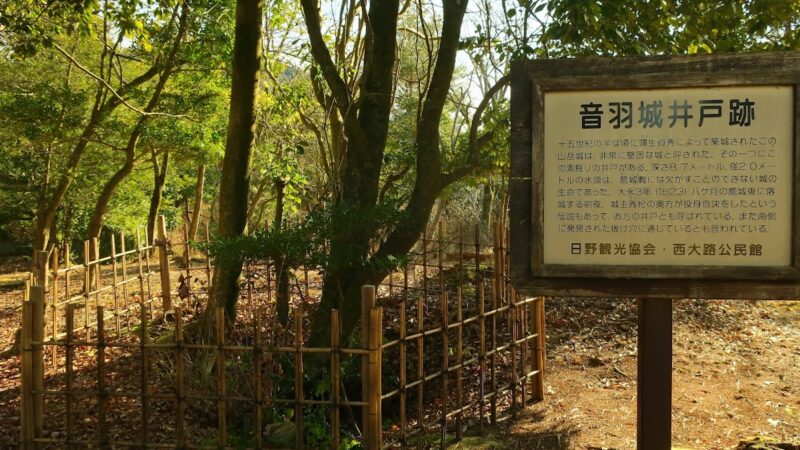
It is said that Sanetaka’s faction holed up in the ruins of Torii-daira Castle, located near the ruins of Sakura Castle. Ultimately, the Gamo family sent troops to subdue the branch family, and the Ogura clan was absorbed into the Gamo family. It is believed that Sakura Castle was abandoned some time after this incident.
Layout and Structure of Sakura Castle
Characteristics of the Main Enclosure
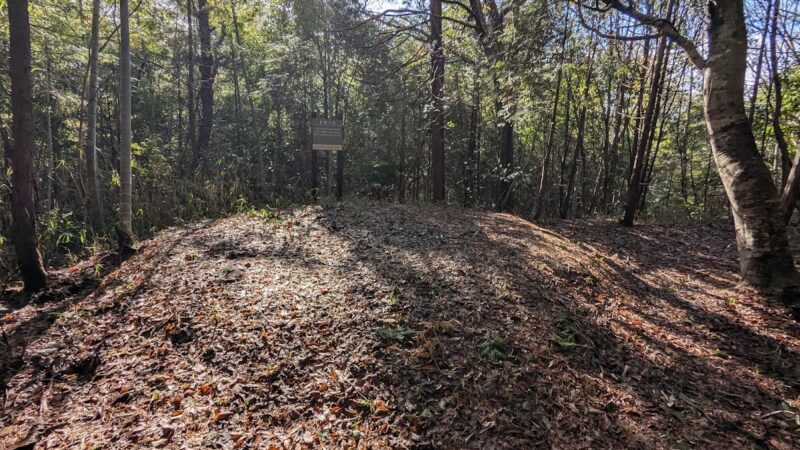
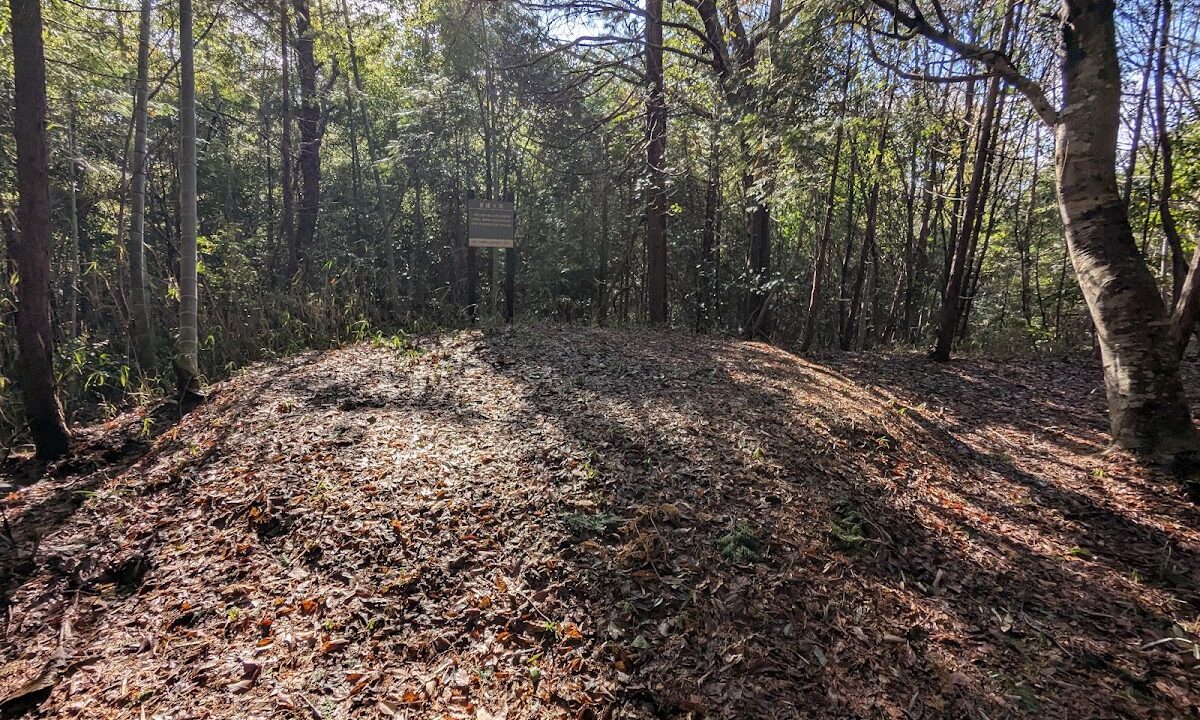
The main enclosure of Sakura Castle, the heart of the castle, is located at the highest point of the castle and is a rectangular enclosure approximately 50 meters on each side. A high earthen embankment surrounds the main enclosure, and its state of preservation is remarkably good. The height of the embankment varies depending on the location, but in some places it reaches 2-3 meters.
The main enclosure has entrances (koguchi) on the east and west sides, with the eastern entrance being considered the main gate (Ote). From the eastern entrance, a dirt bridge spanning a moat connects to the eastern enclosure. This dirt bridge is an important defensive structure to prevent enemy intrusion, and its narrow width shows ingenuity in limiting the number of enemies that could enter at once.
Moats and Vertical Moats
A particularly noteworthy defensive feature of Sakura Castle is the large-scale moats. Moats with varying elevations are positioned around the main enclosure, serving to physically hinder enemy intrusion. The depth of the moat varies depending on the location, but in its deepest points it reaches over 5 meters.
Furthermore, vertical moats can be seen on the slopes of the castle. Vertical moats are defensive structures that cut off the ridgeline, making it difficult for the enemy to move laterally. The vertical moats of Sakura Castle are skillfully positioned, utilizing the natural terrain, demonstrating the high level of castle construction technology of the medieval period.
Horizontal Moats and Enclosures
The enclosures other than the main enclosure are irregular in shape, and in some areas the divisions are not clearly defined, but overall, it can be confirmed that multiple enclosures were arranged. These enclosures functioned as a defensive line to protect the main enclosure.
Horizontal moats were also placed around the castle, playing a role in restricting enemy movement. Horizontal moats are moats dug along contour lines and are important defensive structures to prevent attacks from the castle’s flanks.
Use of Stone Masonry
One of the characteristics of Sakura Castle is the use of stone masonry. While earthworks and trenches were the primary defensive structures in medieval mountain castles, Sakura Castle features partially constructed stone masonry. This is thought to have enhanced the castle’s defensive capabilities and also served to demonstrate the lord’s authority. The stone masonry techniques represent a transitional period before the development of modern castles, making it a valuable historical site from the perspective of castle history.
Related Historical Sites in the Surrounding Area
Nagasun Castle
Located approximately 500 meters east of Sakura Castle, Nagasun Castle was a fortified outpost known as “Kami-no-shiro” (Upper Castle). Functioning as an integral part of Sakura Castle, it was built as a facility for siege during wartime. From Nagasun Castle, one could overlook Sakura Castle and the surrounding area, playing an important role as a military base.
Toriidaira Castle Ruins
The Toriidaira Castle Ruins are said to be the site where a faction led by Ogura Sanetaka holed up during an internal conflict in 1564. Located near the ruins of Sakura Castle, this is one of the important historical sites that demonstrate the sphere of influence of the Ogura clan.
Nakamyoji Temple
Nakamyoji Temple, built to commemorate Ogura Sanesumi, still exists near the ruins of Sakura Castle. This temple is a valuable historical site that conveys the history of the Ogura clan and Sakura Castle, and Sanesumi’s tomb remains there.
Sakura Castle Highlights and Visitor Guide
Site Maintenance Status
The ruins of Sakura Castle are maintained by Hino Town, with viewing paths and signs installed. The entire mountain behind Hachiman Shrine constitutes the castle grounds, and access from the entrance to the main enclosure is relatively easy. However, there are areas where fences have been erected to prevent damage from wild animals, and it may be difficult to approach some of the remains.
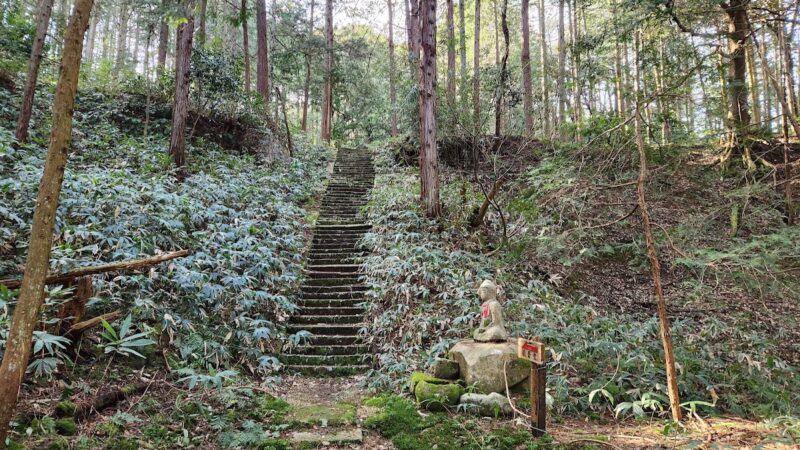
The viewing paths are clearly marked, so you can visit the main remains without getting lost. Even with a leisurely visit, the time required to climb the castle is about 30 minutes to an hour.
Main Points of Interest
Main Enclosure Earthworks: The high earthworks surrounding the approximately 50-meter square main enclosure are the greatest highlight of Sakura Castle. Visitors can walk along the top of the earthworks, experiencing the castle’s structure firsthand.
East Gate and Earthen Bridge: The East Gate, considered the main entrance, and the earthen bridge spanning the moat are crucial points for understanding the defensive ingenuity of medieval castles.
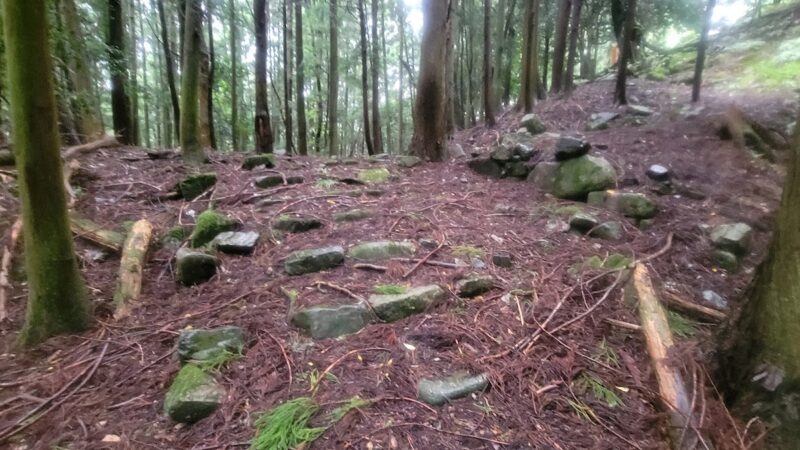
Moat: The large moats surrounding the main enclosure are impressive in their depth and scale. Their varying elevations clearly demonstrate their defensive intent.
Stone Walls: The partially remaining stone walls are valuable relics showcasing castle construction techniques from the transitional period between the medieval and early modern eras.
Access Information
Location: Sakura, Hino-cho, Gamo-gun, Shiga Prefecture
Public Transportation: Take the Hino Town bus from Omi Railway Hino Station, get off at the “Sakura” bus stop, and walk for approximately 10 minutes. However, since bus services are limited, we recommend checking the timetable in advance.
By Car: Approximately 30 minutes from the Yokaichi Interchange on the Meishin Expressway. There are a few parking spaces near the Hachiman Shrine.
Precautions for Visiting
- As it is a mountain castle, please wear comfortable clothing and shoes.
- Insect repellent is recommended during the summer months.
- Please follow the instructions when visiting areas with animal-proof fences.
- To protect the remains, please do not climb on or excavate the earthworks or stone walls.
- The ground can become slippery during and after rain, so please be careful.
Historical Value of Sakura Castle
Position in Medieval Castle History
Sakura Castle possesses typical characteristics of a castle of a local lord from the medieval period to the Sengoku period. This is a valuable historical site that allows for a comprehensive understanding of the castle-building techniques of this period, including the layout centered around the main enclosure, defensive structures such as earthworks and moats, and the partial use of stonework.
In particular, the function of the “lower castle” as a residence and its coordination with the “upper castle,” Nagasune Castle, is important as an example of a defensive system in medieval castles. The way the castle was used differently in peacetime and wartime is also useful for understanding the lifestyle of samurai at that time.
Importance in the Sengoku History of Omi
Sakura Castle is an important historical site for understanding the power structure of Omi during the Sengoku period. The relationship between the Ogura and Gamo clans, and the history of the Ogura clan’s decline due to internal conflicts and its absorption into the Gamo clan, is a typical example of the rise and fall of local lords during the Sengoku period.
The fact that Ogura Sanetaka, the uncle of Gamo Ujisato, was killed in battle at this castle is an interesting background when considering the history of the Gamo clan, who later served and distinguished themselves under Oda Nobunaga and Toyotomi Hideyoshi.
Preservation of the Remains
The greatest value of Sakura Castle lies in the exceptionally well-preserved state of its remains. The main defensive structures of this medieval mountain castle—earthen ramparts surrounding the main enclosure, moats, vertical moats, horizontal moats, and stone walls—remain almost completely intact. This is fortunate, as no large-scale development took place after the castle was abandoned.
Thanks to the maintenance and preservation efforts by Hino Town, these remains are expected to be passed down to future generations. The installation of viewing paths and explanatory signs makes it easier for general visitors to understand the castle’s history and structure.
Sakura Castle and Gamo Ujisato
When discussing the history of Sakura Castle, its relationship with Gamo Ujisato, a renowned general who was active from the Sengoku period to the Azuchi-Momoyama period, cannot be overlooked. The death of Ujisato’s uncle, Ogura Sanetaka, at Sakura Castle was a crucial turning point in the Gamo clan’s expansion of power.
The decline of the Ogura clan allowed the Gamo clan to strengthen their control over the Hino area. The control of this region formed part of the foundation for Ujisato’s later service to Oda Nobunaga and his eventual rise to become a powerful daimyo with a domain of 920,000 koku in Aizu. The history of Sakura Castle is a microcosm of the power struggles in Omi Province during the Sengoku period and holds significant importance in understanding the background of the Gamo clan’s rise to power.
Summary
Located in Hino-cho, Gamo-gun, Shiga Prefecture, Sakura Castle is a medieval mountain castle known as the residence of Ogura Sanesumi, who played an active role in the Onin War. Numerous well-preserved remains remain, including earthworks surrounding the approximately 50-meter square main enclosure, large moats, vertical and horizontal moats, and stone walls, making it a valuable historical site that conveys the appearance of a medieval castle.
The relationship between the Ogura and Gamo clans, internal conflicts within the clan, and the death of Ogura Sanetaka in battle are important examples illustrating the shifts in the power structure in Omi Province during the Sengoku period. Furthermore, the coordination between Sakura Castle, the “lower castle,” and Nagasun Castle, the “upper castle,” is an interesting subject of study as an example of a defensive system in medieval castles.
Thanks to the development efforts by Hino Town, walking paths and signs have been installed, making it relatively easy for visitors to tour the main remains. For those interested in the Sengoku period history of Omi Province, or those interested in medieval castles, Sakura Castle is a must-see historical site. Visiting it along with the surrounding Nagasun Castle, Toriihira Castle, and Nakamyo-ji Temple will allow for a deeper understanding of the history of the Ogura clan and Sakura Castle.