Takaoka Castle (Suzuka City, Mie Prefecture) Complete Guide | History, Highlights, and Access Information
What is Takaoka Castle?
Takaoka Castle is a Sengoku period mountain castle located in Chayama, Takaoka-cho, Suzuka City, Mie Prefecture. Also known as Ise Takaoka Castle, it was built on a hill approximately 50 meters above sea level on the north bank of the Suzuka River and functioned as an important subsidiary castle protecting the north of Kambe Castle.
Currently, it is maintained as Takaoka Castle Ruins Park, and the remains such as baileys, earthworks, and dry moats are well preserved. The castle’s layout, which utilizes the natural fortified terrain of the hill (approximately 40 meters high) surrounded by steep cliffs, is a valuable historical site that conveys the castle-building techniques of the Sengoku period.
History of Takaoka Castle
Construction and Early History
The exact construction date of Takaoka Castle is unknown, but it is said to have been repaired and maintained by Yamaji Danjo Tanetsune, a chief retainer of Kambe Tomomori, the lord of Kambe Castle. The Kambe clan was a powerful local lord controlling northern Ise Province, and Takaoka Castle was positioned as a strategic base protecting the northernmost edge of their sphere of influence.
Yamaji Danjo, a trusted chief retainer of Kambe Tomomori, resided in this castle and played a key role in its defense. The castle’s location made maximum use of the natural moat of the Suzuka River and the surrounding steep cliffs, making it easily defendable even with a small force.
Oda Nobunaga’s Invasion and Resistance
Takaoka Castle first appears on the historical stage during Oda Nobunaga’s invasion of northern Ise during the Eiroku era. In 1567 (Eiroku 10), Nobunaga advanced his army with the aim of conquering northern Ise. At this time, Takaoka Castle came under fierce attack from the Oda army, but under the command of Yamaji Danjo, it resisted tenaciously and avoided falling.
In 1568 (Eiroku 11), Oda Nobunaga’s forces invaded northern Ise again, and Takaoka Castle was attacked for the second time. However, the castle held out once more, preventing a complete takeover by the Oda army. These two successful defenses demonstrated the formidable strength of Takaoka Castle and the abilities of Yamaji Danjo as a military commander.
Peace Agreement between the Kambe and Oda Clans
After repeated battles, Kambe Tomomori chose to make peace with Oda Nobunaga. As a condition of this peace agreement, Tomomori adopted Nobunaga’s third son, Kambe Nobutaka (Oda Nobutaka), and retired himself. This political settlement brought the Kambe clan’s territory under the influence of the Oda clan.
However, the situation remained unstable, with Tomomori’s half-brothers rebelling against Nobunaga. Ultimately, the Kambe clan’s influence was completely incorporated into the Oda family, and Takaoka Castle was affected by this change in power structure.
Successive Lords and Abandonment
The names of Yamaji Danjo and Kojima Hyobu are recorded as successive lords of Takaoka Castle. It is unclear when Kojima Hyobu became lord, but it is believed to have been after the Oda clan’s rule was established.
With the end of the Sengoku period, Takaoka Castle lost its strategic importance and was abandoned. The exact date of its abandonment is unknown, but it has been suggested that it may have been influenced by the castle reorganization under the Toyotomi regime or the “One Castle Per Province” decree of the early Edo period.
Structure and Layout of Takaoka Castle
Location and Topography
Takaoka Castle was located on a hill on the north bank of the Suzuka River, with the river flowing to the south serving as a natural moat. This hill, approximately 50 meters above sea level and 40 meters above ground, was surrounded by steep cliffs, making it an extremely difficult terrain for attackers.
Viewing the castle ruins from the bridge over the Suzuka River to the south, the majestic shape of the hills rising against the river’s backdrop clearly conveys the formidable strength of the castle. This topographical advantage was one of the factors that repelled Oda Nobunaga’s two attacks.
Characteristics of the Remains
The following remains are preserved at the current Takaoka Castle site:
Kuruwa (Enclosures) Multiple enclosures are arranged in a stepped fashion, revealing a layered defensive structure centered around the main enclosure. Each enclosure is positioned along the terrain, forming an efficient defensive line.
Dorui (Earthworks) Earthworks were built around the enclosures, and parts of them remain clearly visible today. These earthworks are thought to have prevented enemy intrusion and also functioned as foundations for watchtowers and walls.
Karabori (Dry Moats) Dry moats separating the enclosures can be seen, demonstrating an ingenious method of creating multiple defensive lines within the castle. Dry moats, which do not hold water, were a common defensive feature in mountain castles.
These remains exhibit typical characteristics of mountain castles from the Sengoku period and are valuable resources for learning about the castle construction techniques of that time.
Characteristics of the Castle Layout
The layout of Takaoka Castle is characterized by a practical design that skillfully utilizes the natural terrain. The main enclosure is located at the top of the hill, and the baileys are arranged radially from there, creating a structure that can withstand attacks from all directions.
In particular, the area facing the Suzuka River on the south side formed the strongest defensive line due to the double obstacle of a steep cliff and the river. On the other hand, dry moats and earthworks were placed along the ridges on the north side and east and west sides, a measure taken to prevent intrusion from relatively gentle slopes.
Highlights of Takaoka Castle Ruins Park
Main Points of Interest
Castle Ruins Monument and Information Board
Near the entrance to Takaoka Castle Ruins Park, there is a stone monument marking the castle ruins and a detailed information board. Here you can obtain basic information about the castle’s history and structure. Main Enclosure Site Located at the highest point of the hill, the main enclosure site was once the location of the lord’s residence and other important buildings. Currently, it is a flat area, offering panoramic views of the surrounding area.
Earthworks and Dry Moats Exploring the park reveals remnants of earthworks and dry moats throughout. The well-preserved sections, in particular, allow visitors to appreciate the scale of the defensive structures at the time.
View From the castle ruins, you can enjoy a panoramic view of the Suzuka River and the surrounding plains, demonstrating the castle’s ideal location for monitoring the surrounding area.
Park Facilities
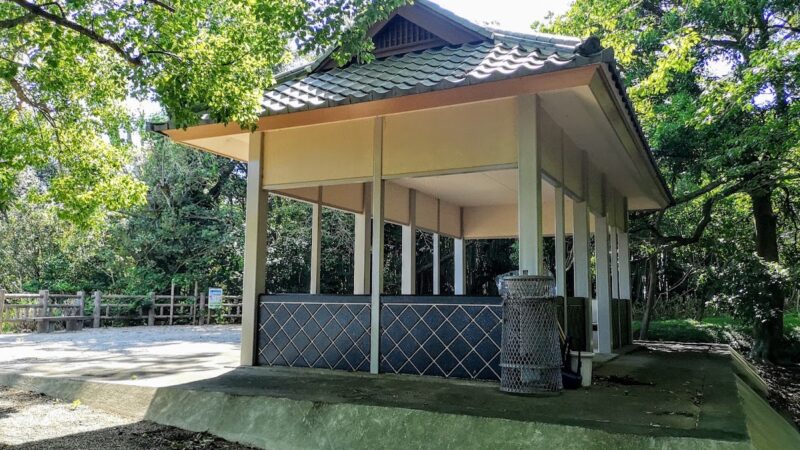
Takaoka Castle Ruins Park preserves historical remains while also serving as a recreational area for citizens. The parking lot is surprisingly spacious, making it accessible by car. However, the road to the park has narrow sections, so caution is advised when driving.
Walking paths are maintained within the park, allowing visitors to enjoy the changing seasons, such as cherry blossoms in spring and autumn leaves in fall, while exploring the castle ruins. Benches are also provided, so it is recommended to take your time and enjoy the visit.
Access Information
Location
513-0019
Takaoka Castle Ruins Park, Chayama, Takaoka-cho, Suzuka City, Mie Prefecture
Access by Car
From the Tomei-Hanshin Expressway
- Approximately 15 minutes from Suzuka IC
- Accessible via National Route 1
Parking
Parking is available at the castle ruins park (free). While the parking space is relatively large, the road to the park is narrow, so caution is advised for large vehicles.
Access by Public Transportation
Train
- Approximately 30 minutes on foot from Hirata-cho Station on the Kintetsu Suzuka Line
- Approximately 40 minutes on foot from Kawagoe Station on the JR Kansai Main Line
Bus
Get off at the Takaoka bus stop on the Suzuka City Community Bus, then approximately 10 minutes on foot (Due to infrequent service, checking the timetable in advance is recommended).
Public transportation access is somewhat inconvenient; visiting by car is the most efficient option.
Estimated Visiting Time
- Brief Visit: Approximately 30 minutes
- In-depth Visit: Approximately 1 to 1.5 hours
- Detailed Visit (including photography): Approximately 2 hours
Related Historical Sites in the Surrounding Area
Kambe Castle Ruins
Kambe Castle, the main castle of Takaoka Castle, is located in the Kambe district of Suzuka City. It is approximately a 15-minute drive from Takaoka Castle and, as the base of the Kambe clan, boasts larger-scale castle remains. Visiting both Takaoka Castle and Kambe Castle together provides a deeper understanding of the Kambe clan’s sphere of influence and castle network.
Suzuka Barrier Ruins
The ruins of the Suzuka Barrier, an important transportation hub from ancient to medieval times, are also located within Suzuka City. Understanding the transportation history of this region is valuable for comprehending the historical background of Takaoka Castle.
Kameyama Castle Ruins
Kameyama Castle, located in Kameyama City, was developed as a castle during the Edo period. While it dates from a different era than Takaoka Castle, it offers an interesting point of comparison for studying the history of castles in Ise Province.
Points to Note and Advice for Visitors
Clothing and Equipment
Takaoka Castle Ruins is a mountain castle, and although it is maintained as a park, you will be walking on undulating terrain. The following equipment is recommended:
- Comfortable walking shoes (sneakers or hiking boots)
- Comfortable clothing
- Summer: Hat, sunscreen, insect repellent
- Winter: Warm clothing
- Drinking water
Photography Tips
Recommended Photography Spots
- Panoramic view of the castle ruins from the Suzuka River on the south side
- View from the main enclosure
- Well-preserved earthworks and dry moats
- Combination of cherry blossoms in spring, autumn leaves, and ruins
Tripods are permitted, but please be considerate of other visitors.
Best Season
Spring (late March to early April)
The castle ruins are at their most beautiful during the cherry blossom season. However, this is also a busy time for visitors.
Autumn (Mid-to-Late November)
The autumn foliage season offers ideal weather for exploring the castle ruins, allowing visitors to enjoy beautiful scenery.
Early Summer/Early Autumn
During this time, when fresh greenery and the first signs of autumn are present, there are relatively few visitors, allowing for a peaceful visit to the castle ruins.
Historical Significance of Takaoka Castle
Strategic Importance in Northern Ise
Takaoka Castle played a crucial role as a northern defensive stronghold within the sphere of influence of the Kambe clan, centered around Kambe Castle. The fact that it withstood Oda Nobunaga’s invasions of Northern Ise twice speaks to the castle’s strength and strategic value.
Oda Nobunaga’s invasion of Ise during the Eiroku era was a significant stage in his unification of Japan. Takaoka Castle’s resistance symbolizes the desperate resistance of local lords in this historical process.
Value in the Study of Sengoku Period Mountain Castles
Takaoka Castle retains many typical features of Sengoku period mountain castles, making it a valuable resource for castle research. It offers concrete examples of the castle-building techniques of the time, including its use of natural terrain, defensive structures such as earthworks and dry moats, and the arrangement of baileys.
In particular, its practical design philosophy, evident in its relatively small size but actual combat experience, has attracted attention from researchers.
The Significance of Visiting Takaoka Castle
Visiting the Takaoka Castle ruins is not merely about viewing remains; it’s an experience that allows you to feel the tense historical context of the Sengoku period firsthand. Standing on the site where local warlords resisted the historical giant Oda Nobunaga, you can feel the reality of history that cannot be learned from textbooks.
The hills rising against the backdrop of the Suzuka River, the steep slopes, the remaining earthworks and dry moats—all of these convey the memory of battles fought more than 450 years ago. It may be hard to imagine from its current state as a quiet park, but reflecting on the battles that once unfolded here will make history feel much closer.
Summary
Takaoka Castle in Suzuka City, Mie Prefecture, is an important historical site in northern Ise during the Sengoku period, having withstood two invasions by Oda Nobunaga. Defended by Yamaji Danjo and others as a branch castle of Kambe Castle, it features a layout that skillfully utilizes the natural terrain and practical defensive facilities.
Currently, it is maintained as Takaoka Castle Ruins Park, and the remains such as baileys, earthworks, and dry moats are well preserved. Its location on a hill on the north bank of the Suzuka River still eloquently speaks to its strategic importance at the time.
Access is convenient by car, and parking is available. Visiting Takaoka Castle along with other related historical sites in the vicinity, such as Kambe Castle Ruins, will allow you to gain a deeper understanding of the Kambe clan’s sphere of influence and the history of northern Ise during the Sengoku period.
For history buffs, castle enthusiasts, and anyone interested in local history, Takaoka Castle is a historical site well worth visiting. Spending time reflecting on the Sengoku period in this tranquil park will surely be an unforgettable experience.