A Complete Guide to the History and Highlights of Kusunoki Castle (Yokkaichi City, Mie Prefecture)
Kusunoki Castle, located in Kusunoki-cho, Yokkaichi City, Mie Prefecture, was a flatland castle that played an important role in the northern Ise region from the Nanboku-cho period to the Sengoku period. Although much of the original structure has been lost, traces of the castle remain around the Kusunoki Historical and Folk Museum, preserving the region’s history. This article provides a detailed introduction to the history, structure, highlights, and access methods of Kusunoki Castle.
Kusunoki Castle (Yokkaichi City, Mie Prefecture): A Complete Guide to its History and Highlights
Kusunoki Castle (Kusunoki-jo), located in Kusunoki-cho, Yokkaichi City, Mie Prefecture, was a flatland castle that played an important role in the northern Ise region from the Nanboku-cho period to the Sengoku period. ## Basic Information on Kusunoki Castle
Location: Hongō, Kusunoki-chō, Yokkaichi City, Mie Prefecture
Alternate Name: Kusuyama Castle
Castle Structure: Flatland Castle
Year of Construction: Around Shōhei 24 (1369)
Builder: Kitabatake Clan
Main Lords: Kusunoki Family, Kitabatake Clan Vassals
Year of Abandonment: Around the Tenshō Era (1573-1592)
Remains: Castle Site Monument, Slight Topographical Remains
Designated Cultural Property: Mie Prefecture Buried Cultural Property Site
Kusunoki Castle was once located near the mouth of the Suzuka River and served as an important base for monitoring maritime traffic in Ise Bay. The current Hongō district of Kusunoki-chō, Yokkaichi City, is a historical area that developed around this castle.
History of Kusunoki Castle
Construction of the Castle and the Kusunoki Clan during the Nanboku-cho Period
Kusunoki Castle first appears in history during the Nanboku-cho period, in the 24th year of Shohei (1369, the 2nd year of Oan in the Northern Court era). In that year, Toki Yoriyasu, the governor of Mino Province on the Northern Court side, invaded Ise Province with a large army. Kitabatake Akinori, the governor of Ise Province on the Southern Court side, led his son, Kitabatake Akiyasu, as commander-in-chief to intercept the Toki army, and they successfully repelled them.
After this battle, the Kitabatake clan strengthened their defenses in Mie County (present-day Yokkaichi City area) by capturing and renovating several castles. Kusunoki Castle is thought to be one of the castles built or significantly renovated at this time.
The castle lords were the Kusunoki clan. This clan served the Kitabatake clan as local samurai who governed the Kusunoki region. The place name Kusunoki is said to originate from the name of this family, or conversely, from the place name to the family name.
Prosperity as a Port Town
The Kusunoki region, where Kusunoki Castle was built, was not merely a military base. In the Middle Ages, Kusunoki flourished as an important port town on Ise Bay.
The coastline at that time was significantly different from the present day, with the coastline connecting Kawarada, Kawajiri, Shiohama, Hazu, and Tomita. Until this time, Kusunoki was located in or near the seashore, and functioned as a port, taking advantage of its location at the mouth of the Suzuka River.
Notably, Kusunoki was counted as one of the “Five Main Guard Points” of Ise Bay recognized by Ise Grand Shrine. This meant it was an important port protecting maritime traffic in Ise Bay, playing a significant role as a transit port connecting southern and northern Ise. Kusunoki Castle also served as a military base protecting this port town.
Turmoil of the Sengoku Period
With the arrival of the Sengoku period (Warring States period), Kusunoki Castle became embroiled in conflicts over northern Ise Province.
In 1568, when Oda Nobunaga began his invasion of northern Ise, the power of the Kitabatake clan gradually declined. During the Battle of Ishiyama-no-Miyako, which began in 1570, the northern Ise region was also affected by the conflict.
Around 1575, Oda Nobuo, the second son of Oda Nobunaga, succeeded to the Kitabatake clan, effectively placing them under the control of the Oda clan. It is believed that Kusunoki Castle also came under the influence of the Oda during this process.
It is believed that Kusunoki Castle was abandoned sometime during the Tensho era (1573-1592), but the exact date and circumstances are unclear. It’s possible that the castle had already lost its function as a fortress by the time Takigawa Kazumasu ruled northern Ise (early 1580s).
The Kusunoki Area from the Early Modern Period Onward
During the Edo period, the Kusunoki area developed as an agricultural region. The Okada residence, the headman’s house, was located in the Hongō district and functioned as the center of the area. This Okada residence is now preserved and utilized as the Kusunoki Historical and Folk Museum.
After the Meiji era, the area changed its name from Kusunoki Village to Kusunoki Town, and on February 7, 2005 (Heisei 17), it was merged into Yokkaichi City, where it remains today.
Structure and Layout of Kusunoki Castle
Characteristics as a Flatland Castle
Kusunoki Castle is a typical flatland castle, lacking defensive structures that utilize the rugged terrain of a mountain castle. Its location near the mouth of the Suzuka River suggests that its convenient access to water transport and its strategic location as a transportation hub in the plains were considered important.
While flatland castles are less defensively advantageous than mountain castles, they offer advantages for the transportation of goods and the movement of people. This location was likely chosen as a castle to protect a port town and as a base for the Kitabatake clan’s control of northern Ise.
Estimated Castle Area
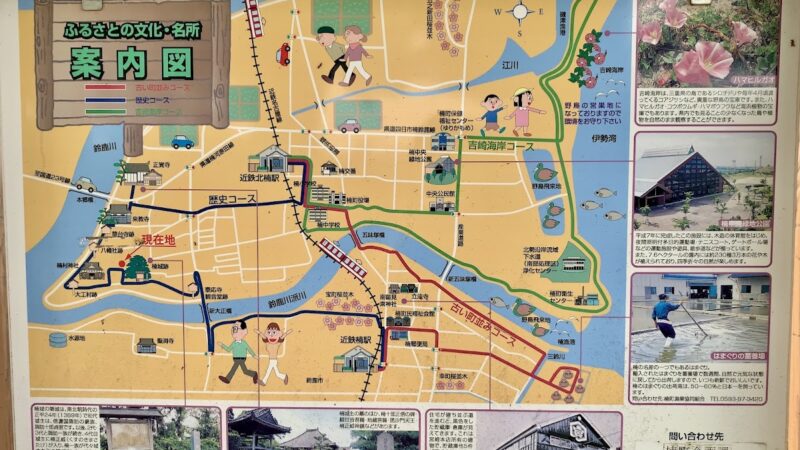
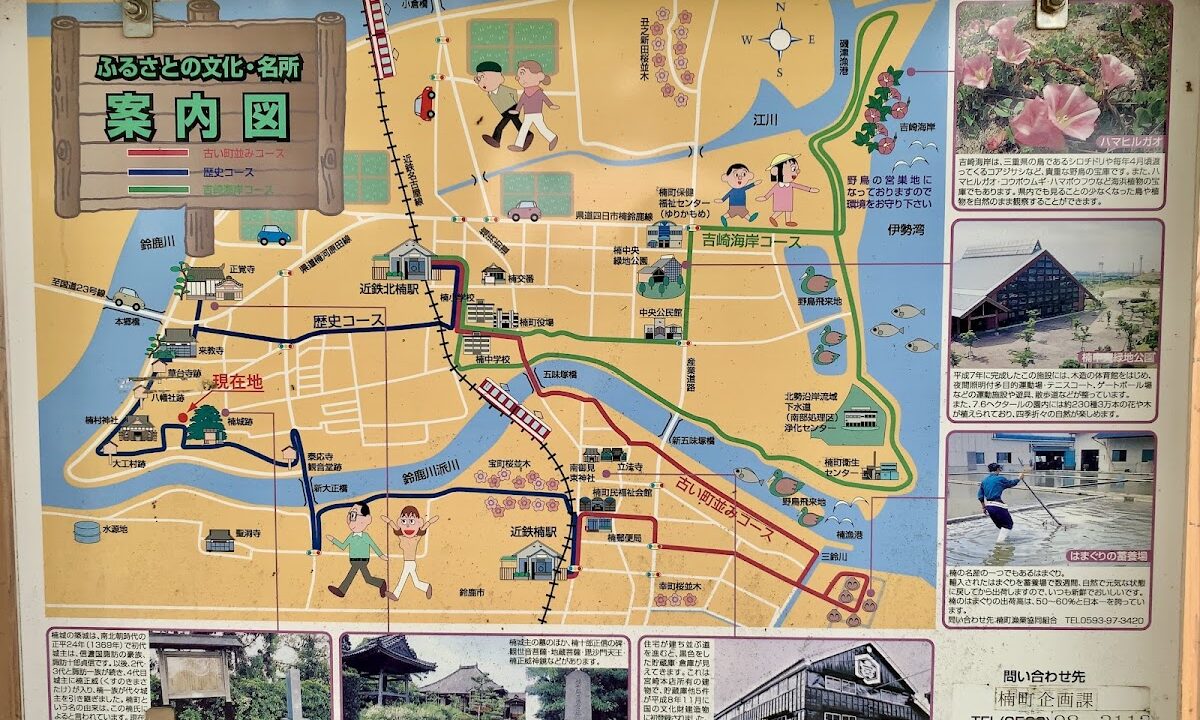
The area around the current Kusunoki Historical and Folk Museum is estimated to have been the center of Kusunoki Castle. The area designated as a buried cultural property site by Mie Prefecture indicates the former castle area.
While the specific layout details are unknown, considering the general structure of flatland castles, it is presumed that the following facilities existed:
- Main Enclosure (Honmaru): The lord’s residence and central facility for conducting administrative affairs
- Moat: A defensive structure combined with earthworks
- Earthworks: Earthen walls to prevent enemy intrusion
- Gate: Entrance to the castle
- Watchtower: A facility for observation and defense
Medieval flatland castles lacked the stone walls and keeps of later early modern castles, and had a relatively simple structure centered on earthworks and moats.
Relationship with Kusumura Shrine
Kusumura Shrine is located near the castle ruins. In medieval castles, shrines were often placed as guardian shrines, and Kusumura Shrine may have had a deep connection with the castle. Even today, it remains an important place that conveys the history of the Kusunoki family, serving as a center of local faith.
Highlights of Kusunoki Castle
Castle Site Monument
A castle site monument stands at the Kusunoki Castle ruins, indicating that this area was once a castle. It is a valuable historical site that confirms the existence of the castle, especially since very few remains are left.
Kusunoki Historical and Folk Museum
Location: 1068 Hongō, Kusunoki-chō, Yokkaichi City, Mie Prefecture
The Kusunoki Historical and Folk Museum, located very close to the Kusunoki Castle ruins, is a facility utilizing the former residence of the Okada family, the village headman. It exhibits historical and folk materials of the Kusunoki area, and also provides information about Kusunoki Castle.
The museum exhibits include:
- Historical materials of the Kusunoki area
- Folk cultural properties
- Ancient documents
- Daily life tools such as farming implements
When visiting Kusunoki Castle, it is recommended to first learn about the local history at this museum before visiting the castle ruins for a deeper understanding.
Remaining Topography
Walking around the castle ruins, you can sense traces of the former castle from the slight elevations and changes in the terrain that remain. Although no clear remains are visible due to complete residential development, walking around with a knowledge of the history allows you to imagine what it was like in its heyday.
Surrounding Historical Landscape
The Hongō area developed as a castle town of Kusunoki Castle, and parts of the old townscape remain. A stroll around Kusunoki Village Shrine allows you to imagine the prosperity of the area from the medieval to the early modern period.
Access and Visit Information
Access by Public Transportation
Nearest Station: Kintetsu Nagoya Line “Kintetsu Tomita Station” or JR Kansai Main Line “Tomita Station”
From the station, take a bus or taxi:
- Get off at the Mie Kotsu Bus “Kusunoki-cho Hongo” bus stop, approximately 5 minutes on foot
- Approximately 10 minutes by taxi
Access by Car
From Tomeihan Expressway “Yokkaichi-Higashi IC”:
- Approximately 15 minutes via National Route 477
Parking: Parking available at Kusunoki Historical and Folk Museum (limited number of spaces)
Notes for Visitors
- The castle ruins are located within a residential area, so consideration for residents is necessary.
- Please do not trespass on private property.
- It is recommended to check the opening hours of the Kusunoki Historical and Folk Museum in advance.
- The visit takes approximately 15-30 minutes.
Nearby Tourist Attractions
Other Castle Ruins in Yokkaichi City
When you visit Kusunoki Castle, why not also explore other castle ruins in Yokkaichi City?
Shigefuku Castle: A medieval mountain castle located in Shigefuku-cho, Yokkaichi City. It has strong ties to the Kitabatake clan.
Hamada Castle: A castle located near Yokkaichi Port, responsible for monitoring maritime traffic in Ise Bay.
Hazu Castle: A castle located in Hazu-cho, Yokkaichi City, with a history related to Oda Nobunaga’s invasion of northern Ise.
Tourist Facilities in Yokkaichi City
Yokkaichi City Museum: A facility where you can comprehensively learn about the history and culture of Yokkaichi. It also has a planetarium.
Yokkaichi Port Building: From the observation deck “Umi Terrace 14,” you can enjoy a panoramic view of Yokkaichi Port and Ise Bay. You can admire the scenery of Ise Bay, where Kusunoki once flourished as a port town. Nabana no Sato: A flower theme park located in Kuwana City, next to Yokkaichi City. It’s popular for its seasonal flowers and winter illuminations.
Nature around the Suzuka River
The Suzuka River, which flows very close to Kusunoki Castle, remains an important river in the region. The riverbank is suitable for strolling, allowing visitors to imagine the topography from the time when the castle stood there.
Historical Significance of Kusunoki Castle
Base of the Kitabatake Clan’s Rule over Northern Ise
Kusunoki Castle was an important base for the Kitabatake clan, the governors of Ise Province, to control the northern Ise region from the Nanboku-cho period to the Sengoku period. As a force aligned with the Southern Court, and later as an independent Sengoku daimyo, the Kitabatake clan wielded significant influence in Ise Province.
Kusunoki Castle functioned as one of the front-line bases for the Kitabatake clan’s control of Mie County. Along with Kawarada Castle and Hazu Castle, it formed part of the defense network of northern Ise. ### A Key Point in Maritime Transportation
In the Middle Ages, Ise Bay was a vital maritime route connecting the Tokai region and the Kinai region. Kusunoki thrived as a transit port, bustling with the movement of goods and people.
Its inclusion as one of the “Five Main Guard Posts” of Ise Grand Shrine indicates that this area was not merely a local port, but held a crucial position in maritime transportation throughout Ise Bay. Kusunoki Castle was an indispensable military facility protecting this port town.
Importance in Local History
Kusunoki Castle is an essential element in recounting the history of present-day Kusunoki-cho, Yokkaichi City. The Hongō district, which developed around the castle, still plays an important role as the center of the Kusunoki region.
The Kusunoki clan, from whom the place name originates (or from which the name was taken), and Kusunoki Castle, their residence, form the core of the region’s identity.
Current Status and Challenges of Kusunoki Castle Research
Limitations of Historical Sources
Detailed historical sources regarding Kusunoki Castle are limited, leaving many unanswered questions about the exact date of its construction, the changes in its lords, and the circumstances of its abandonment.
Unlike the castles of powerful rulers or daimyo, medieval regional castles often lack detailed records. Kusunoki Castle is no exception, and its history can only be reconstructed from fragmentary descriptions.
Loss of Remains
Due to modern residential development, the remains of Kusunoki Castle have been almost completely lost. Archaeological excavations have been limited, and the specific structure and scale of the castle remain largely speculative.
Possibilities for Future Research
On the other hand, there remains the possibility that new facts will be revealed through archaeological excavations in the surrounding area and a re-examination of ancient documents. In particular, advancements in research on historical materials related to the Kitabatake clan and maritime traffic in Ise Bay will further clarify the historical position of Kusunoki Castle.
The meticulous research by local historians and archaeologists holds the key to uncovering the true nature of Kusunoki Castle.
Summary
Kusunoki Castle, located in Kusunoki-cho, Yokkaichi City, Mie Prefecture, is a flatland castle built by the Kitabatake clan during the Nanboku-cho period. The Kusunoki family served as its lords, and it functioned as a defensive base for northern Ise and as a castle protecting an important port town in Ise Bay.
Although much of the remains have been lost, its history can be learned through the castle site monument and the Kusunoki Historical and Folk Museum. While it is not a castle with complete remains, it is an important historical site for a deep understanding of the region’s history.
When visiting Yokkaichi City, be sure to visit the Kusunoki Castle ruins and reflect on the history of northern Ise from the Nanboku-cho period to the Sengoku period. By learning about the local history at the Kusunoki Historical and Folk Museum and strolling around the castle ruins, you will be able to appreciate that this area was once an important military and transportation hub.
Kusunoki Castle is an indispensable historical site for understanding the medieval history of Mie Prefecture, particularly the history of the Kitabatake clan and the history of maritime traffic in Ise Bay. Though unassuming, it is a castle that played an important role in Japanese history and is worth preserving for future generations.