Complete Guide to Chigachi Castle (Iga City, Mie Prefecture) | Birthplace of Hattori Hanzo and Highlights of the Castle Ruins
Overview of Chigachi Castle
Chigachi Castle is a Japanese castle (hill castle) from the late Muromachi period, located in Yono, Iga City, Mie Prefecture. It is also known as Chigachi Castle or Chigachi-shi Castle. This castle is widely known as the birthplace of Hattori Hanzo Masanari, a famous ninja who served Tokugawa Ieyasu, and is an important historical site indispensable to the history of Iga ninjas.
About 1 km west from National Route 368, you will reach the settlement of Yono. This settlement is located in a valley between hills on both sides, and as many as 14 small castles were clustered on these hills. Chigachi Castle was one of them, forming part of a group of castles symbolizing the “Sōkoku Ikki” system unique to the Iga region.
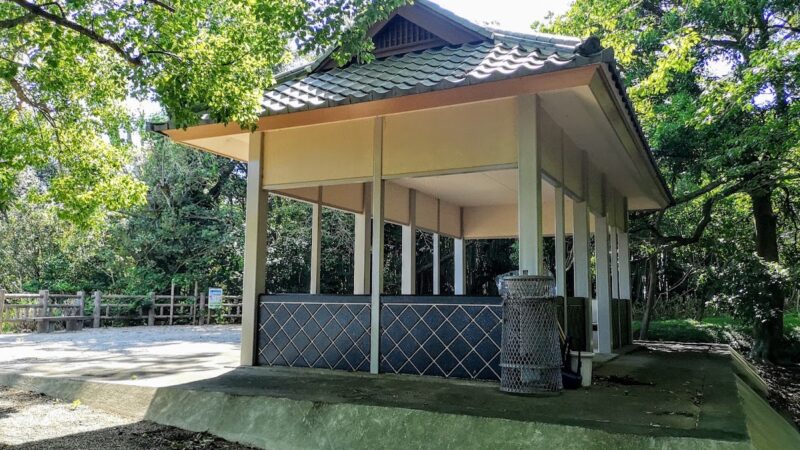
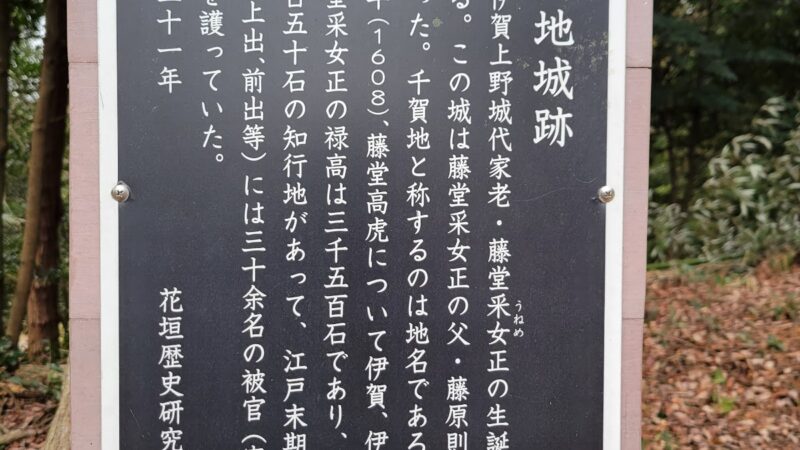
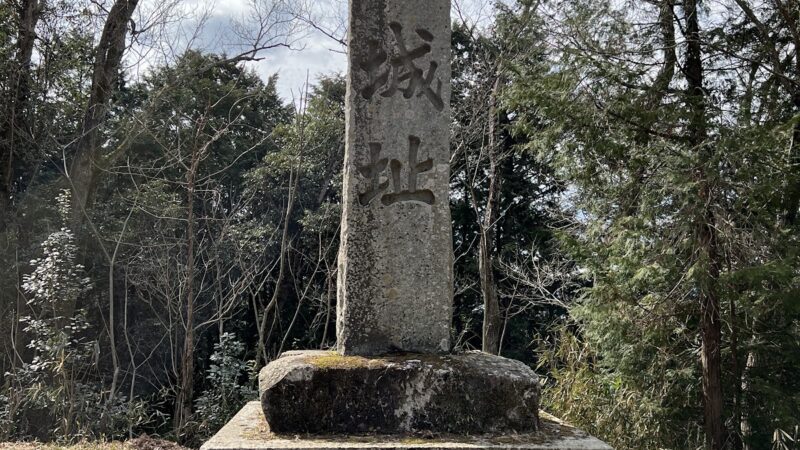
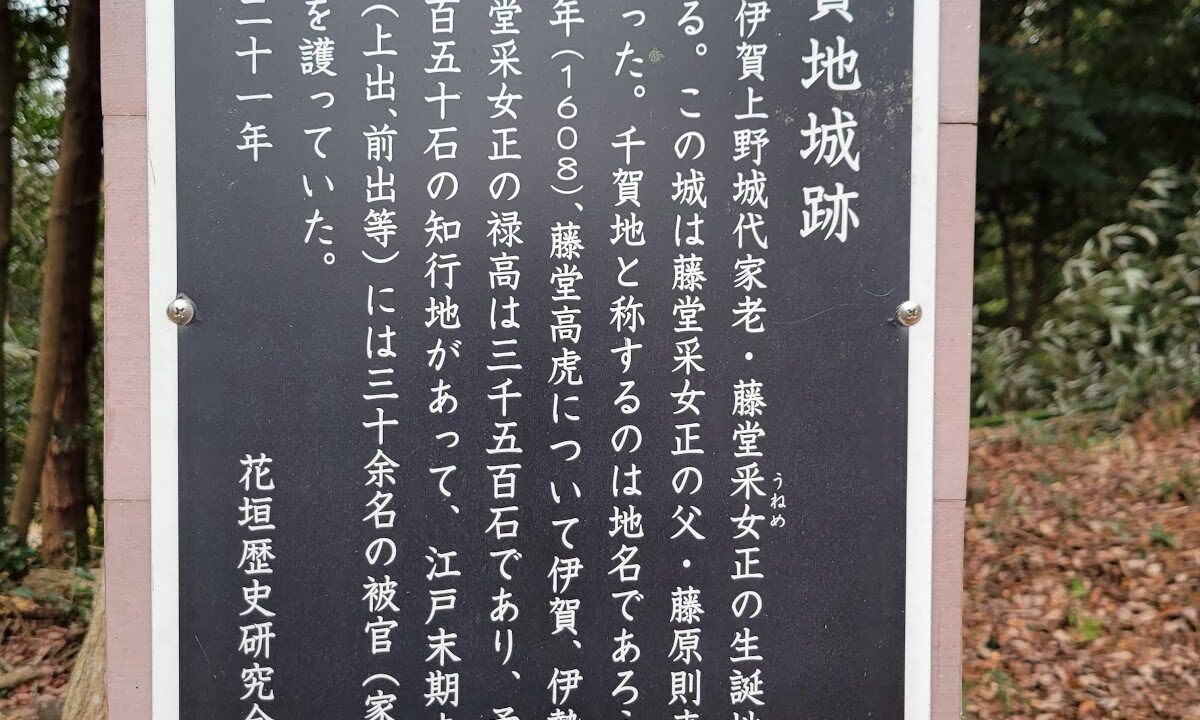
The current site of the Chigachi Castle is a park, and in addition to the castle site monument, there are stone monuments marking the birthplace of Hattori Hanzo Masanari and Todo Umenosuke (a chief retainer of Iga Ueno Castle). Although the original buildings no longer remain, remnants such as earthworks, moats, and baileys can be seen, conveying the appearance of a local powerful family’s castle from the Muromachi period.
Basic Information on Chigachi Castle
Location and Classification
- Location: Yono Ueda, Iga City, Mie Prefecture
- Former Province: Iga Province
- Classification/Structure: Hill Castle (Hilltop Castle)
- Elevation: Approximately 175m
- Relative Height: Approximately 18.2m
- Size: Approximately 45m East-West x 60m North-South
- Common Name/Alternate Name: Chigachi Castle, Chigachi Clan Castle
Builder and Lord
- Builder: Hattori Yasunaga (Chigachi Yasunaga)
- Construction Period: Late Muromachi Period (Around the first half of the 16th century)
- Main Lord: Chigachi Clan (Hattori Clan)
- Renovator: No record
- Keep Structure: None (Due to being a medieval hill castle)
Remains and Current Status
- Existing Remains: Enclosures, earthworks, moats
- Current Status: Developed as a park, partly forested
- Designated Cultural Properties: None
- Main Facilities: Castle site monument, Hattori Hanzo birthplace monument, Todo Umenosuke birthplace monument
History and Explanation of Chigachi Castle
Construction by Hattori Yasunaga
While there are no clear records of the construction date of Chigachi Castle, it is believed to have been built by Hattori Yasunaga in the late Muromachi period. Hattori Yasunaga originally served Ashikaga Yoshiharu, the shogun of the Muromachi shogunate. However, for some reason, he moved to Iga Province and established his residence in this Yono area.
When Hattori Yasunaga moved to this area, he adopted the name “Chigachi” after the place name. This followed the custom of samurai at the time who adopted the place name of their territory as their surname. The Hattori clan was originally a powerful family in Iga Province, a prestigious lineage descended from Hattori Ienaga. Yasunaga built a castle in this Chigachi area, making it a base for controlling the surrounding region.
The Unique Political System of Iga Province
During the time Chigachi Castle was built, Iga Province had a unique self-governing system called “Sokoku Ikki.” This was a form of governance where powerful local samurai (local magnates) formed alliances to run the province, a highly independent region that resisted the rule of central daimyo.
The presence of 14 small castles clustered around the Yono settlement is a manifestation of this Sokoku Ikki system. Each local samurai built their own castle, cooperating with one another to defend and govern their region. Chigachi Castle was one of these castles, serving both as a defense for the Yono region and as the residence of the Chigachi clan.
The Hattori clan is sometimes counted among the “Three Great Ninja of Iga,” alongside the Momochi and Fujibayashi clans. While this may include some later fictional elements, it is certain that the Hattori clan were powerful local samurai in Iga and led a group possessing ninjutsu skills.
The Birth and Departure of Hattori Hanzo Masanari
What makes Chigachi Castle most famous is the fact that Hattori Masanari (Hanzo), the son of Hattori Yasunaga, was born there. Masanari, later known as “Hattori Hanzo,” left his mark on history as a hatamoto (direct retainer of the Tokugawa shogunate) who served Tokugawa Ieyasu.
There are various theories regarding Masanari’s birth year, but it is generally believed to be around 1542. He left Iga Province at a young age and went to serve Tokugawa Ieyasu (then Matsudaira Motoyasu) in Mikawa Province. This is thought to be influenced by the fact that his father, Yasunaga, had established early relationships with the Tokugawa family.
Hattori Masanari achieved numerous military successes as a retainer of Tokugawa Ieyasu, and in particular, he played a crucial role in safely escorting Ieyasu from Sakai to Mikawa during the “Iga Crossing” immediately after the Honnoji Incident (1582). For this service, Masanari was granted 8,000 koku as a hatamoto (direct retainer of the Tokugawa shogunate) and treated as a senior retainer of the Tokugawa family.
Relationship with Todo Umenosuke
At the Chigachi Castle, there is a monument commemorating not only Hattori Hanzo but also the birthplace of Todo Umenosuke. Todo Umenosuke later served as the chief retainer of Iga Ueno Castle and is believed to have been from the Chigachi family.
While historical records regarding Todo Umenosuke’s detailed biography are limited, the fact that a member of the Chigachi (Hattori) family later served the Todo family and held an important position at Iga Ueno Castle is an interesting fact in the history of Iga Province. The fact that members of the Hattori clan served two daimyo families, the Tokugawa and the Todo, and held important positions in each, demonstrates the power and influence of the Sengachi clan.
Castle Abandonment and Present State
There are no clear records of when the Sengachi castle was abandoned. However, after Iga Province was conquered by Oda Nobunaga in the “Tensho Iga Rebellion” of 1581, the Iga provincial uprising system collapsed, and it is believed that many small castles lost their function.
Subsequently, Iga Province came under the rule of Toyotomi Hideyoshi, and in 1608, Todo Takatora became the lord of Iga Ueno Castle. Under the Todo clan’s rule, the castle town centered around Iga Ueno Castle was developed, and the small castles around Yono completely disappeared from the stage of history.
The current site of the Chigachi Clan Castle has been developed into a park by the local community, and a stone monument marking the birthplace of Hattori Hanzo and Todo Umenosuke has been erected. A castle site monument has also been installed, informing visitors of the historical importance of this location.
Remains and Highlights of the Chigachi Clan Castle
Remains of the Main Enclosure (Honmaru)
The main enclosure of the Chigachi Clan Castle is currently developed into a park. A stone monument commemorating the births of Hattori Hanzo Masanari and Todo Umenosuke has been erected here, conveying the historical significance of this site to visitors.
The main enclosure measures approximately 45m east-west and 60m north-south, a standard size for a medieval local lord’s castle. It was built on a hill approximately 175m above sea level with a relative height of approximately 18.2m, offering a view of the surrounding plains.
Remains of Earthworks
Remains of earthworks can be found at the Chigachi Clan Castle. Earthen ramparts are earthen walls built to prevent enemy intrusion and are a fundamental defensive structure in medieval castles. The earthen ramparts of the Chigachi Castle are thought to have been positioned around the main enclosure, and parts of them can still be seen today.
While the height and shape of the ramparts have changed over time due to weathering and collapse, they remain important structures for understanding the castle’s defensive structure. By observing the arrangement of the ramparts, we can infer which directions attacks were anticipated and how the defensive lines were constructed.
Remains of Moats
Moats were dry moats dug to cut across the ridges of hills, serving to prevent enemy intrusion and clearly demarcate the castle area. Remains of moats also exist at the Chigachi Castle, indicating their function as part of the castle’s defensive system.
Moats were a defensive structure utilizing natural terrain and did not require large-scale stonework such as stone walls, making them a commonly used defensive measure in the castles of local powerful families during the medieval period. The moats at Chigachi Castle can be seen as one of the ingenious methods used to achieve effective defense with limited resources and manpower.
Arrangement of Enclosures
Chigachi Castle had multiple enclosures (flat areas) arranged around the main enclosure. Enclosures were flat spaces used for garrisoning soldiers and storing supplies, and were important facilities supporting the castle’s functions.
From the current topography, traces of enclosures arranged in a stepped pattern around the main enclosure can be seen. These enclosures are thought to have functioned as defensive lines to gradually prevent attacks on the main enclosure. They were also likely used as living spaces and warehouses during peacetime.
Stone Monuments and Information Boards
The following stone monuments and information boards are currently installed at the site of the Chigachi Castle:
- Castle Site Monument: A stone monument indicating the location of the Chigachi Castle.
- Hattori Hanzo Birthplace Monument: A stone monument commemorating the birth of Hattori Hanzo Masanari at this site.
- Todo Umenosuke Birthplace Monument: A stone monument indicating the birthplace of Todo Umenosuke.
- Information Board: An information board explaining the history and structure of the castle (installation status should be confirmed).
These stone monuments indicate that the Chigachi Castle is not merely a castle site, but the birthplace of a figure who had a significant impact on Japanese history.
Relationship with Surrounding Castles
When visiting the Chigachi Castle, keeping in mind the fact that 14 small castles were clustered in the surrounding area will allow for a deeper understanding of the history. Walking through the Yono settlement and imagining what kind of castles stood on which hills, you can experience the realities of regional defense under the Iga Province’s sono-kuni ikki (nationwide uprising) system.
Unfortunately, many of these small castles have not undergone detailed investigations, and the state of preservation of the remains varies. However, by observing the topography, it is possible to identify the hills where castles may have been built.
Access to the Castle Ruins
Access by Train and Bus
The following routes are convenient when using public transportation:
- Take the Iga Railway Iga Line and get off at “Ueno-shi Station” or “Inodamichi Station”
- From Ueno-shi Station, take the Mie Kotsu Bus and get off at the “Kamide” bus stop, then walk for about 5 minutes.
- You can also take the bus from Inodamichi Station.
Since the number of buses is limited, it is recommended to check the timetable in advance. Checking the timetable on the Mie Kotsu official website or at the bus stop is important.
Access by Car
If traveling by car:
- Exit the Meihan Expressway at either the Nakase IC or Ueno IC.
- Take National Route 368 towards Yono.
- Proceed approximately 1 km west from National Route 368 to reach the Yono settlement.
- There is no dedicated parking lot around the castle ruins; you will need to park in an appropriate location within the settlement.
Regarding parking, please follow local instructions and be careful not to park on private property or obstruct traffic. We recommend checking details at the Iga City Tourist Information Center before your visit.
Distance from Major Nearby Facilities
- Iga Ueno Castle: Approximately 15 minutes by car
- Iga-ryu Ninja Museum: Approximately 15 minutes by car
- Danjiri Museum: Approximately 15 minutes by car
- Ueno-shi Station: Approximately 10 minutes by car
When visiting Chigachi Castle, it is efficient to combine your visit with other tourist spots in Iga City, such as Iga Ueno Castle and the Ninja Museum.
Nearby Spots and Tourist Information
Iga Ueno Castle
Located approximately 15 minutes by car from Chigachi Castle, Iga Ueno Castle is a modern castle built by Todo Takatora. It boasts numerous attractions, including the tallest stone walls in Japan and a keep rebuilt in 1935. Visiting both Chigachi Castle and Iga Ueno Castle allows you to experience the transformation of castles from the medieval to the early modern period.
Iga-ryu Ninja Museum
Located at the foot of Iga-Ueno Castle, the Ninja Museum offers a chance to learn about the history and techniques of Iga ninjas. Visiting the museum after visiting the Chigachi Castle, the birthplace of Hattori Hanzo, will deepen your understanding of ninja history.
Exploring the Yono Village
The Yono village itself, where Chigachi Castle is located, is an interesting place that retains a historical atmosphere. Walking through the village and observing the topography of the hilly area where 14 small castles once stood, you can imagine what life was like during the Iga Province uprising.
Recommended Historical Site Tour Itinerary
When planning a historical site tour in Iga City, the following model itinerary is recommended:
Morning: Visit Iga Ueno Castle and the Iga-ryu Ninja Museum
Lunch: Enjoy local cuisine such as Iga beef in the castle town of Iga Ueno
Afternoon: Visit the Chigachi Clan Castle and see the birthplace of Hattori Hanzo
Evening: Enjoy the rural scenery around Yono on your way home
This course allows you to efficiently visit the main historical spots of Iga in one day.
Notes on Visiting Chigachi Clan Castle
Clothing and Equipment
The Chigachi Clan Castle ruins are maintained as a park, but some parts are forests and grasslands. We recommend the following preparations when visiting:
- Comfortable walking shoes: Sneakers or trekking shoes are suitable.
- Long-sleeved shirt and long pants: To protect yourself from plants and insects.
- Hat: To protect yourself from the sun and rain.
- Drinking water: Essential, especially in summer, to prevent heatstroke.
- Insect repellent spray: There may be many insects from spring to autumn.
Points to note when visiting
- Respect for private property: Private property may be included around the castle ruins, so please be sure to follow any signs prohibiting entry.
- Protection of remains: Please be careful not to damage remains such as earthworks and moats.
- Take your trash home: Please be sure to take your trash home to protect the natural environment.
- Safety check: There are places where the ground is uneven, so please act carefully.
Best time to visit
The Chigachi Castle Ruins can be visited throughout the year, but the following times are especially recommended:
- Spring (March-May): Mild weather and beautiful fresh greenery.
- Autumn (October-November): Enjoyable autumn foliage and comfortable temperatures.
- Winter (December-February): Fewer insects, and fallen leaves make it easier to observe the ruins.
Summer (June-September) is hot and humid with dense vegetation, so caution is advised when visiting.
Historical Significance of Chigachi Castle
Position in Iga Ninja History
Chigachi Castle holds an extremely important position in the history of Japanese ninjas. The fact that Hattori Hanzo Masanari, one of the most famous ninjas who served Tokugawa Ieyasu, was born in this castle is an indispensable element when discussing the history of Iga ninjas.
The Hattori clan, along with the Momochi and Todo clans (later the family of Todo Umenosuke), were powerful clans in Iga and led groups possessing ninjutsu skills. Chigachi Castle was one of their strongholds and is believed to have served as a base of operations for Iga ninjas.
Symbol of the Iga Province Uprising System
Chigachi Castle and the 14 smaller castles clustered around it are relics that symbolize the Iga Province Uprising System. This unique political system, which rejected centralized daimyo rule and instead saw local samurai unite to exercise self-governance, was a rare phenomenon in Japanese medieval history.
This system was made possible by Iga’s geographically mountainous and defensible terrain, and the existence of local samurai groups possessing specialized skills such as ninjutsu. Visiting Chigachi Castle offers a valuable opportunity to experience the reality of this unique political and social system.
Relationship with the Tokugawa Family
The circumstances under which Hattori Yasunaga and his son, Masanari, came to serve Tokugawa Ieyasu reflect the complex human relationships and political situation of the Sengoku period. The Hattori clan, who rose from local samurai of Iga to become important retainers of the Tokugawa family, represent a prime example of the samurai way of life during the transition from the Sengoku period to the Edo period.
In particular, Hattori Hanzo’s safe escort of Tokugawa Ieyasu to Mikawa after the Honnoji Incident demonstrates the capabilities of the Iga ninja and the strong relationship of trust with the Tokugawa family. This achievement solidified the Hattori clan’s position as Tokugawa retainers.
Importance in Local History
The Chigachi Castle is an important historical site for understanding the history of the Yono region of Iga City. The fact that this region was once a strategically important location with 14 small castles, and that it produced a historical figure like Hattori Hanzo, is a source of local pride and identity.
Currently, local efforts continue to preserve the Chigachi Castle ruins and commemorate it as the birthplace of Hattori Hanzo. The installation of castle ruins monuments and birth monuments, as well as the development of the area as a park, are all manifestations of efforts to pass on the region’s history to future generations.
Current Status and Challenges of Sengachi Castle Research
The Need for Archaeological Investigation
Regarding Sengachi Castle, due to the limited amount of documentary evidence, archaeological investigation is essential to clarify the detailed historical facts. However, no full-scale excavation has been conducted to date, leaving many aspects of the castle’s structure, changes, and period of use unclear.
Future surveys of the ground surface and trial excavations could potentially provide more detailed information about the castle’s layout (design), defensive system, and period of use based on excavated artifacts.
Comprehensive Research on Surrounding Castle Groups
Individual and comprehensive research is needed for the 14 small castles that existed around Yono. Important research questions remain regarding how these castles cooperated in regional defense and the relationships between their respective lords, which are crucial for understanding the realities of the Sōkoku Ikki system.
Challenges of Preservation and Utilization
There are several challenges regarding the preservation and utilization of the Chigachi Castle ruins. Preservation measures to prevent weathering and collapse of the remains, improved guidance and explanations for visitors, and improved access are all necessary.
In particular, leveraging its status as the birthplace of Hattori Hanzo, a nationally renowned figure, and promoting its use as a tourist resource could contribute to regional development. However, excessive development could damage the remains, so balancing preservation and utilization is crucial.
Summary
The Chigachi Castle ruins are a hill castle from the late Muromachi period located in Yono, Iga City, Mie Prefecture. Historically, it holds significant value as the birthplace of Hattori Hanzo Masanari. Built by Hattori Yasunaga, this castle was one of the regional defense bases under the Iga Province’s Sōkoku Ikki system, protecting the Yono region along with 14 smaller castles in the surrounding area.
Currently, the site is maintained as a park, where remains such as earthworks, moats, and baileys can be observed. A monument marking the castle ruins and a monument commemorating the birthplace of Hattori Hanzo and Todo Umenosuke have been erected, conveying the historical importance of this site to visitors.
Visiting this site in conjunction with nearby tourist attractions such as Iga Ueno Castle and the Iga-ryu Ninja Museum allows for a comprehensive understanding of the history of Iga ninjas and the transformation of castles from the medieval to the early modern period.
Visiting the Chigachi Castle ruins will provide a valuable opportunity to explore diverse historical themes, including the history of Japanese ninjas, local politics during the Sengoku period, and the realities of medieval castles. When visiting Iga City, be sure to visit these historical castle ruins.
References
Information regarding the Chigachi Castle can be obtained from the following sources:
- *Nihon Jōkaku Taikei* (Comprehensive Survey of Japanese Castles), Volume 10 (Shin Jinbutsu Ōraisha)
- Various castle-related websites (Nippon Jōmeguri, Kōjōdan, Jōkaku Hōrōki, etc.)
- Cultural property-related materials from the Iga City Board of Education
- Survey reports on castle ruins in Mie Prefecture
- Historical books concerning Hattori Hanzō and Iga ninjas
For detailed academic research, it is recommended to consult more specialized materials at the Mie Prefectural Library, the Iga City Library, or the cultural property department.