Hotta Castle (Daisen City, Akita Prefecture) Complete Guide: A Thorough Explanation of its Relationship with Haruta-saku and Highlights
What is Hotta Castle?
Hotta Castle is a medieval mountain castle located in Haruta, Daisen City, Akita Prefecture. Its main enclosure sits atop the 64.7-meter-high Haruta Hill, with a relative height of approximately 30 meters from Akita Prefectural Road 50 at the southern foot of the hill. It is believed to have functioned as a base for regional control in Dewa Province, and is now a familiar site to local residents as the location of the Takanashi Shrine.
The most distinctive feature of Hotta Castle is its location within the outer enclosure of the ancient Haruta-saku fort. Haruta-saku is a national historical site built in the early Heian period, and Hotta Castle is located approximately 0.6 kilometers to its west. Therefore, it has been suggested that some of the remains of Hotta Castle may have been part of the Haruta-saku facilities, making it a valuable historical site demonstrating the continuity of history from ancient to medieval times.
History of Hotta Castle
Construction and Lord
Regarding the construction period and builder of Hotta Castle, there are currently no clear historical records, and many details remain unknown. However, based on local traditions and place names, it is presumed that the Hotta clan were the lords of the castle. In particular, there is a tradition that a person named Hotta Jibujo resided there, suggesting that he was an influential local clan during the medieval period.
While there are no clear records regarding the origins and lineage of the Hotta clan, it is presumed that as local lords who ruled this region, they had complex relationships with surrounding forces during the Sengoku period. The southern part of Dewa Province was a region where forces such as the Mogami clan and the Onodera clan competed during the Sengoku period, and it is thought that Hotta Castle was under their influence.
Relationship with Hotta-saku
An essential aspect of discussing Hotta Castle is its relationship with the ancient fortified settlement of Hotta-saku. Hotta-saku is a large-scale ancient fortified settlement believed to have been built in the first half of the 9th century and is designated as a national historic site. The outer perimeter of the fortifications was a vast complex, extending approximately 1,370 meters east-west and 780 meters north-south, and functioned as a base for the Ritsuryo state’s control over the Emishi people.
The Mayama Hills, where Hotta Castle is located, are included within the outer perimeter of this Hotta Fort. Therefore, it is possible that defensive structures utilizing the topographical features of Mayama existed in ancient times, and it has been suggested that the medieval Hotta Castle was built by reusing this terrain and existing remains. In fact, it cannot be ruled out that some of the earthworks and moats visible today may originate from ancient facilities.
After the Hotta Fort lost its function, this region transitioned to rule by local lords. Hotta Castle is thought to have played an important role as a base for regional control during this transitional period from ancient to medieval times.
The End of the Castle
There are no clear records of when Hotta Castle was abandoned. From the late Sengoku period to the early modern period, this region came under the influence of the Mogami and Satake clans, and the castles and residences of smaller local lords gradually lost their function. Similarly, it is presumed that Hotta Castle lost its military function and was abandoned with the end of the Sengoku period.
Structure and Remains of Hotta Castle
Layout and Structure
Hotta Castle is a mountain castle with a relatively compact layout, with its main enclosure at the top of the Mayama Hill. Classified as a hill castle, its structure skillfully utilizes the hilly terrain at an elevation of approximately 65 meters.
The main enclosure is the flat area where Takanashi Shrine currently stands, and is estimated to be approximately 40 meters east-west and 30 meters north-south. It is thought that multiple flat areas (enclosures) were arranged around this main enclosure, but due to later alterations and the construction of the shrine, it is difficult to grasp the exact structure at the time.
Earthworks and Moats
The remains of Hotta Castle primarily consist of earthworks and dry moats. Traces of earthworks remain around the main enclosure, indicating their function as defensive structures. However, due to the development of the shrine and the creation of a park, only limited sections retain their original form.
Regarding the dry moats, there are areas on the hillside where trench-like terrain can be observed. These are thought to have functioned as defensive structures to prevent enemy intrusion. Furthermore, traces of cut slopes (artificially carved steep slopes) can be partially confirmed, suggesting that the castle possessed defensive capabilities typical of a medieval fortress.
Connection to the Remains of Haruta-saku
Remains related to Haruta-saku have also been confirmed around Mayama. In particular, traces of waterways and gardens may originate from ancient facilities. It is quite possible that facilities developed as part of Haruta-saku were utilized in some form at medieval Hotta Castle.
Currently, the Mayama area is being developed as a park for the historical site of Hotta-saku, resulting in a complex situation where ancient and medieval remains are intertwined. Therefore, identifying the unique remains of Hotta Castle is not easy, but this makes it a valuable place to experience the continuity of history from ancient to medieval times.
Takanashi Shrine and Hotta Castle
History of Takanashi Shrine
Takanashi Shrine currently stands on the site of the main enclosure of Hotta Castle. Takanashi Shrine has long been revered as the local tutelary deity. While its founding date is uncertain, it may date back to before the medieval period.
The shrine’s main hall features magnificent carvings, making it a valuable cultural asset that conveys the architectural style of the Edo period. The carvings, in particular, are crafted with exquisite skill and delight visitors.
Relationship between Shrines and Castles
The relationship between medieval castles and shrines was deep; many castles had shrines dedicated to their guardian deities. It is possible that some kind of religious facility existed at Hotta Castle even during the time the castle was still functioning. After the castle was abandoned, it is believed that a shrine was built on the site, or that an existing religious facility developed into the current Takanashi Shrine.
The shrine grounds are well-maintained, and the approach to the shrine and the area around the main hall are kept clean. Therefore, it is a place worth visiting not only for viewing the castle ruins, but also for worshipping the shrine.
Highlights of Hotta Castle
Main Enclosure (Takanashi Shrine Grounds)
The greatest highlight of Hotta Castle is undoubtedly the grounds of Takanashi Shrine, which are the site of the main enclosure. Although it is now a flat, leveled area, it is presumed that the lord’s residence and important facilities were once located here. The surrounding views from the grounds are excellent, allowing one to imagine the scenery the former lord might have seen.
Earthworks and Cut Slopes
Remnants of earthworks remain in some areas around the main enclosure. In particular, traces of artificially cut slopes can be seen on the northern and eastern slopes, revealing the defensive structure of a medieval castle. While some of these remains have been altered due to the maintenance of the shrine, careful observation allows us to imagine their original appearance.
Traces of Dry Moats
On the slopes of the hills, depressions resembling dry moats and vertical trenches can be observed. These functioned as defensive structures to prevent enemy intrusion and provide important clues to understanding the castle’s layout.
Positional Relationship with Hotta-saku
When visiting Hotta Castle, be sure to pay attention to its positional relationship with Hotta-saku. Looking down from Mayama, you can see the vast area of Hotta-saku. The coexistence of an ancient fort and a medieval castle in the same area speaks to the layered history of this region.
The Hotta-saku historical park has information boards and reconstructed facilities where you can learn about ancient history. Visiting both Hotta Castle and Hotta-saku will allow you to gain a deeper understanding of the historical flow from ancient to medieval times.
Access
Location
- Address: Mayama, Haruta, Daisen City, Akita Prefecture
- Map: Aiming for Takanashi Shrine makes it easy to find.
Access by Car
Access to Hotta Castle is most convenient by car. It takes about 15 minutes from the Omagari Interchange on the Akita Expressway. Located along Akita Prefectural Road 50 (Kakunodate-Rokugo Line), it is relatively easy to reach by following road signs and guideposts.
There are a few parking spaces near the entrance to the Takanashi Shrine approach, but some are narrow, so caution is advised for large vehicles. Alternatively, you can park at the Haruta-saku Historical Park and walk to Hotta Castle (approximately 10-15 minutes on foot).
Access by Public Transportation
If using public transportation, the nearest station is Omagari Station on the JR Ou Main Line. From Omagari Station, you can take a bus or taxi. There are bus routes heading towards Haruta-saku, but the number of buses is limited, so it is recommended to check the timetable in advance. By taxi, it takes approximately 15-20 minutes from Omagari Station.
Notes for Visitors
Since the Hotta Castle ruins are located within the grounds of Takanashi Shrine, please show respect to the shrine and be mindful of quiet during your visit. Please refrain from entering the shrine buildings or other facilities within the grounds.
Also, please be careful of your footing when viewing the castle ruins. Some slopes can be slippery, so we recommend wearing comfortable shoes. Particular caution is needed during rainy weather and winter, as the ground can become very slippery.
Since there are no dedicated information boards or markers at Hotta Castle, we recommend researching its location and information about the ruins beforehand. It’s also a good idea to obtain information at the Hotta-saku guidance facility before visiting.
Nearby Tourist Attractions
Hotta-saku Ruins
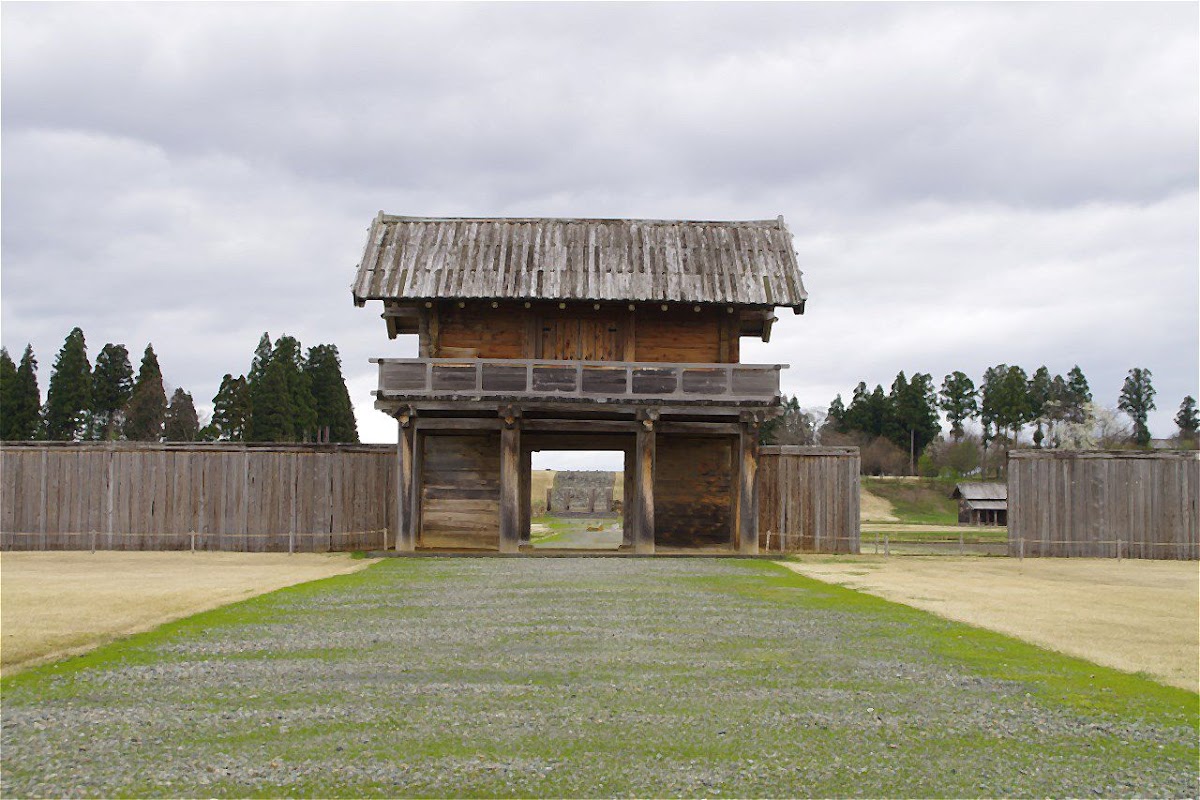
If you visit Hotta Castle, be sure to also visit the Hotta-saku Ruins. Designated as a national historic site, Hotta-saku is a valuable historical site and a representative example of an ancient castle fort. You can experience ancient history by visiting the remains of the outer and inner fences, as well as the reconstructed buildings. There are also information and guidance facilities at the Hotta-saku site where you can receive detailed explanations.
Former Ikeda Family Garden
Daisen City is home to the Former Ikeda Family Garden, a nationally designated scenic spot. This large-scale Japanese garden, built during the Meiji era, is known as a representative modern garden of the Tohoku region. It’s about a 20-minute drive from Hotta Castle and is worth visiting as part of a historical walk.
Omagari Fireworks
The Omagari district of Daisen City is nationally known as the “City of Fireworks.” The “National Fireworks Competition,” held every August, is one of Japan’s three major fireworks festivals, attracting many tourists from all over the country. When visiting Hotta Castle during the fireworks season, accommodation reservations become difficult, so early planning is necessary.
Hotta Castle’s Evaluation and Visitor Feedback
While Hotta Castle is not a nationally renowned castle, it has received a certain level of appreciation from castle enthusiasts who have visited. According to data from the Kojodan (Castle Enthusiast Group), the average rating is 3.00 stars, and the average visit time is approximately 38 minutes. The number of visitors is relatively low at 40, which is likely due to the lack of information provided about the castle itself and its recognition as part of the Hotta-saku fortifications.
Visitors have commented that “visiting it together with Hotta-saku helps understand the flow of history from ancient to medieval times,” “the carvings at Takanashi Shrine are wonderful,” and “although there are few remains, it’s a place where you can quietly feel history.” On the other hand, some have pointed out that “there is little information provided about the castle, making it difficult to find” and “the state of preservation of the remains is not very good.”
Preservation of Hotta Castle and Future Challenges
Currently, Hotta Castle is being developed as part of the Hotta-saku historical site, but its unique value as a medieval castle is not fully recognized. Many challenges remain, including the installation of information boards and markers, and the preservation and public access of the remains.
As a regional historical heritage site and an important site demonstrating its connection to Hotta-saku, it is necessary to re-evaluate the value of Hotta Castle and ensure its appropriate preservation and utilization. Particularly as a valuable example demonstrating the continuity of history from ancient to medieval times, further academic investigation and research are expected.
Summary
Hotta Castle is a medieval mountain castle located in Daisen City, Akita Prefecture, and is a valuable historical site notable for its connection to the ancient fortified settlement of Hotta-saku. Built on the Mayama Hill at an altitude of approximately 65 meters, it is presumed to have functioned as the residence of the Hotta clan.
Currently, Takanashi Shrine stands on the site, and remnants such as earthworks and dry moats remain partially. While there is little information available about the castle itself, visiting it together with Hotta-saku offers a fascinating opportunity to experience the flow of history from ancient to medieval times.
Its easy access from Akita Prefectural Road 50 and its location, approximately 15 minutes by car from Omagari Interchange, make it easily accessible. For those interested in the history of Akita Prefecture or those who enjoy castle tours, it is a historical site well worth a visit.
A visit to Hotta Castle will deepen your understanding of the multifaceted history of Dewa Province, including its regional history, the historical transition from ancient to medieval times, and the history of local religious beliefs. Please take your time to explore it thoroughly, along with Hotta Fort and other surrounding historical sites.