
Togo Makiyama Castle (Fukui City, Fukui Prefecture) Complete Guide | History, Remains, and Access Information
What is Togo Makiyama Castle?
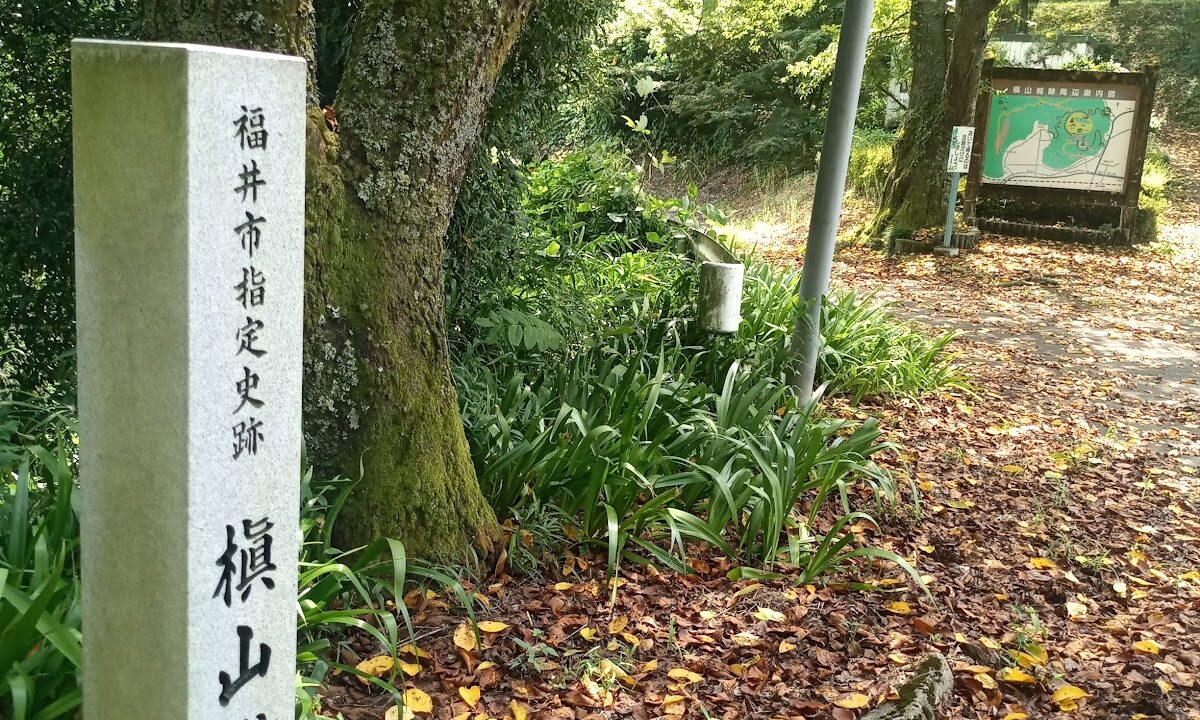
Togo Makiyama Castle is a mountain castle located on “Shiroyama” (Castle Mountain), at an elevation of 122 meters, spanning Koji-cho, Tochiizumi-cho, and Yasuhara-cho in Fukui City, Fukui Prefecture. Also known as Makiyama Castle or Togo Castle, it is designated as a Fukui City Historic Site.
Located approximately 8 kilometers southeast of Fukui city center and approximately 4 kilometers west along the ridge from the famous Ichijodani Asakura Clan Ruins, the relative elevation is approximately 100 meters. The castle ruins feature a series of large baileys spanning approximately 470 meters, and are known as valuable remains that convey the appearance of a mountain castle from the Sengoku period.
Geographical Features
Togo Makiyama Castle is located on the south side of the Togo district, where the Doda River, part of the Asuwa River system, flows east to west. This area has long been a strategically important transportation hub, serving as a crucial base connecting Ichijodani, the base of the Asakura clan, with the Fukui Plain. To the north of the mountain is the Sansha Shrine, and climbing its approach leads to a saddle, providing access to the series of baileys along the ridge.
History and Development of Togo Makiyama Castle
Asakura Clan Era (Muromachi Period to Sengoku Period)
According to tradition, Togo Makiyama Castle originated when Asakura Masakage, the second son of Asakura Ujikage (the third head of the Kuromaru Asakura clan), resided there. During the time the Asakura clan ruled Echizen Province, a fort was located on Makiyama, and it continued to function as an outpost (branch castle) even after the Asakura clan established their base in Ichijodani.
As a crucial defensive stronghold for securing the rear of Ichijōdani and a key base for controlling the area around Tōgō, it was an indispensable part of the Asakura clan’s rule over Echizen Province. It is believed that this castle remained within the Asakura clan’s sphere of influence until their downfall in 1573.
The Era of Hasegawa Hidekazu (Azuchi-Momoyama Period)
After the fall of the Asakura clan, Echizen Province came under the control of Oda Nobunaga, and later the era of Toyotomi Hideyoshi. During the Tenshō era, Hasegawa Hidekazu, a subordinate of Hideyoshi, built Tōgō Castle in this area. Hasegawa Hidekazu was a samurai who served both Oda Nobunaga and Toyotomi Hideyoshi, and was granted the land of Tōgō, where he developed Makiyama Castle as his residence.
Hasegawa Hidekazu formed a castle town at the foot of the castle, making a significant contribution to the development of the Tōgō area. The streetscape that remains in the Tōgō area today still retains traces of the town layout formed during this period. In Ryotaro Shiba’s “Kaido wo Yuku: Echizen no Shodo” (Traveling the Highways – The Roads of Echizen), it is described as a “beautiful village,” and the scenery with the Doda River flowing through the center of the highway evokes a nostalgic, old-fashioned hometown atmosphere.
Hasegawa Hidekazu is believed to have died of illness in 1595 (Bunroku 4), and it is thought that Togo Makiyama Castle was subsequently abandoned. Currently, a stone monument to the former lord, Hasegawa Hidekazu, stands on the site of the castle tower, allowing us to commemorate his achievements.
From the Edo Period Onward
In the Edo period, Togo Makiyama Castle ceased to serve its military role and was protected by local people as a historical symbol of the region. It continued to be carefully preserved by local residents after the Meiji era, and has been protected as a valuable cultural asset of Fukui City from the Showa and Heisei eras to the present day.
Remains of Togo Makiyama Castle
Enclosures (Kuruwa)
The greatest highlight of Togo Makiyama Castle is the large-scale group of enclosures (kuruma) that stretches for approximately 470 meters along the ridge. These enclosures are arranged in stages to enhance the castle’s defensive capabilities, demonstrating the advanced castle-building techniques of the time.
The main enclosures include the Ninomaru (second enclosure), Honmaru (main enclosure, site of the keep), and a vast flat area called Senjojiki. Each enclosure is demarcated by earthworks and moats, showcasing ingenious methods to prevent enemy intrusion.
Senjojiki and Earthworks
Senjojiki, now developed as Makiyama Park, is a particularly impressive remains of Togo Makiyama Castle. As its name suggests, it is a vast flat area where massive earthworks and moats still exist. The scale of these earthworks is breathtaking, demonstrating the pinnacle of civil engineering technology during the Sengoku period.
The earthen ramparts of Senjojiki were massive in both height and width, forming a strong defensive line that physically prevented enemy intrusion. They remain well-preserved today, making them a must-see for mountain castle enthusiasts and history buffs.
Moats
The moats, dug to cut across the ridge, are also important defensive structures of Togo Makiyama Castle. These moats were constructed to prevent enemies from invading along the ridge, and the deeply excavated terrain remains clearly visible.
Multiple moats are strategically placed, indicating a multi-layered defensive strategy. These remains exemplify the typical characteristics of Sengoku period mountain castles, which skillfully utilized natural terrain while maximizing defensive capabilities through artificial modifications.
Stone Walls and Monuments
Traces of stone walls can also be seen in some areas. These are thought to have been added during a relatively later renovation of the mountain castle, possibly during the time of Hasegawa Hidekazu.
As mentioned earlier, a stone monument to Lord Hasegawa Hidekazu stands at the site of the castle tower, serving as an important monument that conveys the history of the castle to the present day.
Other Remains
A parking lot is provided around the second bailey, offering access to the various remains. It’s possible to reach the vicinity of the second bailey by car using the forest road, making it relatively easy to visit the main remains—an attractive feature of Togo Makiyama Castle.
The layout of the baileys, the scale of the earthworks, and the depth of the moats all strongly reflect the practical mountain castle of the Sengoku period, allowing visitors to feel the tension of that time.
Historical Background of the Togo Area
Togo as a Post Town
The Togo area developed as a castle town of Togo Makiyama Castle, a branch castle of the Sengoku daimyo Asakura clan. Even after the fall of the Asakura clan, the town was developed by Hasegawa Hidekazu, and it began to function as a post town.
The Doda River is an important waterway that forms part of the Asuwa River irrigation system. The townscape that developed around this river flourished as a key transportation and logistics hub throughout the Edo period. Even today, historical buildings are scattered along the old highway, allowing visitors to imagine the town’s past glory.
Togo as a Tourist Resource
The current Togo area is known for its rich natural beauty and history. The ruins of Makiyama Castle, the scenery of the Doda River, Kobiri-an, and the Furusato Chaya “Kine to Usu” are all tourist attractions, attracting attention as a hidden gem of Fukui City.
Despite being easily accessible, about 20 minutes by car from the center of Fukui City, the Togo area retains a tranquil rural landscape and historical atmosphere. It has been selected as one of the “100 Scenic Views of Fukui,” making it a valuable area to experience the original landscape of Fukui.
Access and Parking Information
Access by Car
Access to Togo Makiyama Castle is convenient by car. The castle can be reached in about 20 minutes from central Fukui City via Prefectural Road 180 (Fukui-Imadate Main Local Road) or the Shimizu-Miyama Line.
It is possible to drive to the vicinity of the second bailey via a forest road, where a parking lot is available. From this parking lot, you can explore the various ruins on foot. However, the forest road has narrow sections, so caution is required when driving.
Access on Foot
There is also a route that starts from the approach to the Sansha Shrine. Following the shrine’s approach leads to a saddle, from which you can access the group of baileys on the ridge. This route offers a more authentic mountain castle atmosphere, but requires hiking equipment and physical fitness.
Public Transportation
If using public transportation, you can access the Togo area by bus from central Fukui City, but since the number of buses is limited, it is recommended to check the timetable in advance. From the bus stop to the castle ruins, it is a walk.
Points to Note and Recommendations for Visiting
Estimated Time Required
If you plan to see the main remains from the parking lot, allow approximately 1 to 1.5 hours. If you want to carefully observe the earthworks and moats of Senjojiki or enjoy taking photographs, we recommend allowing about 2 hours.
Clothing and Equipment
Since you will be visiting a mountain castle, comfortable walking shoes and clothing are essential. Especially after rain, the ground can become slippery, so please wear non-slip shoes such as trekking shoes. Don’t forget insect repellent in summer and warm clothing in winter.
Recommended Sightseeing Route
- Begin your visit from the parking lot (near Ninomaru)
- Check the monument to Lord Hasegawa Hidekazu at the site of the castle tower
- Move to Senjojiki and observe the massive earthworks and moats
- Visit the group of enclosures on the ridge in order
- Stroll around, noting the layout of the moats and earthworks at each location
This route allows you to efficiently see the main remains.
Photo Spots
The earthworks at Senjojiki are an excellent spot for taking impressive photos. Also, from the site of the castle tower, you can look down on the townscape of the Togo area, allowing you to appreciate the importance of the castle’s location. Finding an angle that expresses the depth of the moats will also be fun.
Nearby Attractions
Ichijodani Asakura Clan Ruins
Located approximately 4 kilometers west of Togo Makiyama Castle, the Ichijodani Asakura Clan Ruins are designated as a National Special Historic Site and were the base of the Asakura clan. Visiting Togo Makiyama Castle in conjunction with this site will give you a deeper understanding of the Asakura clan’s rule.
The Doda River and the Townscape of Togo
The townscape of the Togo district, which developed as a castle town, spreads along the Doda River. The scenery created by the waterway and old buildings is known as a “beautiful village” and is perfect for a stroll.
Furusato Chaya “Kine to Usu”
This facility offers local cuisine made with local ingredients, allowing you to experience the charm of the Togo district. It’s recommended to stop by before or after visiting the castle ruins to experience the local culture.
The Cultural Value of Togo Makiyama Castle
Fukui City Designated Historic Site
Togo Makiyama Castle is protected as a Fukui City designated historic site and is positioned as an important cultural property of the region. It is highly valued academically as a well-preserved structure of a Sengoku period mountain castle, with its large-scale baileys, a thousand-mat earthen rampart, and multiple moats.
Preservation and Maintenance
Thanks to preservation efforts by local residents and Fukui City, the remains are maintained in good condition. Part of the site has been developed as Makiyama Park, creating a safe environment for visitors. It is an important historical site where appropriate preservation and management are expected in the future.
Educational Value
Togo Makiyama Castle can be used as a multifaceted learning site for the history of Echizen Province during the Sengoku period, the Asakura clan’s rule, and the construction techniques of mountain castles. It is also a valuable resource for local history education.
Summary
Togo Makiyama Castle (Fukui City, Fukui Prefecture) is a valuable mountain castle steeped in the history of the Asakura clan and Hasegawa Hidekazu. The remains, including the approximately 470-meter-long group of baileys on the 122-meter-high castle mountain, the massive earthen ramparts, and the deep moats, vividly preserve the appearance of a Sengoku period mountain castle.
Located approximately 20 minutes by car from the center of Fukui City and close to the Ichijodani Asakura Clan Ruins, this castle boasts an excellent location and easy access to the parking lot via a forest road, making it highly desirable for visitors. It’s a recommended spot not only for history buffs and mountain castle enthusiasts, but also for anyone who wants to enjoy Fukui’s history and nature.
Visiting the castle in conjunction with the beautiful townscape of the Togo district and the scenery of the Doda River will allow you to experience the rich history and culture of Echizen, which has continued since the Sengoku period. Be sure to visit Togo Makiyama Castle, a Fukui City-designated historical site that is carefully preserved.


