Complete Guide to Kozukue Castle | History and Highlights of Yokohama’s Medieval Castle, Selected as One of Japan’s Continued Top 100 Castles
What is Kozukue Castle?
Kozukue Castle is a medieval hilltop castle located in Kozukue-cho, Kohoku-ku, Yokohama City, Kanagawa Prefecture. It is located about a 15-minute walk northwest from the current Kozukue Station on the Yokohama Line, and was built on a hill approximately 25 meters above sea level on the right bank of the Tsurumi River. On April 6, 2017, it was selected as one of Japan’s Continued Top 100 Castles (No. 125), attracting attention as an important Sengoku period castle in Kanagawa Prefecture.
The castle ruins have been developed as the “Kozukue Castle Ruins Citizens’ Forest,” and the remains, including the main keep (western enclosure), the second enclosure (eastern enclosure), a large dry moat, earthworks, and watchtower bases, are well preserved. Although no buildings remain, this site is a valuable historical landmark where one can experience the unique castle layout techniques of the Later Hojo clan, and is affectionately known locally as “Shiroyama” (Castle Mountain).
On May 15, 2006, it was designated as a special green space preservation area by Kanagawa Prefecture as “Kozukue Castle Site,” and is an important cultural heritage site that conveys the appearance of a medieval castle despite being located in an urban area.
History and Background of Kozukue Castle
Construction and Early History
While there are no clear records regarding the construction date of Kozukue Castle, it is believed to have been established sometime between the late Kamakura period and the Nanboku-cho period. One theory suggests that it was built by the Uesugi clan, the Kanto Kanrei (governor of the Kanto region), around the time of the Eikyo Rebellion (1438-1439).
Located in Kozukue-go, Tachibana-gun, Musashi Province, a strategic transportation hub, it functioned as a strategic base controlling the Kamakura Kaido (central route) and the Tsurumi River waterway. There are various theories about the castle’s early lords, but it is presumed that influential local samurai resided there.
Nagao Kageharu’s Rebellion and Ota Dokan’s Siege
The name of Kozukue Castle clearly appears in history during the Nagao Kageharu Rebellion of Bunmei 8 (1476). At this time, Yano Hyogo-no-suke, the lord of Kozukue Castle, appears as a general on Kageharu’s side.
In Bunmei 10 (1478), when Toyoshima Yasutsune, a general on Kageharu’s side, was attacked by Ota Dokan and forced to retreat, Kozukue Castle was his last stronghold. Ota Dokan established a fortified camp on Kamenokoyama (near present-day Jindaiji, Kanagawa Ward) and besieged Kozukue Castle. After a fierce battle, the castle fell. This battle is one of the most famous events in Kozukue Castle’s history.
After Dokan’s siege, Kozukue Castle is believed to have been abandoned for a time.
Restoration and Improvement by the Later Hojo Clan
In 1516, when the Hojo clan attacked and destroyed Miura Dosun of Arai Castle (Miura Peninsula), a vassal of the Ogigayatsu Uesugi clan, the strategic value of Kozukue Castle was re-recognized.
Around 1524, Kozukue Castle was repaired and restored by Hojo Ujitsuna. It is believed that the distinctive layout of the Later Hojo clan’s castles, as seen today, was formed during this period. The defensive structure, surrounded by double earthworks and dry moats, demonstrates the high level of the Later Hojo clan’s castle-building technology.
Kasahara Nobutame (of the Bitchu Kasahara clan) was appointed as the castle lord, and Kozukue Castle functioned as an important branch castle of the Hojo clan. A group of vassals called the “Kozukue-shu” was organized based at Kozukue Castle and was responsible for governing and defending the surrounding area.
The Siege of Odawara and Abandonment
In 1590, Toyotomi Hideyoshi carried out the Siege of Odawara. At this time, Kozukue Castle is said to have surrendered intact. The fact that it escaped destruction during battle is considered one of the reasons why its remains have been preserved to this day.
With Tokugawa Ieyasu’s entry into the Kanto region, Kozukue Castle was abandoned for the second time. Although it lost its function as a castle, it continued to be remembered by the local people as “Shiroyama” (Castle Mountain).
Modern Era
On February 5, 1892 (Meiji 25), the nine districts of Kozukue Village in Tachibana District (Shimosugata, Hazawa, Sanmaibashi, Kozukue, Toriyama, Katakura, Jindaiji, Rokkakubashi, and Kishine) changed their name to “Shirosato Village.” This means “village where the castle stood,” indicating that Kozukue Castle was considered important as a part of the region’s identity.
Today, it has been developed as a public forest, serving as a place of relaxation for local residents and a tourist spot visited by history enthusiasts and castle fans.
Successive Lords and Castle Deputies
Early Lords
While there are few clear records regarding the early lords of Kozukue Castle, the following individuals are believed to have been involved:
- Yano Hyogo-no-suke: During the Nagao Kageharu Rebellion of Bunmei 8 (1476), he served as a general on Kageharu’s side and was stationed at Kozukue Castle.
- Toyoshima Yasutsune: Attacked by Ota Dokan in Bunmei 10 (1478), he was besieged in Kozukue Castle.
Castle Deputies during the Later Hojo Clan Era (Bitchu Kasahara Clan)
After the restoration by Hojo Ujitsuna, the Bitchu Kasahara clan was appointed as castle deputies of Kozukue Castle:
- Kasahara Nobutame (First Castle Deputy): Served as castle deputy from around Daiei 4 (1524), contributing to the development of Kozukue Castle and the organization of the Kozukue clan.
- The Kasahara Family: The Kasahara family continued to serve as castle lords, managing Kozukue Castle until its surrender in 1590.
Kozukue Hojo Clan
There are instances where members of the Hojo clan adopted Kozukue as their surname, known as the “Kozukue Hojo Clan.” This was part of the Later Hojo clan’s policy of placing family members in important strongholds.
The Kozukue Group and its Role
The “Kozukue Group,” organized around Kozukue Castle, played a crucial role in the Later Hojo clan’s military and administrative organization. The Kozukue Group performed the following roles:
- Military Functions: Defense of Kozukue Castle and security of the surrounding area
- Administrative Functions: Governance of the Tachibana District and collection of land tax
- Transportation Management: Management of the Kamakura Kaido (central route) and water transport on the Tsurumi River
The Kozukue Group incorporated influential local samurai, forming the foundation for supporting the Hojo clan’s rule. In the domain management of the Later Hojo clan, centered around Odawara Castle, Kozukue Castle and the Kozukue group functioned as important bases within Kanagawa Prefecture.
Kozukue Castle’s Layout and Structure
Basic Structure
Kozukue Castle is a flatland castle built on a peninsula-shaped hill, with a layout that skillfully utilizes the natural terrain. The main components are as follows:
- Honmaru (Western Enclosure): The main enclosure at the center of the castle, located at the highest point.
- Ninokuruwa (Eastern Enclosure): The second most important enclosure after the Honmaru.
- Multiple Enclosure Groups: Defensive positions arranged to surround the Honmaru and Ninokuruwa.
The Main Enclosure Debate and Access Route
There is a debate about Kozukue Castle known as the “Main Enclosure Debate.” Traditionally, the western enclosure has been considered the Honmaru (main enclosure), but some researchers argue that the eastern enclosure is more suitable as the main enclosure in terms of size and structure.
Multiple routes are hypothesized for the castle’s approach, and it has been suggested that the main approach may have been located in a different place than the current entrance to the Citizens’ Forest. Further archaeological excavations and site layout studies may yield new insights in the future.
Features of the Dry Moat and Earthworks
The greatest highlight of Kozukue Castle is the massive dry moat and earthworks constructed during the Later Hojo period:
Dry Moat
- Some sections reach depths of over 10 meters
- A double dry moat structure surrounds the enclosure
- The shape varies depending on the location, including V-shaped and U-shaped moats
- The wide width of the moat bottom effectively hinders enemy intrusion
Earthworks
- Earthworks approximately 3-5 meters high surround the enclosure
- Constructed by piling up soil excavated from the dry moat
- Some sections show projecting areas that appear to be watchtower bases
These remains demonstrate the high level of castle-building technology of the Later Hojo clan and are highly valued academically as typical examples of Sengoku period castles in the Kanto region.
Highlights of Kozukue Castle
Main Enclosure (Western Enclosure)
The main enclosure is the central part of Kozukue Castle and is currently a flat open space. The surrounding earthen ramparts give a real sense of the castle’s former defensive structure. From the main enclosure, you can overlook the surrounding landscape, appreciating the castle’s excellent location.
Second Enclosure (Eastern Enclosure)
The second enclosure is also a large, flat area, and is an important enclosure on par with the main enclosure. Given its large size and the fact that it’s the subject of debate regarding the main enclosure, it’s presumed to have housed important facilities.
Massive Dry Moat
The biggest highlight of Kozukue Castle is the massive dry moat surrounding the main enclosure and the second enclosure. The dry moat on the north side of the main enclosure is particularly impressive in both depth and width, astonishing visitors as a “super-massive moat.” Looking up from the bottom of the moat is truly awe-inspiring.
The dry moat remaining within the bamboo grove remains cool even in summer, creating a fantastical atmosphere.
Earthen Ramparts and Watchtower Bases
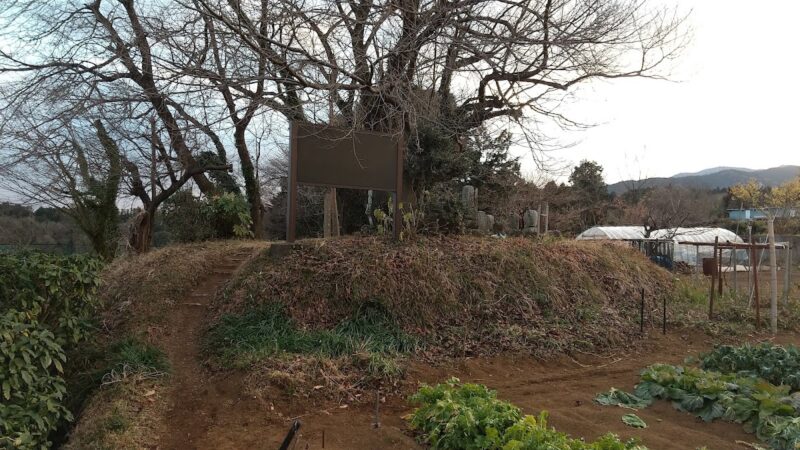
The earthen ramparts surrounding the enclosures are well-preserved, retaining almost their original height. Some parts of the site have projecting sections that are presumed to be watchtower bases, suggesting that watchtowers or turrets once stood there.
Bamboo Grove Landscape
The Kozukue Castle Ruins Citizens’ Forest is covered in a beautiful bamboo grove, creating a unique landscape where the castle ruins and nature harmonize. You can enjoy the changing scenery throughout the seasons: the fresh green of spring, the deep green of summer, the vibrant autumn foliage, and the tranquility of winter.
Branch Castles and Surrounding Castle Network
Kozukue Castle functioned as part of the Hojo clan’s branch castle network. The following related castles were located in the surrounding area:
- Chigasaki Castle: Located north of Kozukue Castle, it worked in conjunction with Kozukue Castle to defend the Tsurumi River basin.
- Kamekoyama Jinjo: The site where Ota Dokan established his encampment during the siege of Kozukue Castle.
- Odawara Castle: The main castle of the Later Hojo clan, with Kozukue Castle positioned as an important subsidiary castle of Odawara Castle.
These castles worked in conjunction with each other, supporting the Later Hojo clan’s rule within Kanagawa Prefecture.
Access and Visiting Information
Transportation Access
By Train
- Approximately 15 minutes on foot from JR Yokohama Line “Kozukue Station”
- Head northwest from the station, passing under the Daisan Keihin Expressway
By Car
- Approximately 5 minutes from the Daisan Keihin Expressway “Kohoku Interchange”
- There is no dedicated parking lot, so using nearby coin parking is recommended
Visiting Information
- Admission Fee: Free
- Opening Hours: Always open (maintained as a public forest)
- Estimated Time Required: Approximately 1-2 hours for a thorough visit
- Notes:
- Comfortable shoes are recommended as it is a mountain castle
- Insect repellent is necessary in summer
- Be careful as the ground can be slippery after rain
- It is recommended to use the restrooms near the station beforehand
Castle Stamp Information
Continued Top 100 Japanese Castles Stamp
- Location: Yokohama City Shirogo Kozukue District Center (approximately 2 minutes on foot from Kozukue Station)
- Opening Hours: Monday-Saturday 9:00-21:00, Sunday & Public Holidays 9:00-17:00
- Closed: Third Monday of the month (or the following day if it’s a public holiday), New Year’s holidays
Castle Stamp
- Occasionally distributed at some castle-related events, but not permanently sold.
- For details, please check the tourist information for Kohoku Ward, Yokohama City.
Kozukue Castle and its Connection to the Community
The Place Name of Shirosato
As mentioned above, the fact that Kozukue Village was renamed “Shirosato Village” in 1892 (Meiji 25) indicates that Kozukue Castle was considered important as a part of the community’s identity. Even today, the name Shirosato remains deeply rooted in the community, as seen in places like the “Shirosato Kozukue District Center.”
Use as a Citizens’ Forest
The Kozukue Castle Ruins Citizens’ Forest is used as a place of relaxation for local residents. Many people visit daily for walks, jogging, nature observation, and other activities. It is a good example of harmony between historical heritage and daily life.
Educational and Cultural Activities
Local elementary and junior high schools sometimes incorporate Kozukue Castle into their local history studies, providing children with an opportunity to learn about the region’s history. Furthermore, guided tours and lectures by castle researchers and history enthusiasts are regularly held.
Points to Note When Visiting Kozukue Castle
How to Enjoy It for Beginners
- Experience the Power of the Dry Moat: Start by looking up at the massive dry moat from the bottom.
- Walk Through the Main and Second Baileys: Walk through the flat baileys and get a real sense of the castle’s scale.
- Enjoy the Atmosphere of the Bamboo Grove: Immerse yourself in the medieval atmosphere amidst the beautiful bamboo forest.
Highlights for Castle Enthusiasts
- Analysis of the Layout: Observe the layout techniques unique to the Later Hojo clan.
- Verification of the Main Bailey Debate: Compare the main bailey and the second bailey and consider which is the main bailey.
- Detailed Observation of Earthworks and Turret Bases: Examine the ingenuity of the defensive structure in detail.
- Estimation of the Ascent Route: Infer the location of the main approach road from the topography.
Photography Tips
- Dry Moat: The angle of looking up at the earthworks from the bottom of the moat is incredibly impressive.
- Bamboo Grove: The combination of the bamboo grove and dry moat creates a fantastical atmosphere.
- Earthwork: The lines of the earthwork viewed from the bailey are beautiful.
- Seasonal Scenery: The castle displays different expressions depending on the season, such as the fresh greenery of spring and the autumn foliage.
Academic Value of Kozukue Castle
Kozukue Castle is highly valued academically for the following reasons:
- Hojo Clan’s Castle Construction Techniques: The unique layout of the Later Hojo clan, including double dry moats and earthworks, remains in excellent condition.
- Medieval Castle in an Urban Area: Its rarity lies in the preservation of its remains despite being located in the large metropolitan area of Yokohama.
- Comparison with Historical Documents: The site was the stage for historical events recorded in historical documents, such as Ota Dokan’s siege.
- Regional History Research: An important historical site for considering the Sengoku period history of southern Musashi Province.
Further archaeological excavations and research are expected to reveal more historical facts.
Nearby Tourist Attractions
When visiting Kozukue Castle, it is recommended to also visit nearby tourist attractions:
Nissan Stadium (Yokohama International Stadium)
Located about a 10-minute walk from Kozukue Station, this is one of Japan’s largest stadiums and the venue for the 2002 FIFA World Cup final.
Tsurumi River Basin
A promenade has been developed along the Tsurumi River, which was strategically important for Kozukue Castle, allowing visitors to enjoy a stroll while appreciating nature.
Shin-Yokohama Ramen Museum
Near Shin-Yokohama Station is the Ramen Museum, which brings together ramen shops from all over Japan, offering a great place to enjoy a meal.
Summary
Kozukue Castle is a valuable historical site located in the metropolitan area of Yokohama City, Kanagawa Prefecture, with well-preserved remains of a Sengoku period castle. It was the stage for the historical event of Ota Dokan’s siege and played an important role as a base for the Kozukue forces during the Later Hojo clan era.
The massive dry moats and earthworks demonstrate the high level of castle-building technology of the Later Hojo clan, making it worthy of being selected as one of the Continued Top 100 Japanese Castles. Now developed as a public forest, the site is an ideal example of historical site utilization, balancing its value as a historical heritage site with its function as a place of relaxation for citizens.
Its convenient location, within walking distance of Kozukue Station, is also a major draw, allowing visitors to easily experience a castle from the Sengoku period. It’s a recommended spot not only for castle enthusiasts but also for history buffs and those who enjoy nature walks. When you visit Yokohama, be sure to stop by Kozukue Castle Ruins Public Forest and experience the charm of a medieval castle.