Takao Castle, Kanazawa City (Ishikawa Prefecture) Complete Guide | The Charm of the Mountain Castle Ruins and the Site of Togashi Masachika’s Demise
What is Takao Castle?
Takao Castle (Takojo, Takojo) is a medieval mountain castle located in Takao-machi, Kanazawa City, Ishikawa Prefecture. Built on Mount Takao, approximately 190m above sea level, this castle is known as the residence of the Togashi clan, the shugo (military governor) of Kaga Province. It holds a particularly important position in Japanese history as the site where Togashi Masachika met his end during the Chokyo Ikko-ikki rebellion of 1488 (Chokyo 2).
Affectionately known as “Joyama” by locals, it is now a popular spot for history buffs, general tourists, and hiking enthusiasts alike, offering a spectacular panoramic view of Kanazawa city.
Basic Information on Takao Castle
Location and Geographical Characteristics
Location: Takao-machi, Kanazawa City, Ishikawa Prefecture (Current pronunciation: “Takao-machi”)
Takao Castle is located in the hilly area of southern Kanazawa City and was constructed as a mountain castle with a relative elevation of approximately 70-90m. The castle grounds spread across the Takao Mountain area, with the main enclosure located at an altitude of around 190m. It was a strategically important location overlooking the Kanazawa Plain and functioned as the political and military center of Kaga Province.
Castle Classification and Structure
- Classification: Mountain Castle
- Construction Period: Late Kamakura Period to Nanboku-cho Period (Estimated)
- Year of Abandonment: 1488 (Chōkyō 2)
- Common Name/Alternate Name: Takao Castle, Takao Castle, Tae Castle, Tago Castle
- Former Province: Kaga Province
- Keep Structure: None (As it is a medieval mountain castle, there is no keep)
Details of Remains
Currently, the following remains are found at the Takao Castle site:
- Kuruwa (Enclosure): Multiple levels of flat land can be seen
- Earthwork: Earthen embankments built as defensive structures
- Moat: Defensive structures built to cut across the ridge
- Koguchi (Gate): Structures serving as entrances to the castle
- Tatebori (Vertical Moat): A defensive moat dug along the slope.
At the summit, the “Takao Castle Ruins Observation Deck” has been developed, with benches and information boards. Following the ridge path to the south, you can reach the ancient castle ruins area, approximately 90 meters higher.
History of Takao Castle
Construction and the Rule of the Togashi Clan
The exact construction date of Takao Castle is uncertain, but it is believed to have been built by the Togashi clan, who were appointed as the governors of Kaga Province, during the late Kamakura period to the Nanboku-cho period. The Togashi clan reigned as the rulers of Kaga Province for a long time, expanding their power with Takao Castle as their base.
As the shugo daimyo (provincial governor) of Kaga Province, the Togashi clan ruled the Kanazawa Plain, and their family strongholds, such as Togashi-kan (Nonoichi City) and Oshino-kan, were scattered throughout the surrounding area. Takao Castle functioned as the core of this area, a political and military strategic point.
The Chōkyō Ikkō-ikki Rebellion and the End of Togashi Masachika
Takao Castle first appeared on the historical stage during the Chōkyō Ikkō-ikki Rebellion of 1488 (Chōkyō 2). This incident was a groundbreaking event in Japanese history, marking the first time that rebel forces overthrew a shugo daimyo (provincial governor), establishing a “country ruled by the peasants” for approximately 100 years.
Background of the Rebellion
In Kaga Province, the influence of the Jōdo Shinshū (Ikkō-shū) sect was growing strong, and Togashi Masachika was wary of the expansion of the Honganji sect’s power. Masachika implemented strict policies towards Ikkō-shū temples, which provoked resistance from Honganji followers. Furthermore, internal succession disputes within the Togashi clan became intertwined, and the situation worsened when Masachika’s younger brother, Togashi Yukichiyo, sided with the Ikkō-ikki.
The Siege of Takao Castle
In June 1488, tens of thousands of Ikko-ikki rebels from Kaga Province besieged Takao Castle. Togashi Masachika resisted by holding out in the castle, but the overwhelming difference in troop numbers and the resulting shortage of supplies due to the prolonged siege gradually pushed him into a disadvantageous position.
On July 17th, the rebel forces finally stormed the castle. Masachika committed suicide in vain, and the Togashi clan, the governors of Kaga Province, came to an end. After this battle, Takao Castle was abandoned, and Kaga Province became an autonomous state under the control of Ikko-ikki followers, a “country owned by the peasants.”
History After the Castle’s Abandonment
After the fall of Takao Castle, Kaga Province remained under the control of the Ikko-ikki for approximately 100 years. In 1580 (Tensho 8), Shibata Katsuie, acting on orders from Oda Nobunaga, pacified Kaga Province, bringing an end to the Ikko-ikki rebellion. Afterward, Maeda Toshiie governed the Kaga Domain from Kanazawa Castle.
Takao Castle itself was never rebuilt and remained as a forest. Currently, the Ishikawa Prefectural Teacher Training Center (formerly the Ishikawa Prefectural Education Center) is built at the foot of the mountain, and the castle ruins are a popular walking trail for local residents.
Highlights of Takao Castle
Takao Castle Ruins Observation Deck
The greatest attraction of Takao Castle is the view from the “Takao Castle Ruins Observation Deck” located at the mountaintop. You can see the entire city of Kanazawa, and on clear days, even the Sea of Japan.
Benches are provided at the observation deck, allowing visitors to enjoy the scenery at their leisure. A trapezoidal information board is also installed, where you can learn about the castle’s history and the surrounding geography. Because it’s a relatively small mountain, it’s rarely crowded, and you can even enjoy a picnic at the summit.
Exploring the Mountain Castle Ruins
As you proceed along the climbing path, you can observe the ruins characteristic of a medieval mountain castle. Beyond the bamboo grove, there’s a moat, and beyond that, the castle’s entrance. These ruins are valuable historical sites that convey the appearance of the Sengoku period, over 500 years ago.
The main enclosure is a relatively large, flat area, suggesting that buildings once stood there. Traces of earthworks can be seen in many places, providing important clues to understanding the castle’s structure.
Following the ridge path on the south side, you reach an area called the Old Castle Ruins. This area is slightly higher than the main enclosure (relative height approximately 90m) and is presumed to be an older castle facility.
A Hidden Gem for Cherry Blossoms
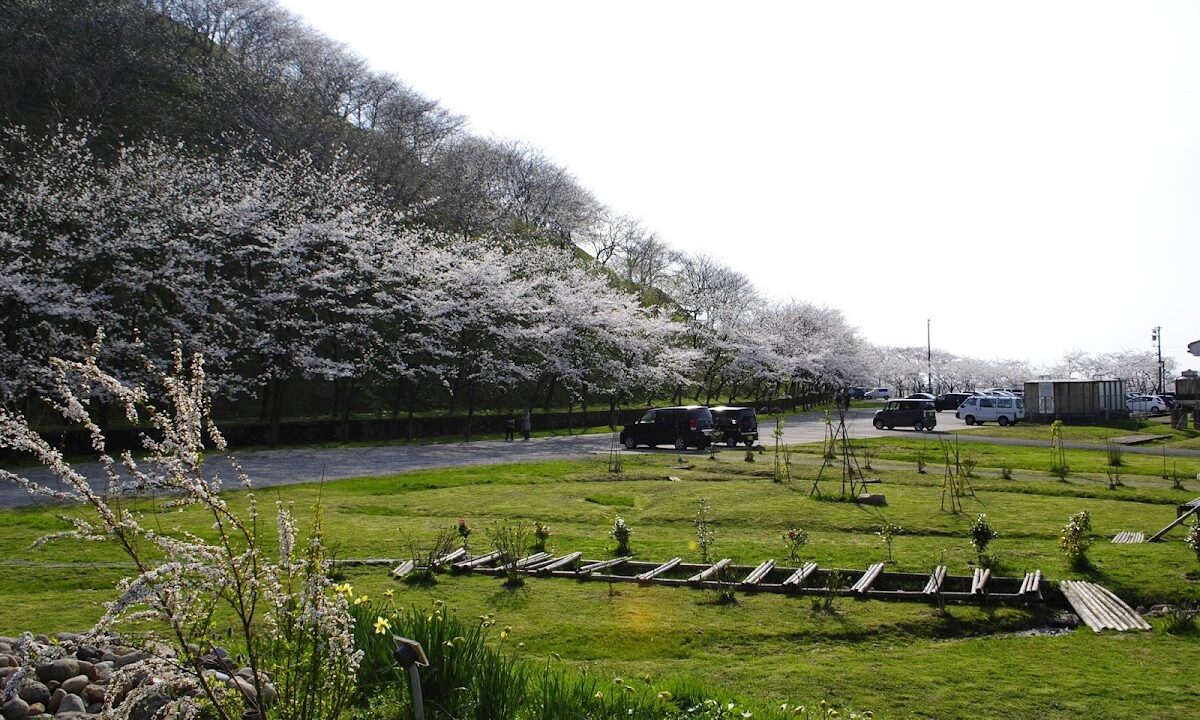
Takao Castle Ruins is also known as a hidden gem for cherry blossoms. In spring, cherry blossoms bloom profusely on the mountainside, coloring the hiking trails. Compared to other famous cherry blossom viewing spots in Kanazawa City, this location is less crowded and is beloved by locals as a quiet place to enjoy cherry blossoms.
The cherry blossoms typically bloom from early to mid-April, and from the observation deck, you can enjoy the contrast between the cherry blossoms and the city of Kanazawa.
Access Information
Access by Public Transportation
Nearest Station: JR Hokuriku Main Line, Kanazawa Station
Access by Bus:
- Take Hokuriku Railway Bus No. 30 or 31 from Kanazawa Station
- Get off at the “Takao Minami 1-chome” bus stop (approximately 20-25 minutes)
- Approximately 15 minutes on foot from the bus stop to the castle entrance
Location of the Castle Entrance: The castle entrance is located approximately 100m to the right from the front of the Ishikawa Prefectural Teacher Training Center. Signposts are installed, making it relatively easy to find.
Access by Car
From Kanazawa City Center:
- Head south on National Route 157 towards Takaomachi.
- Estimated time: Approximately 20 minutes
Parking: There are parking spaces around the Ishikawa Prefectural Teacher Training Center, but priority is given to facility users, so it is recommended to check in advance. Please avoid street parking and be considerate of the surrounding area.
Time Required for Climbing the Castle
- From the Castle Entrance to the Observation Deck: Approximately 15-20 minutes on foot
- From the Observation Deck to the Old Castle Ruins: Approximately 10 minutes on foot
- Round Trip Time: Approximately 1 hour to 1 hour 30 minutes (including sightseeing time)
As it is a relatively low mountain castle with a relative elevation of 70-90m, even beginner hikers can visit without difficulty. However, since you will be walking on mountain paths, it is recommended to wear comfortable clothing and broken-in shoes.
Information on Spots Around Takao Castle
Related Historical Sites in Kanazawa City
When visiting Takao Castle, exploring the surrounding historical sites will allow you to gain a deeper understanding of the history of Kaga Province.
Kanazawa Castle (Distance: Approx. 6.0km)
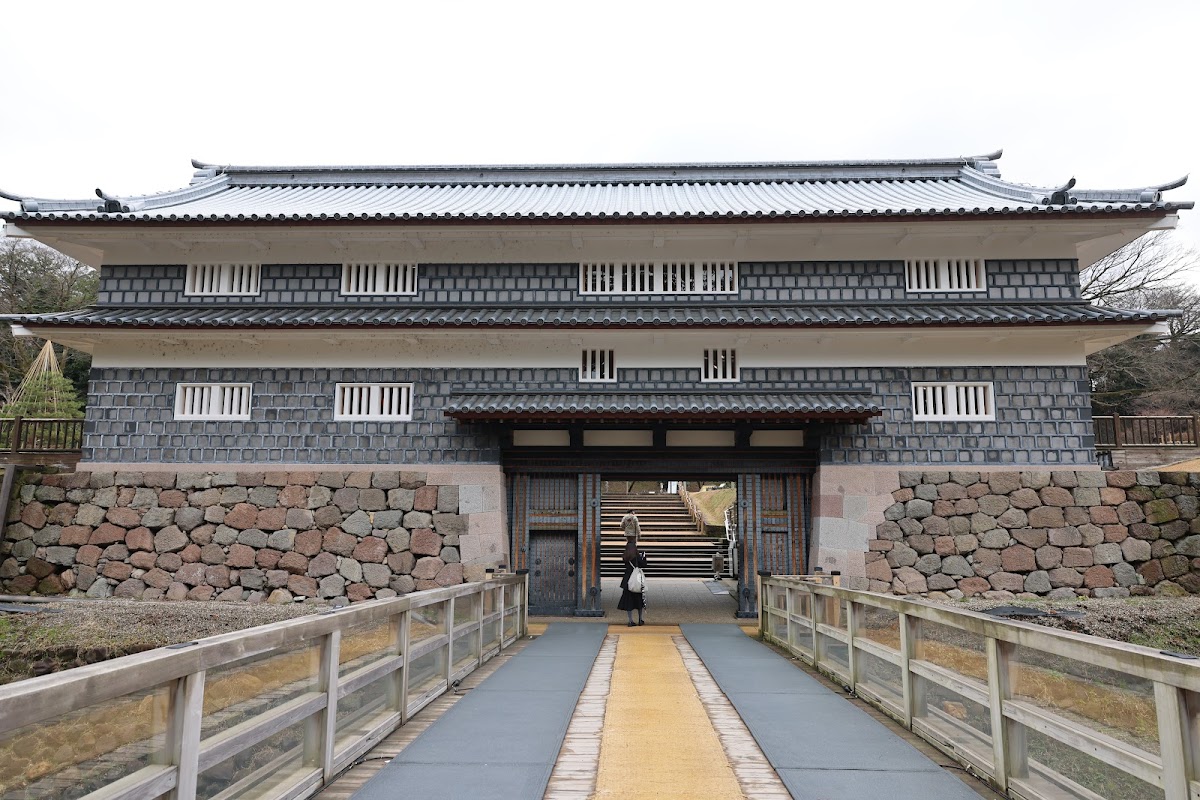
A symbol of Kaga Province, built by Maeda Toshiie. After the fall of Takao Castle, it became the center of Kaga Province approximately 100 years later. Edo period buildings such as the Ishikawa Gate and the Fifty-Ken Nagaya (long building) have been restored.
Togashi Residence (Nonoichi City, Distance: Approx. 5.2km)
One of the Togashi clan’s strongholds. Along with Takao Castle, it is an important historical site for understanding the Togashi clan’s sphere of influence.
Oshino Residence (Nonoichi City, Distance: Approx. 4.6km)
The site of the residence of the Togashi clan. Although now a residential area, some remains still exist.
Mattō Castle (Hakusan City, Distance: Approx. 9.4km)
An important stronghold in southern Kaga Province. It played a crucial role during the Ikkō-ikki rebellion.
Kanazawa Southern Hills Dream Road
Takao Castle is located on the route of the “Kanazawa Southern Hills Dream Road,” a walking course promoted by Kanazawa City. This course is a walking trail that winds through the hilly area of southern Kanazawa City, allowing you to enjoy nature and history simultaneously.
Many citizens use it for health promotion and nature observation, making it an attractive course where you can explore history while enjoying the scenery of the four seasons.
Points to Note and Recommendations for Visiting
Clothing and Equipment
- Footwear: Trekking shoes or athletic shoes (sneakers) are essential.
- Clothing: Comfortable clothing, appropriate warmth and heat protection for the season.
- Items to Bring: Drinking water, towel, insect repellent (summer).
- In Rainy Weather: The mountain paths become slippery, so it is recommended to refrain from visiting.
Best Time to Visit
- Spring (April-May): The most beautiful scenery can be enjoyed during the cherry blossom season.
- Autumn (October-November): The autumn foliage and refreshing weather make it ideal for visiting the castle.
- Summer (June-August): Lush greenery, but heat and insect protection are necessary.
- Winter (December-March): Caution is needed due to the possibility of snow and ice.
Photography Tips
Panoramic photos of Kanazawa city from the observation deck are beautiful in the morning light, and on clear days, you can capture a spectacular view that even includes the Sea of Japan. The cherry blossom season in spring and the autumn foliage season are particularly suitable for photography.
When photographing the ruins, capturing structures unique to medieval mountain castles, such as moats and gates, allows you to visually record their historical value.
Historical Significance of Takao Castle
Takao Castle is not merely a local mountain castle, but a place that symbolizes a crucial turning point in Japanese history. The downfall of Togashi Masachika during the Chōkyō Ikkō-ikki rebellion was a groundbreaking event in medieval Japan, representing a transition from rule by the samurai class to self-governance by the common people (followers).
The Ikkō-ikki rule of Kaga, which lasted for approximately 100 years as a “country owned by the peasants,” became an important example demonstrating the political influence of religious forces in the later Sengoku period. It can be said that the success of the Kaga Ikko-ikki rebellion played a role in Oda Nobunaga’s fierce conflict with Ishiyama Hongan-ji Temple.
Currently, the Takao Castle ruins are preserved as a historical site in Ishikawa Prefecture and are also used as a place for local history education. Located on a quiet mountaintop overlooking Kanazawa city, it is a valuable historical site where one can reflect on the fierce battle and turning point in history that occurred more than 500 years ago.
Summary
Takao Castle is a medieval mountain castle remaining in Kanazawa City, Ishikawa Prefecture, and is a historically important place where Togashi Masachika, the governor of Kaga Province, met his end during the Chokyo Ikko-ikki rebellion. Currently, it has been developed as the “Takao Castle Ruins Observation Deck,” and is a popular spot for local residents and tourists alike, offering a spectacular view of Kanazawa city and being a hidden gem for cherry blossoms.
Located at an altitude of 190m and with a relative height of 70-90m, Takao Castle is a relatively low mountain castle, making it easily accessible even for beginner hikers. Visitors can observe the remains of a medieval mountain castle, such as earthworks and moats. It’s accessible by bus and on foot from Kanazawa Station, making it an ideal spot for a historical stroll as part of Kanazawa sightseeing.
Takao Castle offers a glimpse into a crucial turning point in Japanese history: the fall of the Togashi clan and the victory of the Ikko-ikki rebellion. When visiting Kanazawa, be sure to pay a visit!