Jōnō Castle (Toyama City, Toyama Prefecture) Complete Guide: History and Highlights of a Mountain Castle on a Sheer Cliff Resembling a Warship
Located in Yao-machi, Toyama City, Toyama Prefecture, Jōnō Castle is an important mountain castle indispensable to understanding the Sengoku period of Etchū Province. Built on an isolated hill on the west bank of the Jinzu River, this castle is known for its unique terrain and strong defenses. This article provides a detailed introduction to Jōnō Castle, including its history, structure, highlights, and access methods.
Basic Information on Jōnō Castle
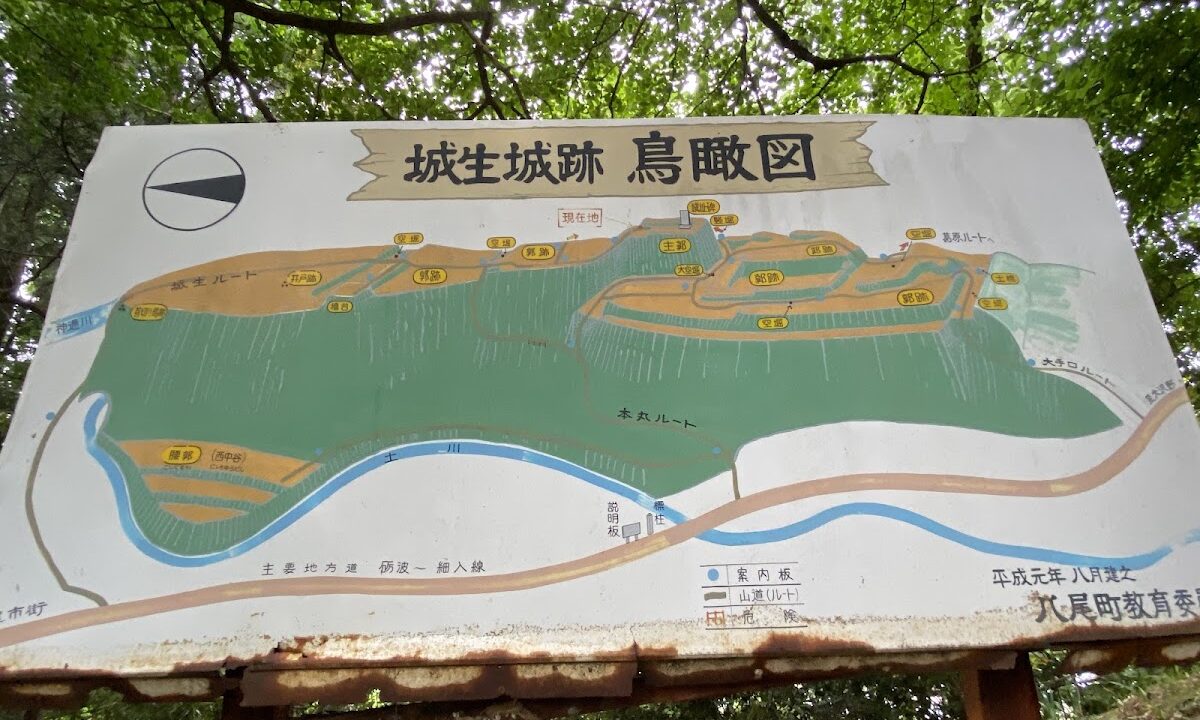
Jōnō Castle is a mountain castle located in Jōnō, Yao-machi, Toyama City, Toyama Prefecture. It is also known as Jōo Castle, Hebijo Castle, Echidani Castle, Tenguhira Castle, and Jōno Castle. Built on an isolated hill approximately 124 meters above sea level with a relative height difference of approximately 50-60 meters, it features a long, narrow layout of approximately 750 meters north-south and 150 meters east-west.
This unique shape is often described as resembling a warship, and it has attracted attention among castle enthusiasts. Designated as a historical site by Toyama City, it is a valuable example of a medieval mountain castle in Etchu Province, preserving its surviving remains.
Geographical Features and Location
The hill on which Shiroo Castle was built is surrounded by two rivers: the Jinzu River to the east and the Tsuchikawa River to the west and north. Protected on three sides (excluding the south) by natural moats, it was a formidable location, making it difficult for attackers to approach.
Its location on the west bank of the Jinzu River was also strategically important, controlling a key transportation hub within Etchu Province. Situated on high ground overlooking the Toyama Plain, it was an ideal location for monitoring developments in the surrounding area.
History of Shiroo Castle
Construction and Lord
There are various theories regarding the construction period of Shiroo Castle, but it is believed to have been built during the mid-to-late Muromachi period. It is believed that a family of the Jinbo clan, who wielded considerable power as the deputy governor of Etchu Province, was involved in its construction, and it is highly likely that it functioned as a branch castle of the Jinbo clan.
During the Sengoku period (Warring States period), it played a crucial role in the complex political situation of Etchu Province. Etchu Province was a fierce battleground where various forces, including the Uesugi clan, the Ikkō-ikki rebels, and Sasa Narimasa, vied for supremacy, and Shiroo Castle was at the heart of this conflict.
Two-Year Siege
The most famous episode in the history of Shiroo Castle is its siege during an attack by the Jinbo clan. According to historical records, Shiroo Castle did not fall despite a two-year siege.
This remarkable defensive strength was a result of its geographical advantage, protected on three sides by rivers, and its robust castle structure. Although many details of the siege remain unclear, this fact indicates that Shiroo Castle was not merely a small fort, but a full-fledged military base.
From the Late Sengoku Period to the Castle’s Abandonment
During the Tensho era (1573-1592), the conflict over Etchu Province intensified further. With Uesugi Kenshin’s invasion of Etchu, the rule of Etchu by Sassa Narimasa under Oda Nobunaga, and the subsequent confiscation of the Sassa clan’s domain by Toyotomi Hideyoshi, the castle was tossed about by the tides of the times amidst a rapid shift in rulers.
Ultimately, it is believed to have been abandoned in the early Edo period. With the establishment of the Maeda clan’s rule over Etchu Province, and influenced by the “One Castle Per Province” decree, many mountain castles were abandoned. Shiroo Castle was no exception, ending its role as a military base.
Structure and Layout of Shiroo Castle
Overall Composition
The most distinctive feature of Shiroo Castle is its long, narrow layout, approximately 750 meters north-south and 150 meters east-west. Designed to maximize the use of the hilly terrain, multiple enclosures (kuruma) are arranged continuously along the ridgeline.
This elongated structure effectively utilized the limited hilly terrain and also served to disperse the attacking forces. The concept of multi-layered defense is evident, allowing for respite from breaches in one enclosure.
Main and Secondary Enclosures
The main enclosure, the heart of the castle, is located at the highest point of the hill. From here, a wide view of the surrounding area was possible, and it functioned as a command post. Traces of earthworks remain around the main enclosure, indicating the presence of defensive structures.
Several secondary enclosures were positioned around the main enclosure, each functioning as an independent defensive unit. Moats were constructed between the enclosures, demonstrating various measures taken to prevent enemy intrusion.
Defensive Structures
Shiroo Castle retains numerous defensive structures typical of medieval mountain castles.
Earthworks: Earthworks were built surrounding the enclosures, and some sections are still clearly visible today. The height varies depending on the location, but some earthworks reach a maximum height of 2-3 meters.
Moat: Multiple moats cutting across the ridge can be seen. In particular, the moat between the main and secondary enclosures reaches a depth of 3-4 meters in some places, demonstrating the strength of the defenses at the time.
Enclosures (Kuruwa): More than 10 enclosures of varying sizes have been identified. Each enclosure has been leveled, suggesting it was used for buildings or troop garrisons.
Stone Walls: Traces of stone walls remain in some areas. Stone walls are relatively rare in mountain castles in Etchu Province, making this one piece of evidence indicating the importance of Shiroo Castle.
Entrances and Passages
Multiple entrances (koguchi) to the castle have also been identified. These entrances were not merely openings, but incorporated features designed to prevent enemy intrusion. Structures allowing attacks from the flanks, known as “yokoya-gakari,” are also visible.
The passages connecting the enclosures are not straight but curved, designed to prevent enemy charges. The accumulation of these meticulous features was likely one of the factors that enabled the castle to withstand a two-year siege.
Highlights of Shiroo Castle
A Long, Narrow Layout Resembling a Warship
When visiting Shiroo Castle, it’s recommended to first familiarize yourself with the overall topography. If possible, viewing the entire castle from the south or north side will allow you to fully appreciate its long, narrow layout reminiscent of a warship.
This unique shape is rare among Japanese mountain castles and is a charm unique to Shiroo Castle. Walking along the ridge and imagining how the castle was built utilizing the terrain is also part of the enjoyment.
Well-Preserved Remains
Because Shiroo Castle did not undergo large-scale development after its abandonment, the remains are well-preserved. The earthworks and moats, in particular, remain clearly visible, making it an excellent learning resource for studying the structure of medieval mountain castles.
The earthworks around the main enclosure retain their height, allowing you to appreciate the scale of the defensive facilities at the time. The moats are also deep, and descending to the bottom will surprise you with their high defensive capabilities.
Views
The views from Shiroo Castle are also not to be missed. From the main enclosure and the higher enclosures, you can overlook the Jinzu River and the Toyama Plain. On clear days, you can even see the Tateyama mountain range, allowing you to fully enjoy the rich natural beauty of Etchu.
Perhaps the castle lords of the Sengoku period also strategized while gazing at this view. Enjoying the scenery while reflecting on history is one of the great pleasures of visiting castles.
Natural Environment
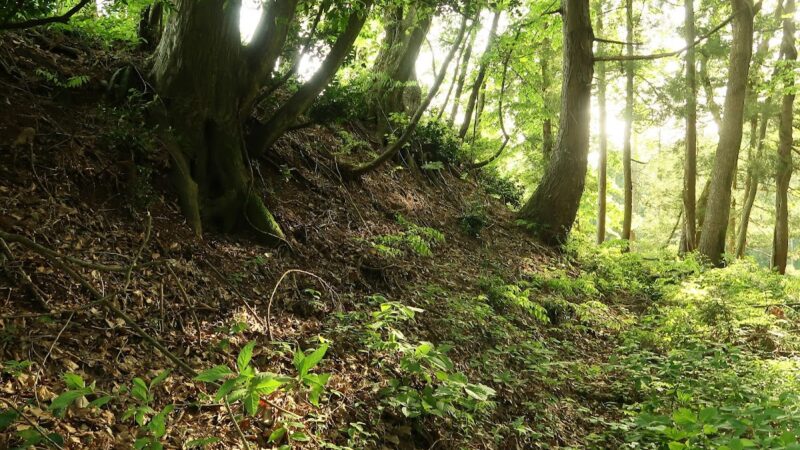
The castle ruins are currently covered with mixed forest, but this actually enhances the medieval atmosphere. You can enjoy the changing seasons, from the fresh greenery in spring to the vibrant autumn leaves.
However, as it is a mountain castle, comfortable clothing and shoes are essential when visiting. Don’t forget to bring insect repellent and drinking water.
Access Methods
Location
939-2306 Jōshō, Yao-machi, Toyama City, Toyama Prefecture
Access by Car
Approximately 30 minutes from Toyama IC on the Hokuriku Expressway, or approximately 25 minutes from Toyama-Nishi IC. Take National Route 472 towards Yao and head towards the Jōshō area of Yao-machi.
There is no dedicated parking lot near the castle ruins, but there is street parking available near the Jōshō settlement. However, please be considerate of local residents.
Access by Public Transportation
Approximately 10 minutes by taxi from Etchū-Yao Station on the JR Takayama Line. Bus service is limited, so it is recommended to check the timetable in advance.
Walking is approximately 4 kilometers from Etchū-Yao Station, taking about 1 hour. Enjoying a stroll through the townscape of Yao along the way is also a pleasant experience.
Ascent Route
There are several entrances to the castle ruins, but the route from the south is considered relatively easy to follow. The trail is an unmaintained mountain path, so caution is necessary.
The elevation difference is approximately 50-60 meters, and the climb takes about 15-20 minutes. Those who are not confident in their physical fitness should climb at their own pace without overexerting themselves.
Precautions for Visiting
Equipment and Preparation
- Clothing: Long sleeves and long pants are essential. Mountain castles have many bushes and branches, so avoid exposing your skin.
- Shoes: Non-slip trekking shoes or hiking boots are ideal.
- Items to Bring: Drinking water, a towel, insect repellent, a first-aid kit, and a map or GPS device are recommended.
- Season: Spring to autumn is suitable for visiting, but be careful in summer due to the abundance of insects.
Safety Precautions
- Avoid visiting alone; if possible, travel in a group. – Avoid visiting on days with bad weather or when bad weather is expected.
- Check your cell phone signal strength in advance to be prepared for any eventuality.
- Be aware of wild animals (especially wild boars and bears), and consider carrying a bell or similar device.
Manners
- The castle ruins are a valuable cultural asset. Please refrain from damaging the remains or littering.
- When passing through private property, please be considerate of local residents.
- Photography is permitted, but please be mindful of the privacy of other visitors.
Nearby Tourist Attractions
Etchu Yatsuo Townscape
After visiting Shiroo Castle, be sure to also stroll through the townscape of Etchu Yatsuo. Yatsuo, famous for the “Owara Kaze no Bon” festival, has a beautifully preserved townscape and has been designated as an Important Preservation District for Groups of Traditional Buildings.
The charming scenery of cobblestone slopes and houses with lattice doors will give you the feeling of stepping back in time.
Other Castle Ruins in Toyama City
Toyama Castle: Located in the heart of Toyama City, Toyama Castle is known as the residence of Sasa Narimasa and the Maeda family of the Kaga Domain. Currently, it is maintained as Toyama Castle Ruins Park, and the Toyama City Local History Museum is housed in a castle-like building. It is also selected as one of the Continued Top 100 Japanese Castles.
Yasuda Castle: Located in Fuchu-machi, Toyama City, Yasuda Castle is a flatland castle with a well-preserved moat. It is designated as a national historic site and preserves the appearance of a medieval castle.
Other Famous Castles of Etchu Province
There are many other castle ruins in Toyama Prefecture.
Masuyama Castle: Located in Tonami City, Masuyama Castle is one of the Continued Top 100 Japanese Castles and is counted among the three great mountain castles of Etchu Province. It is known for its vast layout and well-preserved remains.
Takaoka Castle: Located in Takaoka City, Takaoka Castle is a flatland castle built by Maeda Toshinaga, the second lord of the Kaga Domain, and is selected as one of Japan’s Top 100 Castles. It is a popular castle ruins park with a beautiful moat, enjoyed by local residents.
Mori-dera Castle: Located in Toyama City, Mori-dera Castle is also an important castle site in the history of the Sengoku period in Etchu Province.
Cultural Value of Shiroo Castle
Toyama City Designated Historic Site
Shiroo Castle is designated as a historic site by Toyama City and is protected as an important cultural property of the region. It is considered to have high academic value as a typical example of a medieval mountain castle.
Position in Etchu Castle Research
While approximately 400 castle ruins have been identified in Toyama Prefecture, Shiroo Castle occupies an important position in Etchu castle research due to its well-preserved remains and clearly defined layout.
With its long, narrow layout, location protected on three sides by rivers, and its ability to withstand a two-year siege, it is a valuable example for understanding the defensive philosophy of medieval mountain castles.
Future Preservation and Utilization
Mountain castles in rural areas like Shiroo Castle are not well-known, making their preservation and utilization challenges. However, in recent years, with the increase in castle enthusiasts and a re-evaluation of them as regional historical resources, attention is growing.
Local volunteers are working on maintenance activities and installing information boards, and it is expected that the environment will become even more accessible to visitors in the future.
The Significance of Visiting Shiroo Castle
Shiroo Castle is not a famous castle like Toyama Castle or Takaoka Castle, but that is precisely why it is worth visiting. It is a simple mountain castle that has not been commercialized for tourism, where you can quietly feel the spirit of the Sengoku period.
By actually walking along the long, narrow layout resembling a warship and witnessing the moats and earthworks firsthand, you can experience medieval castle technology and defensive philosophy. Furthermore, reflecting on the historical fact of a two-year siege, you’ll be moved by the hidden strength of this small mountain castle.
Summary
Shiroo Castle, located in Yao-machi, Toyama City, Toyama Prefecture, is an important mountain castle that tells the story of the Sengoku period in Etchu Province. Built on an isolated hill on the west bank of the Jinzu River, its long, narrow layout has a unique shape reminiscent of a warship, attracting attention among castle enthusiasts.
Its robust defenses, which withstood a two-year siege, its strategic location protected on three sides by rivers, and the well-preserved remains such as earthworks and moats, fully convey the charm of a medieval mountain castle.
While access may be somewhat difficult, its historical value and scenic beauty more than compensate for it. When visiting Toyama City, be sure to visit Shiroo Castle and experience the history and nature of Etchu.
Reflecting on the battles fought at this small mountain castle during the Sengoku period, spending time quietly contemplating history will be an invaluable experience. Shiroo Castle is a precious historical heritage site that teaches us about the diversity and depth of Japanese castle culture.