Complete Guide to Kosaka Castle (Ushiku City, Ibaraki Prefecture): History, Highlights, and Access Information
What is Kosaka Castle?
Kosaka Castle (Osaka-jo) is a medieval mountain castle located in Kosaka-cho, Ushiku City, Ibaraki Prefecture. Situated at a strategic point in southern Hitachi Province, it functioned as an important branch castle of the Okami clan during the Sengoku period. Currently, it is maintained as the “Kosaka Castle Ruins Plaza (Kosaka Castle Ruins Park),” where various remains such as dry moats, earthworks, and gatehouses are well-preserved.
Because the basic structural elements of a mountain castle are clearly preserved, it is a valuable historical site that is easy to understand not only for castle enthusiasts but also for beginners to mountain castles.
Basic Information
- Location: Kosaka-cho, Ushiku City, Ibaraki Prefecture
- Other Names: None
- Castle Structure: Hilltop Castle
- Builder: Okami Harusuke
- Year of Construction: Eiroku period (1558-1570)
- Year of Abandonment: Tensho 18 (1590)
- Main Lords: Okami clan
- Remains: Dry moat, earthworks, earthen bridge, gate, horizontal moat, watchtower base ruins
- Designated Cultural Property: Ushiku City Designated Historic Site
History of Kosaka Castle
Background and Purpose of Construction
Kosaka Castle is believed to have been built during the Eiroku period (1558-1570) by Okami Danjo-chu (Okami Harusuke), the lord of Okami Castle. The primary purpose of its construction was to serve as a subsidiary castle to counter the Toki clan, whose base was Edosaki Castle.
The Okami clan was a powerful local family in southern Hitachi Province. They strengthened their territorial control by strategically placing multiple subsidiary castles, including Kosaka Castle, around their main castle, Okami Castle (present-day Ryugasaki City). Kosaka Castle was located north of Ushiku Marsh, a strategically important point suitable for monitoring and defending the Edosaki area.
Relationship between the Okami and Oda Clans
Initially, the Okami clan was subordinate to the Oda clan, a prominent family in Hitachi Province. The Oda clan was a powerful daimyo family that held influence from southern Hitachi Province to northern Shimosa Province, but gradually lost power due to conflicts with the Satake clan to the north.
With the decline of the Oda clan, the Okami clan was forced to seek its own survival strategy. It is believed that Kosaka Castle became increasingly important as a military base for the Okami clan during this period.
Alliance with the Hojo Clan and Countermeasures Against the Satake Clan
After the fall of the Oda clan, the Okami clan formed an alliance with the Tokihara clan and joined the ranks of the Hojo clan, the dominant power in the Kanto region. This choice was a strategy to counter the Satake clan, which was expanding its power from the north.
The Satake clan was a powerful Sengoku daimyo based in northern Hitachi Province, and during the Tensho era, they were continuously advancing southward with the aim of unifying Hitachi Province. The Okami clan sought to resist the pressure of the Satake clan by gaining the backing of the Hojo clan.
Kosaka Castle functioned as a key fortress in the Hojo clan’s network of control over the Kanto region during this period. The Hojo clan was incorporating local forces throughout the Kanto region into their ranks, building a system to oppose the Toyotomi regime.
The Siege of Odawara and the Abandonment of the Castle
In 1590 (Tensho 18), Toyotomi Hideyoshi’s “Siege of Odawara” began. This military operation aimed to subdue the Hojo clan, who controlled the Kanto region, and complete the unification of Japan under the Toyotomi regime.
The Hojo clan resisted by holding out in Odawara Castle, but were forced to surrender in the face of the overwhelming Toyotomi army. With the fall of the Hojo clan, the Okami clan, who were under their command, also suffered the same fate, losing their territory.
With the downfall of the Okami clan, Kosaka Castle lost its military and political function and was abandoned. From then on, Kosaka Castle was never used as a military base, and its remains were buried underground.
Preservation and Development in Modern Times
After its abandonment, the Kosaka Castle site was used for a long time as farmland and woodland, but the remains were preserved in relatively good condition. In recent years, its value as a local historical heritage site has been re-recognized, and it has been developed into a historical park by Ushiku City.
Currently, it is open to the public as “Kosaka Castle Ruins Plaza” or “Kosaka Castle Ruins Park,” and is used as a place for historical learning and strolling.
Structure and Layout of Kosaka Castle
Overall Structure
Kosaka Castle is a flatland castle utilizing the tip of a plateau. While the castle grounds are relatively compact, it possesses a defensive structure typical of mountain castles from the Sengoku period. Multiple baileys are arranged around the main enclosure, and it was heavily defended by dry moats and earthworks.
The castle’s location is on a slightly elevated area surrounded by lowlands, and its layout skillfully utilizes the natural terrain. This topographical advantage allowed for effective defense even with a small force.
Main Enclosure (Honmaru)
The main enclosure is located in the center of the castle and is the most important section. Surrounded by earthworks, it is believed to have housed the lord’s residence and command post. While not particularly large, the main enclosure is sufficiently spacious for a subsidiary castle.
From the main enclosure, one can overlook the surrounding terrain, making it a suitable position for monitoring enemy movements.
Dry Moat
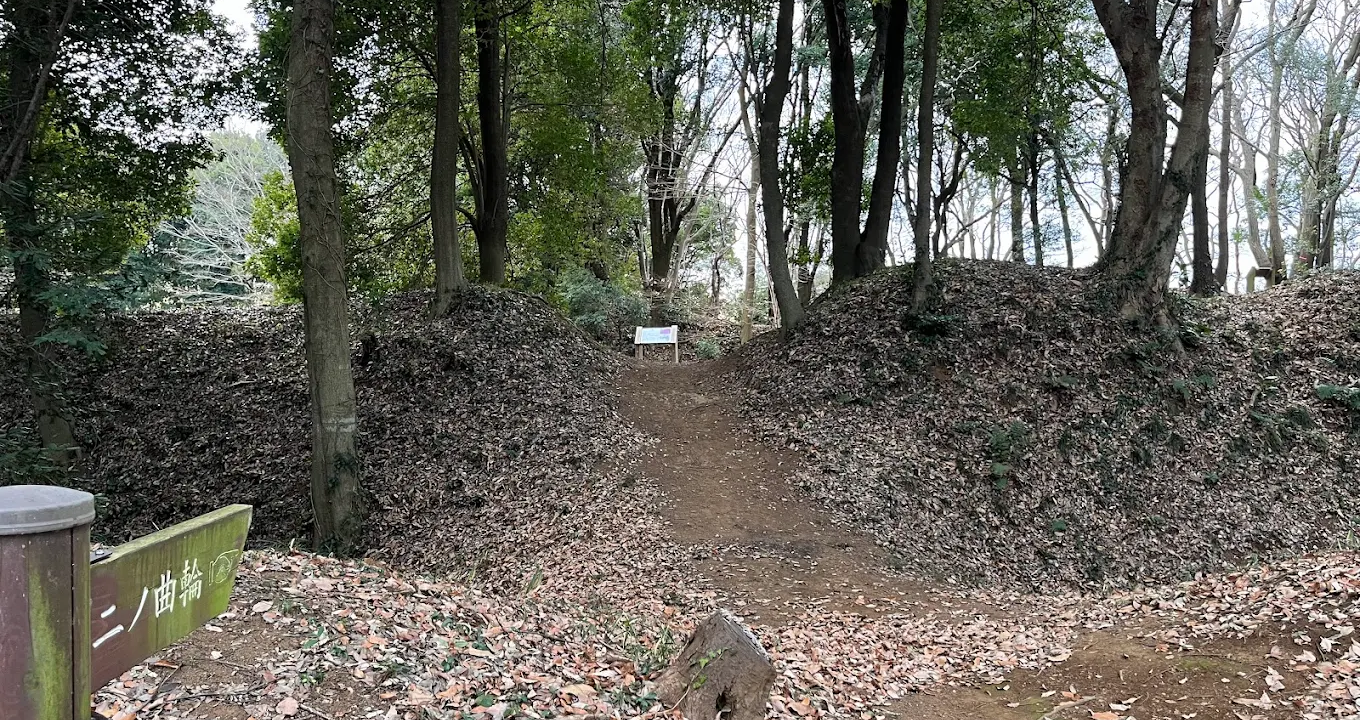
One of the greatest highlights of Kosaka Castle is its well-preserved dry moat. Dry moats separated the baileys and were important defensive structures to prevent enemy intrusion.
The dry moats of Kosaka Castle reached depths of several meters in some places, demonstrating the high level of defense at the time. The shape and arrangement of the moats reveal insights into the castle-building techniques of the Sengoku period.
Particularly noteworthy are the various ingenious features designed to restrict the movement of attackers, such as the treatment of the moat bottom and the curves of the moats.
Earthworks
Earthworks were earthen embankments built around the baileys, serving as defensive walls. At Kosaka Castle, earthworks surrounded the main bailey and each other, and some of them are still clearly visible today.
The height of the earthworks varied depending on the location, but in some places they reached about 2-3 meters, forming a strong defensive line in combination with the dry moats.
It is thought that fences or walls were built on top of the earthworks, further enhancing their defensive capabilities.
Koguchi (Entrance)
Koguchi were the entrances to the castle and the areas that needed the strongest defenses. At Kosaka Castle, multiple koguchi sites have been identified, and their structure provides insights into the defensive techniques of the Sengoku period.
Koguchi were not simple openings; they incorporated earthworks and dry moats to make enemy intrusion difficult. Some were also positioned to allow for attacks from the flanks of enemies passing through.
Dobashi (Earthen Bridge)
Dobashi were earthen bridges built to cross dry moats. At Kosaka Castle, several earthen bridges crossing dry moats have been identified, functioning as communication routes between baileys.
While earthen bridges were used as passageways in peacetime, they could also be destroyed during wartime to prevent enemy intrusion. Thus, earthen bridges served both defensive and practical purposes.
Yokobori (Horizontal Moat)
Yokobori were moats dug horizontally along slopes, serving to prevent enemies from climbing the slopes and invading the castle. The remains of a horizontal moat have also been confirmed at Kosaka Castle, indicating that a variety of defensive techniques were employed.
The horizontal moat, when combined with the vertical dry moat, created a more complex defensive system.
Turret Base Remains
A turret base is a platform for constructing buildings such as watchtowers and armories. At Kosaka Castle, a raised area believed to be the site of a turret base remains, suggesting that a wooden turret once stood there.
From the turret, one could survey the surrounding area, allowing for early detection of approaching enemies. Furthermore, the turret functioned as a defensive stronghold, serving as a base for attacks using bows and arrows and firearms.
Highlights of Kosaka Castle
Well-Preserved Remains
The greatest appeal of Kosaka Castle is the extremely well-preserved structural elements of this Sengoku period mountain castle. Castle ruins where diverse remains such as dry moats, earthworks, gates, earthen bridges, horizontal moats, and turret base remains can be observed all at once are rare in the Kanto region.
Especially for those new to mountain castles, these remains are clearly preserved, making them an excellent learning tool for understanding the basic structure of castles. Information boards are also installed, allowing visitors to view each structure while reading explanations.
The Impressive Dry Moat
Many visitors to Kosaka Castle are impressed by the impressive dry moat. Standing at the bottom of the deeply excavated moat, one can truly appreciate the high level of defense at the time.
The moat walls are steeply sloped, making it extremely difficult for enemy soldiers to climb. Walking along the bottom of the moat also allows you to experience the castle’s defenses from the attacker’s perspective.
The Series of Earthen Embankments
The series of earthen embankments surrounding the baileys is also impressive. There are places where you can walk on top of the embankments, allowing you to survey the castle’s interior and exterior from the defender’s point of view.
The height and width of the embankments allow you to imagine the immense effort required to construct the castle.
The Defensive Structure of the Gate
Observing the structure of the gate reveals the ingenuity of castle construction techniques from the Sengoku period. It’s clear that this wasn’t just a simple entrance, but a place where various measures were taken to make enemy intrusion difficult.
Careful observation of the layout of the earthworks and moats around the entrance reveals how the defenders tried to put the attackers at a disadvantage.
Seasonal Scenery
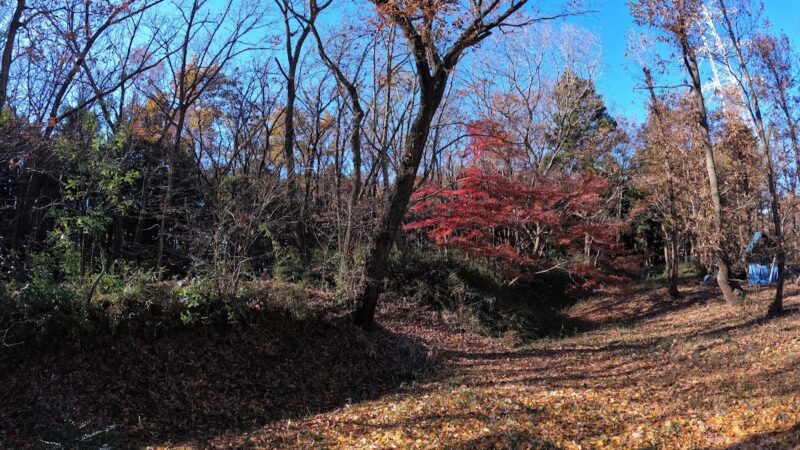
Kosaka Castle Ruins Park is located in a rich natural environment, allowing visitors to enjoy the scenery of each season. Spring brings fresh greenery, summer offers deep green, autumn brings vibrant foliage, and winter, with its clear view of the ruins after the leaves have fallen, each season has its own unique charm.
Especially from autumn to winter, the withered vegetation makes the shape of the ruins clearer, making it the ideal season for observing the castle.
Well-maintained Walking Paths
As it is a park, walking paths are provided, allowing for safe viewing of the ruins. Signboards and explanatory panels are placed in appropriate locations, making it enjoyable even without prior knowledge.
The walking paths are relatively flat, and comfortable shoes are sufficient. The walk takes approximately 30 minutes to an hour, allowing for a thorough and leisurely observation. ## Access Information
Access by Public Transportation
From Ushiku Station on the JR Joban Line
- Take the Kanto Railway bus bound for “Ushiku Joen”
- Get off at the “Danchi Chuo” bus stop (approximately 15 minutes)
- From the bus stop, it’s about a 5-minute walk to Kosaka Castle Ruins Park.
Since bus services are limited, it is recommended to check the timetable in advance. Especially on holidays, there may be fewer buses, so please be careful.
By Taxi
If you take a taxi from Ushiku Station, the journey takes approximately 10 minutes and costs around 1,500 yen. A taxi is convenient if you are visiting with multiple people or want to make the most of your time.
Access by Car
From the Joban Expressway
- Exit the Joban Expressway at the Ushiku Interchange
- Approximately 10 minutes via National Route 408
- Proceed to the parking lot of Kosaka Castle Ruins Park
Parking is free, but space is limited, so early arrival is recommended on holidays and other days when congestion is expected.
Car Navigation Settings
You can search using the address “Kosaka-cho, Ushiku City, Ibaraki Prefecture” or the facility name “Kosaka Castle Ruins Park”.
Nearby Parking
Kosaka Castle Ruins Park has its own free parking lot. While the capacity is limited to about 10 cars, parking is usually not a problem on weekdays.
Important Notes for Visitors
- The park is open year-round, but please avoid visiting at night.
- The ground can become slippery after rain, so please be careful.
- Insect repellent is recommended during the summer months.
- There are no vending machines for drinks, so please bring your own.
- Toilets are located within the park.
Visiting Points and Model Course
Beginner’s Course (Duration: 30 minutes)
- Parking Lot/Entrance: Understand the overall layout using the information board.
- Main Enclosure: Explore the central part of the castle.
- Dry Moat: Observe the most impressive remains.
- Gate Entrance: Check the defensive structure of the entrance.
- Earthen Bridge: Experience the earthen bridge crossing the moat.
This course efficiently covers the main highlights of Kosaka Castle.
In-Depth Observation Course (Duration: 60 minutes)
- Parking Lot/Entrance: Read the information board beforehand
- Outer Perimeter: Observe the overall structure of the castle from the outside
- Dry Moat: Walk along the bottom of the moat to experience its defensive capabilities
- Earthworks: Walk along the earthworks to survey the castle interior
- Main Enclosure: Carefully examine the central area
- Gate Enclosure: Compare and observe multiple gate entrances
- Horizontal Moat: Confirm the ingenuity of slope defenses
- Watchtower Base Remains: Confirm the location of the observation post
This course allows you to understand the entire defensive system of the castle while observing each structure in detail.
Photography Tips
- Dry Moat: The angle looking up from the bottom of the moat is very impressive.
- Earthwork: Shooting from the side makes the height easier to understand.
- Gate Enclosure: Shoot with a wide-angle lens to capture the entire defensive structure.
- Panoramic View: Take a panoramic shot looking around from the main enclosure.
Autumn and winter, when the leaves have fallen, are recommended as the shape of the remains is clearly visible.
Nearby Tourist Attractions
Okami Castle Ruins
Okami Castle Ruins, the main castle of Kosaka Castle, are located in Ryugasaki City. Visiting both Kosaka Castle and Okami Castle allows you to understand the Okami clan’s castle network. Okami Castle also has remaining structures, making it a worthwhile sight for castle enthusiasts.
Ushiku Daibutsu
The Ushiku Daibutsu, a representative tourist spot in Ushiku City, is about a 15-minute drive from Kosaka Castle. Known as one of the world’s largest bronze statues, it attracts many tourists. Visiting it in conjunction with a visit to Kosaka Castle is also recommended.
Ushiku Marsh
Located south of Kosaka Castle, Ushiku Marsh is known for its rich natural environment. It’s a beautiful spot for birdwatching and strolling, with stunning scenery throughout the seasons.
Ushiku Chateau
Ushiku Chateau, a historical building constructed during the Meiji era, tells the story of Japanese winemaking history. It also features a restaurant and shops, allowing visitors to enjoy both sightseeing and dining.
Ryugasaki City Historical and Folk Museum
This museum provides information about the history of the Okami clan and the surrounding area. Exhibits on Kosaka Castle and Okami Castle are also available, deepening your understanding if you visit before or after your main visit.
Castle Network around Kosaka Castle and Ushiku Marsh
Okami Clan’s Castle Group
The Okami clan used Okami Castle as their base and established several branch castles, including Kosaka Castle. These castles worked in conjunction with each other to control and defend their territories.
Main castles associated with the Okami clan:
- Okami Castle (Ryugasaki City): Main castle
- Kosaka Castle (Ushiku City): Northern branch castle
- Other branch castles: Multiple castles located around Ushiku Marsh
Visiting these castles will help you understand the realities of regional control during the Sengoku period.
Major surrounding castles
Edosaki Castle (Inashiki City)
This was the base of the Toki clan and a rival of the Okami clan. Located south of Ushiku Marsh, it faced Kosaka Castle across the marsh.
Obata Castle (Higashiibaraki District)
Known as a medieval castle in Hitachi Province, this castle site is suitable for learning about the structure of mountain castles. Visiting it together with Kosaka Castle allows you to compare the characteristics of mountain castles in Ibaraki Prefecture.
Shimazaki Castle (Itako City)
This castle features advanced defensive structures such as umadashi (horse enclosures) and masugata (square enclosures). Visiting Kosaka Castle and Obata Castle together will allow you to understand the diversity of castles in Ibaraki Prefecture.
Model Castle Tour Route
1-Day Course: Castles around Ushiku Marsh
- Morning: Kosaka Castle (Ushiku City)
- Lunch: Ushiku City
- Afternoon: Okami Castle (Ryugasaki City)
- Evening: Ushiku Daibutsu or Ushiku Chateau
This route allows you to efficiently tour the castle network of the Okami clan.
2-Day Course: Castle Tour of Southern Ibaraki Prefecture
- Day 1: Kosaka Castle → Okami Castle → Edosaki Castle
- Day 2: Obata Castle → Shimazaki Castle
This route allows you to comprehensively visit representative medieval castles in Ibaraki Prefecture.
Cultural Value of Kosaka Castle
Academic Value
Kosaka Castle has a typical structure and scale as a branch castle of a local powerful family during the Sengoku period. Due to the excellent state of preservation of the remains, it is a valuable resource for studying the castle construction techniques and defensive philosophies of the time.
In particular, the arrangement of the dry moats and earthworks, and the structure of the gate, clearly demonstrate the characteristics of castle architecture in the Kanto region in the late 16th century, making it of archaeological and historical importance.
Educational Value
Kosaka Castle Ruins are excellent teaching materials for castle education because the basic structural elements of a mountain castle are clearly preserved. It is used as a place for school education and lifelong learning, and is a valuable place to learn about local history.
The abundance of information boards and explanatory signs makes it easy to understand even without specialized knowledge, making it suitable for learning by a wide range of age groups.
Value as a Regional Resource
Kosaka Castle Ruins, as an important historical heritage site of Ushiku City, contributes to the formation of the region’s identity. Having been developed as a park, it also functions as a place of relaxation for citizens, creating a space where history and modern life are in harmony.
It is also utilized as a tourist resource, and the visits from castle enthusiasts and history lovers contribute to the revitalization of the region.
Preliminary Information for Visiting Kosaka Castle
The Situation in Hitachi Province During the Sengoku Period
In the late 16th century, when Kosaka Castle was built, Hitachi Province exhibited characteristics of the Sengoku period, with multiple powers vying for influence. In the north, the Satake clan competed for power, while in the south, the Oda, Okami, and Toki clans vied for power, repeatedly forming alliances and conflicts.
During this period, the Hojo clan was gaining hegemony in the Kanto region, and the various forces in Hitachi Province were also seeking to forge relationships with the Hojo clan. Kosaka Castle functioned as part of the Okami clan’s survival strategy amidst this complex political situation.
How to View and Enjoy Mountain Castles
When visiting a mountain castle, paying attention to the following points will allow you to enjoy it more deeply:
- Utilization of Terrain: How is the natural terrain utilized?
- Defensive Ingenuity: How are the dry moats and earthworks arranged?
- Design of Movement: How are the movement routes within the castle planned?
- Views and Blind Spots: What can be seen and hidden from where?
- Attacker’s Perspective: The difficulties from the attacking side.
Having these perspectives will lead to an understanding of the castle-building techniques and strategies of the Sengoku period, going beyond mere sightseeing of historical sites.
Useful Items to Bring
- Comfortable Walking Shoes: Sneakers or trekking shoes
- Drinking Water: Essential, especially in summer
- Insect Repellent Spray: From spring to autumn
- Camera: For documenting the ruins
- Binoculars: For observing distant views
- Maps or Pamphlets: Useful to obtain in advance
- Notebook: For recording observations
Suitable Seasons for Visiting
Spring (March-May)
The fresh greenery is beautiful, and the weather is mild, making it ideal for walks. However, the ruins may become difficult to see once the vegetation begins to grow.
Summer (June-August)
The greenery is lush, making it a good season to enjoy nature, but precautions against heat and insects are necessary. The ruins tend to be covered with vegetation.
Autumn (September-November)
The autumn foliage is beautiful, and the weather is pleasant. The ruins become easier to see once the vegetation begins to wither.
Winter (December-February)
This is the best season to view the ruins after the leaves have fallen. It’s ideal for castle observation, but warm clothing is necessary.
Related Historical Materials and Research
Documentary Materials
While historical materials concerning Kosaka Castle are limited, they are scattered throughout documents dealing with the Okami clan and the Sengoku period history of Hitachi Province. Main sources include:
- *Hitachi Shiryo* (Hitachi Historical Records)
- *Shinpen Hitachi no Kuni Shi* (New Compilation of Hitachi Province History)
- Various Sengoku Period Documents
These materials allow us to infer the activities of the Okami clan and the role of Kosaka Castle.
Archaeological Investigations
Surveys and layout surveys have been conducted at the Kosaka Castle site in the past, and the castle’s structure is recorded in detail. These survey results have been published as reports and are used in specialized research.
Related Books
Reference books for learning about Kosaka Castle and the Okami clan:
- Castle guidebooks covering castles in Ibaraki Prefecture
- Research books on the Sengoku period history of Hitachi Province
- Local histories such as the Ushiku City History and the Ryugasaki City History
These books can be viewed at libraries and local history museums.
Summary: The Charm of Kosaka Castle and the Significance of Visiting It
Kosaka Castle is a valuable Sengoku period mountain castle site remaining in Ushiku City, Ibaraki Prefecture. Built by the Okami clan to counter the Toki clan of Edosaki Castle, it is an important historical site that tells the story of the political and military situation in southern Hitachi Province during the Sengoku period.
Its greatest appeal lies in the fact that the basic structural elements of the mountain castle, such as dry moats, earthworks, gates, earthen bridges, horizontal moats, and watchtower bases, are preserved in extremely good condition. These remains are valuable teaching materials that convey the castle-building techniques and defensive philosophies of the Sengoku period to the present day, making it a place of great learning not only for castle enthusiasts but for everyone interested in history.
The site is now developed as Kosaka Castle Ruins Park, with well-maintained walking paths and information boards, making it easily accessible. It’s reachable by bus from Ushiku Station, and free parking is available for those traveling by car.
Nearby, other tourist attractions such as Okami Castle and the Ushiku Daibutsu (Great Buddha) are scattered, allowing you to enjoy the history and culture of Ushiku City for a full day. Furthermore, visiting Kosaka Castle along with other mountain castles in Ibaraki Prefecture, such as Obata Castle and Shimazaki Castle, will provide a deeper understanding of the characteristics of medieval castles in the Kanto region.
Visiting Kosaka Castle is not simply about viewing a historical site; it’s a valuable opportunity to experience the lifestyle of local powerful families during the Sengoku period, the castle-building techniques of the time, and the history of the region. When visiting Ibaraki Prefecture, be sure to visit Kosaka Castle Ruins.