Tamaki Castle Ruins (Sekigahara Town, Gifu Prefecture) Complete Guide | A Border Fortress of Mino and Omi Provinces from the Nanboku-cho Period to the Battle of Sekigahara
Located on the summit of Shiroyama Mountain (307.5 meters above sea level) in the Tamaki district of Sekigahara Town, Fuwa District, Gifu Prefecture, Tamaki Castle Ruins is a mountain castle that functioned as an important military base protecting the border between Mino and Omi Provinces from the Nanboku-cho period through the Sengoku period and up to the Battle of Sekigahara. Recent aerial laser surveys have revealed a much larger castle structure than previously thought, attracting attention from history enthusiasts as a “phantom giant mountain castle.”
This article provides a comprehensive explanation of this important historical site, from its historical background to the details of its castle structure, highlights, and access methods.
Historical Background of Tamagusuku Ruins
Founding Legend from the Nanboku-cho Period
Regarding the founding of Tamagusuku, it is said to have begun around 1332 (Genkō 2) during the Nanboku-cho period, when Satake Hitachi-no-suke Yoshiharu, a descendant of the Seiwa Genji clan, built a fort in this area while being pursued by Ashikaga Takauji. It is believed that Satake Yoshiharu, as a force opposing the Ashikaga, needed to establish a base at a strategically important location on the border between Mino and Omi provinces.
During this period, Japan was divided between the Southern Court (Emperor Go-Daigo’s side) and the Northern Court (Ashikaga Takauji’s side), and the area around Sekigahara became the stage for fierce battles between the two forces. The location of Tamagusuku was a strategic point overlooking the Hokkoku Kaido and Nakasendo roads, making it an ideal location for monitoring and defending the invasion route from Omi to Mino.
Renovations during the Sengoku Period and the Involvement of the Takenaka Clan
During the Sengoku period (Warring States period), Tamaki Castle increased in importance as a fortress for monitoring and defending the border between Omi and Mino provinces. It is believed that the Takenaka clan used Tamaki Castle during this period, under the control of the Saito and Oda clans, who were powerful daimyo in Mino Province.
Recent aerial laser surveys have revealed that many Sengoku period castle construction styles remain in the castle’s structure. This indicates that a fort from the Nanboku-cho period was extensively renovated during the Sengoku period, developing into a more formidable mountain castle. The main enclosure spans over 200 meters from east to west, extending from northeast to southwest, indicating that it was a considerably large castle for its time.
Role in the Battle of Sekigahara
During the Battle of Sekigahara in 1600, Tamaki Castle was used as an important encampment for the Western Army. It is said that when Ishida Mitsunari was preparing the Western Army’s defenses, he renovated Tamaki Castle, which controlled the entrance from Omi to Mino, and used it as a defensive base.
Located west of the Battle of Sekigahara, Tamaki Castle was a crucial location for securing rear support routes for the Western Army’s commanders-in-chief, Mori Terumoto and Toyotomi Hideyori. It is believed to have played a role in monitoring the Eastern Army’s advance from the Omi region and intercepting them as needed.
After the battle, Tamaki Castle was abandoned following Tokugawa Ieyasu’s unification of Japan, but its remains have been preserved in excellent condition to this day.
Tamaki Castle Ruins: Castle Structure and Highlights
Features of the Main Enclosure (Honmaru)
The main enclosure of Tamaki Castle is located on the summit of Shiroyama Mountain and boasts an astonishing scale, measuring over 200 meters from east to west. This vast, flat area allowed for the garrisoning of numerous soldiers and was designed to withstand prolonged sieges.
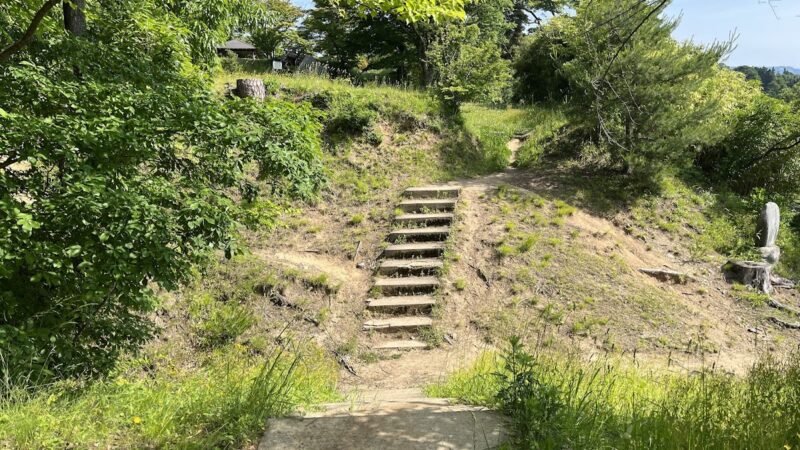
Earthworks surround the main enclosure, and their traces are still clearly visible today. The height of the earthworks varies depending on the location, but at their highest points, they reach over 2 meters, effectively preventing enemy intrusion.
Moat Arrangement and Defensive System
The most distinctive feature of Tama Castle is the multiple moats (horikiri) positioned along the mountain ridge. A moat is a dry moat dug to cut across a ridge, serving as a crucial defensive structure to prevent enemy advances.
At Tama Castle, moats are located in all four directions—east, west, north, and south—centered around the main enclosure. The eastern moat, in particular, is massive, measuring over 5 meters deep and over 10 meters wide. Attacking beyond this moat would be extremely difficult, demonstrating the high level of castle-building technology during the Sengoku period, skillfully utilizing the natural terrain.
Arrangement of Enclosures (Kuruwa)
Several enclosures (kuruwa) are arranged in a stepped pattern around the main enclosure. Enclosures are flat areas within the castle, used as garrisons for soldiers and storage for supplies.
At Tama Castle, the second enclosure (Ninokuruwa) is located one level below the main enclosure, and the third enclosure (Sanokuruwa) is further below, forming a multi-layered defensive structure. Each enclosure is demarcated by earthworks and steep slopes (artificially constructed ramparts), ensuring that even if the enemy breaches one enclosure, they can defend again in the next.
Structure of the Entrance (Koguchi)
The entrances to Tama Castle are also an important feature of the castle. These entrances were not merely entry points, but defensive structures incorporating various ingenious methods to prevent enemy intrusion.
Some of Tama Castle’s entrances employ a “staggered entrance” design, preventing direct advancement. This design prevents the enemy from charging in with full force, forcing them to navigate narrow, winding passages. During this time, the castle defenders could attack with bows and arrows or firearms.
Traces of Stone Walls
While Tama Castle is primarily an earthen mountain castle, traces of stone walls have been found in some areas. These may have been constructed during renovations by the Western Army after the Battle of Sekigahara, making them valuable relics illustrating the evolution of castle construction techniques at the end of the Sengoku period.
Stone walls can be seen in part of the main enclosure and around the gate, employing the “nozurazumi” technique, which involves stacking relatively small natural stones.
Remains of the Former Army Sekigahara Ammunition Magazine
Besides the castle remains, the Tamagusuku site also contains the remains of the former Army Sekigahara Ammunition Magazine, constructed after the Meiji era. These concrete structures are attracting attention as valuable industrial heritage that conveys the history of modern military facilities.
The remains of the ammunition magazine are scattered from the foot to the middle of the castle mountain, forming a unique landscape where medieval mountain castle remains and modern military facilities coexist. Visitors have the rare opportunity to see military facilities from different eras simultaneously.
View from Tamagusuku Site
From the summit of the castle mountain, at an altitude of 307.5 meters, you can enjoy a panoramic view of the surrounding area, including the Battle of Sekigahara. On a clear day, you can see as far as Mount Ibuki, the Yoro Mountains, and the Nobi Plain, giving you a real sense of why this location was considered a strategically important military point. In particular, its location overlooking Sekigahara, where two important highways, the Hokkoku Kaido and the Nakasendo, intersected, makes it an ideal spot for monitoring the movement of people and goods from Omi to Mino. Furthermore, the topographical features of the Sekigahara Basin, nestled between the natural fortresses of Mount Ibuki to the west and the Yoro Mountains to the east, are clearly observable.
Latest Research and New Discoveries
Discoveries through Aerial Laser Surveying
In recent years, surveys using aerial laser surveying (LiDAR) technology have been conducted, revealing numerous ruins that could not be discovered through conventional ground surveys. This technology involves irradiating the ground surface with laser light from an aircraft to create a precise topographic map that removes trees and other vegetation, proving highly effective in discovering castle ruins buried in forests.
The Tamaki survey revealed numerous previously unknown moats, baileys, and earthworks, indicating that the castle’s scale significantly exceeds previous estimates. In particular, the east-west extent of the castle grounds is greater than expected, with some suggesting it could reach nearly 400 meters in length.
Featured on NHK’s “History Detective”
On December 19, 2020, Tamaki Castle was featured on the NHK program “History Detective” as “Scoop from the Sky: The Phantom Giant Mountain Castle,” generating a significant response. The program visually recreated Tamaki Castle’s three-dimensional structure based on aerial laser surveying data, making its scale and complexity widely known.
Since this broadcast, the number of history enthusiasts and castle fans visiting the Tamaki Castle ruins has increased, and it is attracting attention as a new tourist resource for Sekigahara Town.
Future Research Issues
Many aspects of Tamaki Castle remain unresolved. In particular, the following points are areas for future research:
- Determining the Construction Date: It is necessary to clarify the relationship between the founding legend from the Nanboku-cho period and the Sengoku period remains confirmed by aerial laser surveying. Dating of excavated artifacts is expected.
- Changes in Castle Lords: Due to a lack of historical documents, many aspects of which warlords used Tamaki Castle after Satake Yoshiharu remain unclear. Further investigation is needed regarding its relationship with the Takenaka clan.
- Specific Role in the Battle of Sekigahara: The extent to which the Western Army renovated Tamaki Castle, the actual deployment of troops, and its specific role in the battle are open to debate.
Access and Visitor Guide to Tama Castle Ruins
Location
Address: Tama, Sekigahara-cho, Fuwa-gun, Gifu Prefecture
Access Methods
Access by Car:
- Approximately 10 minutes from the Meishin Expressway “Sekigahara IC”
- There are several parking spaces in the Tama district settlement (free of charge)
Access by Public Transportation:
- Approximately 40 minutes on foot from JR Tokaido Main Line “Sekigahara Station”
- Approximately 10 minutes by taxi
- Bicycle rentals are also available (rented in front of Sekigahara Station)
Hiking Route
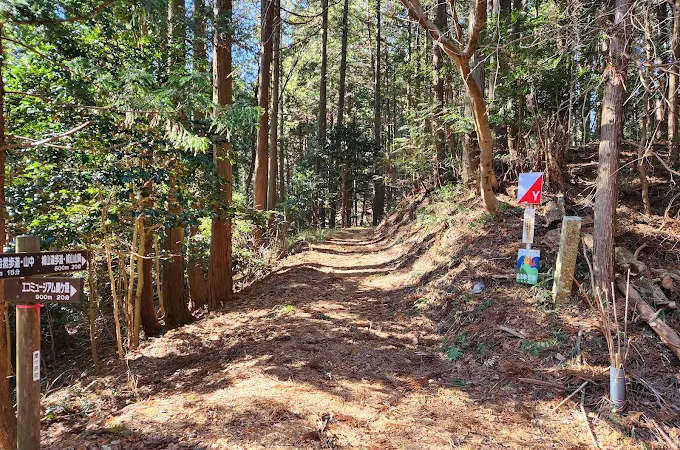
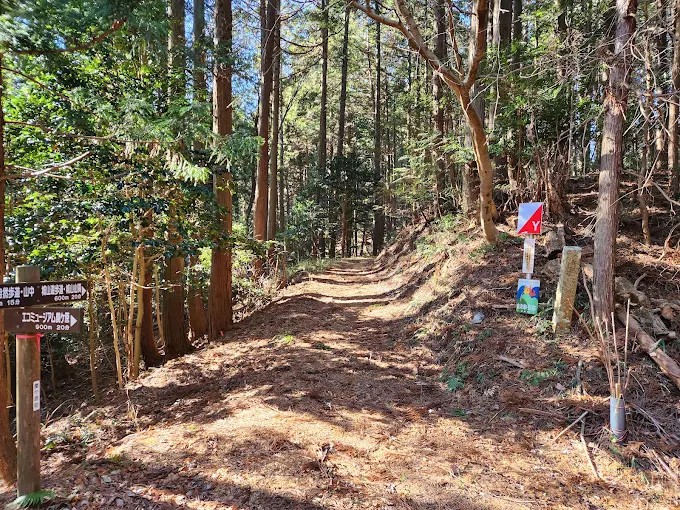
To reach Tama Castle Ruins, use the “Shiroyama Walking Trail” that leads from the Tama district to the summit. The hike from the trailhead to the summit takes approximately 30-40 minutes.
Precautions for Hiking:
- The walking trails are well-maintained, but since it is a mountain trail, comfortable shoes and clothing are necessary.
- Be especially careful as it can be slippery in rainy weather and during winter.
- We recommend bringing drinking water and insect repellent.
- Be careful of bees and venomous snakes in summer.
Estimated Visiting Time
The estimated time required for visiting, including hiking, is approximately 2-3 hours round trip. If you wish to thoroughly explore the castle ruins, we recommend allowing more time.
Visiting Precautions
- Tamaki Castle Ruins are not a nationally designated historical site, but they are a valuable cultural asset. Please be careful not to damage the remains.
- Please take all your trash with you.
- The use of fire is strictly prohibited.
- There is a possibility of snow and ice during winter (December-March).
Related Historical Sites in the Surrounding Area
When visiting Tamaki Castle Ruins, we recommend also visiting other historical sites in Sekigahara Town.
Sekigahara Battlefield: Approximately 15 minutes by car from Tamaki. This is the site of the decisive Battle of Sekigahara in 1600, and numerous historical sites remain, including the site of Ishida Mitsunari’s camp and the site of Tokugawa Ieyasu’s final encampment.
Sasao Mountain: The location of Ishida Mitsunari’s main camp. From the summit, you can see the entire Battle of Sekigahara.
Sekigahara Town Historical and Folk Museum: A facility where you can view materials and exhibits related to the Battle of Sekigahara. Information about Tamaki Castle can also be obtained.
Tokai Nature Trail: The Tokai Nature Trail, which passes around Tamaki Castle, has a hiking course that takes you around the historical sites of Tamakura.
Cultural Value of Tamaki Castle Ruins
Importance as a Border Fortress between Mino and Omi Provinces
Tamaki Castle played an extremely important strategic role as a border castle located on the border between Mino and Omi Provinces. From the medieval period to the early modern period, this region was constantly under military tension, and a castle to protect the border was necessary.
Border castles like Tamaki served as border guards and traffic controllers during peacetime, and as frontline bases to prevent enemy incursions during wartime. Their location and structure provide valuable insights into the border defense systems of the time.
Academic Significance in Mountain Castle Research
Tamaki is an important example illustrating the development of mountain castles from the Nanboku-cho period to the Sengoku period. The remains reveal the evolution from simple early forts to the complex layouts of full-fledged mountain castles of the Sengoku period.
In particular, the defensive system combining earthworks and trenches is noteworthy among castle researchers as a typical example of earthen mountain castles without stone walls. Furthermore, its connection to the historical event of the Battle of Sekigahara enhances the castle’s value.
Excellent State of Preservation
After being abandoned following the Battle of Sekigahara, the Tamaki site was preserved as a forest without large-scale development. Therefore, the castle structure from the Sengoku period remains almost completely intact, and the state of preservation of the remains is extremely good.
Recent aerial laser surveying has revealed the complete picture of the ruins, which were previously obscured by trees, and has reaffirmed their excellent state of preservation. Such well-preserved mountain castles are rare nationwide, and appropriate preservation and utilization in the future are highly anticipated.
Points for Enjoying Tamaki Castle Ruins
Understanding the Historical Background
Before visiting Tamaki Castle Ruins, learning about the historical background from the Nanboku-cho period to the Battle of Sekigahara will deepen your understanding at the site. In particular, understanding why the geographical location on the border of Mino and Omi provinces was militarily important is crucial.
We recommend checking information from the Sekigahara Town Historical and Folk Museum or online beforehand.
Points for Observing Castle Ruins
When visiting Tamaki Castle Ruins, please pay attention to the following ruins.
- The vast flat area of the main enclosure: Experience its scale of over 200 meters from east to west.
- The depth and width of the moat: The large moat on the east side is a must-see.
- The height and shape of the earthworks: Observe how the earthworks surrounding the main enclosure are arranged.
- The layout of the enclosures: Understand the defensive system of the terraced enclosures.
- The view: From the mountaintop, confirm the topography of Sekigahara and the strategic location of Tamaki Castle.
Recommended photo spots
- View from the main enclosure: Take a photo with the Sekigahara Basin and Mount Ibuki in the background.
- Large moat: Photographing the deep moat from the slope is impressive.
- Cross-section of the earthworks: Take a photo from an angle that shows the height of the earthworks.
- Remains of the former Imperial Japanese Army gunpowder magazine: A unique landscape where concrete structures and nature are fused together.
Enjoying the Mountains Through the Seasons
Spring (March-May): The fresh greenery is beautiful, making it the perfect season for hiking. Enjoy hiking while listening to the birdsong.
Summer (June-August): The greenery is lush, and walking in the cool mountains is pleasant, but insect repellent is necessary. Early morning visits are recommended.
Autumn (September-November): The autumn foliage is beautiful, and this is the most popular season. The view from the mountaintop is magnificent with the crisp air.
Winter (December-February): There is a possibility of snow and ice, so caution is needed when hiking, but the castle ruins amidst the snowy landscape are magical.
References and Information Sources Regarding Tamaki Castle Ruins
Books
- *Comprehensive Survey of Japanese Castles*, Volume 9 (Shin Jinbutsu Oraisha)
- *Medieval Castles and Residences in Gifu Prefecture* (Gifu Prefectural Board of Education)
- *The Battle of Sekigahara and Ishida Mitsunari* (Yoshikawa Kobunkan)
- *Mastering Sengoku Period Mountain Castles* (Sunrise Publishing)
Websites
- Sekigahara Tourist Guide Official Website
- Kojodan (Castle Information Site)
- Gifu Prefecture Official Homepage (Cultural Property Information)
Contact Information
Sekigahara Town Hall, Industry and Construction Division
- Phone: 0584-43-1113
- Provides information on the Battle of Sekigahara and historical sites in the town
Sekigahara Town Historical and Folk Learning Center
- Phone: 0584-43-2665
- Provides detailed information on historical sites in the town, including Tamaki Castle
Summary
Tamaki Castle Ruins in Sekigahara Town, Gifu Prefecture, is a mountain castle that functioned as an important military base protecting the border between Mino and Omi provinces from the Nanboku-cho period until the Battle of Sekigahara. Built on the summit of Shiroyama Mountain at an altitude of 307.5 meters, its main enclosure, spanning over 200 meters east to west, and its multi-layered defensive system of multiple moats and earthworks, holds high academic value as a typical example of a Sengoku period mountain castle.
Recent aerial laser surveys have uncovered numerous large-scale remains previously unknown, attracting attention as a “phantom giant mountain castle.” Located near the Sekigahara battlefield, it is a must-see historical site for anyone interested in the history of the Sengoku period.
A walking trail is maintained on Shiroyama Mountain, making it relatively easy to reach the summit. The view from the summit is magnificent, offering a panoramic view of the Sekigahara Basin. When visiting Sekigahara, be sure to visit Tamaki Castle Ruins and reflect on the history of this mountain castle that protected the border between Mino and Omi provinces.
By viewing the same landscape that warlords of the Sengoku period saw from the same spot, you will feel closer to history. Tamaki Castle Ruins are an important piece for understanding the history of Sekigahara from multiple perspectives, and are a valuable cultural asset that is expected to receive further research and preservation efforts in the future.