Nemoto Castle (Tajimi City, Gifu Prefecture) Complete Guide | Thorough Explanation of History, Remains, and Access Information
What is Nemoto Castle?
Nemoto Castle is a Sengoku period mountain castle located in Nishiyama-cho, Tajimi City, Gifu Prefecture. Built on a mountaintop 285 meters above sea level, this castle played a crucial role as a frontline base during the Takeda clan’s invasion of Tono Province. Even today, the remains of the main enclosure, moats, and earthen bridges are well-preserved, making it a historical site that attracts attention from castle enthusiasts.
Also known as “Nemoto Fort,” this mountain castle, built on a relative height of approximately 80 meters, is a valuable historical relic that tells the story of the Takeda clan’s expansion of power in the Tono region. Among the many mountain castles throughout Japan, it is highly valued for its strong influence on Takeda-style castle construction techniques.
History of Nemoto Castle
The Wakao Clan and the Construction of Nemoto Castle
Nemoto Castle was built by the Wakao clan, a branch of the Kai Takeda clan. The Wakao clan’s ancestral home was Wakao Village in Kai Province (present-day Okusa-cho, Nirasaki City, Yamanashi Prefecture), and they were a family descended from Wakao Jinbei. They were a samurai group that had long resided in the Kamanashi River basin, and they had deep ties with the Takeda clan, occupying an important position as their retainer.
From the late Tenbun era to the early Tensho era (1550s to 1570s), the Takeda Shingen and Katsuyori’s invasion of Tono intensified. In conjunction with this military action, the Wakao clan built a castle in Nemoto as a cutting-edge base in the Tono region. This castle was not merely a residence, but functioned as a strategically important point in the Takeda clan’s control of Tono.
Nemoto Castle After the Fall of the Takeda Clan
In March 1582 (Tensho 10), the Takeda clan was destroyed by the combined forces of Oda and Tokugawa. However, the Wakao clan remained in the area and built relationships with the new rulers. In June of the same year, when Oda Nobunaga died in the Honnoji Incident, Wakao Jinsho, the lord of Nemoto Castle, chose to submit to Mori Nagayoshi of Kaneyama Castle (Mino Kanayama Castle).
Mori Nagayoshi recognized Wakao Jinsho’s loyalty and confirmed his territories in Ohara, Nemoto, and Ogi. This allowed the Wakao clan to continue their control over the region. This demonstrates the political judgment of the Wakao clan, who survived the major turning point of the Takeda clan’s downfall and remained as regional lords.
The Battle of Komaki and Nagakute and the End of the Wakao Clan
In 1584 (Tensho 12), the Battle of Komaki and Nagakute, a conflict between Toyotomi Hideyoshi and Tokugawa Ieyasu, broke out. In this battle, Mori Nagayoshi fought on Hideyoshi’s side, and Wakao Jinkuro Motoyoshi, the eldest son of Wakao Jinsei, also went to battle with his lord.
In the Battle of Haguro (Battle of Komaki-Haguro) in April of the same year, Wakao Motoyoshi fought alongside Mori Nagayoshi but was killed in action. Mori Nagayoshi himself also died in this battle, a tragic end for both lord and retainer as they perished on the battlefield. It is unclear how long Nemoto Castle remained in use after this, but it is believed that the power of the Wakao clan declined significantly.
Nemoto Castle’s Layout and Structure
Overall Layout
Nemoto Castle is a typical mountain castle built around a mountaintop at an altitude of 285 meters. The main enclosure, Honkuruwa, is located at the highest point, and secondary enclosures such as the second and third enclosures are arranged in a stepped pattern around it. Its location, with a relative height of approximately 80 meters, provides an excellent balance between defensive advantages and the ability to accommodate daily visits to the castle. The castle’s layout strongly reflects the characteristics of the Takeda-style castle construction techniques, featuring clear divisions by moats and the construction of defensive lines by earthen ramparts. Stone walls are rarely used; the castle’s construction relies heavily on civil engineering techniques.
Main Enclosure (Honkuruwa)
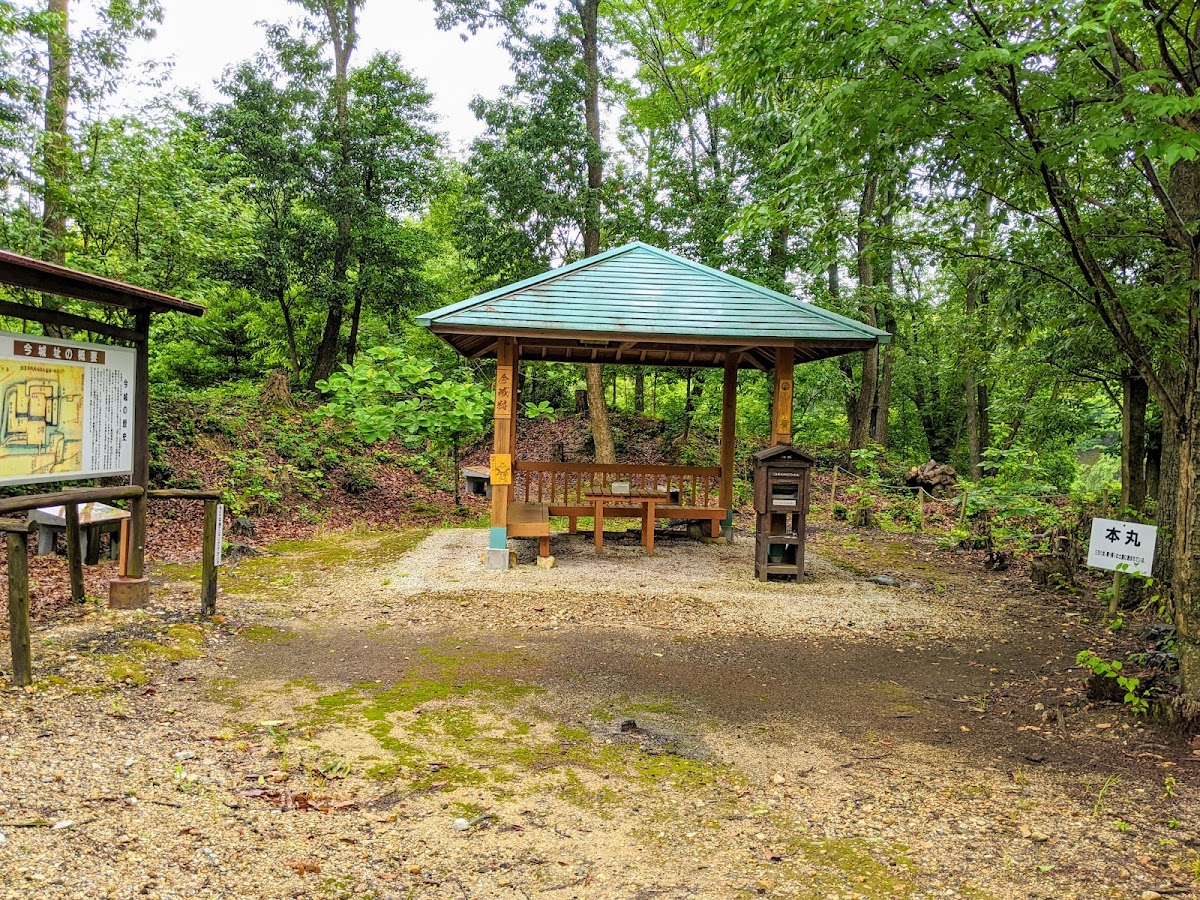
Located at the mountaintop, the main enclosure (Honkuruwa) forms the core of Nemoto Castle. Even today, a clearly defined flat, leveled area remains, suggesting the location of the lord’s residence and command post. The Honkuruwa is of standard size for a medium-sized mountain castle, and its design emphasizes practical combat functionality.
Earthen ramparts surround the Honkuruwa, enhancing its defensive capabilities. Evidence of higher and thicker ramparts can be seen, particularly in directions vulnerable to attack. Within the Honkuruwa is a legendary site known as the “Flag-Raising Pine,” suggesting it was recognized as a symbolic location of the castle.
The Great Moat
The greatest highlight of Nemoto Castle is the great moat located behind the main enclosure (on the rear gate side). This moat is a defensive structure that clearly separates the main enclosure from the rear gate enclosure, boasting an overwhelming scale in both depth and width. Both ends of the moat descend into slopes as vertical moats, a clever design to prevent enemy flanking attacks.
This great moat is a surviving structure that embodies the “extensive use of moats,” a characteristic of Takeda-style castle construction, and remains the most impressive structure when visiting the castle ruins today. The height of the cliff face viewed from the bottom of the moat is breathtaking, allowing one to appreciate the high level of castle construction technology of the time.
Earthen Bridge and Entrance
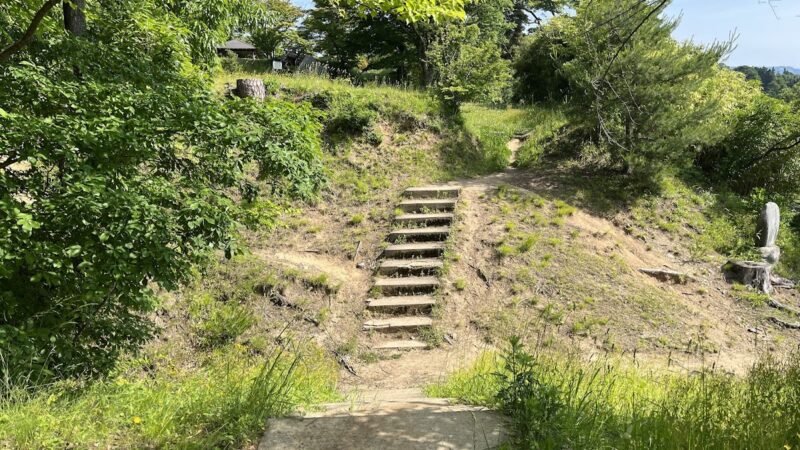
To the north of the main enclosure is a dry moat, and an earthen bridge crosses this dry moat. The earthen bridge serves as a passage connecting the enclosures, but it also represents a defensive weakness, and therefore its structure was carefully designed. It is believed that the area around this earthen bridge functioned as a fortified entrance, and that measures were taken to easily block it in times of emergency.
The width of the earthen bridge was limited to just enough space for a few people to pass side by side, indicating a design philosophy aimed at preventing a large-scale attack by an army. Furthermore, the structure allowed for attacks on enemy soldiers crossing the bridge from the baileys on either side, demonstrating ingenuity in maximizing defensive efficiency.
Second and Third Baileys
Below the main bailey, secondary baileys such as the second and third baileys are arranged in a stepped pattern. These baileys are presumed to have served not only to defend the main bailey but also as garrisons for soldiers and storage areas for supplies.
Each bailey is clearly demarcated by earthen ramparts and steep slopes, designed to function as an independent defensive unit. The connecting paths between baileys are intentionally curved, a design feature intended to hinder a direct enemy advance. This layout is based on a rational design philosophy that allows for effective defense with a small number of defenders.
Highlights of Nemoto Castle
Preservation of the Remains
The greatest appeal of Nemoto Castle is the excellent state of preservation of its Sengoku period (Warring States period) remains. Major remains such as the main enclosure, moats, earthworks, and earthen bridges are clearly visible, making it easy to imagine the castle’s appearance at the time. The large moat, in particular, is overwhelmingly impressive and a sight that will move even those who aren’t castle enthusiasts.
Mountain castles generally tend to have well-preserved remains because they are less susceptible to development, but Nemoto Castle is particularly well-preserved. This is likely due to conservation efforts by local residents and the continued use of the mountain as forest land.
Marker Post and Information Board
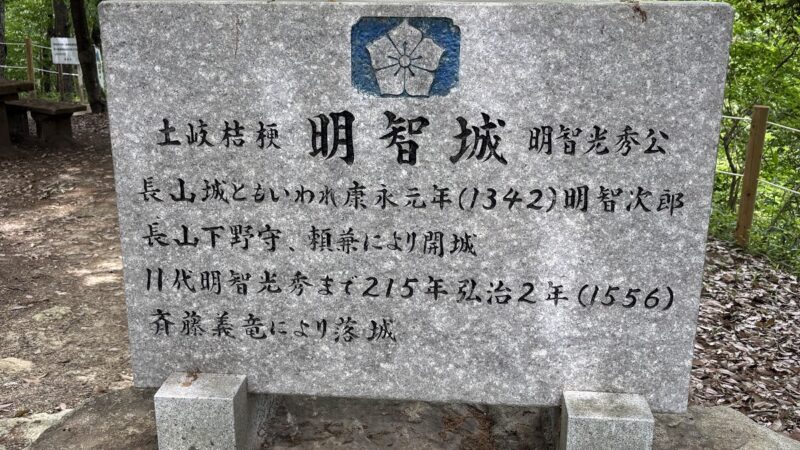
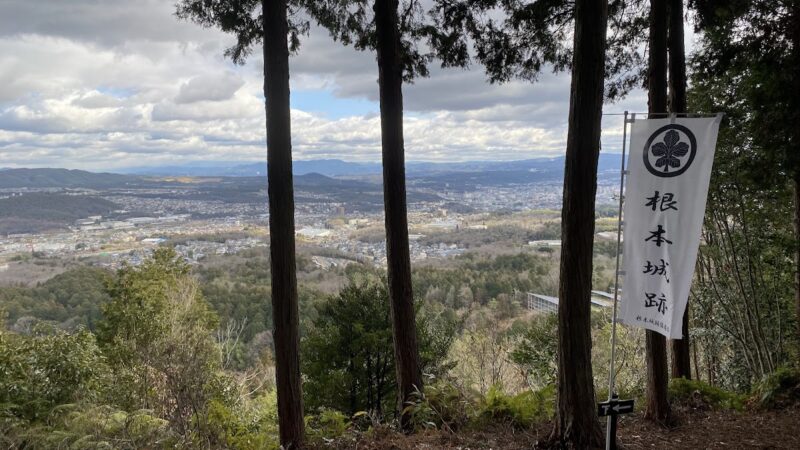
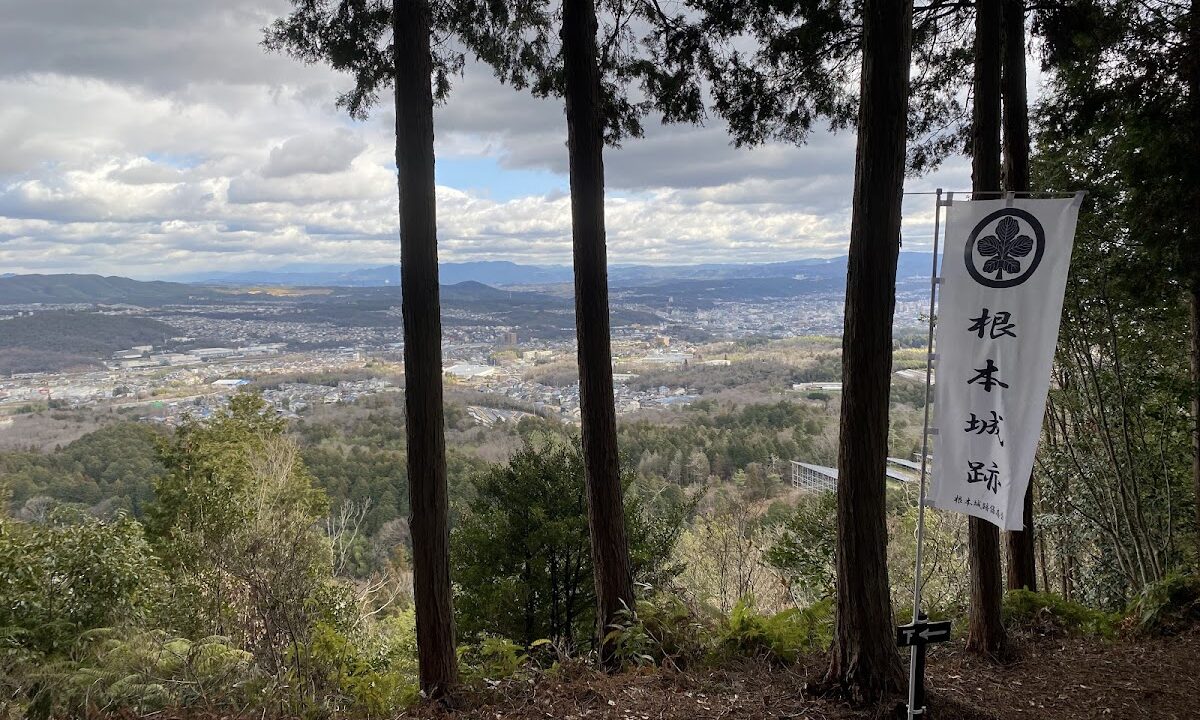
A marker post has been erected at the main enclosure on the mountaintop, clearly indicating that it is the site of Nemoto Castle. This marker post serves as a photo opportunity, and many castle enthusiasts take commemorative photos there.
Information boards are also installed along the climbing route, ensuring that even first-time visitors can reach the mountaintop without getting lost. However, detailed explanatory signs are limited, so studying the history and layout beforehand will allow you to enjoy the castle ruins more deeply.
View
From the mountaintop at an altitude of 285 meters, you can see the city of Tajimi and the surrounding mountains. During the Sengoku period, this view held significant importance as a military surveillance function. It may have also served as a signal fire station to detect enemy movements early and transmit them to allies.
Although some areas are now obstructed by overgrown trees, good views can still be enjoyed from key locations. This is a point where you can truly appreciate the geographical advantage of the castle’s location.
Access Information
Location
Address: 2-chome, Nishiyama-cho, Tajimi City, Gifu Prefecture
Nemoto Castle Ruins are located relatively close to the city center of Tajimi, but since it is a mountain castle, preparation for hiking is necessary.
Access by Car
It is approximately a 10-minute drive from the Tajimi Interchange on the Chuo Expressway. You can access the castle via National Route 19 and major prefectural roads. If using a car navigation system, it’s best to set “Nishiyama-cho, Tajimi City” as your destination.
Parking
There is no dedicated parking lot at Nemoto Castle. While there may be some street parking available near the castle entrance, consideration for local residents is necessary. If possible, it is recommended to use public transportation or park in a nearby public parking lot and walk to the castle.
When parking, please comply with traffic laws and choose a location that does not obstruct other vehicles. Especially near residential areas, good manners such as avoiding noise and long-term parking are required.
Access by Public Transportation
You can take a bus or taxi from JR Chuo Main Line Tajimi Station. If taking the bus, take a route bus such as the Totetsu Bus towards Nishiyama-cho and walk from the nearest bus stop. However, it is recommended to check the distance from the bus stop to the castle entrance and the frequency of buses in advance.
If you take a taxi, it will take about 10 minutes from Tajimi Station to near the castle entrance. It’s a good idea to arrange a taxi for your return trip in advance.
Castle Ascent Route and Estimated Time
Castle Entrance
The entrance to Nemoto Castle is located at the foot of the mountain, and the trail starts from the edge of a residential area. While there may be simple signs and markers at the entrance, they can be unclear, so it’s recommended to check a map or GPS beforehand.
The elevation difference from the entrance to the main enclosure is approximately 80 meters, making it a medium-sized mountain castle. The hiking trail is well-maintained, but it can become slippery in rainy weather or winter, so appropriate equipment is necessary.
Climbing Time
The climb from the entrance to the main enclosure takes about 20-30 minutes at a normal pace. If you stop to observe the ruins along the way, it will take longer. It’s best to allow 1 to 1.5 hours round trip, including descent time.
If you plan to carefully observe the remains such as baileys and moats, we recommend allocating an additional 30 minutes to an hour at the summit. If you plan to take photographs or compare them with a map of the fortifications, you should allow even more time.
Precautions When Visiting the Castle
As visiting the mountain castle involves light hiking, please note the following:
- Clothing: Wear long sleeves and long pants to avoid skin exposure (to prevent insect bites and rashes from plants)
- Footwear: Wear hiking boots or trekking shoes (sneakers are acceptable, sandals are not)
- Items to Bring: Drinking water, towel, insect repellent spray, first-aid kit
- Season: Take precautions against heatstroke in summer and warm clothing in winter
- Weather: Avoid visiting during rainy weather or immediately after rain, as it can be slippery
- Time: Allow ample time to descend before sunset
Surrounding Castles and Related Historical Sites
Kaneyama Castle (Mino Kaneyama Castle)
Kaneyama Castle (Mino Kaneyama Castle) was the residence of Mori Nagayoshi, who was a subordinate of the Wakao clan, the lords of Nemoto Castle. Located in Kaneyama, Kani City, this castle is a nationally designated historical site and a must-see when visiting Nemoto Castle.
After Oda Nobunaga’s conquest of Mino Province, Kaneyama Castle served as the residence of the Mori clan for three generations: Mori Yoshinari, Mori Nagayoshi, and Mori Ranmaru (Tadamasa). The stone walls and baileys are well-preserved, and comparing it to Nemoto Castle, a castle of different scale and structure, allows for a deeper understanding of the castle system of the Sengoku period.
Other Castles in Tono
The Tono region contains numerous castles related to the Takeda clan’s invasions. Naegi Castle (Nakatsugawa City) and Iwamura Castle (Ena City) are particularly famous, both boasting impressive remains. Iwamura Castle is considered one of Japan’s three greatest mountain castles and is known for the beauty of its stone walls.
Visiting these castles allows you to appreciate the history of the power struggle between the Takeda and Oda clans and the strategic importance of the Tono region. Creating a list of castles and planning your visits systematically will make your castle exploration more fulfilling.
Tips for Enjoying Nemoto Castle
Preparations
Before visiting Nemoto Castle, the following preparations will make your visit more fulfilling:
- Historical Study: Understand the relationships between the Wakao, Takeda, and Mori clans.
- Obtaining a Layout Map: Download a layout map from sites such as Kojodan.
- Checking Equipment: Prepare appropriate clothing and equipment for hiking.
- Checking the Weather Forecast: Choose a sunny day for your visit.
- Time Management: Plan a schedule with ample time.
Tips for Visiting
When visiting the castle ruins, keeping the following points in mind will deepen your understanding of the remains:
- Observing the Moats: Descend to the bottom of the moats to get a feel for the height of the cliffs.
- Checking the Earthworks: Walk around the enclosures to confirm the layout of the earthworks.
- Estimating the Entrance: Consider where the connecting routes between enclosures were located.
- Checking the View: Confirm the range visible from the castle and imagine its surveillance function.
- Photography: Record from an angle that shows the characteristics of the remains.
Photography Points
Recommended photography points at Nemoto Castle:
- The marker post of the main enclosure (commemorative photo)
- Panoramic view of the large moat (wide-angle lens recommended)
- The cliff face viewed from the bottom of the moat (impressive composition)
- Panoramic view of the earthen bridge (angle that shows the structure)
- View from the main enclosure (on a clear day)
Historical Significance of Nemoto Castle
Base for the Takeda Clan’s Invasion of Tono
Nemoto Castle was built as a frontline base for the Takeda clan’s invasion of Tono. After unifying Shinano, Takeda Shingen aimed to further expand his power by advancing into eastern Mino (Tono). This region was a strategic point in the Kiso River basin and was economically and militarily important.
The construction of the castle by the Wakao clan at Nemoto is positioned as part of the Takeda clan’s control system of Tono. It is believed that the strategy was to use this castle as a base to establish control over the surrounding area and to use it as a foothold for further westward expansion.
Survival Strategies of Local Lords
The fact that the Wakao clan remained in this area after the fall of the Takeda clan and maintained their territory by becoming subordinate to the Mori clan is a good example of the survival strategies of local lords during the Sengoku period. While being tossed about by the rise and fall of major powers, their attitude of flexibly serving a new lord to ensure the survival of their family was common to many small and medium-sized lords.
However, the death of Wakao Motomi in the Battle of Komaki and Nagakute illustrates the harsh reality of the Sengoku period. Going to the battlefield with one’s lord was a samurai’s duty, and this ultimately determined the fate of the family.
Examples of Takeda-style Castle Construction
The layout of Nemoto Castle strongly retains the characteristics of Takeda-style castle construction. The frequent use of moats, earthen ramparts for defense, and the almost complete absence of stone walls are typical features of castles built under the influence of the Takeda clan.
Nemoto Castle, with its well-preserved remains, is a valuable example for learning Takeda-style castle construction techniques. It is an important historical site that conveys the appearance of a practical mountain castle from the Sengoku period, distinct from the large-scale stone-walled castles of the early modern period.
Summary
Nemoto Castle is a Sengoku period mountain castle located in Tajimi City, Gifu Prefecture, built by the Wakao clan, a branch of the Takeda clan. It played an important role as a frontline base during the Takeda clan’s invasion of Tono, and later survived under the control of the Mori clan, who were subordinates of the Oda clan.
Even today, the remains of the main enclosure, large moat, earthen bridge, and earthen ramparts are well-preserved, and the large moat behind the main enclosure is particularly impressive in scale. This mountain castle, situated at an altitude of 285 meters with a relative height of approximately 80 meters, requires a light hike of 20-30 minutes to reach, but it is a historical site well worth visiting for castle enthusiasts.
Access is approximately 10 minutes by car from the Tajimi Interchange, or by bus or taxi from JR Tajimi Station. There is no dedicated parking lot, so please use public transportation or park considerately in the surrounding area.
When visiting Nemoto Castle, preparing appropriate clothing and equipment for hiking, and doing some research on its history and layout beforehand, will allow you to enjoy a more fulfilling castle exploration. As an example of Takeda-style castle construction techniques and a historical site that conveys the history of a regional lord during the Sengoku period, Nemoto Castle is a valuable cultural heritage of the Tono region.