Atera Castle (Gifu Prefecture) Complete Guide | History, Remains, and Access Explained in Detail
Located in Tegano, Nakatsugawa City, Gifu Prefecture, Atera Castle is a medieval mountain castle that played an important role as a mountain castle in the eastern Mino region. Built on a mountaintop at an altitude of 560m, this castle, with a relative height of approximately 100m, was a strategically important military point in eastern Mino during the Sengoku period. This article thoroughly explains the history of Atera Castle, the characteristics of its remains, points of interest, and access methods, providing useful information for castle enthusiasts and history fans.
Basic Information on Atera Castle
Atera Castle is a mountain castle located in Tegano, Nakatsugawa City, Gifu Prefecture, and functioned as an important base in the eastern Mino region from the medieval period to the Sengoku period.
Location and Setting
- Location: Tegano, Nakatsugawa City, Gifu Prefecture
- Castle Type: Mountain Castle
- Elevation: Approximately 560m
- Relative Height: Approximately 100m
- Construction Period: Medieval Period (Details Unknown)
- Major Remains: Stone walls, earthworks, baileys, moats
Atera Castle is located on a mountaintop along the Atera River, boasting an excellent location offering panoramic views of the surrounding area. Nakatsugawa City is located in the eastern part of Gifu Prefecture and has long been considered an important transportation hub connecting the Kiso Road and Mino Province.
Historical Positioning of Atera Castle
Atera Castle, along with famous castles such as Naegi Castle and Iwamura Castle, was an important base for regional control in the eastern Mino region. While Gifu Prefecture has many famous castles such as Gifu Castle, Gujo Hachiman Castle, and Ogaki Castle, small to medium-sized mountain castles like Atera Castle were also indispensable for regional defense.
History of Atera Castle
Background and Era of Construction
The exact construction date of Atera Castle is unclear due to limited historical records, but it is believed to have been built as a medieval mountain castle. The Higashi-Mino region is located in the eastern part of Mino Province, near the border with Shinano Province (present-day Nagano Prefecture), and was a militarily important area.
In medieval Mino Province, the Toki clan ruled for a long time as the shugo (provincial governor), and their subordinate local lords built castles throughout the region to control their territories. It is presumed that Atera Castle also functioned as a base for one of these local lords.
Atera Castle in the Sengoku Period
With the arrival of the Sengoku period (Warring States period), Mino Province became the stage for Oda Nobunaga’s unification. As the saying goes, “He who controls Mino controls the world,” Mino Province was a strategically extremely important region.
In the Higashi-Mino region, several forces were vying for power, including the Toyama clan based at Iwamura Castle and the Toyama clan at Naegi Castle. Atera Castle may have functioned as one of these regional powers, or as a branch castle of a larger power.
Castle Lord and Ruler
While the specific details of Atera Castle’s lord are unclear due to limited existing historical records, it is believed that the lord was a local lord or powerful family. The area around Nakatsugawa City was close to the sphere of influence of the Toyama clan, and some connection has been suggested.
Abandonment and Aftermath
Like many mountain castles, Atera Castle is thought to have ended its role with the end of the Sengoku period (Warring States period). In the Edo period, mountain castles lost their military value, and castles and encampments on flat land became the administrative centers. Atera Castle naturally fell into ruin, and only remains today.
Remains and Highlights of Atera Castle
Atera Castle still retains several remains that exhibit the characteristics of a medieval mountain castle, making it a fascinating historical site for castle enthusiasts.
Stone Walls
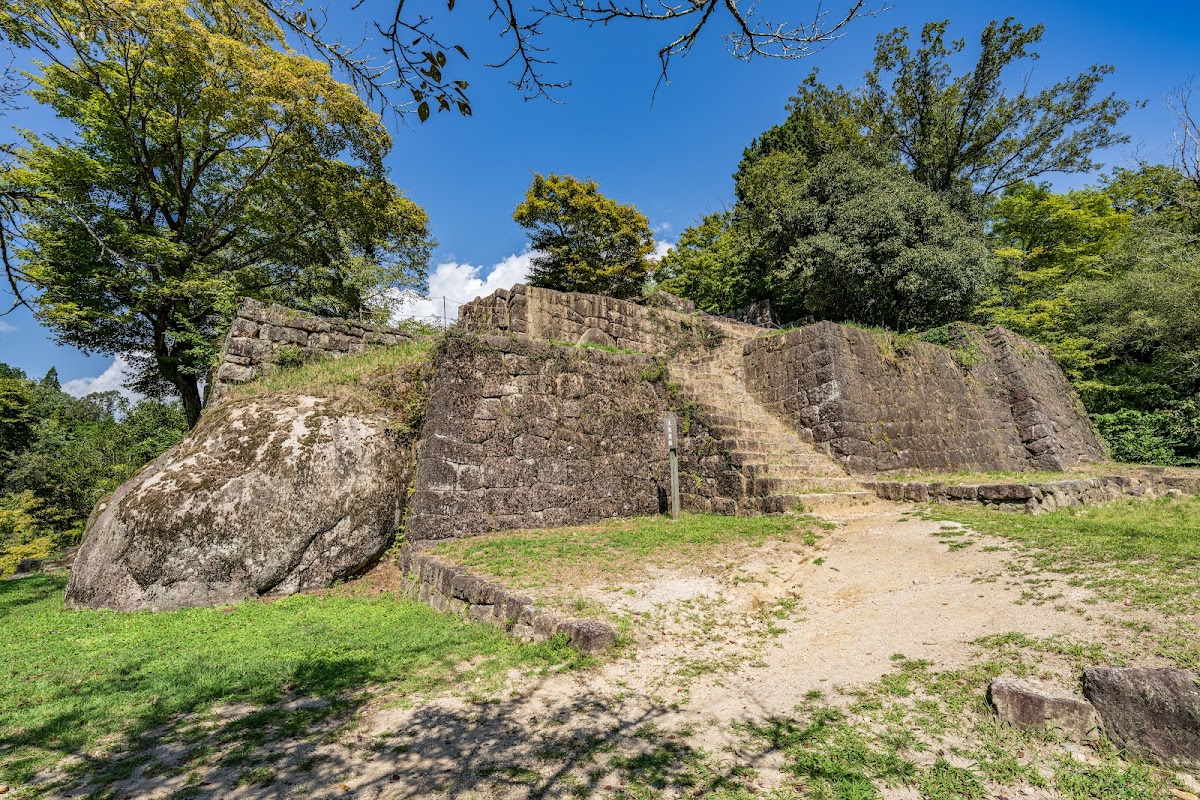
One of the most noteworthy remains of Atera Castle is its stone walls. In medieval mountain castles, stone walls were not always common; most were defended by earthworks and trenches. However, Atera Castle retains some stone walls, providing important clues to the castle’s importance and construction period.
The presence of stone walls suggests that it was not merely a fort of a local lord, but rather built by a force with a certain scale and technical capabilities. By observing the way the stones are stacked and the degree of processing, we can understand the stage of development in castle construction technology.
Earthworks
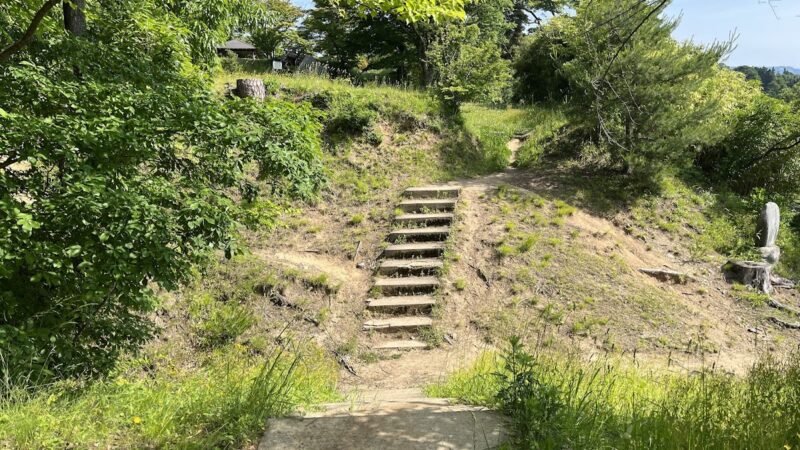
Earthworks were a basic defensive structure of mountain castles, and traces of earthworks can be found in multiple locations at Atera Castle. Earthworks prevented enemy intrusion and also served to enhance defense by allowing fences and walls to be built on top of them.
The height and arrangement of the remaining earthworks allow us to infer the castle’s defensive lines and the locations of important facilities. The state of preservation of the earthworks varies depending on the location, but in the clearly preserved sections, we can get a real sense of the castle’s structure at the time.
Enclosures (Kuruwa)
Enclosures are flat areas within the castle grounds where buildings were constructed or soldiers were stationed. Multiple enclosures have been identified at Atera Castle, arranged in stages around the main enclosure.
The main enclosure is the central part of the castle, the most important location where the lord’s residence and command post were located. Surrounding it are the second and third enclosures, each functioning as an independent defensive unit. The arrangement and size of the enclosures allow for some estimation of the castle’s size and occupancy.
Moats
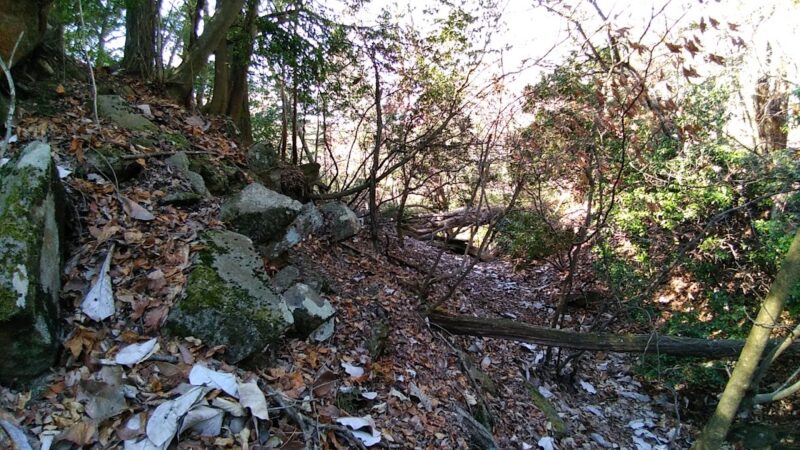
Moats are extremely important defensive structures for castles. Traces of trenches (moats cutting across ridges) and vertical moats (moats dug vertically down slopes) have been confirmed at Atera Castle.
Trees of trenches, in particular, are one of the most effective defensive structures for preventing enemy intrusion in mountain castles. By cutting across the ridge, it made it difficult to reach the castle. The trenches that remain clearly visible today attest to the high level of castle-building technology of the time.
Preservation of Remains
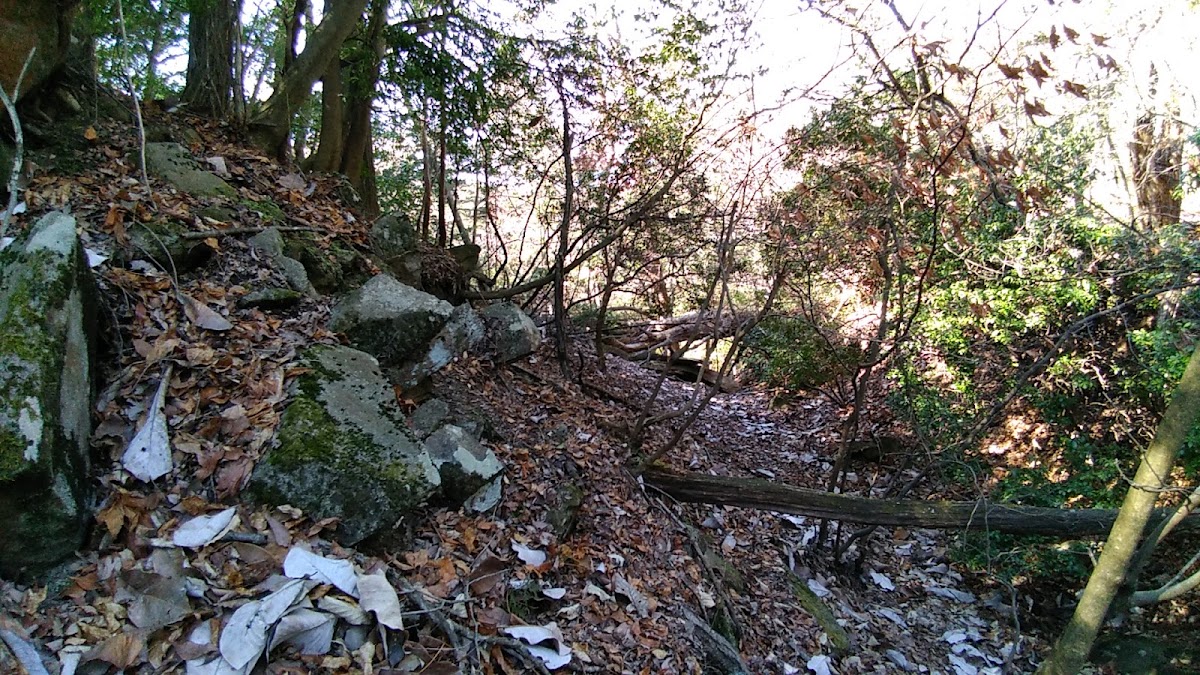
Despite several hundred years having passed since the castle’s abandonment, the remains of Atera Castle are preserved in relatively good condition. This is because its mountain castle location allowed it to escape later development.
However, due to natural weathering and vegetation, some parts of the remains are unclear. When visiting, it is important to be considerate of the preservation of the remains.
Atera Castle and Surrounding Castles
Castles of Eastern Mino
The Eastern Mino region, where Atera Castle is located, has numerous important castles. These castles cooperated with each other, forming a regional defense network.
Naegi Castle
Naegi Castle, located in Naegi, Nakatsugawa City, Gifu Prefecture, is a famous castle selected as one of the Continued Top 100 Japanese Castles. Built on a cliff along the Kiso River, it is a natural stronghold characterized by its stone walls utilizing massive stones. It is relatively close to Atera Castle and is known as an important castle within the same Nakatsugawa City.
Iwamura Castle
Iwamura Castle, located in Iwamura-cho, Ena City, Gifu Prefecture, is a famous castle counted as one of Japan’s three greatest mountain castles. Built at an altitude of 717m, it is also known as “Kirigajo” (Mist Castle). As a central castle in the eastern Mino region, it was the base of the Toyama clan.
Major Castles in Gifu Prefecture
Besides Atera Castle, Gifu Prefecture has many other historically important castles.
Gifu Castle
Located on the summit of Mt. Kinka in Gifu City, Gifu Castle is a famous castle that Oda Nobunaga named “Gifu” and used as a base for his unification of Japan. It is a symbolic representation of the saying, “He who controls Mino controls the world,” and a reconstructed keep now stands, making it a representative tourist attraction of Gifu Prefecture.
Gujo Hachiman Castle
Located in Hachiman-cho, Gujo City, Gujo Hachiman Castle is known as the oldest reconstructed wooden castle in Japan. It is also famous as a “castle in the sky,” and its appearance floating above a sea of clouds is fantastical.
Ogaki Castle
Located in Kuruwa-machi, Ogaki City, Gifu Prefecture, Ogaki Castle is a historically significant castle that served as a base for the Western Army during the Battle of Sekigahara. Currently, a reconstructed keep stands, serving as a symbol of the city.
Access to Atera Castle
Access by Public Transportation
Public transportation access to Atera Castle is limited. The nearest station is Nakatsugawa Station on the JR Chuo Main Line, but from there, you will need to use a bus or taxi to reach the castle ruins.
- Nearest Station: JR Chuo Main Line, Nakatsugawa Station
- Distance from Station: Approximately 10km or more
- Travel Time: Approximately 20-30 minutes by taxi
Visiting by public transportation is difficult, so using a private car or rental car is recommended.
Access by Car
Access by car is the most convenient.
- Nearest Interchange: Nakatsugawa IC, Chuo Expressway
- Distance from Interchange: Approximately 15km
- Estimated Time: Approximately 25-35 minutes
You can drive close to the castle ruins, but parking space is limited, so please be aware of this. The final part of the climb to the castle is on foot.
Points to Note When Climbing the Castle
Atera Castle is a mountain castle, and the following points should be noted when climbing it:
- Clothing and Equipment: Comfortable clothing and non-slip shoes are essential. Trekking shoes are ideal.
- Estimated Time: Allow approximately 30 minutes to 1 hour from the entrance to the main enclosure.
- Season: In summer, be mindful of heat and insects; in winter, be aware of snow and ice.
- Avoid Solo Travel: Visiting in groups is safer whenever possible.
- Drinking Water: Bring plenty of water.
- Mobile Phone: Please note that there may be areas in the mountains where cell phone signals do not reach.
Atera Castle Visiting Points
Recommended Visiting Route
Here is a recommended route for efficiently visiting Atera Castle.
- Castle Entrance: First, get an overview of the castle at the entrance. Check any information boards.
- Vertical Moats and Trenches: Observe the defensive structures remaining along the approach to the castle.
- Outer Enclosure: Confirm the defensive line outside the castle.
- Second and Third Enclosures: Visit the enclosures, which are arranged in stages, in order.
- Main Enclosure: This is the central and most important part of the castle. You can also enjoy the view.
- Stone Walls and Earthworks: Carefully observe the remaining structures in various locations.
Photography Tips
Tips for photographing castles:
- Stone Walls: Photograph in a way that shows the construction method and scale of the stones.
- Earthworks: Choose an angle that conveys the height and continuity.
- Enclosures: A panoramic photograph that shows the size and topography is effective.
- View: The view from the main enclosure is an important element that shows the castle’s location.
- Moat: Photograph in a way that conveys the depth and width.
Best Seasons for Visiting
The best seasons for visiting Atera Castle are as follows:
- Spring (April-May): The fresh greenery is beautiful, and the weather is mild, making it ideal.
- Autumn (October-November): The autumn leaves are beautiful, and the temperature is moderate, making it a good season for visiting.
- Summer (June-September): Due to the heat and many insects, precautions are necessary. Early morning visits are recommended.
- Winter (December-March): Snow and ice are possible; this is for advanced climbers only. However, the views are excellent.
Cultural Value of Atera Castle
Academic Value
Atera Castle is an important resource for the study of medieval and Sengoku period mountain castles in the Higashi-Mino region. The remains, such as stone walls, earthworks, and moats, are relatively well-preserved, making it a valuable historical site for understanding the castle construction techniques and defensive philosophies of the time.
Importance in Local History
When discussing the history of Nakatsugawa City, local castles like Atera Castle are indispensable. Not only large, famous castles, but also these small and medium-sized mountain castles provide insight into the realities of the local community at the time.
Challenges in Preservation and Utilization
There are several challenges in preserving mountain castles like Atera Castle.
- Deterioration due to the Natural Environment: Weathering and overgrowth of vegetation make the remains difficult to see.
- Difficulty of Access: Due to its nature as a mountain castle, it is not easily accessible, which contributes to its low level of recognition.
- Maintenance: Regular mowing and maintenance are necessary, but securing manpower and budget is a challenge.
- Information Dissemination: Disseminating information to widely publicize the castle’s history and value is crucial.
Detailed Information for Castle Enthusiasts
Characteristics of the Castle Layout
The layout (castle design) of Atera Castle exhibits typical characteristics of a mountain castle. Multiple enclosures are arranged in a stepped pattern around the main enclosure, and each enclosure is demarcated by earthworks and moats. Moats are constructed along the ridges, a measure taken to prevent enemy intrusion.
Defensive System
Atera Castle’s defensive system consists of the following elements:
- Utilization of Terrain: The steep terrain is utilized to its fullest extent, creating a natural stronghold.
- Multi-Layered Defense: Multiple enclosures and moats create a tiered defensive line.
- Securing Visibility: From the main enclosure, the surrounding area could be seen, allowing for early detection of enemy movements.
- Securing Water: It is presumed that some measures were taken to secure water, a weakness of mountain castles.
Similar Castles
The following castles share similar characteristics with Atera Castle:
- Small and Medium Mountain Castles in the Eastern Mino Region: Castles of local lords in the same region
- Mountain Castles on the Border with Shinano: Castles in similar strategic locations
- Castles of Local Lords under the Toki Clan: Castles with similar political backgrounds
Nearby Spots to Visit Along with Atera Castle
Tourist Attractions in Nakatsugawa City
In addition to visiting Atera Castle, consider visiting other tourist attractions in Nakatsugawa City.
- Naegi Castle Ruins: One of the Continued Top 100 Japanese Castles, a magnificent castle with impressive stone walls remaining.
- Nakasendo Magome-juku: A tourist spot that retains the atmosphere of an Edo-period post town.
- Tsukechi Gorge: A natural spot where you can enjoy a beautiful gorge and clear stream.
- Nakatsugawa City Nakasendo Historical Museum: A facility where you can learn about the history of the region.
Nearby Castles
If you enjoy visiting castles, consider the following castles as well.
- Naegi Castle: Approximately 30 minutes by car
- Iwamura Castle: Approximately 40 minutes by car
- Akechi Castle: Approximately 50 minutes by car
Summary
Atera Castle is a medieval mountain castle located in Tegano, Nakatsugawa City, Gifu Prefecture. It is a fortress built on a mountaintop at an altitude of 560m. Remains such as stone walls, earthworks, baileys, and moats remain, making it an important historical site for understanding the history of castles in the Higashi-Mino region.
While smaller in scale compared to famous castles in Gifu Prefecture such as Gifu Castle, Gujo Hachiman Castle, Iwamura Castle, and Naegi Castle, Atera Castle is a valuable cultural asset that tells the story of the region’s history. Although access is difficult, it is a mountain castle well worth visiting for castle enthusiasts.
When visiting, be sure to wear appropriate equipment and make sufficient preparations, and prioritize safety while fully experiencing the atmosphere of a medieval mountain castle. Through the remains of Atera Castle, you can surely reflect on the eastern Mino region during the Sengoku period.