Kojima Castle (Gifu Prefecture, Ibi District) Complete Guide | History, Remains, and Access Explained in Detail
Kojima Castle, located in Ibi District, Gifu Prefecture, was a castle that functioned as an important base in the Ibi region from the Sengoku period to the early Edo period. This article provides a detailed explanation of Kojima Castle’s historical background, builder, the current state of its remains, and access methods.
Basic Information on Kojima Castle
Kojima Castle was a hilltop castle located in Ibigawa Town, Ibi District, Gifu Prefecture. Built on a strategically important site overlooking the Ibigawa River basin, it occupied a strategically important position as a transportation hub.
Location and Geographical Characteristics
- Location: Ibigawa-cho, Ibi-gun, Gifu Prefecture (formerly Kojima-mura, Ibi-gun)
- Castle Type: Hilltop Castle
- Construction Period: Sengoku period (There are various theories regarding the exact date)
- Abandonment Period: Estimated to be the early Edo period
Ibigawa-cho, where Kojima Castle was built, is located in the western part of present-day Gifu Prefecture and has long flourished as a transportation hub along the Ibi River. The castle was built on a hill overlooking the surrounding plains, possessing excellent locational advantages for both defense and surveillance.
History of Kojima Castle
Kojima Castle in the Sengoku Period
Although there are few clear records regarding the construction period of Kojima Castle, it is believed to have already existed in the mid-Sengoku period. This region is located in the western part of Mino Province and is strategically important due to its proximity to the border with Omi Province.
During the Sengoku period, Mino Province was under the control of the Saito clan, and it is presumed that Kojima Castle was also under their influence. The Ibi region was a region within Mino where independent powers vied for control, and Kojima Castle is thought to have functioned as a base for regional administration.
Changes during the Oda and Toyotomi Eras
When Oda Nobunaga pacified Mino Province in 1567, the Ibi region also came under the control of the Oda clan. While historical records are limited regarding the role of Kojima Castle during this period, it is highly likely that it was governed by Oda clan vassals.
During the era of Toyotomi Hideyoshi, Mino Province became one of the important bases of the Toyotomi regime. It is thought that the area around Kojima Castle continued to be under the control of Toyotomi-affiliated warlords.
The Edo Period and the Abandonment of Castles
After the Battle of Sekigahara in 1600, as Tokugawa Ieyasu unified Japan, Mino Province became a direct territory of the Tokugawa clan and the domains of hereditary daimyo. The Ibi region was divided and governed by the Ogaki Domain and other hatamoto (direct retainers of the Tokugawa shogunate).
With the issuance of the “One Castle Per Province” decree by the Edo shogunate (1615), many branch castles were abandoned. It is highly likely that Kojima Castle was abandoned around this time, and it is believed to have lost its function as a castle thereafter.
Lords and Related Figures of Kojima Castle
About the Successive Lords
Regarding the successive lords of Kojima Castle, there are few reliable historical records, and many details remain unknown. The following information is available from local traditions and genealogies:
It is presumed that during the Sengoku period, local lords and provincial lords served as castle lords. The Ibi region was home to several local powerful families, each maintaining their influence through small castles and fortifications. Kojima Castle may have been one such castle.
Warlords of the Ibi Region
From the Sengoku period to the early Edo period, the following warlords and powerful families were active in the Ibi region:
- Ibi Clan: A warlord family based in the Ibi region
- Ikeda Clan: A branch of a family that held power within Mino Province
- Other Local Powers: Small-scale samurai groups rooted in the region
Further research is needed regarding the relationship between these forces and Kojima Castle.
Kojima Castle’s Layout and Structure
Castle Scale and Arrangement
Kojima Castle was built as a flatland castle, characterized by its layout that utilizes the hilly terrain. While detailed layout maps do not exist, the following structure is estimated from archaeological excavations and topographical surveys.
- Main Enclosure (Honmaru): Located in the center of the castle, at the highest point.
- Second Enclosure: Defensive structures surrounding the main enclosure.
- Moat: Defensive structures built to cut across the ridge.
- Earthwork: Earthen defensive walls built around the enclosures.
The castle is estimated to be of medium to small scale, and is thought to have been an earthen castle primarily composed of earthworks and moats, rather than a large-scale castle with stone walls or a keep.
Characteristics of Defensive Structures
The defensive structures of Kojima Castle are presumed to have possessed the characteristics of typical mountain castles and flatland castles of the Sengoku period.
Moats and Earthworks: To prevent enemy intrusion, earthworks were built around the enclosures, and moats were dug outside of them. It is also possible that water moats were constructed, taking advantage of the topography of the Ibi River basin.
Gate (Entrance): Since entrances to the castle are defensive weak points, it is thought that complex gate structures were constructed. It is possible that the castle incorporated features designed to delay enemy incursions, such as a square-shaped gate.
Remains and Current Status of Kojima Castle
Existing Remains
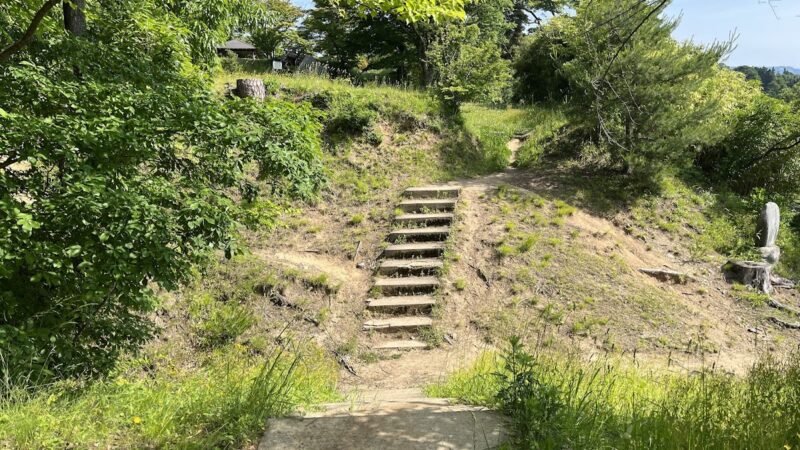
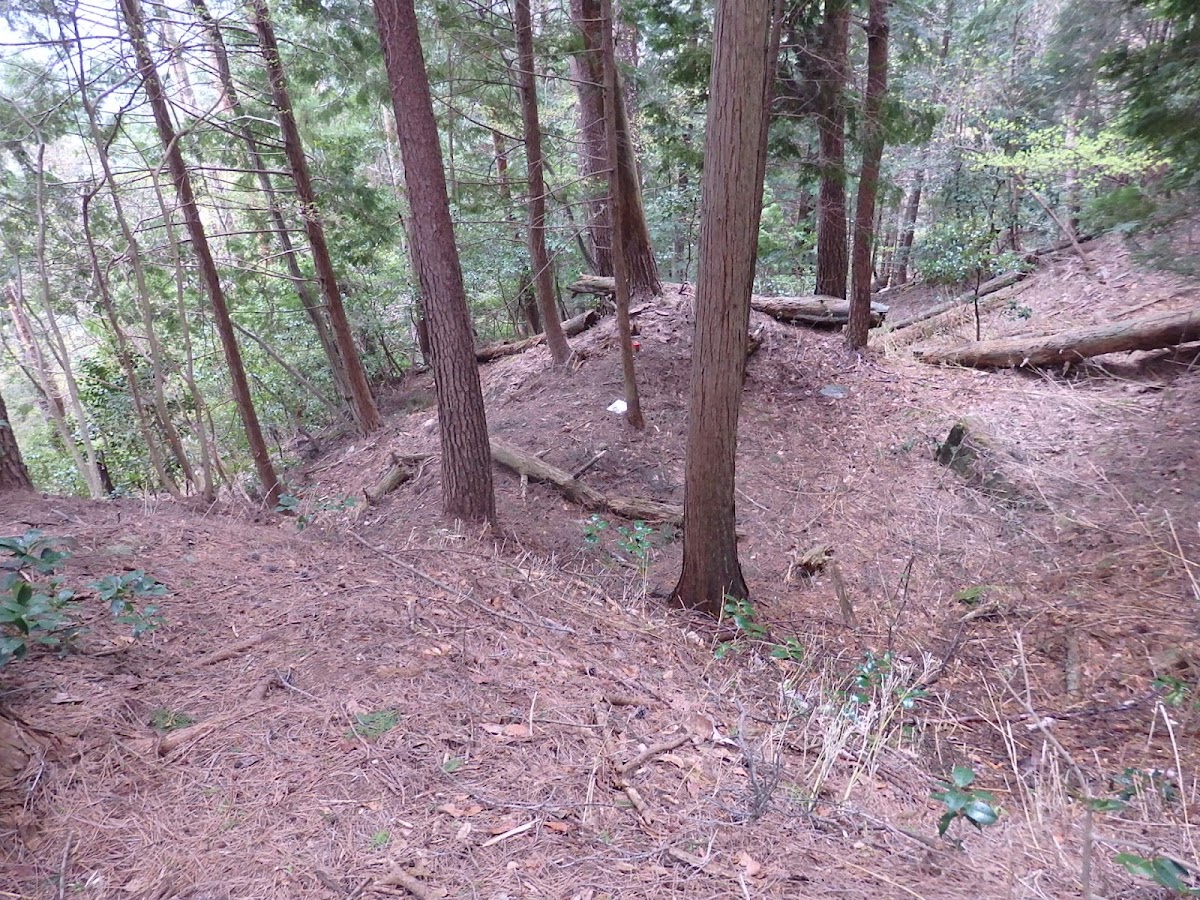
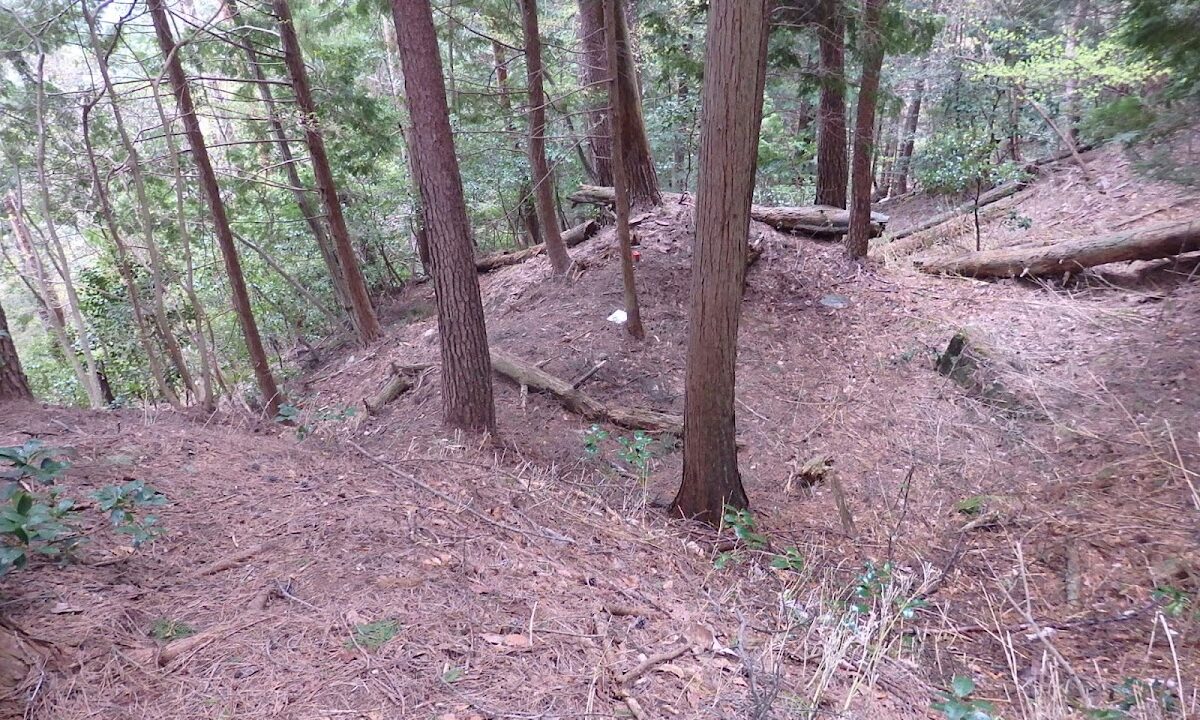
More than 400 years have passed since the abandonment of Kojima Castle, and only a limited number of clearly remaining structures exist. The following traces may be found at the site:
- Topographical Undulations: Flat areas believed to be the remains of baileys
- Traces of Moats: Topography that cuts across ridges
- Remnants of Earthworks: Slightly remaining mounds of earth
Due to years of weathering and changes in land use, clear remains are scarce, but by carefully observing the topography, it is possible to imagine the former appearance of the castle.
Archaeological Excavations and Research Status
Regarding Kojima Castle, there are limited records of large-scale archaeological excavations. Research results primarily consist of surveys and records by local history researchers and castle researchers.
Further detailed surveys and trial excavations may reveal more about Kojima Castle. If the excavated artifacts and detailed layout are identified, new insights into the castle’s construction date, lord, and function will likely be gained.
Access to Kojima Castle
Access by Public Transportation
When visiting Kojima Castle ruins by public transportation, the following routes are possible:
By Train and Bus:
- Get off at Ibi Station on the Yoro Railway
- From Ibi Station, take the Ibigawa Town Community Bus or a taxi
- Travel to the nearest bus stop or location to the castle ruins
Since public transportation services are limited, it is recommended to check the timetable in advance.
Access by Car
Access by car is the most convenient.
Main Routes:
- Approximately 30 minutes from the Meishin Expressway “Ogaki IC” via National Route 417
- Approximately 20 minutes from the Tokai-Kanjo Expressway “Ono-Kobe IC”
Regarding parking, there may not be a dedicated parking lot for the castle ruins, so please use nearby public facilities or roadside stations and access on foot.
Points to Note When Visiting
When visiting Kojima Castle Ruins, please note the following:
- Possibility of Private Property: If the castle ruins are on private property, please avoid trespassing.
- Safety Measures: When walking through forests or bushes, please prepare appropriate clothing and equipment.
- Season: In summer, vegetation grows thick, making it difficult to see the remains. Visiting from autumn to winter is recommended.
- Consideration for Locals: Please be considerate of the lives of local residents and visit quietly.
Related Historical Sites in the Surrounding Area
Castles of Ibigawa Town
Besides Kojima Castle, there are several other castle ruins in and around Ibigawa Town.
Ibi Castle: A castle ruin believed to be the residence of the Ibi clan. Located in the center of Ibigawa Town, it was a base for regional control.
Kitagata Castle: A castle ruin located in the northern part of Ibigawa Town. Although small, it retains remnants from the Sengoku period.
Other Fort Ruins: Numerous small fort ruins are scattered throughout the Ibigawa River basin, telling the story of the tense situation during the Sengoku period.
Historical and Cultural Facilities of Ibigawa Town
The following facilities are recommended to visit in conjunction with a visit to Kojima Castle.
Ibigawa Historical and Folk Museum: A museum showcasing the history and culture of Ibigawa Town. It also exhibits materials related to local castles.
Michi-no-Eki Yume Sansan Tanigumi: A facility where you can obtain local products and tourist information of Ibigawa Town. It can also be used for rest and meals.
Historical Significance of Kojima Castle
Role in the Ibi Region
Kojima Castle, located at a strategic transportation hub in the Ibigawa River basin, is thought to have played the following roles:
Monitoring Transportation Routes: It monitored the roads along the Ibigawa River, managing the movement of goods and people. Its location on the route connecting Mino Province and Omi Province made it strategically important.
Center for Regional Control: It controlled surrounding villages and functioned as a base for collecting taxes and maintaining public order.
Military Defense Line: It is presumed to have served as a defensive base during wartime, preventing enemy incursions.
Castle Network in Western Mino Province
Kojima Castle functioned as part of a castle network in western Mino Province. It is believed that multiple castles were built in the Ibigawa River basin, coordinating with each other to defend the region.
During the Sengoku period, Mino Province was a strategic location bordering Owari Province to the east, Hida Province to the north, and Omi Province to the west, leading to the construction of numerous castles throughout the region. Kojima Castle played a part in this defense network.
Challenges and Prospects of Kojima Castle Research
Limitations of Historical Sources
Research on Kojima Castle faces the challenge of limited historical sources. Detailed records of small and medium-sized local castles from the Sengoku period to the early Edo period are often lacking, and Kojima Castle is no exception.
The following approaches are considered effective for future research:
- Re-examination of Ancient Documents: Carefully examine ancient documents remaining in local temples, shrines, and old families.
- Archaeological Investigation: Collect physical evidence through excavation and surveying.
- Place Name Research: Explore traces of the castle from place names and sub-district names.
- Comparative Research: Clarify the characteristics of Kojima Castle by comparing it with similar castles in the surrounding area.
Preservation and Utilization
Regarding the preservation and utilization of the Kojima Castle ruins, the following initiatives can be considered as a regional historical heritage site:
Preservation of Remains: Efforts are needed to appropriately preserve the remaining remains and pass them on to future generations. Designation as a cultural property and protective measures are required to prevent the loss of remains due to development, etc.
Utilization as a Regional Resource: The castle ruins can be utilized as a regional historical tourism resource, contributing to town development and tourism promotion. Installing information boards and developing walking paths would be effective.
Educational Applications: By incorporating Kojima Castle as teaching material for learning local history in local schools, children can develop a love for their hometown.
Summary
Kojima Castle was a castle from the Sengoku period located in Ibi District, Gifu Prefecture, and was an important base protecting a key transportation hub in the Ibi River basin. Although detailed historical materials are limited, it is a valuable legacy that tells the story of the region’s history.
Currently, there are few clear remains, but we can imagine its former appearance from the topography and legends. When visiting Ibigawa Town, why not explore the Kojima Castle ruins and surrounding historical sites and reflect on the Ibi region during the Sengoku period?
While we hope that future research and investigations will further clarify the true nature of Kojima Castle, it is important to carefully preserve and utilize it as a local historical heritage. We highly recommend that history enthusiasts and castle fans visit the site and search for traces of Kojima Castle.