Dota Castle (Kani City, Gifu Prefecture) Complete Guide | History and Highlights of the Mountain Castle Associated with Oda Nobunaga’s Mother
What is Dota Castle?
Dota Castle (Dota-jō) was a Japanese mountain castle located in Dota, Kani City, Gifu Prefecture. Built on a hill approximately 172 meters above sea level, this castle is known as the birthplace and upbringing of Lady Dota, the mother of Oda Nobunaga (although there are various theories). Situated at a strategic location overlooking the Kani River to the north and the Kiso River to the west, it was one of the important bases in Mino Province.
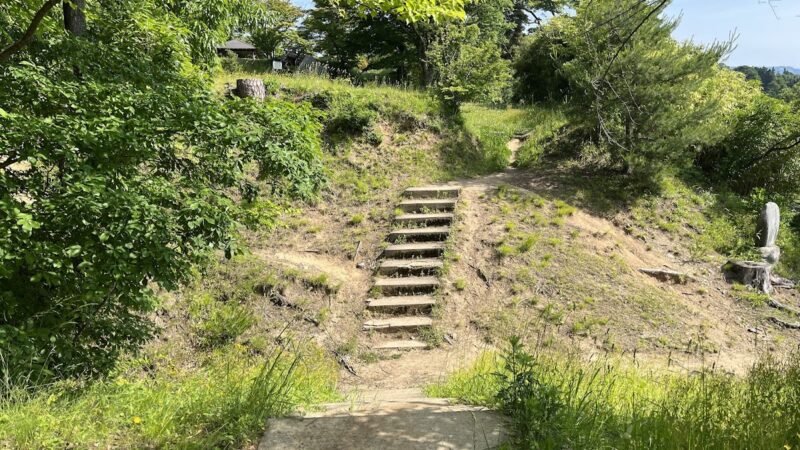
Currently, the castle ruins have been developed, and walking paths have been established, making it easily accessible to history enthusiasts and castle fans. Remains such as stone walls, baileys, and moats remain, making it a valuable historical site that conveys the appearance of a mountain castle from the Sengoku period.
History of Tsuchida Castle
Construction and the Era of the Tsuchida Clan
The exact date of construction of Tsuchida Castle is uncertain, but it is believed to have been built by the Tsuchida clan during the Bunmei era (1469-1487). The Tsuchida clan claimed descent from the Sasaki Minamoto clan of Omi Province and served the Akechi clan, a powerful local lord of Mino Province.
The Tsuchida clan ruled this area for generations, with Tsuchida Hidehisa, Tsuchida Yasuhisa, and Tsuchida Gentayu serving as castle lords. Tsuchida Jinsuke, the second son of Tsuchida Yasuhisa, later became the adopted son of Ikoma Iehiro and took the name Ikoma Chikashige, but at this point, the Tsuchida clan still reigned as the castle lords.
The Fall of Akechi Castle and the End of the Main Line of the Tsuchida Clan
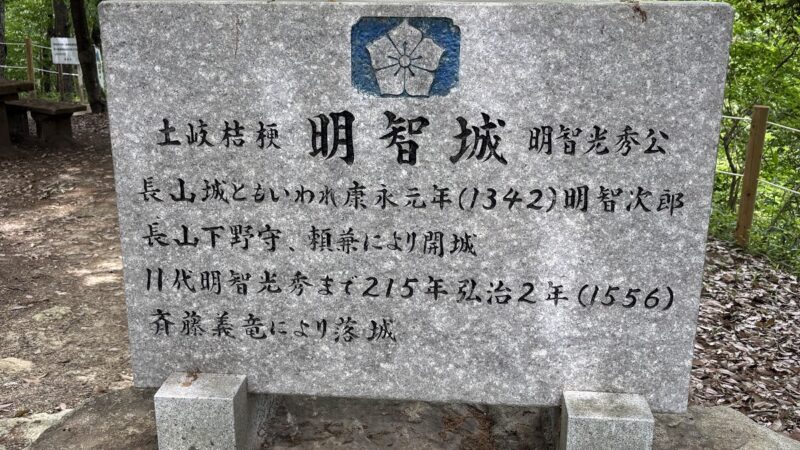
A major turning point in the history of Tsuchida Castle occurred in 1556 (Koji 2). In this year, Akechi Castle was attacked by Nagai Michitoshi (lord of Seki Castle), a senior retainer of Saito Dosan. Tsuchida Gentayu fought at Akechi Castle alongside the Akechi clan but was killed in action.
This battle marked the end of the main line of the Tsuchida clan. However, the Tsuchida bloodline did not die out. Ikoma Chikashige, the second son of Tsuchida Yasuhisa and adopted son of Ikoma Iehiro, lord of Koori Castle in Owari Province (on his mother’s side), became the lord of both Koori Castle and Tsuchida Castle.
The Ikoma Clan Era
After Ikoma Chikashige became lord of Tsuchida Castle, he passed the position to his son, Ikoma Chikamasa. The Ikoma clan came to serve Oda Nobunaga and contributed to the expansion of the Oda family’s power.
During Ikoma Chikamasa’s time, Tsuchida Castle is thought to have functioned as a key base for Oda Nobunaga’s control of Mino Province. However, in 1574, Ikoma Chikamasa was ordered by Oda Nobunaga to leave Tsuchida Castle. Afterward, the region came under the control of Mori Nagayoshi, and Tsuchida Castle is believed to have been abandoned.
Relationship with Tsuchida Gozen
One reason Tsuchida Castle is particularly noteworthy is its connection to Tsuchida Gozen, the mother of Oda Nobunaga. Tsuchida Gozen is said to have been born as the daughter of Tsuchida Masahisa (or Tsuchida Hidehisa), and there is a tradition that she spent her childhood at Tsuchida Castle.
However, there are various theories regarding Tsuchida Gozen’s origins, and reliable historical sources are limited. Nevertheless, as a place associated with the mother of Oda Nobunaga, a leading warlord of the Sengoku period, Tsuchida Castle holds historical importance. Tsuchida Gozen later married Oda Nobuhide and gave birth to Nobunaga, becoming a figure who greatly influenced Japanese history.
Structure and Layout of Tsuchida Castle
Location and Topography
Tsuchida Castle is a mountain castle built on a hill approximately 172 meters above sea level, with a relative elevation difference of about 100 meters. Located between two rivers, the Kani River to the north and the Kiso River to the west, it utilizes its natural fortifications. Furthermore, its location along a major road suggests it also served as a base for monitoring traffic and as a military stronghold.
Arrangement of Enclosures
Tsuchida Castle’s layout consists of multiple enclosures (kuruwa). The enclosures are arranged in stages around the main enclosure, exhibiting a typical medieval mountain castle structure. Even today, the flat surfaces of each enclosure can be observed, allowing for estimation of the castle’s original size.
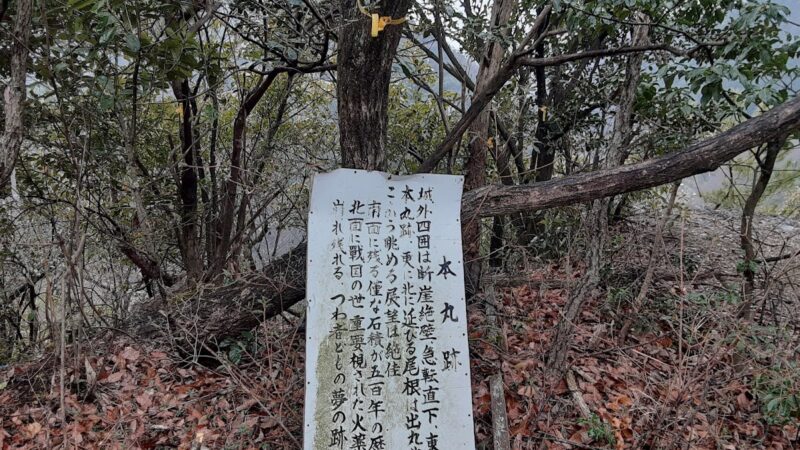
The main enclosure offers excellent views of the surrounding area, overlooking the Kani River and Kiso River basins. This indicates its role in providing early detection of enemy movements.
Outposts and Defensive Structures
Tsuchida Castle also featured an outpost called a “demaru,” a type of defensive enclosure. The demaru was a structure designed to strengthen the defenses of the main enclosure and to disperse enemy attacks.
Furthermore, several trenches (horikiri) were constructed within the castle grounds. These trenches, dug to cut across ridges, played a crucial role in preventing enemy incursions. Clear traces of the trenches remain today, making them valuable historical remains for understanding the defensive strategies of the time.
Remains of Stone Walls
One of the highlights of Tsuchida Castle is the remains of its stone walls. Stone walls were relatively uncommon in medieval mountain castles, making Tsuchida Castle’s stone walls noteworthy. However, they are not large-scale structures, and only partial remains survive.
While there is debate about when these stone walls were built, it has been suggested that they may have been renovated during the time of the Ikoma clan. The presence of stone walls indicates that Tsuchida Castle was not merely a simple castle with earthen ramparts and moats, but rather a castle built with a certain level of skill and effort.
Highlights of Tsuchida Castle
Walking Trails and Ascent Route
Currently, walking trails are maintained at the Tsuchida Castle ruins, making it relatively easy to ascend. It takes approximately 15-20 minutes on foot from the entrance to the main enclosure. While the path is well-maintained, there are steep slopes characteristic of mountain castles, so comfortable walking shoes are recommended.
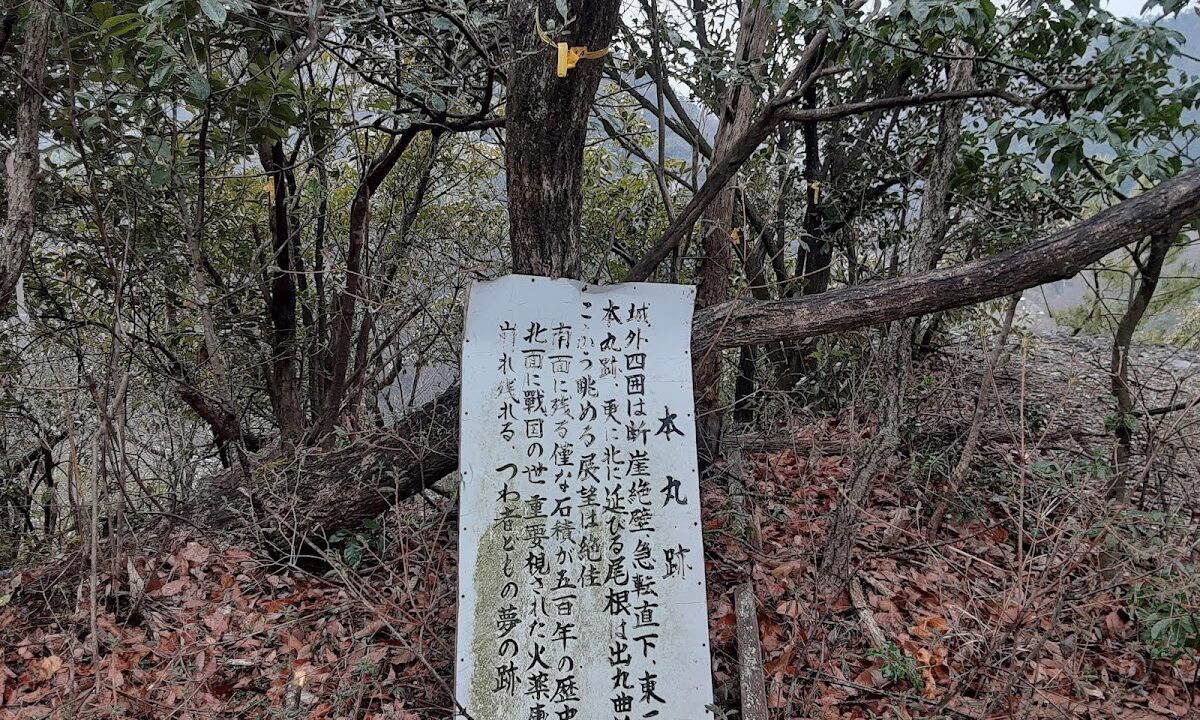
Information boards are installed along the walking trails, allowing visitors to learn about the castle’s history and structure as they explore. Even first-time visitors to mountain castles can follow the signs and avoid missing any major remains.
View from the Main Enclosure
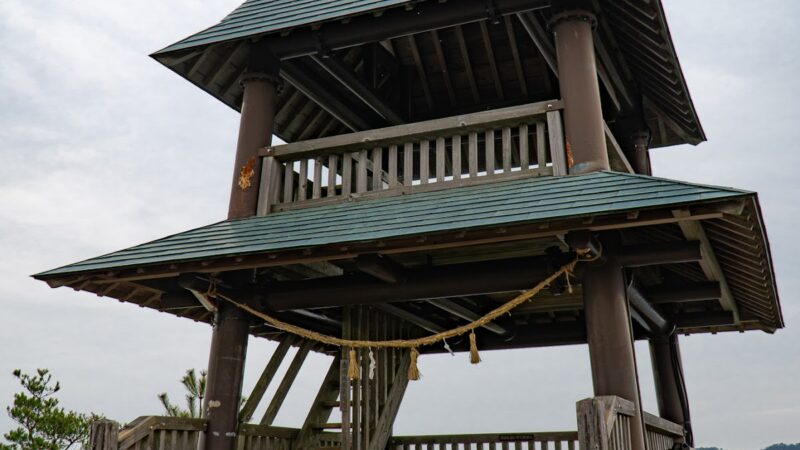
Upon reaching the main enclosure, you can enjoy a panoramic view of the surrounding landscape. On a clear day, you can see the Kani River and Kiso River basins, as well as the Mino plains, giving you a real sense of the castle’s strategic importance.
The excellent views likely served not only a military purpose, such as monitoring enemy movements, but also served to demonstrate the authority of the castle lord overlooking the territory. For us today, it’s a valuable place where we can relive the scenery seen by the warlords of the Sengoku period.
Remains of Enclosures and Earthworks
Walking through the castle grounds, you can see the flat surfaces of each enclosure and traces of earthworks. The earthworks are particularly well-preserved around the main enclosure, allowing us to imagine the defensive line of the time.
One of the pleasures of visiting a castle is trying to estimate the number of troops stationed there and the types of buildings present, based on the layout and size of the enclosures. While Tsuchida Castle is not a large castle, it is thought to have been of a standard size for a local lord’s residence.
The Impressive Moat
The moat is particularly impressive as a defensive feature of Tsuchida Castle. Deeply excavated into the ridge, the moat forms an artificially reinforced defensive line while utilizing the natural terrain.
Standing at the bottom of the moat, you can experience its depth and the sheer power of the steep cliffs. You can truly appreciate how difficult it must have been to attack across these moats, and understand the high level of medieval castle-building technology.
Observation of the Stone Walls
The partially remaining stone walls are also a point not to be missed. Built using a technique called “nozurazumi,” where natural stones are stacked as they are, they give a simple yet solid impression.
Although small in scale, the stone walls are valuable examples of stone wall use in medieval mountain castles and are important remains for learning about the development of castle architecture.
Access and Visiting Information for Tsuchida Castle
Location
Tsuchida Castle ruins are located in Tsuchida, Kani City, Gifu Prefecture. The address is “Tsuchida, Kani City, Gifu Prefecture,” and it is a quiet environment surrounded by rural landscapes.
Access by Car
If you are visiting by car, it is about a 10-minute drive from the Kani-Mitake Interchange on the Tokai-Kanjo Expressway. There is parking space near the castle ruins, but it is not a large parking lot, so caution is advised during busy times.
If using a car navigation system, it is recommended to search for “Tsuchida Castle Ruins” or “Tsuchida, Kani City.” However, as it is a mountain castle, there are narrow roads leading to the castle entrance, so driving requires caution.
Access by Public Transportation
If using public transportation, the nearest station is Kanigawa Station on the Meitetsu Hiromi Line. It is about a 30-40 minute walk from the station to the castle ruins. Bus services are limited, so it is recommended to check the timetable in advance.
Due to the long walking distance, it is important to plan your visit with ample time. Taking a taxi is also an option.
Precautions for Visiting
Since Tsuchida Castle Ruins is a mountain castle, please note the following when visiting:
- Clothing: Please wear comfortable shoes and clothing suitable for walking. The ground can be particularly slippery after rain.
- What to bring: We recommend bringing drinking water, a towel, and insect repellent.
- Season: In summer, take precautions against the heat; in winter, take precautions against the cold. Also, from spring to summer, the vegetation is lush, so long sleeves and long pants are preferable.
- Time of day: Please visit with plenty of time to descend before sunset.
- Safety: If visiting alone, we recommend informing family or friends of your destination.
Estimated time required for visit
To visit Tsuchida Castle Ruins, you should allow approximately 1-2 hours, including the ascent and descent. If you want to carefully observe the remains or enjoy taking photographs, it may take longer.
Nearby tourist spots
Akechi Castle Ruins
Akechi Castle Ruins, the residence of the Akechi clan who had close ties to the Tsuchida clan, is also located in Kani City. This castle is considered to be the ancestral home of Akechi Mitsuhide. Visiting it along with Tsuchida Castle will allow you to gain a deeper understanding of the Sengoku period history of this region.
Mino Kanayama Castle Ruins
One of the representative castle ruins in Kani City is the Mino Kanayama Castle Ruins. Known as the residence of Mori Nagayoshi and his son Mori Ranmaru, the remains, such as the stone walls, are well-preserved. It is larger in scale than Tsuchida Castle and is a castle ruin worth seeing.
Kani City Sengoku Mountain Castle Museum
Kani City has the “Kani City Sengoku Mountain Castle Museum,” which exhibits information about mountain castles from the Sengoku period. You can learn about mountain castles in the city, including Tsuchida Castle, making it an ideal facility for preparation before visiting or review after visiting.
Hana Festa Memorial Park
For those who want to enjoy nature between castle tours, Hana Festa Memorial Park is recommended. It is a large park where you can enjoy beautiful flowers, mainly roses, and is a popular spot for families.
The Relationship Between Tsuchida Castle and Oda Nobunaga
The main reason Tsuchida Castle attracts the attention of history enthusiasts is its connection to Tsuchida Gozen, the birth mother of Oda Nobunaga. The tradition that Tsuchida Gozen was born and raised in this castle provides fascinating information for understanding Nobunaga’s origins.
After marrying Oda Nobuhide, Tsuchida Gozen gave birth to several children, including Nobunaga. However, it is said that her relationship with Nobunaga was not always good, and there are records indicating that she favored his younger brother, Oda Nobuyuki (Nobukatsu).
It is believed that various factors, such as the Tsuchida clan’s lineage and the political relationship between Mino and Owari provinces, played a role in these complex family relationships. Visiting Tsuchida Castle allows one to reflect on Nobunaga’s human side, which is not found in textbooks, and the complex human relationships of the Sengoku period.
Historical Significance of Tsuchida Castle
Tsuchida Castle is not a large-scale castle, but it holds the following historical significance:
Remains Revealing the Reality of Local Lords
Tsuchida Castle is a valuable example showing what kind of castles local lords built and how they governed their territories during the Sengoku period. It provides insight into the reality of small to medium-sized castles rooted in local communities, distinct from the massive castles of daimyo-class lords.
A Point of Connection Between the Akechi and Oda Clans
The Tsuchida clan served the Akechi clan, while also forming marital ties with the Oda clan. This castle may have functioned as a point of connection between the two powerful forces: the Akechi clan of Mino Province and the Oda clan of Owari Province.
Reflecting the Political Situation of Mino Province
The history of Tsuchida Castle reflects the turbulent political situation in Mino Province during the Sengoku period, including the rise of Saito Dosan, the decline of the Akechi clan, and Oda Nobunaga’s invasion of Mino. Through the rise and fall of a single castle, we can understand the historical flow of the entire region.
Summary
Tsuchida Castle (Kani City, Gifu Prefecture) is a mountain castle known for its connection to Tsuchida Gozen, the mother of Oda Nobunaga. Built by the Tsuchida clan during the Bunmei era, it boasts a history spanning approximately 100 years, from its relationship with the Akechi clan and its succession to the Ikoma clan, through the era of Oda Nobunaga, until its eventual abandonment.
Currently, the castle ruins are well-maintained and easily accessible via walking trails. Remains such as stone walls, baileys, and moats remain, conveying the appearance of a Sengoku period mountain castle. The view from the main enclosure is magnificent, allowing visitors to relive the scenery seen by the castle lords of that time.
Although not large in scale, it is a valuable historical site for understanding the realities of local lords and holds historical significance as a castle connected to Oda Nobunaga, a crucial figure in Japanese history. When visiting Kani City, be sure to visit Tsuchida Castle ruins and experience the spirit of the Sengoku period.