Complete Guide to Hitoichiba Yakata (Gifu Prefecture) | The Birthplace of the Mino Genji and its Historical Value
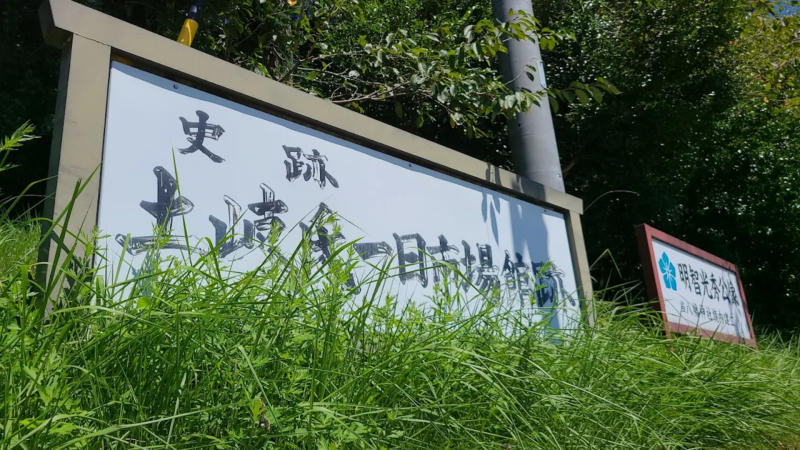
Hitoichiba Yakata is a medieval manor house located in Toki-cho, Mizunami City, Gifu Prefecture. Currently situated within the grounds of Hachiman Shrine, it serves as a historical symbol of the region as the “birthplace of the Mino Genji.” This article provides a detailed explanation of Hitoichiba Yakata’s history, the characteristics of its remains, access methods, and surrounding information.
What is Hitoichiba Yakata?
Hitoichiba Yakata is a medieval manor house built on a slightly elevated area north of the confluence of the Toki River and the Ori River. As a site associated with the Toki clan, considered the ancestors of the Mino Genji, it is a historically significant archaeological site.
Geographical Characteristics
The manor house site is located in a strategically important location at the confluence of rivers. The confluence of the Toki River and the Ori River has been a vital transportation hub since ancient times and also functioned as a center for the collection and distribution of goods. The location, taking advantage of the natural topography of a slightly elevated area, is thought to have offered excellent defensive advantages.
The current elevation is approximately 130 meters, several meters higher than the surrounding plains. This topographical advantage is presumed to have been one of the important reasons for selecting this location when building the manor.
History of Ichiba Manor
Relationship with the Mino Genji
The reason why Ichiba Manor is considered the “birthplace of the Mino Genji” is deeply intertwined with the history of the Toki clan. The Toki clan was a family descended from the Seiwa Genji and was a samurai family that expanded its power mainly in Mino Province.
It is believed that a branch of the Genji clan resided in this area from the late Heian period to the Kamakura period. Because the ancestors of the Toki clan used Ichiba as one of their bases, the designation as the birthplace of the Mino Genji arose.
Role in the Medieval Period
From the Kamakura period to the Muromachi period, Ichiba Manor is thought to have functioned as one of the Toki clan’s bases of control. The Toki clan wielded great power as the governors of Mino Province, playing a central role in the region’s politics and economy.
It is presumed that the residence was not merely a residential facility, but rather a complex structure serving as a base for regional control, a military defense, and a center of economic activity.
Changes After the Sengoku Period
With the arrival of the Sengoku period, the Toki clan’s power declined under Saito Dosan, and the structure of governance in Mino Province changed dramatically. It is believed that the Ichiba Residence gradually lost its military and political functions and eventually fell into disuse.
From the Edo period onward, the Hachiman Shrine was built on this site, taking on a new role as a center of local faith.
Current Remains and Points of Interest
Hachiman Shrine Grounds
Currently, the site of the Ichiba Residence is the grounds of the Hachiman Shrine. The shrine serves as a place of worship for local residents while also preserving historical remains.
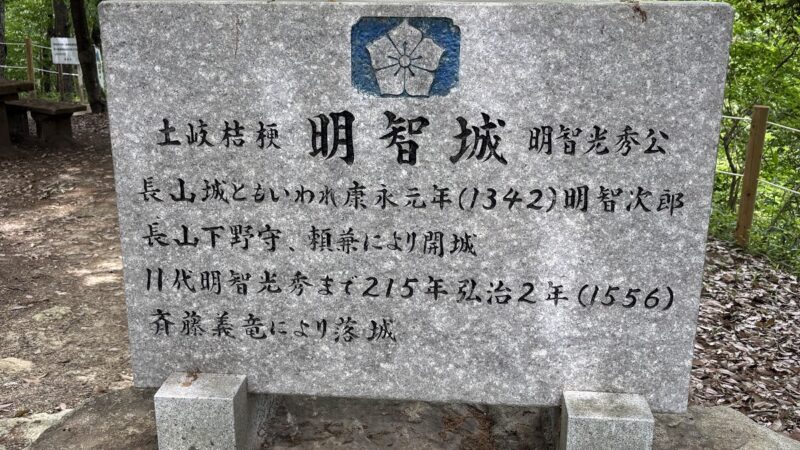
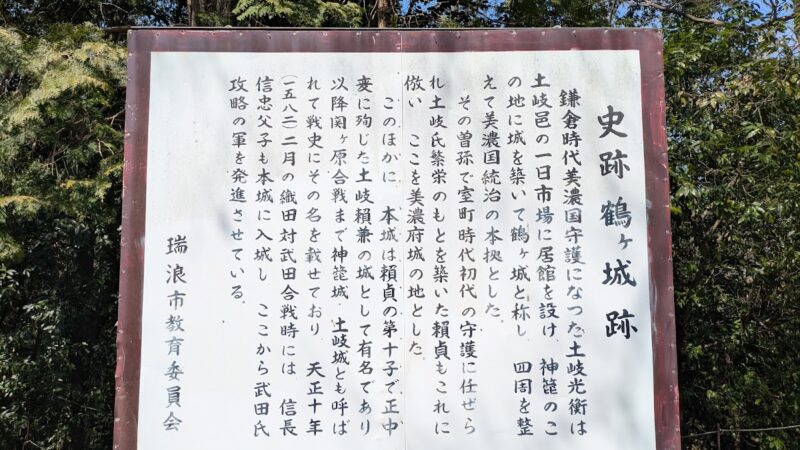
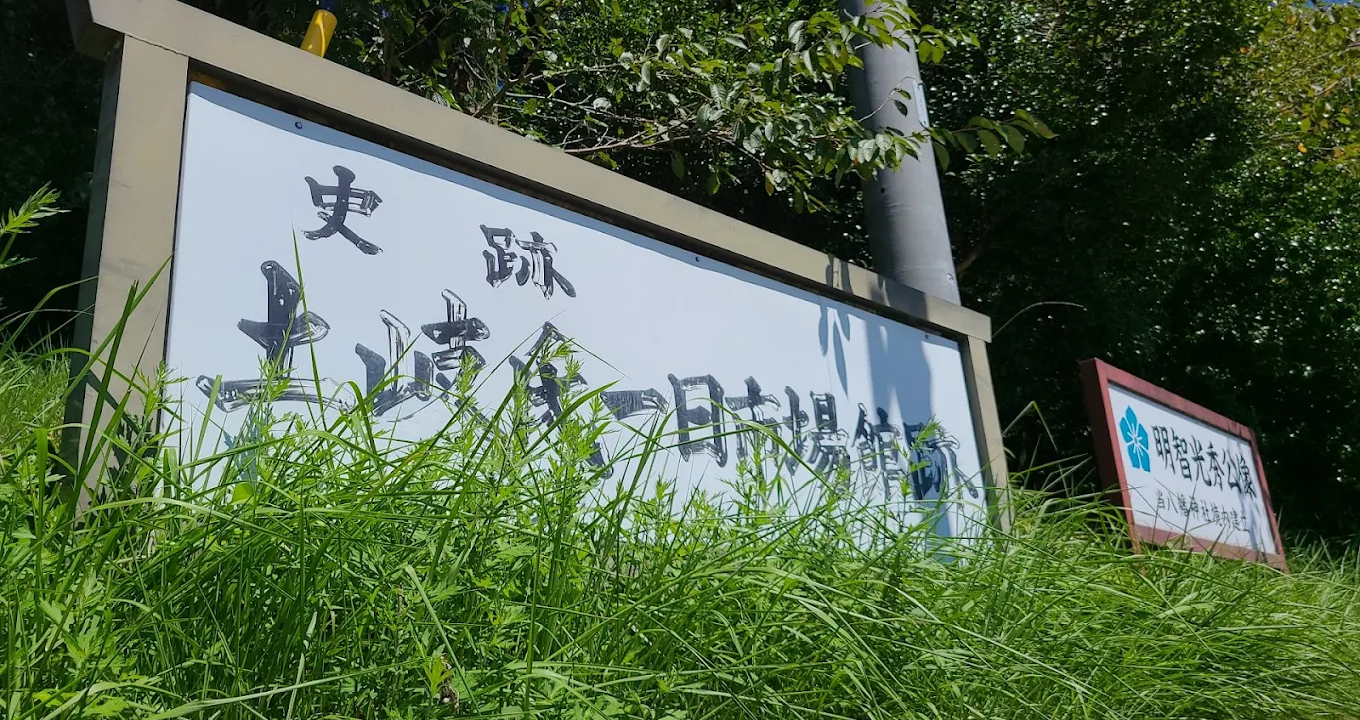
Within the shrine grounds, there is a stone monument and information board inscribed with “Birthplace of the Mino Genji Clan,” conveying the historical significance of this place to visitors.
Earthwork Remains
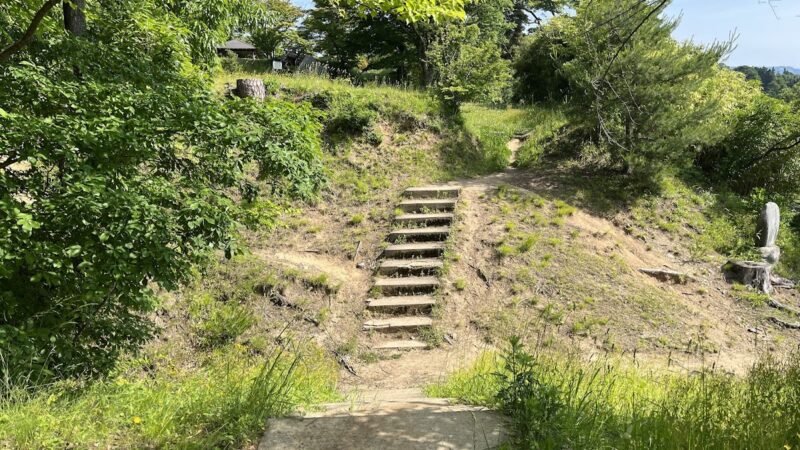
On the north side of the Hachiman Shrine grounds, there remains an earthen mound believed to be an earthwork, a defensive structure of the residence. This earthwork extends approximately 50 meters from east to west and provides an important clue to estimating the size of the medieval residence.
The earthwork is currently about 1-2 meters high, but it is thought to have been higher when it was built, and to have functioned as a means of protecting the residence in combination with other defensive structures such as moats. Although it has been weathered and altered by human activity over time, its basic shape has been preserved.
Preservation Status of the Remains
The remains of the Ichiba Residence are preserved in relatively good condition for a medieval residence site. The fact that it has been used as shrine grounds has been a factor in protecting it from development.
However, records of clear archaeological excavations are limited, and many details of the remains buried underground remain unclear.
Access to Ichiba-kan
Address
Ichiba Hachiman Shrine
- Address: 402 Toki-cho, Mizunami City, Gifu Prefecture 509-6101
- Location: North side of the confluence of the Toki River and Ori River
Access by Train
Using the JR Chuo Main Line:
- Approximately 5 minutes on foot from Mizunami Station
- Head north from the station and it is located across the Toki River
- It is very close to the station and easily accessible on foot
Access by Car
Using the Expressway:
- Approximately 5 minutes from Mizunami IC on the Chuo Expressway
- After exiting the IC, head towards National Route 19 and follow the signs
- Parking: There is a limited amount of space on the shrine grounds (limited number of spaces)
Nearby Transportation
While Tono Railway buses operate within Mizunami City, walking from Mizunami Station is the most convenient way to reach Ichiba Hachiman Shrine. Even if you take a taxi, the fare is relatively inexpensive because it’s close to the station.
Notes and Manners for Visitors
Visiting Hours
While Hachiman Shrine is generally open for worship throughout the day, it is recommended to avoid visiting early in the morning or late at night and instead visit during daylight hours. Consideration for the shrine’s administrators and local residents is also necessary.
Visitor Etiquette
- Please understand that this is a shrine site and observe proper etiquette as a worshipper.
- Do not climb on or touch the remains such as earthworks; observe them from a distance.
- Photography is permitted, but please be considerate of other worshippers.
- Please take all your trash with you and help maintain the cleanliness of the shrine grounds.
Safety Considerations
- The area around the earthworks can be uneven, so comfortable walking shoes are recommended.
- Be especially careful during and after rain, as the ground can become particularly slippery.
- Remember to take insect repellent in summer and warm clothing in winter.
Nearby Historical Spots
Castle Ruins in Mizunami City
In addition to Ichiba Castle, there are several other medieval castle ruins in and around Mizunami City:
- Toki Akechi Castle: A mountain castle associated with Akechi Mitsuhide.
- Ori Castle: A mountain castle built along the Ori River.
- Ōkute Castle: A castle located overlooking a post town on the Nakasendō road.
Visiting these castle ruins will allow you to gain a deeper understanding of the medieval history of the Mino region.
Mizunami City Tourist Attractions
Mizunami City tourist attractions that can be enjoyed in conjunction with historical exploration:
- Mizunami City Fossil Museum: Exhibits fossils excavated in this region.
- Nakasendō Ōkute-juku: A townscape that retains the atmosphere of an Edo-period post town.
- Ryūgin Gorge: A valley rich in nature where you can enjoy the scenery of the four seasons.
- Oniiwa Park: A scenic spot with a series of strangely shaped rocks.
About the Place Name “Ichinichi-Ichiba”
Origin of the Place Name
The place name “Ichinichi-Ichiba” is thought to originate from the fact that a market called “Ichi-no-Ichi” was once held in this area. A market was held on a specific day each month, and people from the surrounding areas gathered to exchange goods and conduct trade.
In the Middle Ages, markets were not only the center of economic activity but also played a crucial role as places for information exchange and social gatherings. The location at the confluence of the Toki River and the Ori River was ideal for transporting goods via water, creating perfect conditions for market development.
Relationship with Gifu City
The search results also show the place name “Ichinichi-Ichiba, Gifu City,” but this is a different location from Ichinichi-Ichiba-kan (Toki-cho, Mizunami City). Gifu City’s Ichinichi-Ichiba is in the area with postal code 501-0103, a residential area with stores such as Ministop.
The historical Ichinichi-Ichiba-kan is located in Toki-cho, Mizunami City, a different area from Gifu City’s Ichinichi-Ichiba, so caution is advised when visiting.
History of the Mino Genji and Toki Clan
Minamoto Clan’s Expansion into Eastern Japan
In the late Heian period, after losing the power struggle at the imperial court, the Minamoto clan expanded their influence into eastern Japan and other regions. Mino Province became one of its important strongholds, and the Toki clan and other branches of the Minamoto clan established themselves in this region.
The Development of the Toki Clan
The Toki clan was appointed as the governor of Mino Province during the Kamakura period and wielded considerable power throughout the Muromachi period. At its peak, they controlled the entire Mino Province and became a powerful daimyo with influence over surrounding provinces.
The Toki clan subdivided, giving rise to many branches. The Akechi clan is considered one of these branches, and is believed to have a lineage leading to the later Akechi Mitsuhide (although there are various theories).
Saito Dosan’s Takeover of Mino Province
During the Sengoku period, the Toki clan lost power due to the rise of their vassal, Saito Dosan (Nagai Norihide). Dosan, through clever strategies and military force, expelled the Toki clan and seized control of Mino Province.
This historical shift caused the strongholds associated with the Toki clan, including Ichiba-kan, to lose their political and military importance.
Characteristics as a Castle/Manor Site
Differences Between Flatland Manors and Mountain Castles
Ichiba Manor, as its name suggests, is a residence built on flatland (slightly elevated ground), not a mountain castle. There were broadly two types of samurai bases in the Middle Ages:
Flatland Manor
- A place for daily living and administrative work
- Convenient transportation and a center of economic activity
- Less defensive than mountain castles, but highly convenient
Mountain Castle
- A defensive base during wartime
- Strong defenses utilizing the terrain
- Inconvenient for daily living
It is believed that powerful samurai families like the Toki clan used flatland manors like Ichiba Manor during peacetime and retreated to mountain castles during wartime.
Estimated Structure of the Manor
Based on the existing earthworks and topography, the Ichiba Manor is presumed to have had the following structure:
- Main Enclosure: The central part of the manor, containing living and administrative spaces
- Earthworks: A defensive structure surrounding the manor (partially existing)
- Moat: A defensive structure located outside the earthworks (currently buried)
- Gate: An entrance/exit, possibly located in multiple places
The site is estimated to have been approximately 50 meters or more east-west, and similarly or even larger north-south, but the exact extent cannot be determined without archaeological excavation.
Current Status of Research and Preservation
Academic Research
It appears that no full-scale archaeological excavation has been conducted on the Ichiba Manor. Therefore, detailed analysis of the remains and dating based on excavated artifacts remain future challenges.
While its historical importance is recognized through historical documents, place name research, and topographical analysis, archaeological empirical research is limited.
Preservation Status
The fact that the site is used as part of the Hachiman Shrine grounds has, in effect, contributed to the preservation of the remains. Due to its nature as a shrine, large-scale development is unlikely, which has allowed for the survival of remains such as earthworks.
However, proactive historical site maintenance and the improvement of informational facilities are limited, and there is room for improvement in terms of providing information to visitors.
Future Prospects
Considering the historical value of this site as the birthplace of the Mino Genji clan, the following initiatives are expected in the future:
- Detailed elucidation of the remains through academic archaeological excavations
- Strengthening of legal protection through designation as a historical site
- Improvement of information boards and explanatory panels
- Utilization for local history education
- Development as a tourist resource
Model Course for Visiting Ichibakan
Half-Day Course (Emphasis on Historical Exploration)
Morning
- Arrive at JR Mizunami Station (9:00)
- Visit Ichiba Hachiman Shrine and tour the site of the Ichibakan (9:10-10:00)
- Visit Mizunami City Fossil Museum (10:30-12:00)
Lunch
- Enjoy local cuisine around Mizunami Station
Afternoon
- Stroll through Nakasendo Okuwa-juku (13:30-15:00)
- Depart from Mizunami Station (15:30)
One-Day Course (Nature and History)
Morning
- Ichiba Hachiman Shrine (9:00-10:00)
- Hiking to Ori Castle Ruins (10:30-12:30)
Lunch
- Lunch at a local restaurant
Afternoon
- Stroll through Ryuginkyo Gorge (13:30-15:00)
- Oniiwa Park (15:30-17:00)
Summary
Ichiba-kan is a medieval mansion site of historical importance as the birthplace of the Mino Genji clan. Although it is now the grounds of Hachiman Shrine, remnants such as earthworks remain, allowing visitors to imagine its former appearance.
With its convenient access (5-minute walk from Mizunami Station), it’s suitable not only for history enthusiasts but also for those visiting the Nakasendo Road and surrounding tourist spots. It’s a valuable historical site for those interested in the medieval history of Mino Province and those wanting to learn about the history of the Toki and Genji clans.
When visiting, please observe proper etiquette as a shrine and treat the remains with care. Also, please note that this is a different location from the “Ichinichi-Ichiba” area in Gifu City (it is located in Toki-cho, Mizunami City).
It is hoped that the historical value of the Ichinichi-Ichiba Hall will be widely recognized, and that appropriate preservation and utilization will be promoted so that it can be passed down to future generations as a valuable cultural heritage of the region.