Omori Castle (Kani City, Gifu Prefecture) Complete Guide | History, Highlights, and Access Information
Omori Castle, located in Omori, Kani City, Gifu Prefecture, is a hilltop castle built by the Okumura clan during the Sengoku period. It functioned as an important base in the region for approximately 20 years until its fall in 1582. This article provides a detailed explanation of Omori Castle, from its historical background and layout to its actual highlights and access methods.
History of Omori Castle
Background of Construction and the Okumura Clan
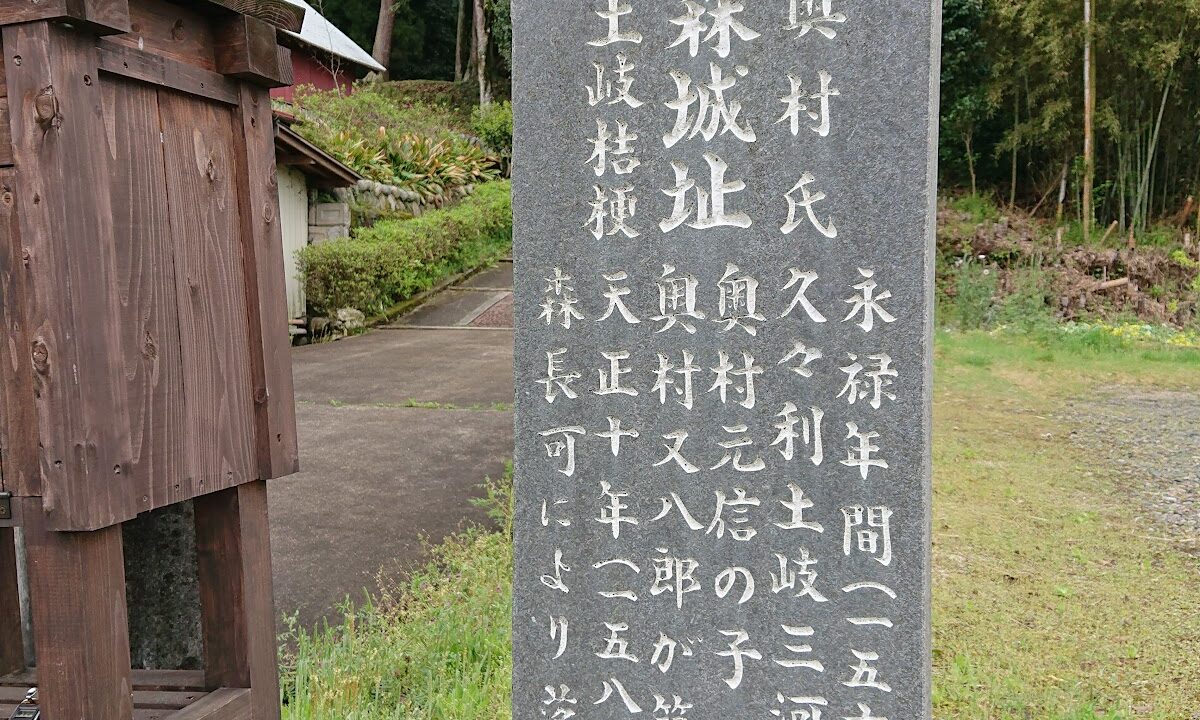
Omori Castle was built during the Eiroku period (around 1558-1570). The builder is believed to be Okumura Matahachiro Motohiro, the son of Okumura Motonobu, a chief retainer of Toki Mikawa-no-kami (Kukuri Mikawa-no-kami), the lord of Kukuri Castle. Okumura Motonobu played an active role as a key retainer supporting Kukuri Castle, and it is thought that his son, Motohiro, built Omori Castle as an independent base.
At that time, Mino Province was experiencing a period of expanding Oda Nobunaga’s power, and local lords were fortifying their castles in an effort to survive. Omori Castle, too, functioned as the base of the Okumura clan within this historical context.
The Okumura Clan’s Rule and Surrounding Circumstances
Okumura Matahachiro Motohiro used Omori Castle as his residence and governed the surrounding area. It is presumed that he maintained relations with Kukuri Castle while forming his own sphere of influence. From the Eiroku era to the early Tensho era, the power struggle between the Oda and Takeda clans intensified within Mino Province, and Omori Castle was likely affected by this.
Although the castle was of medium size, it utilized advanced castle construction techniques for its time, suggesting it functioned not merely as a fort but as a full-fledged residence.
The Fall of Omori Castle in Tensho 10
The history of Omori Castle came to an end in Tensho 10 (1582). In this year, the castle was attacked and fell to Mori Nagayoshi, a vassal of Oda Nobunaga. Mori Nagayoshi was a warlord who had been granted territories within Mino Province by Nobunaga and was expanding his power.
The year 1582 (Tensho 10) was also the year of the Honnoji Incident, a period of great instability for the Oda regime. Historical records do not clearly indicate whether the fall of Omori Castle occurred before or after this political upheaval, but in any case, Mori Nagayoshi’s attack marked the end of the Okumura clan’s rule, and the castle was abandoned.
After its fall, there is no evidence that Omori Castle was reused, and it remains buried in history.
Structure and Layout of Omori Castle
Location and Topography
Omori Castle is a flatland castle built on a hill approximately 200 meters above sea level. The relative height difference is about 50-60 meters, making it relatively easy to climb for a mountain castle. At the eastern foot of Shiroyama Hill stands Omori Shrine, which still serves as the entrance to the castle ruins.
The castle’s layout utilizes the ridge of the hill, resulting in a long, narrow shape running north-south. The surrounding area is farmland, suggesting that it was a strategically important location with excellent views in its time.
Main Enclosure Layout
Omori Castle’s layout consists of multiple enclosures. The main enclosure (honmaru) is at the center, surrounded by the second and third enclosures, each separated by moats and earthworks.
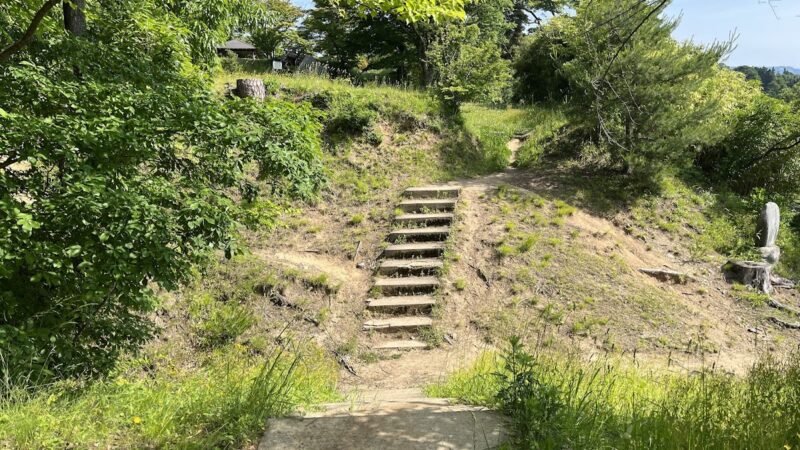
The main enclosure is located at the highest point of the castle, measuring approximately 30 meters east-west and 40 meters north-south. Traces of earthworks remain around it, indicating efforts to enhance its defensive capabilities. From the main enclosure, one can overlook the surrounding terrain, demonstrating its significant military function.
The second and third enclosures are located north and south of the main enclosure, forming a tiered defensive line. These enclosures are clearly demarcated by earthworks and steep slopes, demonstrating a well-planned layout.
Characteristics of Defensive Structures
The most striking feature of Omori Castle lies in its advanced construction techniques. The placement and scale of the moats are particularly impressive, clearly separating the enclosures and effectively preventing enemy intrusion.
Multiple dry moats, approximately 3-5 meters deep, have been identified and remain clearly visible today. These moats were artificially excavated, skillfully utilizing the natural terrain, demonstrating the high level of civil engineering technology during the Sengoku period.
Earthworks are also positioned around each enclosure, with some remaining at a height of 1-2 meters. It is presumed that fences or walls were built on top of these earthworks, further enhancing their defensive capabilities.
Steep slopes (artificially carved steep slopes) are also visible in various places, demonstrating a strategy to make approaching the enclosures difficult. These remains indicate that Omori Castle was not merely a simple fort, but a full-fledged fortress designed for serious combat.
Highlights of Omori Castle
Well-Preserved Remains
The greatest appeal of Omori Castle is its well-preserved remains, even after more than 400 years. In particular, the moats are clearly visible in multiple locations, allowing visitors to experience the castle structure of the Sengoku period.
The earthworks around the main enclosure are also relatively well-preserved, allowing visitors to imagine the defensive line of the time. Because it is covered with trees, the remains can be observed more clearly when visited during the winter when the leaves have fallen.
The elevation changes and cliffs of the enclosures are also clearly visible, making it a worthwhile sight for castle enthusiasts. Despite being a medium-sized castle, its layout is highly refined, making it an ideal castle site for learning about Sengoku period castle construction techniques.
Relationship between Omori Shrine and the Castle Ruins
Omori Shrine, located at the eastern foot of the castle mountain, serves as the entrance to Omori Castle. A wooden box containing castle ruin information pamphlets is placed next to the shrine’s torii gate, which visitors can use.
Omori Shrine itself is a historical shrine and has been a center of local faith. While the direct connection to the castle is unclear, it’s not uncommon for shrines to be located at the foot of castles, suggesting it may have been an object of worship for the castle lord or his retainers.
The path from the shrine to the castle ruins is relatively well-maintained, making the climb easy. While full hiking gear isn’t necessary, comfortable walking shoes are recommended.
Views and Surrounding Environment
The view from the main enclosure is currently limited due to tree growth, but glimpses of Kani city and the surrounding mountains are still visible from certain points. It’s likely that during the Sengoku period (Warring States period), the trees were managed, providing a wider view.
The area surrounding the castle ruins is a quiet, rural landscape, offering opportunities to enjoy the changing seasons. The fresh greenery of spring and the vibrant autumn foliage create distinct scenery throughout the year.
The low number of visitors is another appealing aspect, allowing for a peaceful and tranquil visit to the castle ruins. For castle enthusiasts, it’s a hidden gem where you can carefully observe the remains.
Access and Visit Information
Access by Public Transportation
By Train:
- Approximately 15-20 minutes on foot from JR Taita Line “Shimogiri Station” (approximately 1.0 km in a straight line)
- Take a taxi from Meitetsu Hiromi Line “Shin-Kani Station” or JR Taita Line “Kani Station” (approximately 1,760 yen, approximately 10 minutes)
- Approximately 25-30 minutes on foot from Meitetsu Hiromi Line “Hime Station” (approximately 2.0 km in a straight line)
While the shrine is within walking distance from the nearest stations, the route from the station to Omori Shrine passes through residential and rural areas. Since there are few road signs, it is recommended to check the route in advance using a map app.
By Taxi:
Taking a taxi from Kani Station or Shin-Kani Station is the most convenient option. The fare is approximately 1,500-1,800 yen one way. Since you will need to call a taxi for your return trip, it is a good idea to note down the contact information of a taxi company.
Access by Car
From Major Roads:
- Approximately 15 minutes from the Kani-Mitake Interchange on the Tokai-Kanjo Expressway
- Accessible via a prefectural road from National Route 21
Parking:
There are a few parking spaces around Omori Shrine. Since it is not a dedicated parking area, please be considerate of shrine visitors. Avoid street parking and be careful not to inconvenience local residents.
Searching for “Omori Shrine (Omori, Kani City, Gifu Prefecture)” on your car navigation system will display the location.
Notes for Visitors
Admission Fee: Free
Visiting Hours: No specific restrictions (always open). However, visiting during daylight hours is recommended.
Estimated Time Required: Approximately 10-15 minutes on foot from Omori Shrine to the main enclosure. Allow approximately 1-1.5 hours to view the entire castle ruins.
Clothing and Equipment:
- Athletic shoes or trekking shoes recommended
- Long-sleeved shirt and long pants (for insect repellent in summer)
- Bring your own drinking water
- Be careful as some areas can be slippery in winter
Other Notes:
- There are no toilets or vending machines within the castle ruins
- Cell phone reception may be unstable in some areas
- If visiting alone, inform family or friends of your destination
- Please take all your trash with you
- To protect the ruins, please be careful not to damage the earthworks or moats
Nearby Tourist Attractions
Other Castle Ruins in Kani City
Kukuri Castle Ruins:
This was the residence of Toki Mikawa-no-kami, who served the Okumura clan, who built Omori Castle. It is about a 10-minute drive from Omori Castle, and visiting both is recommended. Kukuri Castle is also known as a castle ruin with well-preserved Sengoku period remains.
Mino Kanayama Castle Ruins (Kaneyama Castle):
This castle was the residence of Mori Nagayoshi and is associated with the warlord who attacked Omori Castle. It is a representative castle ruin of Kani City, and the remains, such as the stone walls, are remarkably well-preserved. Approximately 20 minutes by car from Omori Castle.
Ima Castle Ruins:
Another medieval castle located within Kani City, its remains are also well-preserved. It can be enjoyed as part of a “Kani Castle Tour,” visiting multiple castle ruins.
Kani City Tourist Facilities
Hana Festa Memorial Park:
This park boasts one of the world’s largest rose gardens and is a representative tourist spot in Kani City. Approximately 15 minutes by car from Omori Castle. The best time to see the roses is in spring and autumn, making it ideal for a sightseeing plan combined with a visit to the castle ruins.
Kani Local History Museum:
This facility allows you to learn about the history and culture of Kani City. It also has exhibits on castle ruins in the city, including Omori Castle, and visiting before or after a castle visit will deepen your understanding.
Arakawa Toyozo Museum:
This museum exhibits the works of Arakawa Toyozo, a ceramic artist designated as a Living National Treasure. Visitors can learn about the history of Mino ware.
Nearby Hot Springs and Accommodations
Natural Hot Spring Mitsumine:
This day-trip hot spring facility in Kani City is ideal for relaxing after exploring the castle ruins. It’s approximately a 15-minute drive from Omori Castle.
Nearby Accommodations:
There are several business hotels in Kani City. For more extensive accommodations, consider using hot spring inns and hotels in the neighboring cities of Tajimi and Inuyama (Aichi Prefecture).
Cultural Property Designation and Preservation Activities of Omori Castle
Kani City Designated Historic Site
The Omori Castle ruins are a Kani City designated historic site and are protected as an important cultural property of the region. Due to this designation, notification is required for any changes to the remains, ensuring the preservation of the castle ruins.
The city also provides information to visitors through the installation of signboards and the creation of brochures. The pamphlet in the wooden box next to the torii gate of Omori Shrine concisely summarizes the castle’s history and highlights, making it easy to understand even for first-time visitors.
Current Status and Challenges of Preservation
Omori Castle ruins are basically preserved in their natural state, and no large-scale restoration work has been carried out. Therefore, while the remains are well-preserved, some areas are obscured by the growth of trees and overgrown undergrowth.
Local volunteers and castle enthusiasts occasionally conduct cleaning activities, and steady preservation efforts continue. It is important for visitors to cooperate in protecting the remains by observing proper etiquette, such as not stepping on the earthworks and taking their trash with them.
Sample Itinerary for Visiting Omori Castle
Half-Day Course (Omori Castle Only)
9:00 Arrive at Kani Station or Shin-Kani Station, take a taxi to Omori Shrine
9:15 Arrive at Omori Shrine, obtain a pamphlet, prepare
9:30 Begin climbing to the castle
9:45 Arrive at the main enclosure, view the ruins
10:30 View each enclosure, moat, etc.
11:30 Descend, rest at Omori Shrine
12:00 Return to the station by taxi, or have lunch nearby
Full-Day Course (Kani Castle Tour)
Morning: Visit Omori Castle (same as the half-day course above)
Lunch: Lunch in Kani city
Afternoon: Visit Mino Kanayama Castle Ruins or Kukuri Castle Ruins
Evening: Visit Hana Festa Memorial Park or Kani Local History Museum
Night: Enjoy a bath at the natural hot spring, Mitsumine, and stay overnight in Kani City or Tajimi City.
Weekend Course (Castle Tour of the Tono Region)
Day 1:
- Morning: Visit Omori Castle
- Afternoon: Visit Mino Kanayama Castle and Kukuri Castle
- Evening: Stay overnight in Tajimi City or Ena City
Day 2:
- Morning: Visit Naegi Castle (Nakatsugawa City)
- Afternoon: Visit Iwamura Castle (Ena City)
- Evening: Return home
To fully enjoy the charm of Omori Castle
Recommendation for Pre-trip Study
Before visiting Omori Castle, learning about the history of Mino Province during the Sengoku period and basic knowledge of castles will deepen your understanding on site. It’s especially helpful to keep the following points in mind:
- The situation in Mino Province during the Sengoku period (including Oda Nobunaga’s conquest of Mino)
- Characteristics and defensive functions of hilltop castles
- Castle terminology such as baileys, moats, and earthworks
- The relationship between the Okumura, Toki, and Mori clans
Preparing by reading related books and websites beforehand will significantly enhance your experience, transforming it from a simple hike into a fulfilling historical exploration.
Photography Tips
Tips for effectively photographing the remains of Omori Castle:
Moat: To show the depth of the moat, photograph from an angle to create a sense of depth. Including people in the shot helps convey the scale.
Earthwork: Photograph from the side to emphasize height and length.
Bailey: A wide-angle lens is recommended to capture the expansive view, or a composition that emphasizes the elevation changes.
Overall Atmosphere: The combination of trees and remains can express the atmosphere of the castle ruins.
Best Season: For clear photography of the ruins, winter (November to March) is recommended. For enjoying the fresh greenery and autumn foliage, spring (April to May) or autumn (October to November) are ideal.
Choosing the Right Time to Visit
Spring (April to May): The fresh greenery is beautiful, the weather is mild, and it’s a pleasant time for walking. However, the undergrowth begins to grow thick, which can be slightly disadvantageous for observing the ruins.
Summer (June to August): The greenery is dense, and there are many insects. Heat and insect repellent measures are essential. The ruins are easily covered by vegetation, making observation difficult.
Autumn (September to November): Enjoy the autumn foliage, and the weather is good. The vegetation begins to wither, making the ruins easier to see. One of the best seasons for exploring castle ruins.
Winter (December to March): The fallen leaves make it the easiest time to observe the ruins. It’s also ideal for photography. However, be careful as frost and snow can make the ground slippery.
Summary
Omori Castle is a hilltop castle from the Sengoku period located in Kani City, Gifu Prefecture. It served as the residence of the Okumura clan for approximately 20 years. Although it fell in 1582 when it was attacked by Mori Nagayoshi, the remains such as moats, earthworks, and baileys are still well-preserved, allowing visitors to learn about Sengoku period castle construction techniques.
Despite being a medium-sized castle, it employs advanced layout techniques, making it a worthwhile visit for castle enthusiasts. The low number of visitors and the quiet atmosphere are also attractive features, making it an ideal castle site for those who want to carefully observe the remains.
Access is convenient by taxi from Kani Station, starting from Omori Shrine. Admission is free, and the visit takes approximately 1 to 1.5 hours. Other castle ruins, such as Mino Kanayama Castle and Kukuri Castle, are located nearby, allowing for a multi-castle tour of Kani City. If you’re interested in the history of Mino Province during the Sengoku period, want to carefully observe castle ruins, or simply enjoy a quiet stroll through the countryside, we recommend visiting Omori Castle. Learning about its history beforehand and visiting with appropriate equipment will ensure a fulfilling castle ruins experience.