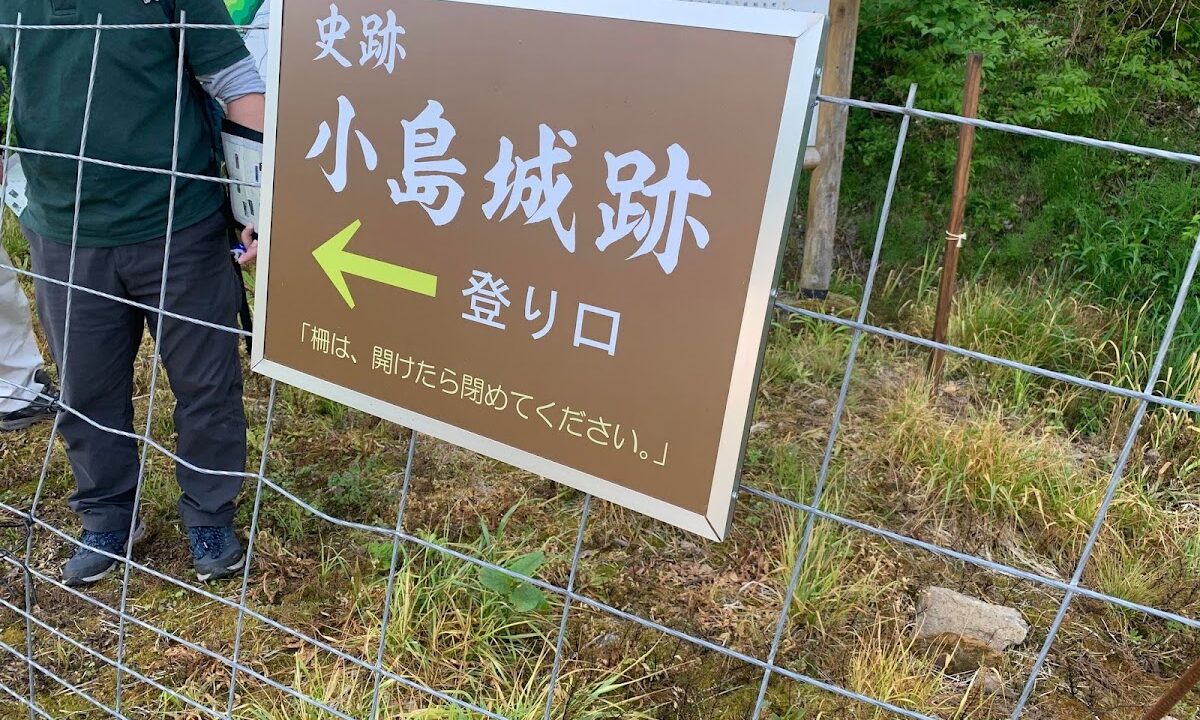
Kojima Castle (Gifu Prefecture, Hida City) Complete Guide | History, Highlights, and Access Information
Located in Furukawa-cho and Numa-cho, Hida City, Gifu Prefecture, Kojima Castle is a medieval mountain castle that served as the base of the Kojima clan, a branch of the Anegakoji clan. Designated as one of the national historic sites “Anegakoji Clan Castle Ruins,” it is known as an important castle ruin indispensable to understanding the Sengoku period history of the Hida region.
Overview and Location of Kojima Castle
Kojima Castle is built on a mountaintop approximately 620 meters above sea level, jutting westward into the lowlands of the Miyagawa River. It is situated at a strategic point between the Etchu-Nishi Kaido and Kamioka Kaido roads, and its strategic location is characterized by the Kanbara Pass, a mountain pass connecting Takahara-go and Kojima-go, passing alongside it.
This area was a crucial point controlling the transportation routes from the center of Hida Province to the north, and the castle’s location suggests that the Kojima clan prioritized securing transportation routes in their control of this region. It can be described as a typical medieval castle, combining defensive capabilities as a mountain castle with traffic monitoring functions.
History of Kojima Castle
Establishment of the Anegakoji and Kojima Clans
Kojima Castle is said to have been built by the Anegakoji clan. The Anegakoji clan was a powerful local family in Hida Province, holding influence from the Muromachi period to the Sengoku period. Eventually, the Anegakoji clan split into three branches: the Kojima, Mukai, and Furukawa clans, which came to be known as the “Three Anegakoji Families.”
The Kojima clan, as one of the Three Anegakoji Families, made Kojima Castle their residence and ruled the area centered around Kojima-go. However, constant conflicts within the clan led to a gradual decline in the overall power of the Anegakoji clan.
Turmoil in the Sengoku Period
At the start of the Sengoku period, the Miki clan, vassals of the Kyogoku clan, the Hida provincial governor, rose to power. As Miki Jitsuna expanded his power within Hida Province, Kojima Tokimitsu became subordinate to Miki Jitsuna. During this period, a reorganization of power centered around the Miki clan progressed within Hida Province, and the Kojima clan was gradually losing its independence.
The Fall of Kojima Castle and the Downfall of the Kojima Clan in 1585
In 1585 (Tensho 13), a major event occurred that determined the fate of Kojima Castle. Kanamori Nagachika, lord of Ono Castle in Echizen Province, invaded Hida Province on the orders of Hashiba Hideyoshi (later Toyotomi Hideyoshi).
Kanamori Nagachika, under Hideyoshi’s orders to pacify Hida, led a powerful army and successively captured castles within Hida Province. Kojima Castle also became a target of attack and fell after a fierce assault by Kanamori’s army. This fall marked the end of the Kojima clan.
Possibility of Renovations by the Kanamori Clan
It is believed that the Kanamori clan, who captured Kojima Castle, renovated and utilized the existing castle fortifications when governing Hida Province. Of particular note are the stone walls within the castle, known as “san-gi-zumi.”
San-gi-zumi is an advanced technique of assembling the corners of stone walls at right angles, a castle construction technique that developed after the Azuchi-Momoyama period. Since this technique is not seen in the traditional mountain castles of the Hida region, it is highly likely that the stone walls of Kojima Castle were built when the Kanamori clan renovated them. This is important evidence that the Kanamori clan temporarily used Kojima Castle as a military base.
Structure and Layout of Kojima Castle
Basic Structure as a Mountain Castle
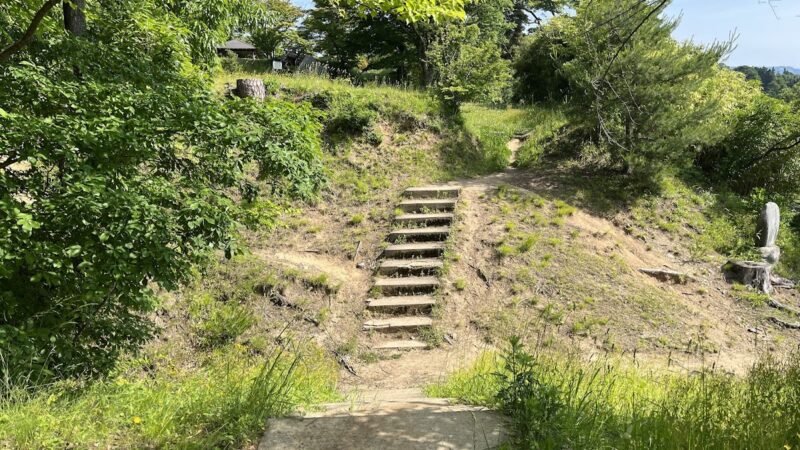
Kojima Castle is a typical mountain castle, with the main enclosure at the 620-meter-high mountaintop, and multiple enclosures (kuruwa) arranged using the ridges and slopes. From the main enclosure, one can overlook the Miyagawa Valley and surrounding roads, making it a suitable location for monitoring enemy movements.
As a defensive feature that takes advantage of the unique terrain of mountain castles, multiple trenches cutting across the ridges were constructed. These trenches served to prevent enemy incursions and to isolate each section within the castle.
Features of the Stone Walls
One of the greatest highlights of Kojima Castle is the aforementioned stone walls constructed using the sanuki-zumi method. These walls are strategically placed throughout the castle and are valuable relics that convey the advanced castle-building techniques of the time.
Sanuki-zumi is a technique that strengthens the corners by stacking stones alternately with their long and short sides facing each other. This is an extremely rare technique in medieval mountain castles in the Hida region and is thought to reflect the advanced castle-building techniques brought by the Kanamori clan from Echizen. The scale and precision of the stone walls suggest that the Kanamori clan considered Kojima Castle an important base.
Trenches and Earthworks
Several trenches remain in good condition within the castle grounds. Trenches are defensive structures that hinder enemy advances by deeply digging into the ridges. The moats at Kojima Castle are several meters deep, making them important remains for understanding the defensive systems of medieval mountain castles.
Furthermore, earthen ramparts were built around the baileys, serving to protect the castle’s defenders from enemy arrows and firearms. These ramparts are also relatively well-preserved, providing clues to the castle’s structure at the time.
Highlights of Kojima Castle
Value as a National Historic Site
Kojima Castle is designated as a National Historic Site as one of the “Anekōji Clan Castle Sites.” The Anekōji Clan Castle Sites include Kojima Castle, Mukai-Kojima Castle, Kotakari Castle, and Noguchi Castle, forming an important group of ruins for understanding the Anekōji clan’s sphere of influence and castle network.
The designation as a National Historic Site indicates that Kojima Castle is not merely a local mountain castle, but holds high academic value in the history of Japanese medieval history and castles.
Observation Points for Stone Wall Remains
When visiting Kojima Castle, be sure to observe the sanuki-zumi stone walls up close. You can truly appreciate the high level of stonemasonry skill of the time, from the way the stones are stacked to the treatment of the corners and the selection of the stones.
Particularly noteworthy is the excellent state of preservation of the stone walls. The fact that these walls remain intact for over 400 years speaks volumes about the high level of craftsmanship of the time. When taking photographs, try to capture the unique features of the stone walls from an angle that clearly shows the structure of the sanuki-zumi (a type of stone masonry).
The Impressive Moat
The moats remaining within the castle grounds are valuable historical remains that allow you to experience the defensive system of a mountain castle. Seeing the deeply excavated moats in person gives you a real sense of how difficult it would have been to attack them.
Looking up from the bottom of the moat, you will be amazed by its depth and the steepness of the cliffs on both sides. Observing the moats is essential for understanding how skillfully medieval castles utilized the terrain.
Views and Surrounding Landscape
The views from the main enclosure are also one of the attractions of Kojima Castle. From here, you can enjoy a panoramic view of the valley through which the Miyagawa River flows, the Hida Mountains, and the townscape of Furukawa. This view allows you to relive the perspective of the castle lord who surveyed his territory from this very spot.
Especially on a clear day, you can clearly see the surrounding mountains and the old roads, giving you a real sense of why the castle was built in this location.
Access to Kojima Castle
Access by Public Transportation
The nearest station is Hida-Furukawa Station on the JR Takayama Line. From the station, take a bus and get off at the “Tae Community Center” bus stop. The castle ruins are approximately a 30-minute walk from the bus stop.
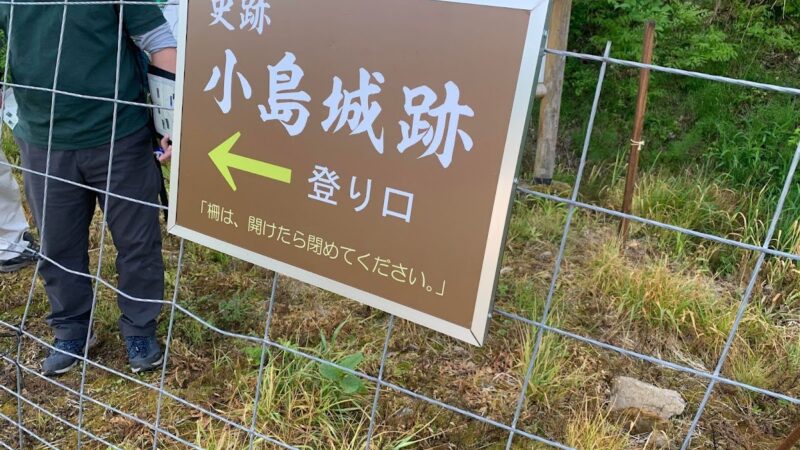
The path to the castle is a mountain trail, so we recommend wearing comfortable shoes and clothing. Particular caution is needed during rainy weather and in winter, as the ground can be slippery.
Access by Car
If traveling by car, there is parking available at the southwestern foot of the castle hill. The castle ruins are approximately a 20-minute walk from the parking lot.
The castle can be accessed from the center of Hida City via national and prefectural roads. Setting “Kojima Castle Ruins” or “Tae Agricultural Center” as your destination on your car navigation system is convenient. However, since it is in a mountainous area, some roads are narrow, so caution is required when driving.
Precautions When Visiting the Castle
Kojima Castle is a mountain castle, so a certain level of physical fitness is required to climb it. Please keep the following points in mind when visiting.
- Attire: Comfortable clothing, non-slip shoes (hiking boots or trekking shoes are ideal)
- Items to bring: Drinking water, towel, insect repellent (summer)
- Weather: The ground can be slippery in rainy weather, so visiting on a sunny day is recommended.
- Time: Allow approximately 2-3 hours for climbing and sightseeing.
- Season: Snow is possible in winter, so check the conditions beforehand.
Nearby Tourist Spots
Castle Ruins Related to the Anegakoji Clan
Mukaikojima Castle, Kotakari Castle, and Noguchi Castle, which are also designated as National Historic Sites “Anegakoji Clan Castle Ruins” along with Kojima Castle, are located nearby. If you have time, visiting these castle ruins as well will give you a deeper understanding of the Anegakoji clan’s sphere of influence and castle network.
Townscape of Hida Furukawa
In Furukawa Town, Hida City, traditional townscapes are preserved, and you can enjoy the beautiful scenery of white-walled storehouses and old merchant houses. The townscape along the Setogawa River is particularly famous and has been used as a filming location for movies and dramas.
Hida City Museum of Art
The Hida City Museum of Art is a facility where you can learn about the history and culture of the Hida region. It exhibits materials related to the Anekōji clan and Kojima Castle, and visiting before or after visiting the castle ruins will deepen your understanding.
Research and Preservation Activities of Kojima Castle
Archaeological Excavations and Academic Research
Multiple archaeological excavations have been conducted at Kojima Castle. These investigations have revealed the castle’s structure, its history, and the ceramics used.
In particular, structural analysis of the stone walls is revealing the period and technical characteristics of renovations by the Kanamori clan. It is expected that continued research will further clarify the historical value of Kojima Castle.
Preservation and Development Project
At Kojima Castle, which is designated as a National Historic Site, a development project is underway aimed at preserving and utilizing the remains. The Hida City Board of Education is leading efforts to preserve the stone walls, improve the access roads, and install information boards, creating a safe environment for visitors.
Collaboration with the Community
Local history enthusiasts and citizen groups are actively involved in the preservation and utilization of Kojima Castle. Regular cleaning activities and guided tours are being held, demonstrating a community-wide effort to protect the castle ruins and promote their value.
The Significance of Visiting Kojima Castle
Kojima Castle is an important historical site that tells the story of the Sengoku period history of the Hida region. Through the remaining structures, you can learn about the rise and fall of the Anegakoji clan, the unification of Hida by the Kanamori clan, and the changes in castle construction technology during the transition from the medieval to the early modern period.
The remains, such as the stone walls, moats, and earthworks, are the culmination of the wisdom and labor of the people of that time. By actually seeing and visiting these structures, you can have a living historical experience that cannot be obtained from history textbooks.
When visiting Hida City in Gifu Prefecture, be sure to visit Kojima Castle Ruins and experience the charm and historical significance of this Hida mountain castle. Its value as a national historical site, its well-preserved stone walls, and the beautiful natural scenery of Hida continue to captivate visitors.
Summary
Kojima Castle was a mountain castle that served as the base of the Kojima clan, a branch of the Anegakoji clan, and played an important role in the Sengoku period history of the Hida region. Although it fell in 1585 during an attack by Kanamori Nagachika, it was later renovated by the Kanamori clan, and valuable remains such as the sanuki-zumi stone walls remain.
Designated as one of the national historical sites “Anegakoji Clan Castle Ruins,” Kojima Castle holds high academic value and is an important historical site for learning about the structure of medieval mountain castles. When visiting Furukawa-cho in Hida City, why not visit this historic mountain castle and reflect on the Sengoku period of Hida?