Complete Guide to the History and Highlights of Kurume Castle | The Remaining Stone Walls and Moat of the Arima Clan’s Residence
Located in Shinoyama-cho, Kurume City, Fukuoka Prefecture, Kurume Castle is a flatland castle built on a small hill along the Chikugo River. Known as the residence of the Arima clan, who ruled the Kurume Domain for approximately 250 years during the Edo period, its magnificent stone walls and inner moat still convey its former glory. This historical castle, also selected as one of the Continued Top 100 Japanese Castles, will be introduced in detail, from its history to its current highlights.
History of Kurume Castle
Before Construction and the Era of Sasahara Castle
The origins of Kurume Castle date back to the Eisho era (1504-1521) of the late Muromachi period. It is believed to have begun when a local lord built a fort-like facility called “Shinohara Castle” or “Sasahara Castle.” This location, utilizing the natural fortifications of the Chikugo River’s muddy wetlands, has long been recognized for its military importance.
Initially a small fort, Sasahara Castle gradually increased in importance as a strategic point in the Chikugo region. The Chikugo River, a natural moat, and the surrounding wetlands provided natural defensive structures, making this area a strategically valuable location.
Transformation into a Modern Castle by Mori Hidekane
Kurume Castle was fully developed as a residence for a modern daimyo in 1587 (Tensho 15). Following Toyotomi Hideyoshi’s redistribution of Kyushu, Mori Hidekane, the ninth son of Mori Motonari, was granted a domain of 130,000 koku. Hidekane came from the prestigious Mori family of the Chugoku region and possessed knowledge and skills in castle construction.
Mori Hidekane extensively renovated Sasahara Castle, transforming the main keep into a modern castle. During this period, a full-fledged castle structure using stone walls was introduced, transforming Kurume Castle from a mere fort into the residence of a Sengoku daimyo (feudal lord). Hidekane’s renovations were a crucial turning point that laid the foundation for the later Kurume Castle.
The Era of Tanaka Yoshimasa
Tanaka Yoshimasa, who distinguished himself on the Eastern Army side in the Battle of Sekigahara in 1600, was appointed as a daimyo of Chikugo Province with a domain of 325,000 koku in 1601. Yoshimasa appointed his second son, Norimasa, as the lord of Kurume Castle, while he himself made Yanagawa Castle his base.
Tanaka Yoshimasa was known as a master castle builder, and had a track record of success in the renovations of Nagahama Castle in Omi Province and Okazaki Castle in Mikawa Province. At Kurume Castle, he further developed the castle’s fortifications and the construction of the castle town, enhancing its completeness as a modern castle. The castle’s layout, consisting of the main keep, second bailey, and third bailey, was established during this period, and the unique structure of having only the main keep entirely constructed of stone walls was formed.
The Arima Clan’s Arrival and the Establishment of the Kurume Domain
In 1620 (Genna 6), when the Tanaka family line ended after three generations, Arima Toyouji was transferred from Fukuchiyama in Tanba Province in 1621 (Genna 7) with a domain of 210,000 koku. Toyouji was the son of Arima Harunobu, a daimyo known for his Christian faith, and became the first lord of the Kurume Domain.
The Arima clan ruled the Kurume Domain for approximately 250 years until the Meiji Restoration. Kurume Castle functioned as the political, economic, and cultural center of the Kurume Domain, and the castle town also flourished. Successive lords strived to maintain the castle and dedicated themselves to the stability of the domain’s administration and the improvement of the welfare of its people.
Under the rule of the Arima clan, Kurume flourished as the central city of the Chikugo region and achieved significant cultural development. Education was also a priority, with the establishment of the domain school, “Meizendo,” producing many talented individuals.
From the End of the Edo Period to the Meiji Restoration
During the end of the Edo period, the Kurume domain became one of the centers of the Sonno Joi (Revere the Emperor, Expel the Barbarians) movement. Many loyalist samurai resided within the domain, playing a crucial role in the Meiji Restoration. During the Boshin War, it sided with the new government forces and functioned as a base for the new government in Kyushu.
With the abolition of the feudal domains and establishment of prefectures in 1871 (Meiji 4), the Kurume domain became Kurume Prefecture, and was later incorporated into Fukuoka Prefecture. In the early Meiji era, most of the castle’s structures were dismantled, leaving only the stone walls and moats. However, the Mizute-gomon gate of the main keep was relocated and remains as the main gate of Juhonji Temple in Kusano, Kusano-machi, Kurume City.
Structure and Layout of Kurume Castle
Location as a Hilltop Castle
Kurume Castle is a hilltop castle built on a hill approximately 30 meters above sea level along the Chikugo River. The north side was protected by the natural moat of the Chikugo River, while the south side had an artificial moat and earthen ramparts. The defensive system utilizing the muddy wetlands of the Chikugo River greatly enhanced the castle’s strength.
The hilltop location was an ideal form, combining the convenience of a flatland castle with the defensive capabilities of a mountain castle. It also allowed for easy communication with the castle town, making it a suitable structure for functioning as a political center.
Arrangement of the Main Bailey, Second Bailey, and Third Bailey
Kurume Castle had a terraced layout consisting of the main bailey, second bailey, and third bailey. The main bailey was located at the northern end, with the second and third baileys extending southward. The main gate was located on the south side of the main bailey, and the castle was entered from south to north.
The main keep (Honmaru) was a sturdy structure surrounded by a complete stone wall, housing the lord’s residence and administrative offices. The second and third baileys (Ninmaru and Sannomaru) housed the residences of retainers and warehouses, making the entire castle complex function as a complex with administrative functions.
Currently, the sites of the second and third baileys are occupied by one of Bridgestone’s largest factories in Japan, and little remains of its former appearance. However, the site of the main keep has been developed into a park, preserving important remains such as the stone walls and moats.
Characteristics of the Stone Walls
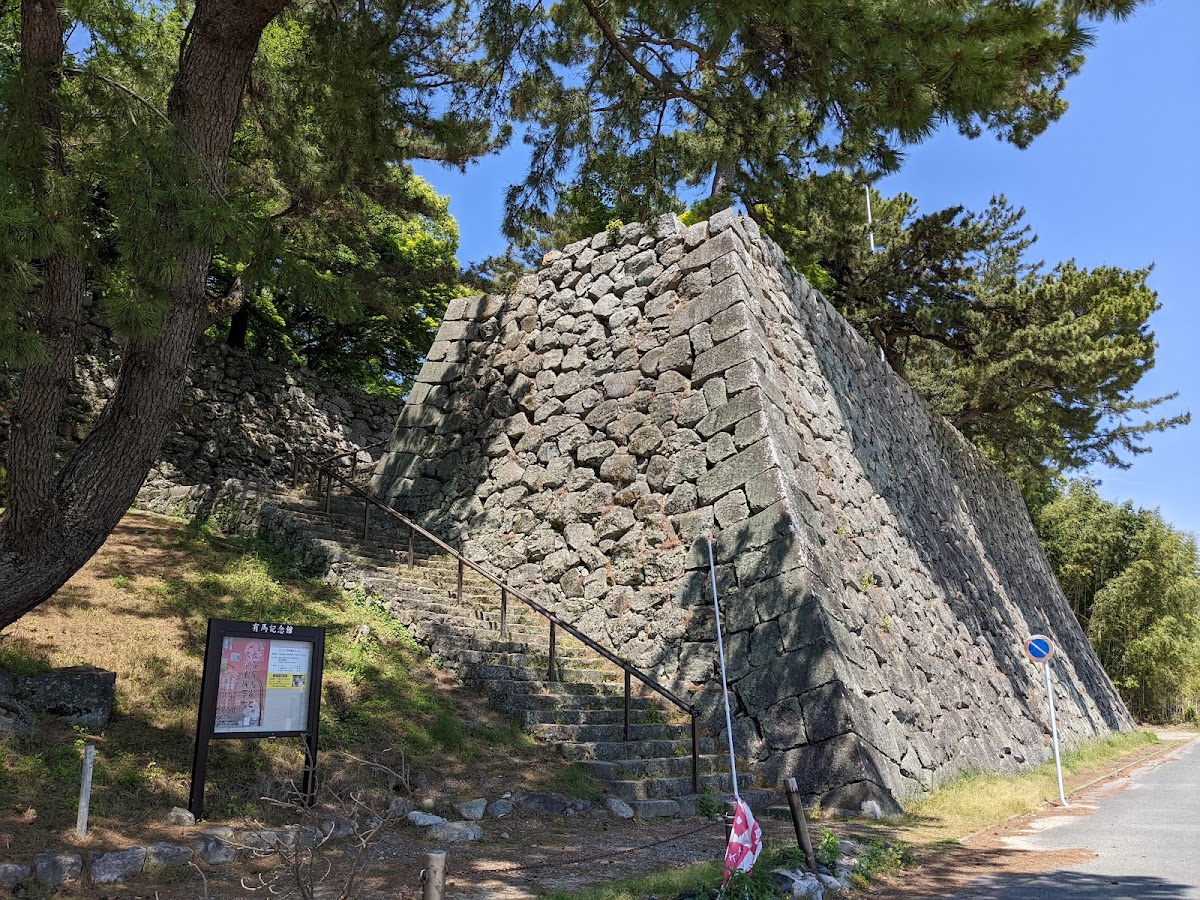
One of the greatest highlights of Kurume Castle is the magnificent stone wall surrounding the main keep. The height varies depending on the location, but the highest points reach over 10 meters. The stone walls exhibit different construction methods from different eras, ranging from rough-hewn to fitted and cut stonework, allowing us to understand the evolution of castle construction technology.
The stone wall on the south side of the main keep is particularly well-preserved, demonstrating the high level of stonework technology of the Edo period. The stonework primarily uses locally sourced andesite, resulting in a robust structure. A technique called “sangi-zumi” (a type of stonework) is employed at the corners, further enhancing structural strength.
The stone wall features a beautiful curve known as the “fan-shaped slope,” combining practicality and aesthetics. Even after more than 400 years, this stone wall remains largely unchanged from its original form.
Moat and Water System
Kurume Castle had both an inner and outer moat. The inner moat still remains on the south side of the main keep, allowing us to imagine its former grandeur. Water was drawn from the Chikugo River, maintaining a constant water level.
This water system, which made maximum use of the Chikugo River’s muddy wetland location, greatly enhanced Kurume Castle’s defenses. Enemy attacks required crossing the moat, creating a defensive structure where attacks from within the castle were unavoidable during the crossing.
Highlights of Kurume Castle Ruins
Shinoyama Shrine
On the site of the main keep stands Shinoyama Shrine, dedicated to Arima Toyouji, the first lord of the Kurume Domain. Founded in 1880 (Meiji 13), this shrine is an important facility that conveys the achievements of the Arima clan to future generations.
The shrine building stands on the site of the former main keep palace, allowing visitors to stand in the former center of the domain’s administration. From the shrine grounds, one can enjoy a panoramic view of Kurume city, imagining the lords surveying their territory from this location.
The name “Shinoyama,” from which the shrine derives its name, is related to “Sasahara Castle,” another name for Kurume Castle, and conveys the history of this area to the present day. An annual festival is held here, and it is cherished by the local people.
Arima Memorial Hall
Another important facility on the site of the main keep is the Arima Memorial Hall. Opened in 1957, this memorial museum displays valuable materials passed down through the Arima family, including armor, swords, and crafts belonging to successive feudal lords.
The exhibits, primarily focusing on materials related to the Kurume domain’s administration, are crucial for understanding the history and culture of the Kurume domain during the Edo period. The museum houses a wide range of materials, including letters from feudal lords, ancient documents concerning domain administration, and maps of the castle town.
Particularly noteworthy is the collection of armor and swords passed down through generations of the Arima family. These weapons are not merely weapons; they also possess high value as works of art and craftsmanship, demonstrating the status and authority of a daimyo family, and are adorned with intricate decorations.
The museum also regularly holds special exhibitions, covering various themes related to the history and culture of Kurume. It is a must-visit facility when visiting Kurume Castle.
Strolling Along the Stone Walls and Inner Moat
When visiting the Kurume Castle ruins, we recommend taking a leisurely stroll along the stone walls and inner moat surrounding the main keep. The stone walls on the south side of the main keep are particularly impressive, and their height and beautiful curves are truly astonishing.
Looking up from below, you can truly appreciate their power and the high level of craftsmanship. Furthermore, by comparing the stone walls built in different eras, you can learn about the evolution of castle construction techniques.
The promenade along the inner moat is well-maintained, allowing you to enjoy the changing seasons while strolling. In spring, cherry blossoms bloom profusely, making it a popular spot for cherry blossom viewing. The reflection of the stone walls and cherry blossoms in the moat is one of Kurume Castle’s most iconic views.
The Relocated and Existing Mizute-gomon Gate
While most of Kurume Castle’s structures were dismantled during the Meiji era, the Mizute-gomon Gate of the main keep was relocated to Juhonji Temple in Kusano-machi, Kurume City, and still exists today. This is a valuable historical site where you can see actual examples of castle architecture.
The Mizute-gomon Gate was located on the north side of the castle, facing the Chikugo River, and was used for communication with water transport. The relocated gate retains much of its original appearance and is an important resource for understanding the architectural style of Kurume Castle.
When visiting the Kurume Castle ruins, we recommend extending your trip a little further to visit the Mizute-gomon Gate at Juhonji Temple. Visiting it along with the castle ruins will give you a deeper understanding of the overall structure of Kurume Castle.
Access and Tourist Information
Transportation Access
The nearest station to the Kurume Castle ruins is JR Kurume Station. From the station, it’s about a 15-minute walk; walk north along Bridgestone Street to reach the site. Along the way, you’ll pass through Kurume’s shopping district, allowing you to enjoy the townscape.
From Nishitetsu Kurume Station, it’s about a 20-minute walk. If using the bus, the Nishitetsu Bus “Mutsumon” bus stop or “Kurume City Hall” bus stop are convenient.
If accessing by car, it’s approximately 15 minutes from the Kurume Interchange on the Kyushu Expressway. Parking is available around the castle ruins, considering the convenience of tourists.
Parking Information
Kurume Castle Ruins has its own dedicated parking lot. If you are visiting the Arima Memorial Museum, you can use the museum’s parking lot. Due to limited space, it may be crowded on holidays and during cherry blossom season.
There are also public parking lots in the surrounding area operated by Kurume City, which you can use. Since the area around the castle ruins is urban, there are also coin-operated parking lots scattered throughout the area.
Visiting Hours and Fees
The main keep area of Kurume Castle Ruins is open as a park, and visits are free. You can visit 24 hours a day, but since lighting is limited at night, daytime visits are recommended.
The Arima Memorial Museum is open from 10:00 AM to 5:00 PM (last entry at 4:30 PM). It is closed on Mondays (or the following day if Monday is a public holiday) and during the New Year holidays. Admission is 200 yen for adults, and free for high school students and younger.
Sasayama Shrine is open to visitors, but the shrine office has limited hours, so it is recommended to check in advance if you wish to receive a Goshuin (shrine stamp).
Nearby Tourist Attractions
Around the Kurume Castle ruins, there are several tourist spots where you can experience Kurume’s history and culture.
Ishibashi Cultural Center is a cultural facility donated to Kurume City by Shojiro Ishibashi, the founder of Bridgestone, and includes an art museum and a Japanese garden. It is about a 10-minute walk from the Kurume Castle ruins, making it ideal to visit in conjunction with the castle.
Suitengu Shrine is the head shrine of all Suitengu shrines nationwide and is revered as the god of safe childbirth and child-rearing. It is located along the Chikugo River and is about a 20-minute walk from the Kurume Castle ruins.
The Kurume City Museum of Art is located within the Ishibashi Cultural Center and exhibits modern and contemporary Japanese and Western paintings, primarily from the Ishibashi Collection.
Strolling through the streets, which retain the atmosphere of a castle town, is also recommended. Kurume has a history of developing as the central city of the Chikugo region, and old merchant houses and temples and shrines are scattered throughout the area.
Gourmet Information
Kurume is known as the “birthplace of tonkotsu ramen,” and there are many ramen restaurants in the city. Kurume ramen is characterized by its rich tonkotsu broth and is popular throughout Japan. There are also many long-established ramen restaurants around the Kurume Castle ruins, where you can enjoy the authentic taste during your sightseeing.
Kurume is also famous as a city of yakitori. “Kurume yakitori” is made by skewering and grilling pork and beef offal, forming a unique food culture. At night, yakitori restaurants are bustling with locals and tourists alike.
The Chikugo region is a thriving agricultural area, and fresh vegetables and fruits are abundant. You can also enjoy local cuisine made with seasonal ingredients.
Kurume Castle and the Continued Top 100 Japanese Castles
Kurume Castle was selected as one of the “Continued Top 100 Japanese Castles” in 2017. The Continued Top 100 Japanese Castles are castles selected by the Japan Castle Association, following the selection of the Top 100 Japanese Castles, and Kurume Castle is recognized as one of them.
The stamp for the Continued Top 100 Japanese Castles is located at the Arima Memorial Hall. For those who enjoy visiting castles as a hobby, Kurume Castle is a must-see spot. The enjoyment of visiting castles throughout Japan while collecting stamps is widely popular among history enthusiasts.
Kurume Castle is also counted as one of Fukuoka Prefecture’s three most famous castles, and along with Fukuoka Castle (Maizuru Castle) and Kokura Castle, it is positioned as a representative castle of Fukuoka Prefecture.
The Four Seasons of Kurume Castle
Spring Cherry Blossoms
Kurume Castle ruins are also known as a famous cherry blossom viewing spot. Many cherry trees are planted along the main keep and moat, and they bloom beautifully in spring. The contrast between the stone walls and the cherry blossoms is stunning, and the area is bustling with many visitors enjoying the blossoms.
At night, the trees are illuminated, allowing visitors to enjoy the magical sight of cherry blossoms after dark. The reflection of the cherry blossoms and stone walls on the moat’s surface is a quintessential spring scene at Kurume Castle.
Summer Greenery
In summer, the trees on the main keep site are lush and green, creating a cool and refreshing atmosphere. The breeze from the Chikugo River is pleasant, making it a perfect season for a stroll. The contrast of the green against the stone walls is also beautiful, making it ideal for photography.
Autumn Foliage
In autumn, the castle ruins are adorned with colorful foliage. Ginkgo and maple trees change color, creating a magnificent harmony with the stone walls and moat. Enjoy a historical walk in the crisp autumn air.
Winter Silence
In winter, Kurume Castle ruins are quiet and peaceful, with few visitors. The stone walls, visible through the leafless trees, give an even more powerful impression. It’s a season to reflect deeply on history in the crisp air.
Preservation and Utilization of Kurume Castle
Kurume Castle ruins are managed by Kurume City, and efforts are being made to preserve and utilize them. Continuous efforts are being made to preserve the remains, such as the restoration of the stone walls and the maintenance of the moats.
In recent years, events utilizing the castle ruins have also been held. History lectures, guided tours, and seasonal events are increasing opportunities for citizens and tourists to learn about the history of Kurume Castle.
The Arima Memorial Museum regularly holds special exhibitions, introducing the history and culture of the Kurume Domain from various angles. It also plays an important role as a place for local history education.
Summary
Kurume Castle is an important historical site with a history of approximately 400 years, built as a flatland castle along the Chikugo River. Kurume Castle served as the residence of prominent daimyo such as Mori Hidekane, Tanaka Yoshimasa, and the Arima clan, functioning as the center of the Kurume Domain.
Today, the stone walls and moat of the main keep convey the appearance of the past, while the Shinoyama Shrine and Arima Memorial Museum preserve its history and culture. Selected as one of the Continued Top 100 Japanese Castles, Kurume Castle is a representative castle of Fukuoka Prefecture, attracting many history buffs and tourists.
Its convenient access, just a 15-minute walk from JR Kurume Station, is also a major draw, making it an ideal central spot for Kurume sightseeing. With its beautiful stone walls, historical significance, and the beauty of nature throughout the seasons, Kurume Castle ruins are well worth a visit.
When visiting Kurume, be sure to visit Kurume Castle ruins and experience the history of the Kurume Domain ruled by the Arima clan. The magnificent stone walls and moat, Shinoyama Shrine, and Arima Memorial Museum convey the appearance of Kurume during the Edo period.