Bodaisan Castle (Gifu Prefecture) Complete Guide | Details of Takenaka Hanbei’s Castle Ruins and Hiking Course
What is Bodaisan Castle?
Bodaisan Castle (Bodaisan-jo) is a Sengoku period mountain castle built on the summit of Mt. Bodai (elevation 402m) in Iwate, Tarui-cho, Fuwa-gun, Gifu Prefecture. It is famous as the residence of Takenaka Hanbei Shigeharu, known as the military strategist of Hashiba Hideyoshi (Toyotomi Hideyoshi), and is also known as “Bodai Castle,” “Iwate Castle,” and “Bodaiji Castle.”
The castle ruins boast a vast scale, approximately 260-300m from north to south and 60-150m from east to west, and are designated as a Gifu Prefecture Historic Site, being one of the largest mountain castle remains in the western Mino region. Currently, a 2.7km hiking course has been developed, making it a popular tourist spot where visitors can enjoy historical walks while exploring the remains of the Sengoku period.
History of Bodaiyama Castle
Construction History and the Iwate Clan
The exact date of Bodaiyama Castle’s construction is unclear, but originally, the Iwate clan, a powerful local family, held sway in this area. Iwate Danjo, based in Urushibara at the foot of Mount Bodai, was a powerful figure with significant influence in the region.
During the Sengoku period, Takenaka Shigemoto (father of Takenaka Hanbei), a vassal of the Saito clan who ruled Mino Province, defeated the Iwate clan. Afterward, Shigemoto is said to have built a new castle on the summit of Mount Bodai. This marks the beginning of Bodaiyama Castle.
The Takenaka Clan’s Residence Period
In 1559 (Eiroku 2), Takenaka Shigemoto is believed to have extensively renovated Bodaiyama Castle. However, in the following year, Eiroku 3 (1560), when Shigemoto died of illness, his eldest son, Takenaka Shigeharu (Hanbei), only 16 years old, inherited the family headship and became the lord of Bodaiyama Castle.
In Eiroku 7 (1564), Takenaka Hanbei took a daring action that would go down in history. With only 16 men, he launched a surprise attack on Inabayama Castle (later Gifu Castle), the residence of his lord, Saito Tatsuoki, and achieved the remarkable feat of occupying it overnight. This “Inabayama Castle takeover incident” instantly raised Hanbei’s reputation as a brilliant strategist.
Afterward, Hanbei returned Inabayama Castle to Saito Tatsuoki and returned to Bodaiyama Castle. Eventually, when Oda Nobunaga pacified Mino Province, Hanbei served the Oda family and later achieved numerous military successes as a retainer of Hashiba Hideyoshi.
Role as a Fortified Residence
The Takenaka clan maintained their residence in Nishifuku Village at the foot of the mountain (present-day Iwate district, Tarui Town) during peacetime, while Bodaiyama Castle functioned as a fortified residence during times of conflict. This dual structure—a strong fortress on the mountaintop and a living base at the foot—was a typical operational configuration for mountain castles during the Sengoku period.
Later, the Takenaka clan built a Takenaka clan encampment at the foot of the mountain and continued to exist as hatamoto (direct retainers of the shogun) during the Edo period. Bodaiyama Castle was used until the encampment was completed, after which it was abandoned. However, the remains of the mountain castle are well-preserved to this day.
Structure and Highlights of Bodaiyama Castle
Characteristics of the Layout
Bodaiyama Castle is a multi-bailey mountain castle with a long, north-south layout centered on the mountaintop at an altitude of 401-402m. Multiple baileys (kuruma) are arranged in a stepped fashion around the main bailey, with defensive structures deployed along the ridgeline.
The castle grounds are estimated to be approximately 150m east-west and 260-300m north-south, although there are slight variations in reported dimensions. In any case, it boasts one of the largest scales in the western Mino region. This vast castle area is highly valued as a testament to the power of the Takenaka clan and as a perfect example of a mountain castle from the Sengoku period.
Major Remains
Main Enclosure (Honmaru)
The main enclosure, located at the mountaintop, is the central facility of the castle. It is believed to have housed the lord’s residence and command post. Even today, the flat shape of the enclosure remains clearly visible, and traces of earthworks can be seen around it.
Earthworks and Moats
Earthworks surround each enclosure, and multiple moats (ditches cutting across the ridge) were constructed along the ridge to prevent enemy intrusion. These defensive structures are thought to have been developed during the time of Takenaka Hanbei, demonstrating the high level of castle-building technology of the Sengoku period.
Well Remains
A well remains at the summit. Securing a water source was a matter of life and death for mountain castles, and this well played a crucial role as a lifeline during sieges.
Vertical and Horizontal Moats
Vertical and horizontal moats were constructed on the slopes, a design intended to restrict enemy movement. Visiting these remains allows you to experience the ingenuity of their defensive functions firsthand.
Stunning Views
The view from the Bodaiyama Castle ruins is magnificent, offering a panoramic view of the Nobi Plain. On clear days, you can see as far as the Battle of Sekigahara and even as far as Gifu City, giving you a real sense of this strategically important location. During the Sengoku period, Takenaka Hanbei likely observed the situation in Mino from this very spot.
Bodaiyama Castle Ruins Hiking Course
Course Overview
The Bodaiyama Castle ruins can be reached via a well-maintained hiking course. The course is approximately 2.7 km long with an elevation difference of about 335 m. The trail is relatively well-maintained, but since it involves visiting the ruins of a mountain castle, a certain level of physical fitness and appropriate hiking equipment are necessary.
Estimated Time: Approximately 2-3 hours round trip
Difficulty: Intermediate (for experienced hikers)
Best Season: Spring (March-May), Autumn (October-November)
Detailed Hiking Route
Trailhead: The trailhead is located near the ruins of the Takenaka clan’s encampment and Zendōji Temple. From the parking lot, walk to the trailhead. An information board is installed at the trailhead, allowing you to confirm the route.
First Half (Foothills to Mid-Mountain): Initially, you will ascend a gentle mountain path. Since you will be walking through a forest, it will be relatively cool even in summer. Along the way, you will pass through bamboo and cedar forests, allowing you to enjoy nature as you hike.
Mid-section (Mid-mountain to just before the castle area)
The slope becomes steeper as the elevation increases. In this section, it’s important to climb at a comfortable pace while catching your breath. Small remnants of baileys and earthworks begin to appear along the way, indicating that the castle area is approaching.
Second half (within the castle area)
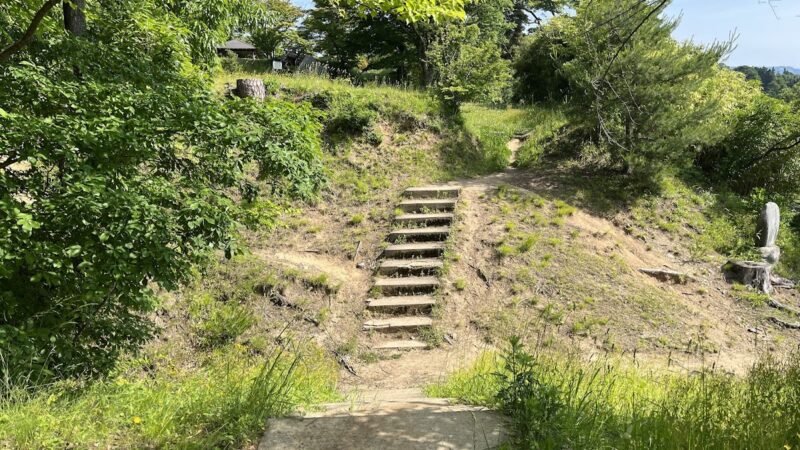
Upon entering the castle area, clear remains such as baileys and moats appear one after another. Information boards are also installed, so take your time to explore and identify the remains. After climbing the final steep ascent, you will reach the main bailey.
Precautions for Hiking
- Clothing: Long-sleeved shirt, long pants, and trekking shoes are recommended.
- Items to Bring: Drinking water, towel, rain gear, map, mobile phone.
- Season: Heatstroke prevention is necessary in summer; warm clothing and non-slip footwear are necessary in winter.
- Weather: Avoid hiking in rainy or bad weather.
- Wildlife: Beware of wild boars and venomous snakes.
- Solo Hiking: Hiking with multiple people is recommended whenever possible.
Access Information
Location
Address: Iwate, Tarui-cho, Fuwa-gun, Gifu Prefecture
Inquiries: Tarui Town Tourism Association (located within the Tarui-cho Iwate District Community Development Center)
Access by Car
From Meishin Expressway, Sekigahara IC: Approximately 10 minutes from Sekigahara IC. Take National Route 21 to the Iwate district of Tarui-cho.
From the Tokai-Kanjo Expressway, Ogaki-Nishi Interchange:
Approximately 15 minutes from the Ogaki-Nishi Interchange.
Parking:
There is a tourist parking lot near the Takenaka Clan Residence Ruins (free). However, parking spaces are limited, so early arrival is recommended on holidays.
Access by Public Transportation
From JR Tokaido Main Line, Tarui Station:
Approximately 10 minutes by taxi, or approximately 40 minutes on foot to the trailhead.
Bus:
A community bus operates, but the number of services is limited, so it is necessary to check the timetable in advance.
Nearby Facilities
Takenaka Clan Residence Ruins:
The ruins of the Takenaka clan’s residence are located near the trailhead. There is no museum, but it is maintained as a historical site.
Zendoji Temple:
A temple associated with Takenaka Hanbei. It houses Hanbei’s grave and attracts many history enthusiasts. A visit before or after hiking is recommended.
Tarui Town Tourist Information Center
Located near Tarui Station, you can obtain brochures and maps.
Related Spots and Nearby Attractions
Places Associated with Takenaka Hanbei
Takenaka Clan Headquarters Ruins
The site of the Takenaka clan’s headquarters during the Edo period. Located at the foot of Bodaisan Castle, it allows you to reflect on the history of the Takenaka clan.
Zendoji Temple
The family temple of Takenaka Hanbei. Hanbei’s grave is located on the temple grounds, and a memorial service is held annually on the anniversary of his death. It’s a sacred place for Hanbei fans.
Sekigahara Area
Approximately 15 minutes by car from Bodaisan Castle is the Sekigahara Battlefield, known for the decisive battle that determined the fate of Japan. Combining this with a visit to the Sekigahara Battlefield Memorial Museum and a historical tour of the encampment sites of various warlords will allow you to experience the history of the Sengoku period more deeply.
Sekigahara Battlefield Memorial Museum
A facility where you can experience the Battle of Sekigahara using the latest exhibition technology.
Ishida Mitsunari’s Camp Site
Sasao Mountain, where Ishida Mitsunari, the commander-in-chief of the Western Army, established his headquarters.
Tokugawa Ieyasu’s First Camp
The place where Tokugawa Ieyasu, the commander-in-chief of the Eastern Army, first deployed his troops.
Famous Places in Tarui Town
Nangu Taisha Shrine
A shrine that has attracted worshippers since ancient times as the Ichinomiya (first-ranked shrine) of Mino Province.
Tarui-juku
A historic townscape that flourished as a post town on the Nakasendo road.
Aikawa Riverside Park
A park where you can enjoy the beautiful clear stream and nature.
The Charm of Bodaisan Castle and Points to Visit
Experience Historical Romance
The greatest charm of Bodaisan Castle is that you can experience the remains of the mountain castle, which was actually the residence of the famous military strategist Takenaka Hanbei, by walking around on foot. Standing at the castle ruins, one can contemplate the historical romance of the young, brilliant strategist who successfully executed the audacious plan to seize Inabayama Castle—what kind of environment did he grow up in, and what kind of scenery did he see?
Well-Preserved Mountain Castle Ruins
Bodaiyama Castle ruins boast remarkably well-preserved remains of a Sengoku period mountain castle. Earthworks, moats, and baileys—the defensive structures of the time—are clearly visible, making it a fascinating spot for castle enthusiasts. In particular, the remains believed to have been renovated by Takenaka Hanbei are highly regarded academically as the perfect example of a Sengoku period mountain castle.
Moderate Hiking and a Sense of Accomplishment
At an altitude of 402m, the round trip takes 2-3 hours, making it closer to a hike than a serious mountain climb, offering enjoyable moderate exercise. Yet, the sense of accomplishment upon reaching the summit is substantial, and combined with the magnificent views, it provides a refreshing experience.
Nature Through the Seasons
Enjoying nature throughout the seasons is a major attraction: fresh greenery in spring, deep green in summer, vibrant autumn leaves, and snowy landscapes in winter. The contrast between the colorful trees and historical sites is particularly beautiful during the autumn foliage season, attracting many hikers.
Basic Information for Visitors
Opening Hours: None (24-hour access)
Admission Fee: Free
Closed Days: None
Estimated Visit Time: 2-3 hours (including hiking)
Toilets: Available near the trailhead (not at the summit)
Vending Machines: Available near the trailhead
Recommended Visiting Season
Spring (March-May)
Beautiful fresh greenery and mild weather, ideal for hiking. Especially popular during cherry blossom season.
Autumn (October-November)
Spectacular autumn foliage and suitable temperatures for hiking. However, it may be crowded on holidays.
Summer (June-August)
The greenery is lush, but beware of the heat and insects. Early morning hikes are recommended.
Winter (December-February)
The air is clear and the views are superb, but beware of snow and ice. Warm clothing is essential.
Things to Know Before Visiting Bodaiyama Castle
About Takenaka Hanbei
Takenaka Shigeharu (1544-1579), commonly known as “Hanbei,” was one of the leading military strategists of the Sengoku period. He served the Saito family at a young age and achieved the remarkable feat of capturing Inabayama Castle with only 16 men. Later, he became a retainer of Oda Nobunaga and played an active role as an assistant to Hashiba Hideyoshi in campaigns such as the Chugoku campaign. Along with Kuroda Kanbei, he was known as one of the “Two Hanbei” or “Two Hanbei,” and supported Hideyoshi’s unification of Japan.
Unfortunately, he died of illness in the field at the young age of 36, but his wisdom and character have been passed down through generations. Bodaiyama Castle is where Hanbei spent his youth, and can be considered his starting point.
Survey and Academic Value
A survey was conducted by the Tarui Town Board of Education, and a detailed layout map was created. This survey revealed that Bodaiyama Castle was not merely a mountain castle of a local lord, but a full-fledged mountain castle from the Sengoku period, utilizing advanced castle-building techniques. The survey report is available on the Tarui Town website and other platforms; reading it before your visit will provide a deeper understanding.
Local Connection
In the Iwate district of Tarui Town, Bodaiyama Castle is carefully preserved and utilized as a regional treasure. Local volunteers maintain hiking trails and install information boards, creating a welcoming environment for visitors. When visiting, please remember to show gratitude and respect to the local people and observe proper etiquette.
Summary
Bodaiyama Castle, as the former residence of the renowned military strategist Takenaka Hanbei, is a valuable historical site that conveys the perfected form of a Sengoku period mountain castle. Located on a 402m-high mountaintop in Tarui-cho, Fuwa-gun, Gifu Prefecture, the Bodaisan Castle ruins, one of the largest castle ruins in western Mino Province, are a must-see spot for history and castle enthusiasts.
The 2.7km hiking trail offers a moderate workout, and the views from the summit are magnificent, allowing you to enjoy both historical and nature walks. The surrounding area is dotted with historical sites from the Sengoku period, including the Takenaka clan’s encampment ruins, Zendō-ji Temple, and the Sekigahara battlefield, making it an ideal base for a historical tour.
Access is relatively good, just about 10 minutes from the Sekigahara Interchange on the Meishin Expressway. When visiting Gifu Prefecture, be sure to visit the Bodaisan Castle ruins and experience the view Takenaka Hanbei saw and the spirit of the Sengoku period. This historically romantic mountain castle ruin will surely transport you back in time to the Sengoku period.