Complete Guide to Muraoka Jinya (Hyogo Prefecture): A Thorough Explanation of the History of the Yamana Clan and the Highlights of Gotenyama Park
Located in Kami-cho, Mikata-gun, Hyogo Prefecture, Muraoka Jinya is the site of the Jinya (fortified residence) of the Yamana clan, who ruled Tajima Province as alternating hatamoto (direct retainers of the shogun) during the Edo period. The prestigious Yamana clan, who ruled 11 provinces nationwide as the “Rokubunichi-shu” (one-sixth group) during the Muromachi period, held significant historical importance as the last base of operations after the changing times. Currently, it has been developed as Gotenyama Park and welcomes many visitors as a historical tourist spot in the Tajima region.
History of Muraoka Jinya: The Rise and Fall of the Yamana Clan
Origins of the Yamana Clan and the Glory of the “Rokubunichi-shu”
The Yamana clan was a prestigious samurai family descended from the Seiwa Genji clan, and flourished from the Kamakura period to the early Muromachi period. Especially during the Muromachi period, the family held the position of shugo (provincial governor) of 11 of the 66 provinces nationwide, boasting such power that they were known as the “Rokubunichi-shu.” However, due to defeats in the Ōnin War and the turmoil of the Sengoku period, their power gradually declined.
The Establishment of Yamana Toyokuni and the Muraoka Yamana Family
In 1601 (Keichō 6), Yamana Toyokuni (Zenkō), the governor of Inaba Province, received 6,700 koku of land in the five villages of Nanami District, Tajima Province from Tokugawa Ieyasu, marking the beginning of the Muraoka Yamana family. Toyokuni became the first head of the Muraoka Yamana family, but initially did not reside in the province. Instead, he established his base in Fukuoka, Bizen Province (present-day Setouchi City, Okayama Prefecture), and governed the territory by dispatching a magistrate. This magistrate’s office is known as the Fukuoka Jinya.
Relocation to Muraoka and Changes in the Jinya
While the first and second generations of Toyokuni were based in Fukuoka, the third generation, Yamana Noritoyo, decided to relocate their base to Kurono Village in Tajima Province (present-day Muraoka Ward, Kami Town), the center of their territory. At this time, the place name was also changed to “Muraoka,” and a jinya (fortified residence) was established here. Initially, the jinya was temporarily located in Usagi Village, which was renamed Fukuoka in 1615.
Relocation of the Jinya to Ojirayama
In 1806, during the time of the eighth head of the Yamana family, Yamana Yoshikata, the jinya was moved to Ojirayama (present-day Gotenyama). This became the final location of the Muraoka Jinya, and from then until the abolition of the feudal domains and establishment of prefectures during the Meiji Restoration, the Yamana family continued to rule the Nanami Gogo region from this base. The Ojirayama jinya took the form of a flatland castle, utilizing the terrain, and was structured in a stepped manner facing west.
From the End of the Edo Period to the Meiji Restoration
The Muraoka Yamana family, which survived as a rotating hatamoto (direct retainer of the shogun) throughout the Edo period, experienced the Meiji Restoration. Following the abolition of the feudal domains and establishment of prefectures in 1871 (Meiji 4), the Muraoka Jinya (fortified residence) ceased to function, and many of its buildings were demolished or relocated. However, the site of the Jinya was preserved as an important place that conveys the history of the region, and it was transformed into the present-day Gotenyama Park.
Structure and Characteristics of Muraoka Jinya
Layout and Layout of the Jinya
The Muraoka Jinya was built on the mountainside of Mt. Ojirayama, east of the intersection of National Routes 9 and 482. It took the form of a flatland castle, and its distinctive feature is its stepped structure arranged westward. The lord’s residence was located on the uppermost level, and the residences of his retainers were located on the lower levels. This stepped arrangement is a typical example of Edo period Jinya architecture that balanced defense and habitability.
Building Composition
In addition to the lord’s residence, the Jinya also contained the wife’s quarters, retainers’ offices, and storehouses. According to historical records, the jinya (fortified residence) buildings were relatively simple, and are thought to have been of a size commensurate with the domain’s assessed yield of 6,700 koku. While most of the buildings are now lost, some architectural elements have been relocated to nearby Hounji Temple and other locations, preserving a glimpse of the past.
Defensive Structures and Gates
The jinya had defensive structures such as walls and gates. While Edo-period jinya did not require the same level of fortification as Sengoku-period castles, they served to demonstrate the lord’s authority and provided a certain degree of defensive capability. A gate recreating the atmosphere of the jinya is installed at the entrance to the current Gotenyama Park, evoking the image of the past.
Gotenyama Park Today
Park Development and Preservation
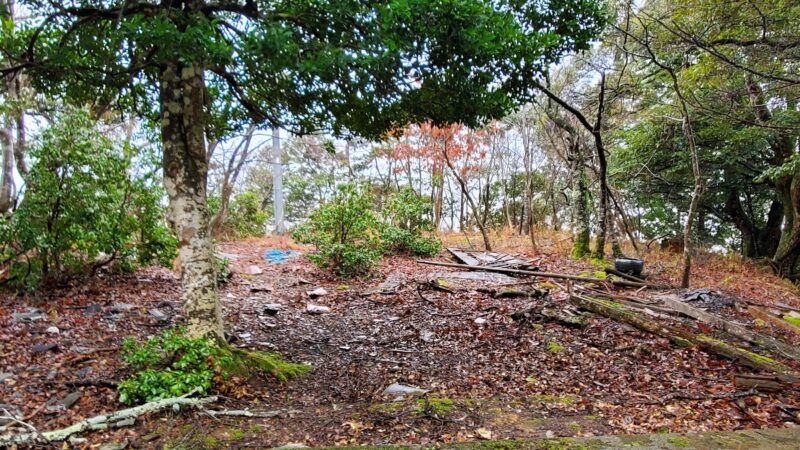
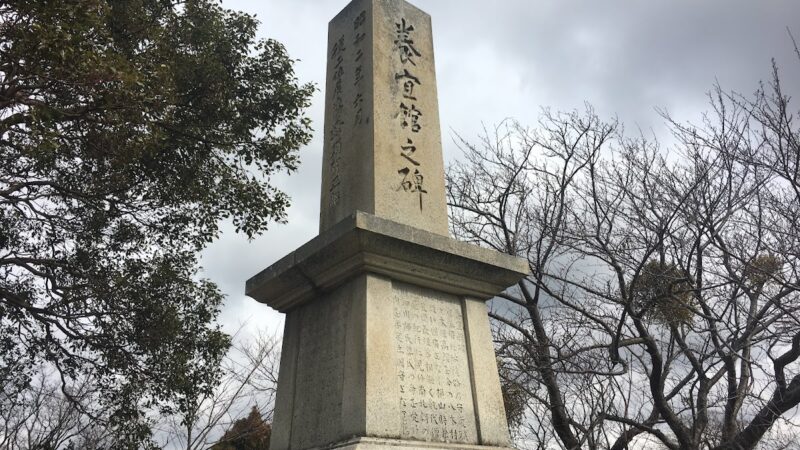
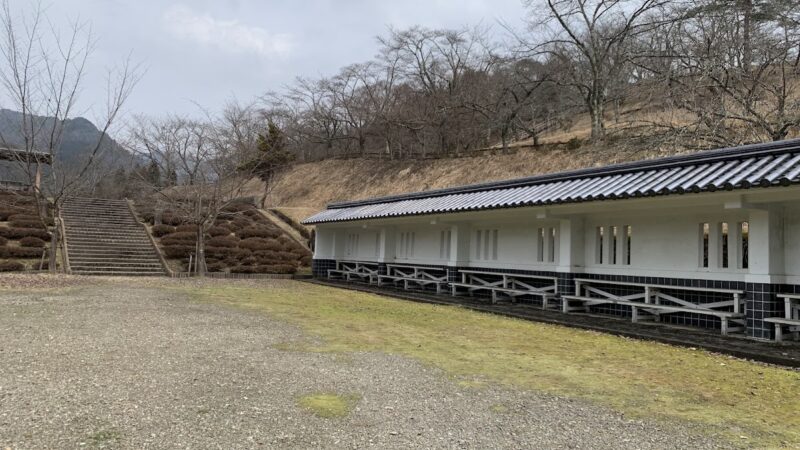
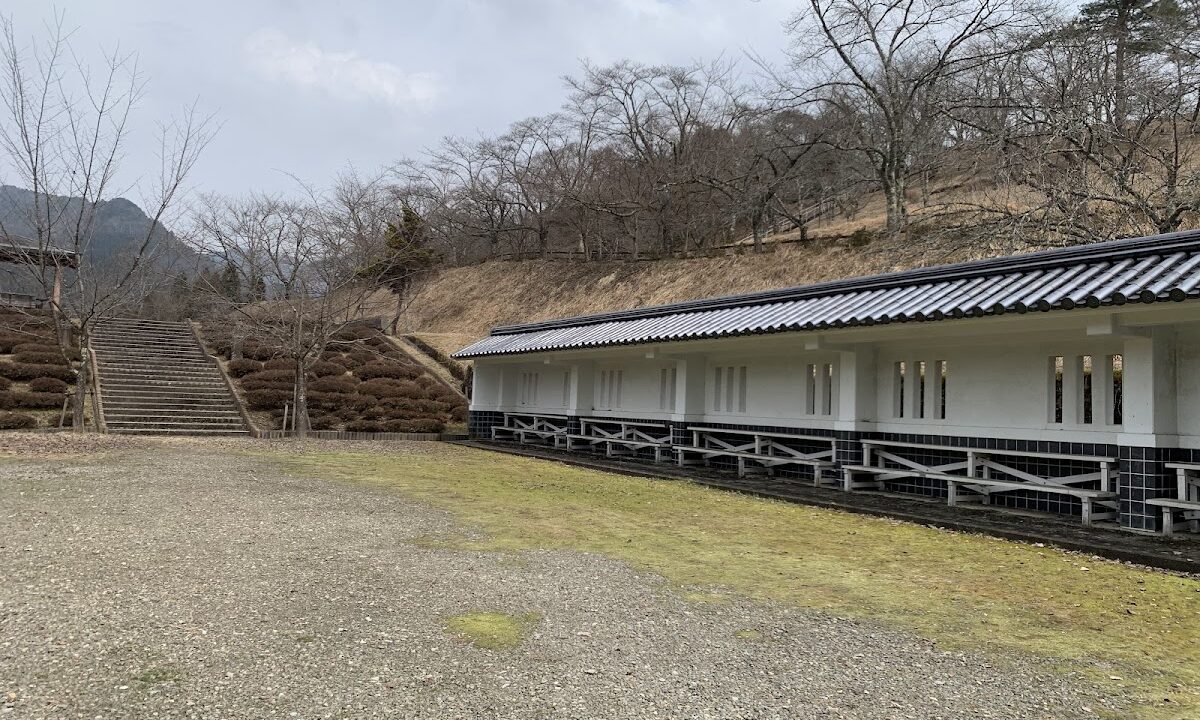
After the abolition of the feudal system, the site of the Muraoka Jinya was developed into Gotenyama Park. The park features walls, gates, and bell tower-like structures that convey the atmosphere of the jinya, giving it the character of a historical park. While the remaining structures themselves are limited, the terraced terrain and layout retain traces of the past, making it a valuable site for learning about the history of the Tajima region.
Highlights and Walking Points
The main highlights of Gotenyama Park are as follows:
Park Entrance Gate
A gate recreating the atmosphere of the former jinya (fortified residence) welcomes visitors. Its structure evokes the grandeur of the jinya of yesteryear.
Terraced Terrain
The terraced terrain, sloping westward, retains the layout from the jinya era. From the top level, you can overlook the townscape of Muraoka and experience the perspective of the feudal lord.
Bell Tower-Style Structure
A structure modeled after a bell tower is located within the park, creating the atmosphere of the jinya.
Information Boards and Explanatory Panels
Information boards detailing the history of the Muraoka Jinya and the Yamana clan are installed within the park, making it useful for historical learning.
Seasonal Charms
Gotenyama Park is a place where you can enjoy nature in every season. In spring, cherry blossoms bloom in abundance, making it a popular spot for cherry blossom viewing in the area. The park displays different expressions in each season: the fresh greenery of summer, the colorful foliage of autumn, and the snowy landscape of winter. The ability to enjoy historical walks and nature appreciation simultaneously is a major attraction of this park.
Related Historical Sites and Points of Interest in the Surrounding Area
Hounji Temple and Relocated Architecture
It is said that some of the buildings of the Muraoka Jinya (fortified residence) were relocated to the nearby Hounji Temple. By visiting Hounji Temple, you can see actual Jinya architecture and learn about Edo period architectural techniques and styles. You can feel the weight of history in the tranquil atmosphere of the temple.
The Townscape of Muraoka
The townscape of Muraoka, which developed as a castle town of the Jinya, still retains traces of its former glory. The layout of the roads and town plan show the planning of a castle town. Looking down at the town from the park, you can understand the structure of the castle town from the perspective of the feudal lord.
Other Castles and Fortifications in Tajima
Besides Muraoka Jinya (fortified residence), the Tajima region has many other historically important castles, such as Izushi Castle and Takeda Castle Ruins. Visiting these together will allow you to gain a deeper understanding of the history of the Tajima region from the Sengoku period to the Edo period.
Access and Visiting Information
Access by Car
Muraoka Jinya Ruins (Gotenyama Park) is located east of the intersection of National Routes 9 and 482. There is a parking lot within the park, making it easily accessible by car.
- From Tottori: Head north on National Route 9, near the intersection with National Route 482 in the Muraoka town area.
- From Toyooka: Head south on National Route 9, near the intersection in the Muraoka town area.
When using a car navigation system, searching for “Gotenyama Park” or “Muraoka-ku, Kami-cho, Mikata-gun, Hyogo Prefecture” is convenient.
Access by Public Transportation
From Yoka Station or Ebara Station on the JR San’in Main Line, take a Zentan Bus towards Muraoka. After getting off at the “Muraoka” bus stop, Gotenyama Park is about a 10-minute walk away. However, since the number of buses is limited, it is recommended to check the timetable in advance.
Points to Note When Visiting
- The park is open year-round, but it is safer to avoid visiting at night.
- In winter, there is a possibility of snowfall, so please check the weather before visiting.
- The park is well-maintained, but we recommend wearing comfortable walking shoes.
- Please be careful when entering areas of the historical site to protect it.
Nearby Tourist Facilities
When visiting Muraoka Jinya, visiting the following nearby tourist facilities will make your trip more fulfilling:
- Kami Town Geopark and Marine Culture Museum: A facility where you can learn about the nature and culture of Tajima.
- Saruo Falls: A famous waterfall selected as one of Japan’s Top 100 Waterfalls.
- Hachikita Plateau: A resort area where you can enjoy mountain climbing in summer and skiing in winter.
- Yumura Onsen: A famous hot spring with a 1,200-year history.
Historical Significance of Muraoka Jinya
Importance in Yamana Clan Research
The Muraoka Jinya is an important historical site that tells the story of the Yamana clan, who transformed from a daimyo (feudal lord) in the Muromachi period to a hatamoto (direct retainer of the shogun) in the Edo period. The fact that the Yamana clan, who were renowned throughout Japan as the “Rokubunichi-shu” (one-sixth group), ultimately survived as a 6,700-koku koku kōtai yoriai hatamoto (alternate retainer of the shogun), is a valuable example illustrating the transformation of samurai society during the transition from the Sengoku period to the Edo period.
Position in Tajima Regional History
Tajima Province was an important region from ancient times, but during the Edo period, it was divided into several small domains and hatamoto territories. Among these, the Muraoka Jinya occupies a special position as a territory ruled by the prestigious Yamana clan. The existence of the Jinya, which functioned as the political, economic, and cultural center of the region, is an indispensable element in understanding the early modern history of the Tajima region.
Research Value of Jinya Architecture
Edo period Jinya architecture is a field that has not been researched as extensively as castles, which were the residences of daimyo. The historical materials and remains concerning the structure, layout, and architectural style of the Muraoka Jinya (fortified residence) are invaluable resources for understanding what a Jinya of a Kōtai Yoriai Hatamoto (a high-ranking samurai) was like. In particular, it is of high academic value as an example illustrating the reality of a Jinya in a relatively small territory of 6,700 koku (a unit of land measurement).
Significance of Visiting Muraoka Jinya
As a Place for Historical Learning
The Muraoka Jinya site is an excellent learning resource for studying Japanese history, especially the samurai society and local governance systems of the Edo period. Visitors can experience firsthand the actual location, structure, and relationship with the castle town of the Jinya, things that cannot be learned from textbooks. It holds great value as a place for school education and lifelong learning.
Understanding Local History and Culture
Visiting Muraoka Jinya allows for a deeper understanding of the history and culture of Kami Town and the Tajima region. Understanding how this region was governed and how people lived during the Edo period is important for understanding modern local communities.
The Charm of a Quiet Historical Stroll
Compared to famous tourist spots like Takeda Castle Ruins or Himeji Castle, Muraoka Jinya is a relatively quiet place to experience history. It’s an ideal spot for those who want to avoid crowds and slowly reflect on history. Spending time contemplating the rise and fall of the Yamana clan amidst the nature of Gotenyama Park will surely be a special experience.
Summary: Rediscovering the Charm of Muraoka Jinya
Muraoka Jinya (Kami-cho, Hyogo Prefecture) was the last base of the prestigious Yamana clan, once renowned throughout Japan as the “Rokubunichi-shu.” It boasts a history spanning approximately 270 years, from the granting of 6,700 koku by Yamana Toyokuni in 1601, to the relocation of the Jinya to Ojirayama (Gotenyama) in 1806, and finally to the abolition of the feudal domains during the Meiji Restoration.
The site is now developed as Gotenyama Park, and its terraced terrain and gates, which recreate the atmosphere of the former jinya (fortified residence), convey the atmosphere of yesteryear. Although the remains themselves are limited, strolling through the park allows you to experience the structure of the Edo-period jinya and the appearance of the castle town from the perspective of the feudal lord.
When visiting the Tajima region, be sure to stop by the Muraoka Jinya site and experience the rise and fall of the Yamana clan and the history of the region. In the quiet park, you can feel the profoundness of Japanese history. Visiting the nearby Hounji Temple, the townscape of Muraoka, and other castles in the Tajima region in conjunction with the site will make for a more fulfilling historical exploration.