Complete Guide to Miharu Castle: A Thorough Explanation of the History, Structure, and Highlights of Maizuru Castle
Located in Miharu Town, Tamura District, Fukushima Prefecture, Miharu Castle was a mountain castle that served as the center of the Tamura region from the Sengoku period to the Edo period. Affectionately known as “Maizuru Castle,” it was selected as one of the Continued Top 100 Japanese Castles in 2017. This article provides a detailed explanation of Miharu Castle’s history from its construction to its abandonment, its castle structure, existing remains, and how to enjoy the castle ruins in modern times.
What is Miharu Castle?
Miharu Castle is a flatland castle (mountain castle) built on a hill approximately 407 meters above sea level in the center of Miharu Town, Tamura District, Fukushima Prefecture. As a symbol of the castle town of Miharu, it is affectionately known locally as “Oshiroyama” (Castle Mountain) or “Maizuru Castle.”
It is said that Miharu Castle was built in 1504 by Tamura Yoshiaki, and it functioned as the residence of the lord of Miharu Domain for approximately 370 years until the castle abolition decree after the Meiji Restoration. Currently, it is maintained as Shiroyama Park and serves as a place of relaxation for citizens.
Origin of Miharu Castle’s Alternate Name, “Maizuru Castle”
There is an interesting legend about the origin of the name “Maizuru Castle” for Miharu Castle. It is said that on the morning Tamura Yoshiaki entered the castle, cranes soared above it, giving rise to this elegant alternative name. This name is also thought to be related to the fact that the shape of the hill on which the castle was built resembled a crane with its wings spread.
History and Background of Miharu Castle
Muromachi Period and Azuchi-Momoyama Period: The Tamura Clan’s Era
While there are various theories regarding the exact construction date of Miharu Castle, what is clear from historical records is the fact that Tamura Yoshiaki moved his base from Moriyama Castle to Miharu Castle during the Eisho era (early 16th century). The most widely accepted theory is that the castle was built in Eisho 1 (1504).
The Tamura clan claimed descent from Sakanoue no Tamuramaro and expanded their power as a Sengoku daimyo ruling the Tamura region. During the time of Tamura Yoshiaki, they maintained their independence while confronting powerful neighboring forces such as the Date and Soma clans.
Relationship between Tamura Kiyoaki and Date Masamune
During the time of Tamura Kiyoaki, the grandson of Tamura Yoshiaki, Miharu Castle reached its peak. Kiyoaki strengthened the alliance with the Date clan by marrying his daughter, Megohime, to Date Masamune. This strategic marriage played a crucial role in the survival of the Tamura clan.
However, with Toyotomi Hideyoshi’s pacification of Oshu in Tensho 18 (1590), the Tamura clan was dispossessed, and Miharu Castle was confiscated. This marked the end of the Tamura clan’s history as a Sengoku daimyo.
Edo Period: As a Residence for Various Daimyo
The Gamo and Uesugi Periods
After the pacification of Oshu, Miharu Castle became part of the territory of Gamo Ujisato, and later came under the control of Uesugi Kagekatsu. During this period, Miharu Castle served as a branch castle of Aizu-Wakamatsu Castle.
The Kato Period
In 1602 (Keicho 7), Kato Akimitsu became the lord of Miharu Castle, establishing the Miharu Domain. The Kato clan renovated Miharu Castle, developing it into a modern castle.
The Matsushita Period
In 1643 (Kanei 20), Matsushita Nagatsuna became the lord of Miharu Castle. The Matsushita clan were descendants of Matsushita Yukitsuna, a retainer of Tokugawa Ieyasu, and solidified the foundation of the Miharu Domain.
The Akita Clan Era
In 1674 (Enpō 2), Akita Toshisue was appointed to Miharu Domain from Hitachi Shishido with a stipend of 55,000 koku. From then on, the Akita clan served as the lords of Miharu Domain until the Meiji Restoration. The Akita clan ruled Miharu for 11 generations, contributing to the development of the castle town.
Meiji Era: Abolition and Dismantling
After the Meiji Restoration, the Miharu Domain was abolished in 1871 (Meiji 4) with the abolition of the feudal domains and establishment of prefectures, and Miharu Castle was also abandoned. In 1873 (Meiji 6), the castle’s structures were dismantled under the castle demolition order, and except for a portion of the stone walls, the remains of the castle were lost.
In 2003 (Heisei 15), the castle celebrated its 500th anniversary, and commemorative events were held. In 2017 (Heisei 29), it was selected as one of the Continued Top 100 Japanese Castles, and its historical value has been re-recognized.
Structure of Miharu Castle
Layout and Utilization of Topography
Miharu Castle is a flatland castle built on a hill approximately 407 meters above sea level, characterized by its layout that skillfully utilizes the surrounding terrain. The castle consists of the main keep (Honmaru), the second and third baileys (Ninmaru and Sannomaru), and multiple baileys constructed in a stepped pattern.
The castle’s location was a strategic point overlooking the town of Miharu, offering excellent advantages in both defense and governance. The surrounding steep slopes functioned as a natural stronghold.
Structure of the Main Keep (Honmaru)
The main keep (Honmaru) housed the main buildings such as the keep (Tenshu) and palace. However, Miharu Castle did not have a large keep; it is believed that two- or three-story turrets served the role of the keep.
Stone walls were built around the main keep, and masugata (square-shaped enclosures) were provided at the entrances (koguchi), exhibiting characteristics of castle architecture from the Sengoku period to the Edo period.
Layout of the Second and Third Baileys
The Second Bailey was located north of the Main Bailey and housed the lord’s residence and administrative buildings. The Third Bailey was located further out and contained the residences of retainers and warehouses.
These baileys formed a tiered defensive line, designed to prevent enemy intrusion.
Characteristics of the Stone Walls
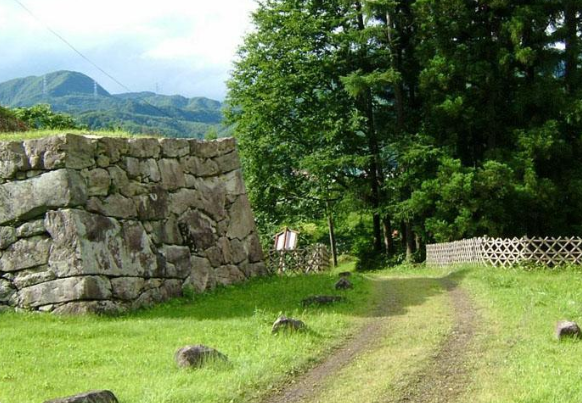
The stone walls of Miharu Castle reflect techniques from the Sengoku period to the early Edo period. The existing stone walls utilize techniques such as rough-hewn stone masonry and fitted stonework, making them valuable remains for understanding the stone wall construction techniques of the time.
In particular, the stone walls around the Main Bailey retain characteristics of the 16th-century Sengoku period, making them of significant archaeological value.
Main Gate and Castle Gates
Miharu Castle had multiple castle gates, with the Main Gate playing a crucial role as the castle’s front entrance. The Main Gate featured a masugata koguchi (square-shaped entrance), enhancing its defensive capabilities.
Although the remains of the castle gate no longer exist, archaeological excavations have confirmed the location of the foundation stones and gate, allowing us to infer its former appearance.
Highlights of Miharu Castle
Existing Remains
Stone Walls
The most striking remains at Miharu Castle are the stone walls surrounding the main keep. Though few in number, they are valuable remnants that convey the stonework techniques of the Sengoku period, attracting the interest of visitors.
While some parts of the stone walls have collapsed and weathered, preservation and maintenance work has been carried out, allowing us to imagine its former appearance.
Remains of Enclosures
The remains of the main keep, second enclosure, and third enclosure are still clearly visible as topographical features. Visiting these enclosures allows us to appreciate the layout and scale of the castle.
Moats and Earthworks
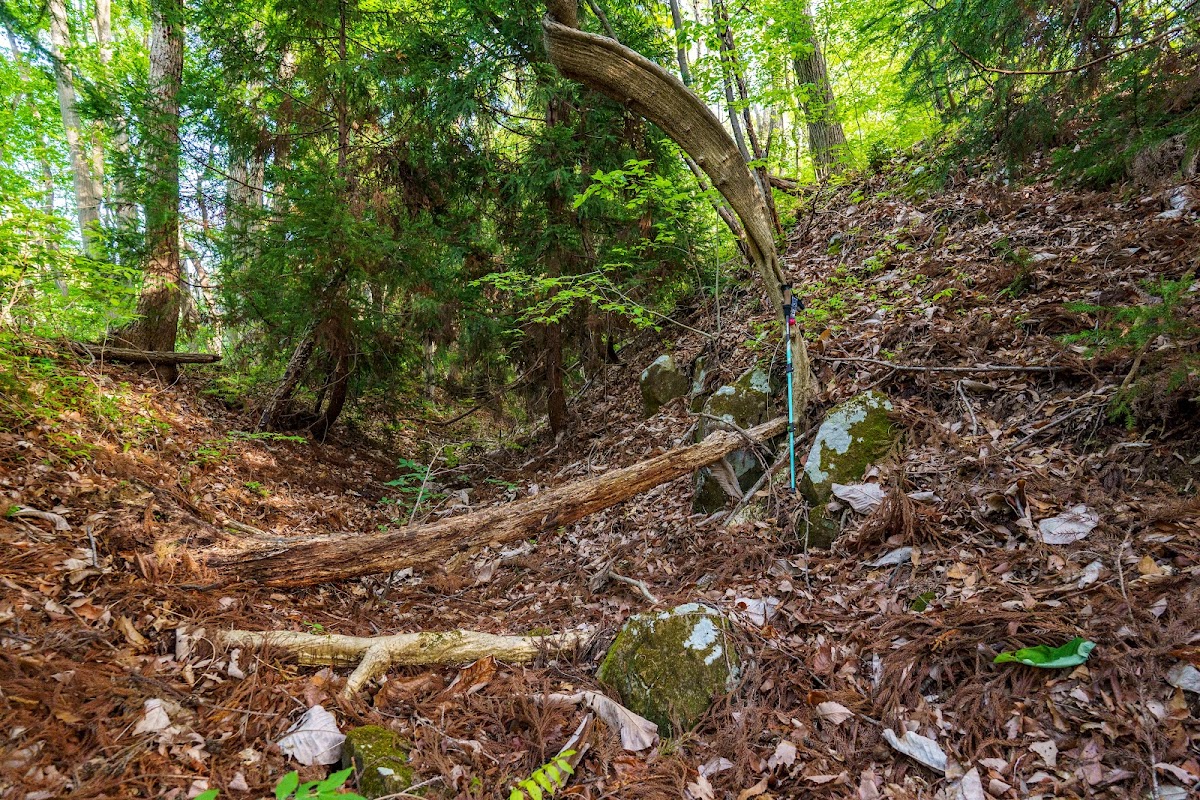
Traces of moats and earthworks, defensive structures unique to mountain castles, also remain. These were important elements that formed the castle’s defensive line.
Development as Shiroyama Park
Currently, the Miharu Castle ruins have been developed into Shiroyama Park, a place of relaxation for citizens. Walking paths are maintained within the park, allowing visitors to stroll through the castle ruins while enjoying the changing seasons.
In spring, cherry blossoms bloom in profusion, making it a popular spot for cherry blossom viewing. In autumn, the autumn foliage is beautiful, captivating visitors in combination with the historical atmosphere of the castle ruins.
Observation Spot
From the main keep ruins, you can enjoy a panoramic view of Miharu town. The view, which the former castle lords must have gazed upon, continues to impress visitors.
On clear days, you can even see the mountains of the Abukuma mountain range in the distance, giving you a real sense of Miharu Castle’s strategic location.
Miharu Castle VR and Cutting-Edge Technology
Street Museum® Experience
At Miharu Castle, you can use the “Street Museum®” app, which utilizes the latest AR (Augmented Reality) technology, to virtually recreate the lost castle architecture.
Through a smartphone or tablet app, the former appearance of Miharu Castle is brought back to life in the modern age, allowing you to experience what the castle was like in its heyday. This app is free to download and greatly enhances the enjoyment of visiting the castle ruins.
VR Restoration Video
In Miharu Town, a VR restoration project of Miharu Castle is underway. Based on historical documents and the results of archaeological excavations, a precise restoration video is being produced. This allows us to learn in detail about the appearance of Miharu Castle in its heyday, even though the buildings are now gone.
Miharu Castle and Castle Town
Formation of Miharu Castle Town
A castle town was formed with the construction of Miharu Castle. The castle town was systematically laid out around the castle, with samurai residences, merchant districts, and temples and shrines neatly divided into sections.
Even today, the town of Miharu retains its castle town layout and old buildings, allowing visitors to feel the historical atmosphere.
Cultural Properties of Miharu
Besides Miharu Castle, Miharu Town has many other historical and cultural properties. The Miharu Takizakura (a nationally designated natural monument) is known as one of Japan’s three greatest cherry trees, attracting many tourists every year.
Furthermore, traditional crafts such as Miharu dolls and Miharu horses continue to convey the culture of the castle town.
Historical and Folk Museum
The Miharu Town Historical and Folk Museum exhibits materials related to Miharu Castle and the Tamura clan. Visiting the museum before or after visiting the castle ruins will deepen your understanding of Miharu Castle.
The museum boasts a wealth of exhibits, including artifacts unearthed during archaeological excavations and displays on the history of the castle town, making it an essential facility for learning about the history of Miharu.
Access Information
Access by Public Transportation
JR Ban’etsu East Line
- Get off at Miharu Station, approximately 20 minutes on foot
- Approximately 5 minutes by taxi from Miharu Station
Bus
- Get off at “Miharu Town Hall” bus stop (Fukushima Kotsu Bus), approximately 10 minutes on foot
Access by Car
Ban’etsu Expressway
- Approximately 10 minutes from Funahiki-Miharu IC
- Approximately 20 minutes from Koriyama-Higashi IC
Parking
- Shiroyama Park parking lot (free) is available
- During peak seasons such as cherry blossom season, please consider using the town-operated parking lot.
Visiting Hours and Fees
- Visiting Hours: No specific restrictions (open as a park at all times)
- Admission Fee: Free
- Estimated Time Required: Approximately 1-2 hours (if you want to take your time to look around)
List of Successive Lords of Miharu Castle
Many lords resided at Miharu Castle from its construction to its abandonment. Here’s a list of the main castle lords, presented in chronological order.
Sengoku Period
- Tamura Yoshiaki (Eisho 1st year/1504~)
- Tamura Takaaki
- Tamura Kiyoaki (Until Tensho 18th year/1590)
Azuchi-Momoyama Period
- Under Gamo Ujisato (Tensho 18th year/1590~)
- Under Uesugi Kagekatsu (Keicho 3rd year/1598~)
Edo Period
- Kato Akimitsu (Keicho 7th year/1602~)
- Kato Akimasa
- Matsushita Nagatsuna (Kanei 20th year/1643~)
- Matsushita Nagatsugu
- Akita Toshisue (Enpo 2nd year/1674~)
- Akita Morisue
- Akita Narisue
- Akita Terusue
- Akita Chikasue
- Akita Nagasue
- Akita Hajimesue
- Akita Eisue
- Akita Noriyuki
- Akita Osamu
- Akita Okisue (until the Meiji Restoration)
The Akita clan, in particular, ruled Miharu for 11 generations over approximately 200 years, making significant contributions to the development of the castle town and the stability of the domain’s administration.
Miharu Castle as one of the Continued Top 100 Japanese Castles
In April 2017, Miharu Castle was selected as one of the “Continued Top 100 Japanese Castles.” This is a list of castles selected by the Japan Castle Association, following the selection of the Top 100 Japanese Castles, and Miharu Castle was recognized as one of the representative castles of the Tohoku region.
Stamp Locations
The stamp for the Continued Top 100 Japanese Castles is located at the following locations:
- Miharu Town Historical and Folk Museum (during opening hours)
- Miharu Town Hall (on museum closing days)
For castle enthusiasts and those enjoying the Top 100 Castles stamp rally, Miharu Castle is a castle site well worth visiting.
Tourist Attractions Around Miharu Castle
Miharu Takizakura (Miharu Waterfall Cherry Tree)
The Miharu Takizakura, designated a national natural monument, is a weeping cherry tree estimated to be over 1,000 years old. Known as one of Japan’s three greatest cherry trees, it reaches its peak bloom from mid- to late April each year.
It’s about a 10-minute drive from the Miharu Castle ruins, and a visit to the castle ruins is recommended.
Fukuju-ji Temple
Fukuju-ji Temple, the family temple of the Tamura clan, houses the graves of three generations of the Tamura family. It’s an important temple for understanding the history of Miharu Castle, and a historical atmosphere permeates the temple grounds.
Miharu Local Doll Museum
This facility exhibits traditional crafts such as Miharu papier-mâché and Miharu horses. Valuable materials that convey the culture of the castle town are on display.
Summary
Miharu Castle was a mountain castle that flourished as the center of the Tamura region from the Sengoku period to the Edo period. Although the buildings themselves are gone, remnants such as stone walls and baileys remain, and the site has been developed into Shiroyama Park.
Miharu Castle, selected as one of the Continued Top 100 Japanese Castles, and with a VR restoration project underway, is experiencing a resurgence of recognition for its historical value. Strolling through the castle ruins amidst the changing seasons, while feeling the history and culture of the castle town of Miharu, offers a deeply moving experience for visitors.
When visiting Fukushima Prefecture, be sure to visit Miharu Castle ruins and experience the history and charm of this historic castle. With its cherry blossoms in spring, lush greenery in summer, vibrant autumn leaves, and snowy winter landscapes, Miharu Castle ruins offer a different face in each season, making it a place where you can discover something new with every visit.