Aga Castle (Hyogo Prefecture) Complete Guide: History, Highlights, and Access Information for the Three Great Castles of Harima
Aga Castle (Aga-jo) was a flatland castle from the Sengoku period located in Aga-miya-cho, Shikama-ku, Himeji City, Hyogo Prefecture. Along with Miki Castle of the Bessho clan and Gochaku Castle of the Kodera clan, it is known as one of the “Three Great Castles of Harima” and was an important military base in the Harima region. This article provides detailed information useful to visitors, from the historical background of Aga Castle to the remaining ruins and access methods.
History of Aga Castle
The Castle’s Origins and the Akamatsu Clan Era
The origins of Aga Castle date back to the Kamakura period. Initially built as a simple fort, during the Muromachi period, a family of the Akamatsu clan, who were the shugo daimyo (provincial governors) of Harima, renovated the castle, developing it into a full-fledged fortress.
The Akamatsu clan was a prestigious samurai family that wielded power mainly in Harima Province, but they lost much of their power in the Kakitsu Rebellion of 1441. Following this turmoil, Aga Castle came under the control of the Miki clan and remained their residence for generations.
Miki Clan Rule and the Development of the Naval Force
The Miki clan is said to have been a branch of the Kono clan, known for their naval forces in Iyo Province. They leveraged the location of Aga Castle on the Seto Inland Sea coast to develop their naval power. Aga Castle was a natural stronghold, overlooking the sea to the south, bordered by the Yumemae River to the west, the Mizuo River to the east, and surrounded by wetlands to the north. This geographical advantage made it extremely advantageous for defense, and it also functioned as a coastal castle with a port.
During the Sengoku period, the Miki clan sided with Ishiyama Honganji Temple during the conflict between Honganji and Oda Nobunaga, providing support from the sea. During this period, the Miki clan was not merely a local lord, but a significant force controlling maritime traffic in the Seto Inland Sea.
The Battle of Aga: The exploits of Kuroda Kanbei
One of the most important events in the history of Aga Castle is the “Battle of Aga,” which took place in 1576 (Tensho 4). This battle was fought between the Mori clan, who aimed to expand into Harima Province, and forces loyal to Oda Nobunaga.
At the time, Kuroda Kanbei (Takataka) was a key military strategist for the Oda side and confronted the Mori navy around Aga Castle. Kanbei’s skillful tactics prevented the Mori clan from expanding into Harima, establishing the Oda’s advantage. This battle became a turning point in Kanbei’s reputation as a military strategist and laid an important foundation for Hideyoshi’s later campaign in the Chugoku region.
The conquest and fall of the castle by Hashiba Hideyoshi
In 1577 (Tensho 5), Hashiba Hideyoshi (later Toyotomi Hideyoshi), acting on orders from Oda Nobunaga, began his full-scale conquest of Harima Province. During this process, the Miki clan resisted as an anti-Oda force, alongside Miki Castle, where Bessho Nagaharu was holed up.
In 1580 (Tensho 8), after a long siege known as the “Starvation of Miki,” Miki Castle fell, and Aga Castle also came under attack from Hideyoshi’s army. The castle lord, Miki Michiaki, attempted to resist, but ultimately Aga Castle fell, bringing an end to the Miki clan’s rule. With this fall, the Sengoku period history of Aga Castle, one of the three major castles of Harima, came to a close.
Post-Abandonment Changes
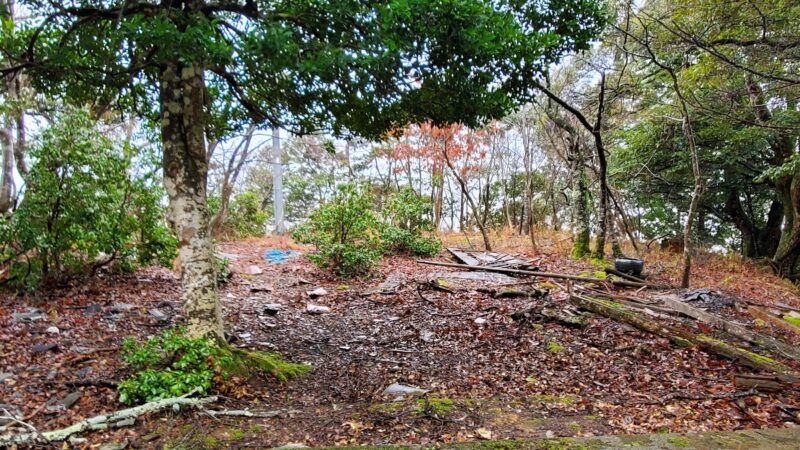
After its fall, Aga Castle was abandoned and never rebuilt. Much of the castle site has been urbanized and is now a residential area. However, remnants of the earthworks remain around Aga Shrine, allowing us to imagine its former appearance.
Positioning as one of the Three Great Castles of Harima
Aga Castle, along with Miki Castle of the Bessho clan and Gochaku Castle of the Kodera clan, was known as one of the “Three Great Castles of Harima.” These three castles each possessed distinct characteristics and symbolized the power dynamics of Harima Province during the Sengoku period.
Miki Castle was a strong mountain castle serving as the base of the Bessho clan, known for the “Battle of Miki” against Hideyoshi. Gochaku Castle was the residence of the Kodera clan, whom Kuroda Kanbei served, and was the political center of Harima. And Aga Castle, a flatland castle facing the sea, functioned as a hub for water transport and trade.
The existence of these three castles demonstrates that Harima was a strategically crucial region, a key point on the Sanyo Road and the Seto Inland Sea shipping routes.
Structure and Layout of Aga Castle
Geographical Characteristics and Defensive System
Although Aga Castle was a flatland castle, it possessed a robust defensive system surrounded by natural waterways. The castle faced the Seto Inland Sea (Harima Sea) to the south, the Yumemae River to the west, the Mizuo River to the east, and a wetland to the north. This location, protected on all sides by water, made enemy incursions difficult and simultaneously facilitated the transport of goods using waterways.
It is believed that the main keep (Honmaru) was located in the center of the castle, surrounded by the second and third baileys (Ninokuruwa and Sannomaru). Each bailey was demarcated by earthworks and moats, forming multiple lines of defense despite being a flatland castle.
Port Facilities and Naval Base
A major characteristic of Aga Castle was that it was a coastal castle with a port. A landing stage was established on the south side of the castle, functioning as a base for the Miki clan’s navy. It is presumed that facilities for mooring warships and warehouses for storing supplies were also provided to control the maritime trade routes of the Seto Inland Sea.
Due to this port function, Aga Castle prospered not only as a military base but also as a center of trade. It also played a commercial role, shipping out local products from Harima and receiving goods from other regions.
Current Sites of Aga Castle: Highlights and Remains
Remains of Earthworks at Aga Shrine
Currently, the most clearly preserved remains of Aga Castle are the earthworks preserved within the grounds of Aga Shrine. These earthworks were part of the castle’s defensive structure and are valuable historical materials indicating the scale of the castle at the time.
The earthworks remain, approximately 2-3 meters high and several tens of meters long, allowing us to imagine its former appearance. Observing the structure of the earthworks reveals the careful earthworks constructed using the rammed earth technique, demonstrating the level of civil engineering technology during the Sengoku period.
Replica Stone Walls and Castle Ruins Park
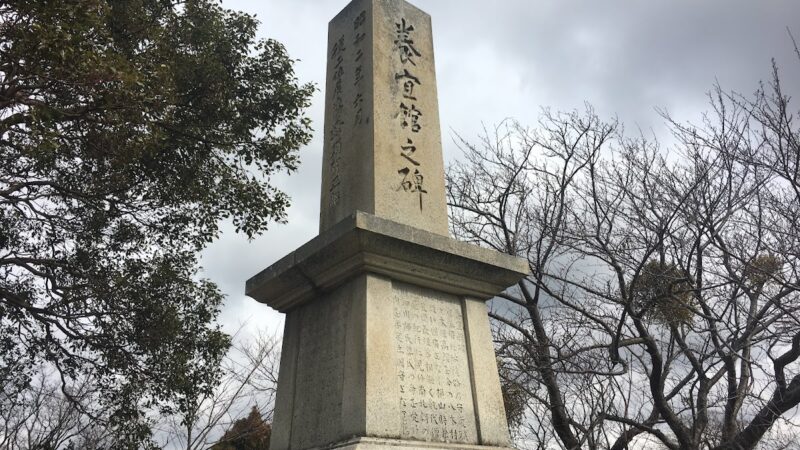
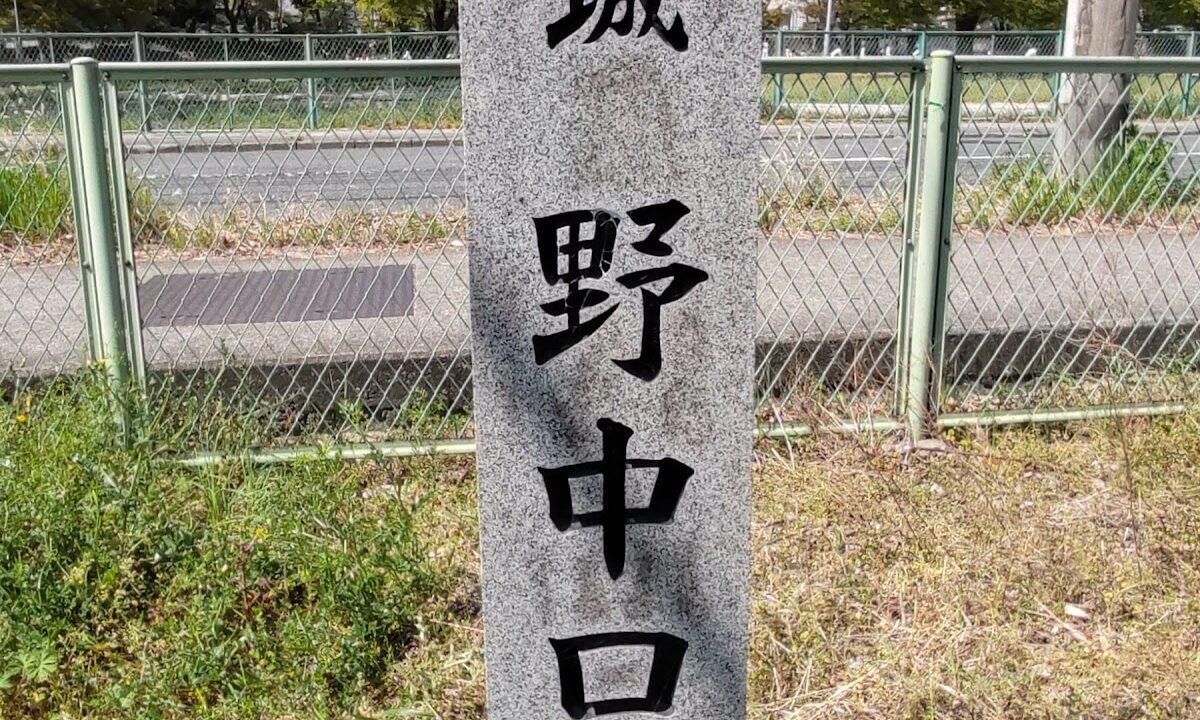
Part of the Aga Castle ruins has been developed into a park, designed to allow visitors to experience history. Replica stone walls have been installed within the park to recreate the atmosphere of the castle. However, this is not a historically accurate reconstruction, but rather a monumental structure indicating that it is a castle site.
Replica Stone Walls and Castle Ruins Park The actual Aga Castle was a flatland castle and is believed not to have been a fortress that made extensive use of stone walls. Its main defensive structures were earthworks and moats, giving it a structure different from mountain castles and early modern castles in this respect.
Castle Site Buried in Residential Areas
Most of the Aga Castle site is now residential. The area southwest of JR Agaho Station is estimated to be the castle site, but there are few clear remains, making it difficult to find traces of its former glory. However, traces of the castle era can be found in place names and road layouts, making it an interesting subject for history enthusiasts to explore.
Careful observation of the town layout reveals topographical features such as unnaturally curved roads and subtle differences in elevation, which are thought to be remnants of former moats and earthworks. By deciphering these “topographical memories,” it is possible to imagine the castle’s layout.
Aga Castle Visit Guide
Access Methods
Access by Train
- Get off at JR Sanyo Main Line “Agaho Station,” approximately 13 minutes on foot
- Get off at Sanyo Electric Railway “Nishi-Shikama Station,” approximately 5 minutes on foot (approximately 400m to Aga Shrine)
- Get off at Sanyo Electric Railway “Yumesakigawa Station,” approximately 10 minutes on foot (approximately 800m)
Access by Car
- Approximately 10 minutes from Himeji Bypass “Nakachi Ramp”
- Approximately 15 minutes from Himeji city center via National Route 250
- Parking: Visitor parking available at Aga Shrine (a few spaces)
Points to Note
Estimated Time Required: Approximately 30 minutes to 1 hour
Main Sightseeing Spots:
- Remains of the earthworks at Aga Shrine (most important point)
- Replica stone walls and information board at the castle ruins park
- Observe the surrounding topography (including the former course of the Yumemae River)
Points to note when visiting:
- Aga Shrine is an active shrine; please observe proper etiquette when visiting.
- The earthwork remains are a valuable cultural asset; please do not climb on or damage them.
- The surrounding area is a residential area; please be mindful of noise and trespassing on private property.
- Information boards and explanatory signs are limited; prior research is recommended.
Best time to visit
As Aga Castle Ruins are an outdoor site, visiting in spring (March-May) and autumn (September-November) with pleasant weather is ideal. The area around Aga Shrine is particularly beautiful during cherry blossom season, allowing you to enjoy both historical sightseeing and flower viewing.
In summer, there is little shade, so heatstroke prevention is necessary. While winter visits are possible due to the relatively mild Seto Inland Sea climate, strong northerly winds are possible, so warm clothing is recommended.
Nearby Tourist Attractions
Himeji Castle
Located approximately 7km northeast of Aga Castle, Himeji Castle is a representative Japanese castle and a UNESCO World Heritage Site. After Aga Castle was abandoned, the center of Harima shifted to Himeji Castle. When visiting Aga Castle, we highly recommend also visiting Himeji Castle. Comparing the two castles will help you understand the differences between a Sengoku period flatland castle and a modern hilltop castle.
Gochaku Castle Ruins
Gochaku Castle Ruins, also one of the three great castles of Harima, is located approximately 5km northeast of Aga Castle. It was the residence of the Kodera clan, whom Kuroda Kanbei served, and has been preserved as a place associated with Kanbei. A visit to Gochaku Castle in combination with Aga Castle is ideal as part of a historical route visiting the three great castles of Harima.
Shoshazan Engyo-ji Temple
Engyo-ji Temple, located on Mount Shosha in northern Himeji City, is an ancient temple known as the 27th temple of the Saigoku Thirty-Three Kannon Pilgrimage. This temple is famous as a filming location for the movie “The Last Samurai” and retains a strong medieval atmosphere. During the time of Aga Castle, this temple was also an important religious center in Harima Province.
Himeji City Aquarium
Located on Tegarayama, approximately 3km southeast of Aga Castle, this aquarium primarily exhibits marine life from the Seto Inland Sea. It is a valuable resource for understanding the marine environment of the Harima Sea, which Aga Castle faced.
Aga Castle and Kuroda Kanbei
Kuroda Kanbei (Takataka) played a crucial role in the history of Aga Castle. Kanbei was a retainer of the Kodera clan, lords of Gochaku Castle, but his exceptional military strategy earned him the trust of Oda Nobunaga and Hashiba Hideyoshi.
In the Battle of Aga in 1576, Kanbei’s tactics were the decisive factor in repelling the Mori navy. Kanbei’s achievements in this battle marked a turning point, leading to his recognition as a core figure in the Oda forces in Harima Province and ultimately to his crucial role in the later campaign against the Chugoku region.
Kanbei’s relationship with Aga Castle holds significance beyond a single battlefield. It symbolizes the process by which a local military strategist grew into a nationally recognized leader, and embodies the meritocracy and talent acquisition of the Sengoku period.
Cultural Property Designation Status of Aga Castle
Currently, the Aga Castle ruins are recognized as a historical site by Himeji City, but they are not designated as a national or prefectural cultural property. This is primarily due to the limited surviving remains.
However, the earthworks remaining at Aga Shrine are considered valuable Sengoku period relics and are subject to regional cultural property protection. An information board has been installed by the Himeji City Board of Education, recognizing its historical value.
In recent years, preservation activities by local residents and history enthusiasts have become more active, and there is a growing movement to re-evaluate the historical significance of Aga Castle. In the future, further development of the historical site and the establishment of guide facilities are expected.
Resources for Learning about Aga Castle
Related Books
The following are some books for learning about Aga Castle:
- *Castles of Harima* (edited by the Harima Studies Institute): A comprehensive explanation of castles in the region, including the three major castles of Harima.
- *Kuroda Kanbei and the Castles of Harima*: Depicts the history of castles in Harima, including Aga Castle, from Kanbei’s perspective.
- *Medieval Castles and Residences of Hyogo Prefecture*: A report of academic research on medieval castles in Hyogo Prefecture.
- *History of Himeji City*: The official history book of Himeji City, which includes a description of Aga Castle.
Historical Materials and Research
While primary sources concerning Aga Castle are limited, descriptions of the Battle of Aga and the siege of Aga Castle can be found in Sengoku period historical materials such as the *Nobunaga Koki* and the *Taikoki*. Aga Castle is also mentioned in local histories such as the *Harima Kagami*.
Although archaeological investigations have only been conducted partially, past excavations have unearthed pottery and porcelain from the Sengoku period, providing clues to the castle’s existence and the lifestyle of its inhabitants.
Summary: Historical Significance of Aga Castle
Aga Castle, one of the three major castles of Harima, played a crucial role in Harima during the Sengoku period. It served as a naval base, leveraging its coastal location, and was also a center of trade. It holds a significant place in Sengoku history as the site of the Battle of Aga, where Kuroda Kanbei played a key role, and as a castle that fell during Hashiba Hideyoshi’s conquest of Harima.
While much of the remains have been lost, the earthworks remaining at Aga Shrine are a valuable historical witness. Visiting the castle ruins, now buried in a residential area, allows one to experience the flow of time from the Sengoku period to the present day, and the layered history of the region.
Aga Castle is indispensable for understanding the history of Harima. Visiting the ruins of Aga Castle in conjunction with other nearby historical sites such as Himeji Castle and Gochaku Castle will allow you to gain a deeper understanding of the transition from the Sengoku period to the early modern period in Harima.
A visit to the ruins of Aga Castle is not merely sightseeing; it is a valuable opportunity to learn about Japanese history and regional culture. Even from the limited remains, by using your imagination, you can feel the spirit of the era in which the warlords of the Sengoku period were active.