Kamegajo Castle (Toyooka City, Hyogo Prefecture) Complete Guide | History, Remains, and Access Information
What is Kamegajo Castle?
Kamegajo Castle is a medieval mountain castle located in Ota, Tanto-cho, Toyooka City, Hyogo Prefecture, and is preserved as a Toyooka City designated historical site. Built on a mountain ridge at an altitude of 172 meters and a relative height of approximately 150 meters, this castle is highly regarded by castle researchers and mountain castle enthusiasts as one of the best-preserved Sengoku period mountain castle remains in the Tajima region.
Built on a castle mountain towering behind the Ota settlement along National Route 482, Kamegajo Castle functioned as the residence of the Ota clan from the Kamakura period to the Sengoku period, playing an important role as a base for the Tajima provincial governor. Even today, defensive facilities from the Sengoku period, such as the ridged vertical moats, double moats, and massive earthworks, are remarkably well-preserved, conveying the high level of castle-building technology of the time.
Basic Information on Kamegajo Castle
Common Name/Alternate Name
Kamegajo Castle is also written as “Kamegajo” or “Kamejo.” Locally, it is also called “Joyama” (Castle Mountain) and is a beloved symbol of the Ota area.
Location
Address: Joyama, Ota, Tanto-cho, Toyooka City, Hyogo Prefecture
Former Province: Tajima Province
Geographical Location: A strategic point on the north bank of the Ota River, overlooking the road from Izushi to Miyazu.
Classification/Structure
Castle Classification: Mountain Castle
Construction Style: Concentric Mountain Castle
Layout Structure: Composed of two zones, east and west, spanning approximately 300 meters from east to west, with seven main enclosures. It has a unique structure, with the eastern and western zones separated by a massive double moat.
Keep Structure
As it is a medieval mountain castle, there was no keep. It is presumed that a residence stood in the main enclosure, but the detailed structure of the building is unknown.
Builder and Year of Construction
Builder: Ota Masaaki
Year of Construction: Jokyu 3 (1221)
Renovator: Successive heads of the Ota clan (renovations continued until the late Sengoku period)
Lord: Ota clan (successive)
Year of Abandonment: Tensho 8 (1580), abandoned after falling during Hashiba Hideyoshi’s invasion of Tajima
History of Kamegajo Castle
Kamakura Period: Construction and the Rise of the Ota Clan
The history of Kamegajo Castle dates back to Jokyu 3 (1221), after the Jokyu War. It is said that in this year, Ota Masaaki was appointed governor of Tajima and built a castle in this location. The Ota clan, as retainers of the Kamakura Shogunate, were entrusted with governing Tajima Province and expanded their power from their base at Kamegajo Castle.
The location chosen by Ota Masaaki was a strategic point controlling the road leading from Izushi to Miyazu in northern Kyoto Prefecture. Situated on the north bank of the Ota River, this mountain, offering a panoramic view of the surrounding plains, became a strategically and economically important base.
Nanboku-cho Period: Kamegajo Castle Amidst Turmoil
With the onset of the Nanboku-cho period, Tajima Province was also embroiled in nationwide turmoil. While the Ota clan generally sided with the Northern Court, the Southern Court’s forces were strong within Tajima, leading to fierce battles. It is believed that Kamegajo Castle suffered several attacks during this period, but the Ota clan successfully defended the castle each time.
Sengoku Period: Castle Expansion and Renovation
With the onset of the Sengoku period, Kamegajo Castle underwent extensive renovations. The remains visible today, such as the ridged trenches and double moats, are thought to have been constructed during this period. These incorporated castle-building techniques from the Oda-Toyotomi period (the era of Oda Nobunaga and Toyotomi Hideyoshi), indicating that Kamegajo Castle developed from a mere local lord’s castle into a fortress comparable in scale to those of a Sengoku daimyo.
During the Sengoku period, Tajima Province was under the control of the Yamana clan, but in reality, local lords maintained semi-independent power. The Ota clan was one such clan, maintaining control of the eastern Tajima region centered around Kamegajo Castle.
1580 (Tensho 8): Hashiba Hideyoshi’s Invasion of Tajima
The history of Kamegajo Castle came to an end with Hashiba Hideyoshi’s second invasion of Tajima in 1580 (Tensho 8). Hideyoshi, acting on orders from Oda Nobunaga, led a large army to invade with the aim of pacifying Tajima Province. The Ota clan successively captured castles throughout Tajima Province, including the Yamana clan’s stronghold, Kinosumiyama Castle (Arikoyama Castle).
Kamegajo Castle was also targeted in this invasion and fell to Hideyoshi’s army. While detailed records of the battle are not available, the castle’s fall marked its abandonment, bringing an end to the Ota clan’s rule, which had lasted approximately 360 years.
From the Edo Period Onward: From a Forgotten Castle to a Historic Site
After its abandonment, Kamegajo Castle was largely forgotten for a long time. However, in recent years, advancements in castle research have led to a renewed appreciation of its value. Thanks to the efforts of local preservation societies and Toyooka City, the remains have been preserved and maintained, and it is now carefully protected as a Toyooka City-designated historical site.
Highlights of Kamegajo Castle
Unejo Tatebori-gun (Ridge-shaped Vertical Moat Group)
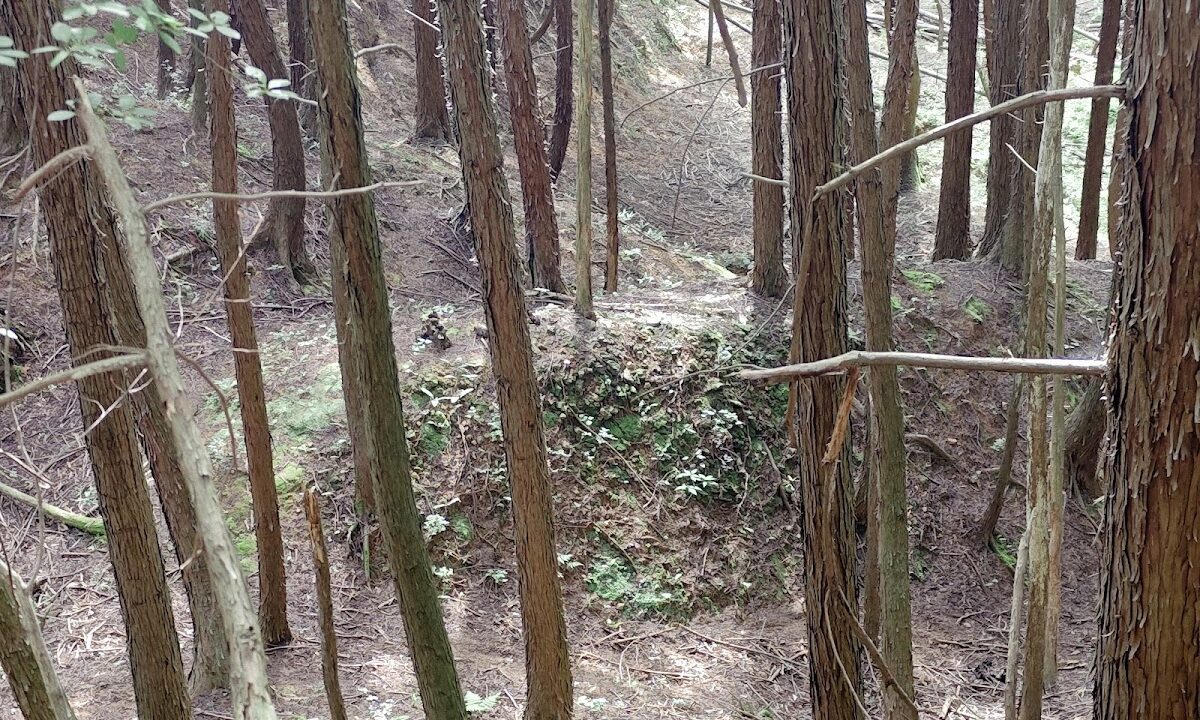
The greatest highlight of Kamegajo Castle is the Unejo Tatebori-gun (Ridge-shaped Vertical Moat Group), which boasts an exceptionally well-preserved state. These vertical trenches carved into the castle’s slopes are defensive structures designed to prevent flanking attacks, demonstrating the advanced castle-building techniques of the late Sengoku period.
Ridge-shaped vertical trenches are trenches dug in a continuous pattern like ridges on a mountain slope, effectively hindering enemy soldiers from climbing the slope and making lateral movement difficult. Several of the ridge-shaped vertical trenches at Kamegajo Castle remain clearly visible, and their scale and state of preservation are among the finest in the Tajima region.
Double Moats and Massive Earthworks
The double moats separating the eastern and western zones are another impressive feature of Kamegajo Castle. The structure, with a massive earthwork sandwiched between two moats, demonstrates a design that maximized defensive capabilities.
The moats reach a maximum depth of 7-8 meters, and their scale is overwhelming to visitors. It was extremely difficult for enemies to invade beyond this double moat, indicating its function as a crucial element of the castle’s defense. The earthworks are also over 5 meters high, demonstrating the advanced civil engineering techniques of the time.
Seven Enclosures
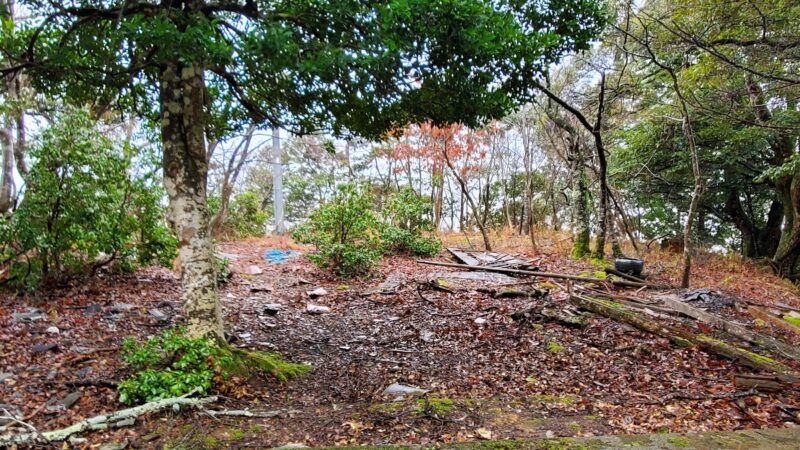
Seven main enclosures (kuruma), numbered I through VII, have been identified at Kamegajo Castle. The largest, the main enclosure (Kuruwa I), measures approximately 40 meters east-west and 20 meters north-south, and is presumed to have housed the lord’s residence.
Each enclosure is skillfully positioned, utilizing the rugged terrain, and designed to function as an independent defensive stronghold. Moving between enclosures requires climbing and descending artificial steep slopes called kirigishi (cut cliffs), highlighting the castle’s high level of defense.
Entrances (Koguchi)
Multiple entrances to the castle (koguchi) have also been identified. The entrance to the main enclosure, in particular, features a complex structure utilizing flanking fire techniques, demonstrating ingenuity in making enemy intrusion difficult. Earthen ramparts and moats were positioned in front of the main gate, forming multiple lines of defense.
Steep Embankments
Sharp steep embankments surround the enclosure. These artificial, steep slopes, carved from the natural terrain, reach heights of 3 to 5 meters in some places, making them crucial defensive structures that made ascent difficult for enemies. Their sharpness remains even today, allowing visitors to feel the tension of the Sengoku period.
Well-Maintained Visitor Paths
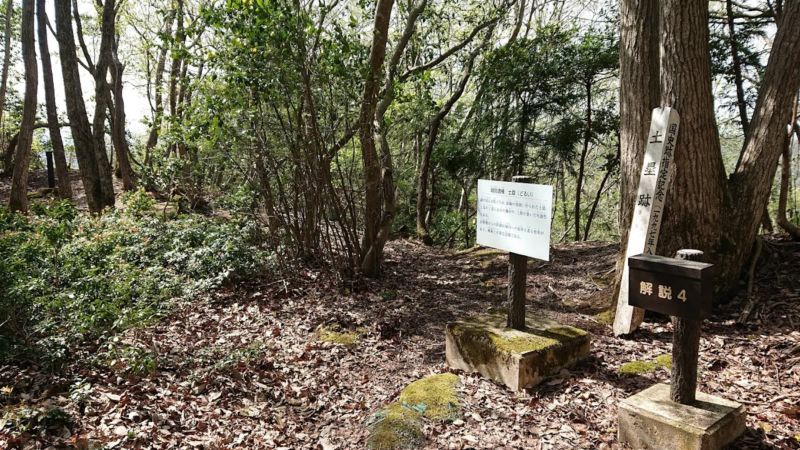
Thanks to the efforts of the local preservation society, visitor paths have been established within the castle grounds. The paths are designed to allow visitors to efficiently tour the main remains, and explanatory signs are placed throughout. However, due to the steep slopes and undulations characteristic of mountain castles, comfortable shoes and clothing are recommended.
Access Information
Access by Car
Nearest Interchange: Approximately 30 minutes from the Kyoto Jukan Expressway “Kyotango Omiya IC,” or approximately 40 minutes from the Kita Kinki Toyooka Expressway “Yoka Hyonoyama IC.”
There is a sign for “Kamegajo Castle Ruins” along National Route 482, and parking is available nearby. The castle entrance is a short walk from the parking lot.
Access by Public Transportation
Access by public transportation is difficult. While it is possible to take a bus from the nearest JR San’in Main Line “Toyooka Station” towards Tanto, the number of buses is limited, so visiting by car is recommended.
Parking Information
There is free parking along National Route 482 (enough space for 3-4 regular cars). It is unpaved, but flat and easy to park in.
Castle Entrance and Time Required
Approximately 1 minute walk from the parking lot to the castle entrance. There is a wire mesh gate (fence) at the entrance to the castle to keep out animals, but it can be opened and closed (please be sure to close it after passing through). It takes about 15-20 minutes to walk to the main enclosure, and if you want to thoroughly explore the entire castle grounds, please allow 1 to 1.5 hours.
Precautions for Visiting
Clothing and Equipment
- Shoes: Please wear non-slip, comfortable shoes such as trekking shoes or athletic shoes.
- Clothing: Long sleeves and long pants are recommended (to protect your skin from bushes and branches).
- Items to Bring: Drinking water, towel, insect repellent (in summer), bear bell (just in case).
Safety Precautions
- It is recommended to refrain from visiting during or after rain, as the slopes can be slippery.
- Avoid climbing alone; visiting in groups is safer.
- Check your cell phone signal strength in advance.
- Be careful of falls on steep slopes such as moats and cliffs.
Manners
- Always close the animal fence (to prevent damage to crops).
- Please take all your trash with you.
- Do not damage the ruins or climb the earthworks.
- Please refrain from entering areas other than the designated viewing paths, as some areas may be private property.
Nearby Castles and Tourist Spots
Izushi Castle (Izushi-cho, Toyooka City)
Located about 30 minutes by car from Kamegajo Castle, Izushi Castle is a symbol of Izushi, a town known as the “Little Kyoto of Tajima.” It’s recommended to visit it along with the townscape of Izushi, which retains a strong atmosphere of an Edo-period castle town. Izushi soba noodles are also a famous local specialty.
Arikoyama Castle (Izushi-cho, Toyooka City)
Standing behind Izushi Castle, Arikoyama Castle is a mountain castle that flourished as the base of the Yamana clan, built on a mountaintop 321 meters above sea level. Like Kamegajo Castle, it boasts well-preserved remains from the Sengoku period, making it a must-see spot for mountain castle enthusiasts.
Kinzoji Castle (Kyotango City, Kyoto Prefecture)
If you proceed along National Route 482 towards Kyoto Prefecture, you will find Kinzoji Castle in Kyotango City. This is another castle with remnants of a medieval mountain castle, and many castle enthusiasts visit it along with Kamegajo Castle.
Tantan Onsen Hot Spring
If you want to relax after climbing the castle, we recommend Tantan Onsen Hot Spring, located about 15 minutes away by car. It’s a local hot spring facility with an attached restaurant.
Evaluation and Appeal of Kamegajo Castle
Evaluation from Castle Researchers
Kamegajo Castle is highly regarded among castle researchers. The reasons are as follows:
- Preservation of the remains: Major remains such as the ridged trenches, double moats, and earthworks are preserved in almost perfect condition.
- Advanced castle construction techniques: Abundant remains demonstrating the advanced castle construction techniques of the late Sengoku period.
- Large scale: Possesses an unusually large layout for a castle of a local powerful family.
- Maintenance: Appropriate maintenance by the local preservation society creates an environment that is easy to visit.
Attractive to mountain castle enthusiasts
Kamegajo Castle is known among mountain castle enthusiasts as a “tear-jerking historical site.” Its appeal lies in the following points:
- Visual Impact: The massive moats and clearly defined rows of vertical trenches have an impact that cannot be conveyed through photographs or drawings.
- Experiential Defensive Power: By actually walking through the castle grounds, you can experience the defensive system of the Sengoku period.
- Easy Access: Located along the national highway with a well-maintained parking lot, it is easy to visit.
- Local Enthusiasm: Thanks to the dedicated maintenance activities of the preservation society, the castle is always kept in excellent condition.
Kamegajo Castle Visit Report (Recommended Sightseeing Route)
Recommended Sightseeing Route
- Parking Lot/Entrance (0 mins)
Park your car in the parking space along National Route 482 and check the signpost. Open the animal-proof fence (be sure to close it) and begin your ascent to the castle.
- Western Zone Enclosures (5-10 mins)
First, visit the enclosures in the western zone. You can observe the rugged terrain and the sharpness of the cliffs.
- Double Moat (15 mins)
The biggest highlight of Kamegajo Castle. Experience the impressive sight of two moats flanking a massive earthen embankment. It’s possible to descend to the bottom of the moat.
- Eastern Zone/Main Enclosure (20 mins)
Cross the double moat to the eastern zone. The main enclosure is the largest enclosure within the castle, and you can also see the surrounding earthen embankments.
- Ridge-shaped Vertical Moat Group (30 mins)
Visit the group of ridge-shaped vertical moats remaining on the slope of the eastern zone. Several vertical moats remain clearly visible, making it a great spot for photography.
- Other Enclosures (45 mins or more)
If you have time, visit enclosures II-VII as well. Each has its own unique remains.
Shooting Points
- Double Moat: An angle overlooking the moats on both sides from the top of the earthwork.
- Ridge-shaped Vertical Moat Group: Capturing the slope from the side highlights the continuity of the vertical moats.
- Main Enclosure Earthwork: It is recommended to include a person in the photo to show the height and scale of the earthwork.
The History of the Ota Clan and Tajima
Genealogy of the Ota Clan
The Ota clan is said to have descended from the Fujiwara Hokke (Northern Fujiwara clan), and since being appointed as the governor of Tajima during the Kamakura period, they established their power in this region. With Ota Masaaki as the first generation, they ruled the Tanto region from their base at Kamegajo Castle for generations.
During the Sengoku period, they operated under the Yamana clan, but maintained a certain degree of independence. However, with Hideyoshi’s invasion of Tajima in 1580 (Tensho 8), the Ota clan’s power came to an end.
The Position of Kamegajo Castle in the Medieval History of Tajima Province
Tajima Province was a crucial transportation hub connecting Kyoto and the San’in region, always maintaining strategic importance. Kamegajo Castle, situated to control the road from Izushi to Miyazu, functioned as a defensive stronghold in eastern Tajima.
The fact that the Ota clan was able to maintain control for approximately 360 years, from the Kamakura period to the Sengoku period, speaks to the castle’s strength and the importance of its location.
Summary: The Value of Visiting Kamegajo Castle
Kamegajo Castle is a masterpiece of medieval mountain castles in the Tajima region and is well worth visiting. The remains, such as the ridged vertical moats and double moats, possess a real-life power and beauty that cannot be obtained from textbooks or documents.
Thanks to the dedicated maintenance efforts of the local preservation society, the viewing environment is well maintained, making it a castle that can be enjoyed by both beginners and advanced mountain castle enthusiasts. It is a historical site that you should definitely visit when visiting Toyooka City or the Tanto region.
Kamegajo Castle, a place that conveys the spirit of the Sengoku period, boasts magnificent remains that will deeply impress visitors. Be sure to wear appropriate equipment and preparations to fully appreciate the charm of this wonderful mountain castle.
Checkpoints for your visit:
- Check the parking location in advance (along National Route 482)
- Wear comfortable shoes and clothing
- Always close the animal-proof fence
- Allow 1 to 1.5 hours for your visit
- Avoid visiting in rainy weather
- Plan a sightseeing itinerary that combines Kamegajo Castle with other nearby castles and hot spring facilities
Kamegajo Castle is a valuable historical site where you can experience the history and culture of Tajima. Be sure to see its magnificent remains with your own eyes.