Complete Guide to Kozan Castle (Hyogo Prefecture): A Mountain Castle in Harima Associated with Kuroda Kanbei
What is Kozan Castle?
Kozan Castle is a medieval mountain castle built on Mt. Kozan, approximately 102 meters above sea level, in Mega, Himeji City, Hyogo Prefecture. Also known as Mega Castle, Kozan Castle, and Hakamadare Castle, it played an important role in the history of the Harima region.
Located approximately 4 kilometers south of Himeji Castle, on a hillside along the Ichikawa River, this castle served as a strategic stronghold overlooking the Harima Sea and Himeji Castle, and also functioned as a monitoring base for the transportation of goods using the Ichikawa River. Particularly during the Sengoku period, it is known for being the residence of Kuroda Mototaka and his son, Kuroda Kanbei (Takataka), and is a famous castle site associated with the Kuroda clan in the Kinki region, attracting many history enthusiasts.
Although now a small mountain surrounded by residential areas, the remains of the castle, such as the baileys and wells, are well-preserved, and local efforts have made it easily accessible for visitors.
History of Kōfuyama Castle
Construction and Early History
Kōfuyama Castle is believed to have been built during the Kamakura and Nanboku-chō periods, and is said to have been constructed by Megane Magosaburō Nagamune. Harima Province has been a strategically important transportation hub since ancient times, and the Ichikawa River basin in particular was an important waterway connecting the Sanyōdō road and the Harima Sea.
During the Nanboku-chō period, it is thought to have been within the sphere of influence of Akamatsu Enshin (Akamatsu Norimura), who was active as the governor of Harima. The Akamatsu clan was a powerful warlord that contributed to the establishment of the Muromachi Shogunate from its base in Harima, and many castles in the Harima region were under their influence. It is highly probable that Kōfuyama Castle functioned as one of their branch castles.
The Kuroda Era
Kofuyama Castle first appeared on the historical stage during the late Sengoku period. In 1573, Kuroda Mototaka, the lord of Himeji Castle, moved to Kofuyama Castle upon his retirement. Mototaka was the man who developed the Kuroda family from a minor lord in Harima, and his son was Kuroda Kanbei (Takataka), who later became famous as a military strategist for Toyotomi Hideyoshi.
After his father’s retirement, Kanbei presented Himeji Castle to Hashiba Hideyoshi (later Toyotomi Hideyoshi), the commander of Oda Nobunaga’s army in the Chugoku region. It is said that around 1580, Kanbei himself briefly resided at Kofuyama Castle. The fact that Kanbei, who handed over Himeji Castle to Hideyoshi as a base for the pacification of the Chugoku region, chose to reside at Kofuyama Castle, his father’s retirement castle, demonstrates the Kuroda clan’s strategic judgment in Harima. From Kōfuyama Castle, Himeji Castle was clearly visible, and it was also ideally positioned to monitor the movements of the Mōri clan from the Harima Sea. Its location along the Ichikawa River likely also served to monitor the supply routes to Himeji.
Subsequent History
After the Kuroda clan was transferred to Buzen Province in Kyushu (present-day Fukuoka Prefecture), Kōfuyama Castle is believed to have been abandoned. During the Edo period, it lost its function as a castle, but a mausoleum for Kuroda Mototaka was established around the Kōjin Shrine at the foot of the mountain, and the site has been carefully preserved by the local community as a place associated with the Kuroda clan.
Structure and Remains of Kōfuyama Castle
Layout and Enclosure Arrangement
Kōfuyama Castle is a mountain castle utilizing the entire Mt. Kōyama, which is approximately 102 meters above sea level, with a relative height of about 80 meters. Although small in scale, it has an intricate structure, with multiple enclosures arranged in tiers.
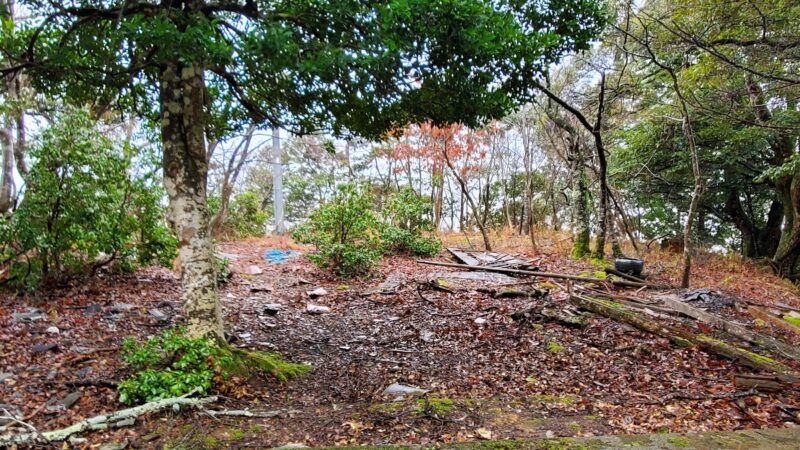
At the summit is the main enclosure (honmaru), from which you can enjoy a panoramic view of Himeji Castle, Harima Nada, and the Ichikawa River basin. Several flat areas can be seen around the main enclosure, and these are thought to have functioned as enclosures. Each enclosure retains relatively good leveling, allowing us to imagine the original layout.
Although small for a mountain castle, it exhibits defensive structures that skillfully utilize the terrain, possessing the typical characteristics of a mountain castle in the Harima region during the Sengoku period.
Main Remains
Well Remains: Well remains have been confirmed within the castle grounds, indicating that securing a water source during a siege was considered. Securing a water source was a matter of life and death for a mountain castle, and the existence of this well indicates that Kōfuyama Castle was not merely a lookout post, but a military facility designed with actual sieges in mind.
Enclosure Group: Multiple flat areas are arranged in a stepped pattern from the main enclosure downwards. These enclosures are thought to have been used for garrisoning soldiers and storing supplies, and traces of earthworks can be seen in some areas. **Sutra Mound Site: Near the main enclosure are the remains of a sutra mound, suggesting a connection to medieval religious practices. Sutra mounds are burial sites for Buddhist scriptures, and these are valuable relics that convey the coexistence of castles and religious facilities during the medieval period.
Transmission Tower: Currently, a power transmission tower stands near the summit, but relics also remain in the surrounding area.
Ascent Route and Information Boards
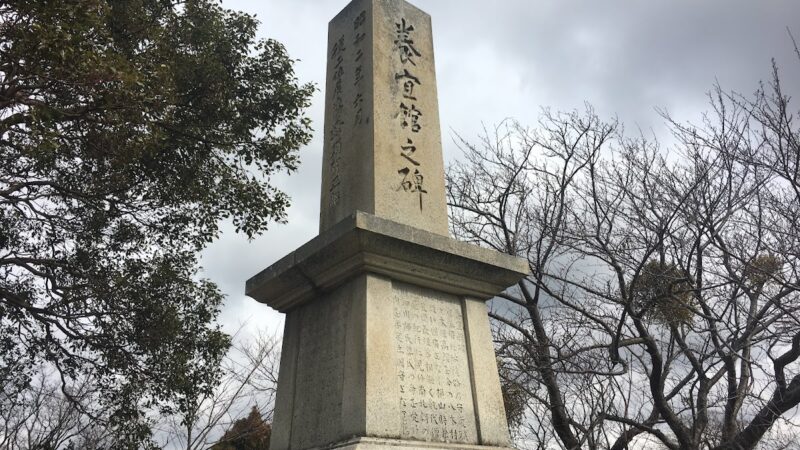
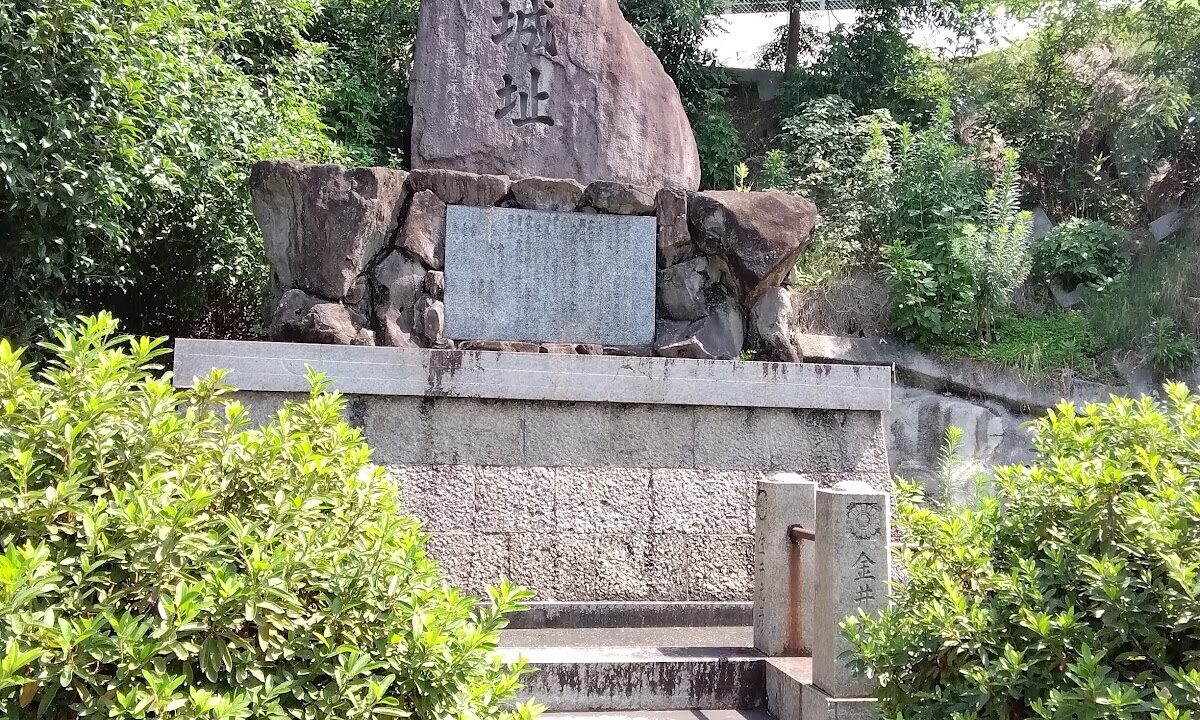
To reach Kōfuyama Castle, an ascent route is maintained from the grounds of the Ara-jinja Shrine at the foot of the mountain. Within the Ara-jinja Shrine grounds, information boards and stone monuments related to Kōfuyama Castle are installed, allowing visitors to learn about the castle’s history and structure.
The ascent route begins to the right of the Ara-jinja Shrine’s main hall, and after climbing a relatively well-maintained mountain path for 10 to 15 minutes, you reach the main enclosure. Along the way, you can see the remains of several baileys, making it a route that allows you to experience the overall structure of the castle.
Highlights of Kōfuyama Castle
View from the Main Enclosure
The greatest highlight of Kōfuyama Castle is the view from the main enclosure. Although it’s a low mountain at an altitude of about 100 meters, the lack of surrounding high mountains provides an astonishingly open view.
To the north, you can see the keep of the World Heritage Site, Himeji Castle, allowing you to imagine Kuroda Kanbei gazing at Himeji Castle from this castle. To the south, the Harima Sea stretches out, conveying the tension of the time when the movements of the Mōri navy were being monitored. To the east, the Ichikawa River flows, highlighting its strategic location overlooking a vital route for transporting supplies.
Especially on a clear day, you can see the entire Harima Plain, making it clear why this castle functioned as the “eyes of Harima.”
Kuroda Shigetaka’s Mausoleum
Near the Kōjin Shrine at the foot of the mountain is the mausoleum of Kuroda Shigetaka. Shigetaka is believed to have died in this area in 1585 (Tensho 13), and is affectionately known as “Kuroda-san” by the locals.
His mausoleum is located in a quiet residential area and is carefully preserved by the local community. For fans of Kuroda Kanbei, it is an important historical site commemorating Kanbei’s father.
Aragami Shrine
Aragami Shrine, which serves as the entrance to the castle, is also a point of interest. This shrine has long been revered as the local guardian deity, and within its grounds are information boards about Kofuyama Castle and a stone monument marking the site of Tsumega Castle.
The shrine grounds are a place of relaxation for local residents, and many visitors can be seen paying their respects before or after exploring the castle ruins.
Well-maintained Ruins
In recent years, local volunteers and the local government have made progress in maintaining the site, making it easier to view the remains of the baileys and the paths leading to the castle. Multiple information boards have been installed, creating an environment where even first-time visitors can understand the castle’s structure and history while exploring.
In particular, the undergrowth around the main enclosure has been cleared, making it easier to see the shape of the enclosures and traces of the earthworks. Thanks to these efforts by the local community, Kōfuyama Castle is preserved as a valuable historical heritage site in the Harima region.
Castle Stamps
Kōfuyama Castle sells two types of castle stamps. For castle enthusiasts, castle stamps are popular items that commemorate a visit. The designs incorporate the Kuroda clan’s family crest and features of the castle, making them popular among collectors.
Map and Access Information
Location
Address: Tsumega, Himeji City, Hyogo Prefecture
Kōfuyama Castle is located on Mt. Kōyama, on the left bank of the Ichikawa River, in the southern part of Himeji City. It is approximately 4 kilometers south of Himeji Castle and approximately 2 kilometers from Harima-nada Sea.
Access
Access by Train:
- Get off at Tsumaga Station on the Sanyo Electric Railway Main Line, and walk for approximately 10 minutes to reach the Arashijinja Shrine.
- Head north along the Ichikawa River from Tsumagaga Station, and after passing through the residential area, you will see a sign for the Arashijinja Shrine.
Access by Car:
- Approximately 5 minutes from the Nakachi Interchange on the Himeji Bypass.
- Approximately 15 minutes from the Himeji East Interchange on the Sanyo Expressway.
- For car navigation, searching for “Arashijinja Shrine, Himeji City, Tsumagaga” is convenient.
Parking:
There is no dedicated parking lot near the Arashijinja Shrine, but there are a few parking spaces along the road near the shrine. However, since it is a residential area, sufficient consideration is needed when parking on the street. If possible, we recommend using public transportation.
Time to Visit the Castle
- From the Kōjinja Shrine to the main enclosure: Approximately 10-15 minutes on foot
- Time to explore the castle grounds: Approximately 30 minutes to 1 hour
- Total time required: Approximately 1 hour to 1 hour 30 minutes
This mountain castle can be climbed in a relatively short time, even for those who are not confident in their physical fitness.
Points to Note When Visiting
- The mountain path is well-maintained, but it can be slippery in rainy weather, so wearing athletic shoes or trekking shoes is recommended.
- In summer, there are many mosquitoes and insects, so insect repellent spray and long sleeves are advisable.
- Bring drinking water in advance (there are no vending machines on the mountain).
- In winter, the sun sets early, so plan your afternoon visit with plenty of time to spare.
Nearby Tourist Attractions
Himeji Castle
Located approximately 4 kilometers north of Kōfuyama Castle, the World Heritage Site Himeji Castle is the center of Harima tourism. The castle complex, including the main keep, turrets, and gates, which are designated as National Treasures and Important Cultural Properties, is preserved and attracts many tourists from both within Japan and abroad as one of Japan’s most representative castles.
Visiting both Kofuyama Castle and Himeji Castle together will allow you to gain a deeper understanding of the historical background of Kuroda Kanbei’s relinquishing Himeji Castle to Hideyoshi and moving his own residence to Kofuyama Castle.
Aga Castle Ruins
Located in the southern part of Himeji City, west of Kofuyama Castle, are the ruins of Aga Castle. Aga Castle was a flatland castle used by the Miki clan during the Sengoku period and was a strategic point for water transport facing the Harima Sea. It was an important battleground in the conflict with the Mori clan, and visiting it together with Kofuyama Castle will provide a more comprehensive understanding of the Sengoku history of Harima.
Shoshazan Engyo-ji Temple
Engyo-ji Temple, located on Mount Shosha in the northern part of Himeji City, is an ancient temple known as the 27th temple of the Saigoku Thirty-Three Kannon Pilgrimage. The vast grounds on the mountaintop contain numerous buildings designated as National Important Cultural Properties and are famous as a filming location for the movie “The Last Samurai.”
Kokoen Garden
Kokoen Garden, a Japanese garden built on the site of the former Himeji Castle West Residence, is a beautiful space consisting of nine garden groups. Visitors can enjoy the scenery of each season, and it is a popular spot often visited in conjunction with Himeji Castle.
Harima Province Grand Shrine
Harima Province Grand Shrine, located in Himeji City, is a shrine that has attracted worshippers since ancient times as the grand shrine of Harima Province. Every October, the Autumn Grand Festival, known as the “Nada Fighting Festival,” is held, and it is the largest festival in the Harima region, attracting great crowds.
Kofuyama Castle and Kuroda Kanbei
The Footsteps of Strategist Kanbei
Kuroda Kanbei (Takataka, Josui) was a renowned military strategist who was active from the Sengoku period to the early Edo period. Born into a family of minor lords in Harima Province, Kanbei served Oda Nobunaga and Toyotomi Hideyoshi, achieving numerous military successes with his exceptional strategic acumen.
After presenting Himeji Castle to Hideyoshi, Kanbei temporarily resided at Kōfuyama Castle. This decision is believed to have been based on a strategic assessment of the situation in the Harima region.
From Kōfuyama Castle, Himeji Castle and the Harima Sea were clearly visible, making it an ideal location for monitoring the movements of the Mōri clan. Furthermore, by establishing his own residence in this castle, where his father, Shigetaka, had retired, it may have also served to demonstrate the Kuroda clan’s roots in the local Harima region to the local lords.
The Kuroda Clan and Harima
The Kuroda clan was not originally a local force in Harima, but rather a family that migrated from Ōmi Province (present-day Shiga Prefecture). Kanbei’s grandfather, Kuroda Shigetaka, moved to Harima and expanded his influence around Himeji.
His father, Shigetaka, served the Kodera clan and based himself at Himeji Castle. During Kanbei’s time, the Kuroda clan grew into a powerful warlord family in Harima Province. However, during Oda Nobunaga’s campaign against the Chugoku region, Kanbei made the bold decision to cede Himeji Castle to Hideyoshi.
This decision earned Kanbei Hideyoshi’s trust, and he would later play a crucial role in Hideyoshi’s unification of Japan. Kōfuyama Castle is one of the castles that symbolizes Kanbei’s time in Harima.
Cultural Property Designation and Preservation Activities of Kōfuyama Castle
While Kōfuyama Castle is not a designated historical site of Himeji City, preservation activities are ongoing by local history enthusiasts and the local government. In recent years, improvements have been made to the access roads and the installation of information boards, creating a safe environment for visitors.
Regular grass cutting and cleaning activities by local volunteers maintain the well-preserved state of the remains. Through these steady efforts, Kōfuyama Castle is being passed down to future generations as a valuable historical heritage of the Harima region. ## Tips for Enjoying Kofuyama Castle
Best Season for Visiting
Spring (March-May): The weather is mild, making it ideal for visiting the castle. The fresh greenery is beautiful, and you can enjoy the songs of wild birds.
Autumn (October-November): The autumn foliage is beautiful, and the temperature is suitable for visiting the castle. The air is clear, and the views are excellent.
Winter (December-February): The air is clear, making it the best season for views of Himeji Castle and Harima Bay. However, warm clothing is essential.
Summer (June-September): There are many insects, and the heat is intense, so visiting in the early morning or evening is recommended.
Photography Tips
- Himeji Castle from the Main Enclosure: An excellent photo spot offering a view of the castle tower.
- Panoramic View of the Enclosure Ruins: A valuable opportunity to capture photos that convey the castle’s structure.
- Kojin Shrine and Information Board: A classic photo spot to commemorate your visit.
- Ichikawa River and Harima Plain: Ideal for landscape photos illustrating the castle’s location.
Historical Learning Tips
Before visiting Kofuyama Castle, the following preparations will enhance your enjoyment:
- The Life and Activities of Kuroda Kanbei in Harima
- Oda Nobunaga’s Invasion of the Chugoku Region and the Situation in Harima
- The History of Harima Province during the Sengoku Period
- The Structure and Defensive System of Mountain Castles
Gathering information from the information board at Kojin Shrine and online beforehand will deepen your understanding at the site.
Summary
Kofuyama Castle (Tsumaga Castle) is a small mountain castle located in Himeji City, Hyogo Prefecture, at an altitude of approximately 102 meters. However, it has a history as the residence of Kuroda Mototaka and his son Kanbei, and played an important role in the Sengoku period history of the Harima region.
It is a historical site with many attractions, including its strategic location overlooking Himeji Castle and the Harima Sea, its important transportation hub along the Ichikawa River, and its historical value as a place associated with the Kuroda clan.
Currently, thanks to local maintenance, the castle is easily accessible, and the remains such as the baileys and wells are well-preserved. It is accessible on foot from Tsumagaga Station on the Sanyo Electric Railway, and the climb is short, making it a popular mountain castle for castle enthusiasts and Kuroda Kanbei fans.
Visiting Kōfuyama Castle in conjunction with Himeji Castle will allow you to gain a deeper understanding of the historical context in which Kuroda Kanbei ceded Himeji Castle to Hideyoshi and moved his residence to Kōfuyama Castle, giving you a real feel for the Sengoku period history of Harima.
When you visit the Kinki region, be sure to visit this historically romantic Kōfuyama Castle. The view of Himeji Castle’s keep and the Harima Plain from the main enclosure will surely be an unforgettable memory.