Complete Guide to Shirohata Castle (Akō District, Hyogo Prefecture): The Impregnable Mountain Castle of Akamatsu Enshin and its Complete History
What is Shirohata Castle?
Shirohata Castle (also known as Shirahata-jō or Shirahata-jō) was a Japanese mountain castle located in Shirohata, Akō District, Harima Province (present-day Akamatsu, Kamigōri-chō, Akō District, Hyogo Prefecture). Built on Mt. Shirohata at an altitude of approximately 440m, this castle was constructed in the early Muromachi period by Akamatsu Enshin (Norimura), the governor of Harima Province, and played an important role as a base supporting Ashikaga Takauji.
In 1996, along with the ruins of Okishio Castle and Kanjōzan Castle, it was designated a National Historic Site under the name “Akamatsu Clan Castle Ruins.” Shirohata Castle is a noteworthy example in the history of Japanese castles, as an impregnable fortress that held off a 60,000-strong army led by Nitta Yoshisada for over 50 days with only 2,000 soldiers.
History of Shirahata Castle
Construction and the Kenmu War
Shirahata Castle is believed to have been built in Kenmu 3 (1336) or Genko 3 (1333). Akamatsu Enshin (Norimura) sided with Ashikaga Takauji, who was in conflict with Emperor Go-Daigo, and built the castle on the steep Shirahata Mountain to confront the large army of Nitta Yoshisada, who was pursuing Takauji as he fled to western Japan.
According to legend, the castle was named “Shirahata Castle” because a white flag fell from the sky during its construction. This legend has been passed down as evidence of the legitimacy and sacredness of the Akamatsu clan.
Battle with Nitta Yoshisada
From Kenmu 2 to 3 (1335-1336), Shirahata Castle became the site of one of the fiercest battles in Japanese history. According to the *Taiheiki*, Nitta Yoshisada led a massive army of 60,000 men to besiege Shirahata Castle, but Akamatsu Enshin and his son, Norisuke, with only 2,000 soldiers, held out for over 50 days, ultimately preventing the castle from falling.
This successful defense bought Ashikaga Takauji time to regain his strength in Kyushu and march back to Kyoto. It is said that if Shirahata Castle had fallen earlier, the Ashikaga army’s victory at the Battle of Minatogawa would not have been possible, and the establishment of the Muromachi Shogunate would have been jeopardized. For this achievement, Akamatsu Enshin was appointed governor of Harima, Bizen, and Mimasaka provinces, laying the foundation for the Akamatsu clan’s prosperity.
As the Akamatsu Clan’s Residence
After the battle with Nitta Yoshisada, Shirahata Castle continued to function as one of the Akamatsu clan’s important strongholds. The Akamatsu clan expanded their power as governors of Harima Province and reigned as the most powerful samurai family in Harima throughout the Muromachi period.
Shirahata Castle, along with Okishio Castle and Kanjōyama Castle, the Akamatsu clan’s strongholds, was maintained as a strategic point for controlling Harima Province. These castles worked in conjunction with each other, forming a fortress network that supported the Akamatsu clan’s territorial management.
The Kakitsu Rebellion and the Fall of the Castle
In 1441, the Kakitsu Rebellion broke out, in which Akamatsu Mitsusuke assassinated Ashikaga Yoshinori, the 6th Shogun of the Muromachi Shogunate. The Shogunate dispatched an army led by the Yamana clan to attack the Akamatsu clan’s castles.
At this time, Shirahata Castle, which boasted of being impregnable, also fell under the fierce attack of the Yamana army. Akamatsu Mitsusuke committed suicide at Shiroyama Castle, and the main branch of the Akamatsu clan was temporarily extinguished. The fall of Shirahata Castle, which had even repelled Nitta Yoshisada’s large army, symbolized the immense military power of the Yamana clan and the decline of the Akamatsu clan.
Subsequent History
After the Kakitsu Rebellion, the Akamatsu clan temporarily declined, but was restored during the time of Akamatsu Masanori. However, there are no clear records of Shirahata Castle being used again as a major base for the Akamatsu clan.
During the Sengoku period, Harima Province came under the influence of Oda Nobunaga, and Hashiba Hideyoshi (Toyotomi Hideyoshi) pacified Harima. While the role of Shirahata Castle in this process is unclear, it is believed that its function as a mountain castle gradually diminished.
Structure and Layout of Shirahata Castle
Overall Scale
Shirahata Castle is a large-scale, multi-bailey mountain castle built on the ridges and valleys of Mount Shirahata, at an altitude of approximately 440m and a relative height of approximately 380-400m. The castle grounds extend approximately 350m east-west and 850m north-south, and its robust structure skillfully utilizes the steep terrain.
This location was a strategic point for monitoring the trade route from western Harima Province to Bizen Province, and held significant military and economic importance.
Main Enclosures
The enclosures (kuruwa) of Shirahata Castle are centered around the Honmaru (main enclosure), Ninomaru (second enclosure), and Sannomaru (third enclosure).
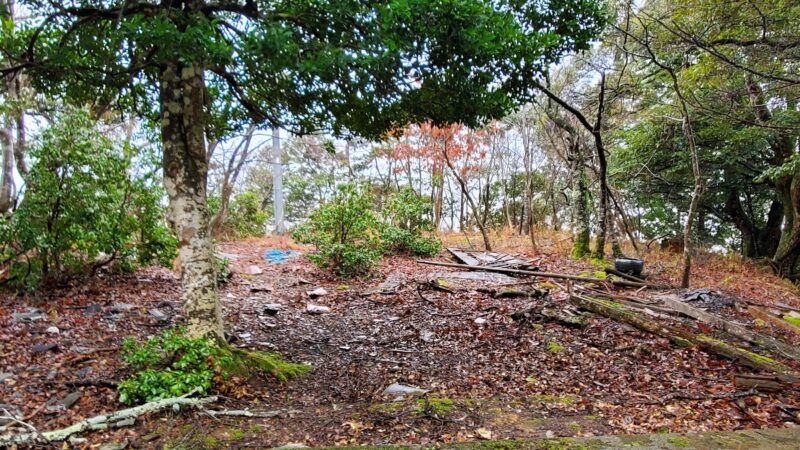
The Honmaru is located on the mountaintop and is the most important enclosure, forming the core of the castle. From here, one can enjoy a panoramic view of the surrounding mountains and the Harima Plain, combining excellent views with strong defensive capabilities. Stone masonry remains have been confirmed around the Honmaru, attesting to the advanced castle-building techniques of the time.
The Ninomaru and Sannomaru** are arranged to surround the Honmaru, forming a multi-layered defensive structure. These enclosures played a role in gradually preventing enemy incursions and making attacks on the Honmaru difficult.
In addition, several other enclosures with both military and residential functions have been identified, including the Babamaru (horse riding ground) and Samurai Residences. Babamaru was used for training and gathering warhorses, while the samurai residences likely served as living quarters for samurai permanently stationed at the castle.
Defensive Structures and Remains
Shirahat Castle exhibits numerous defensive structures characteristic of medieval mountain castles.
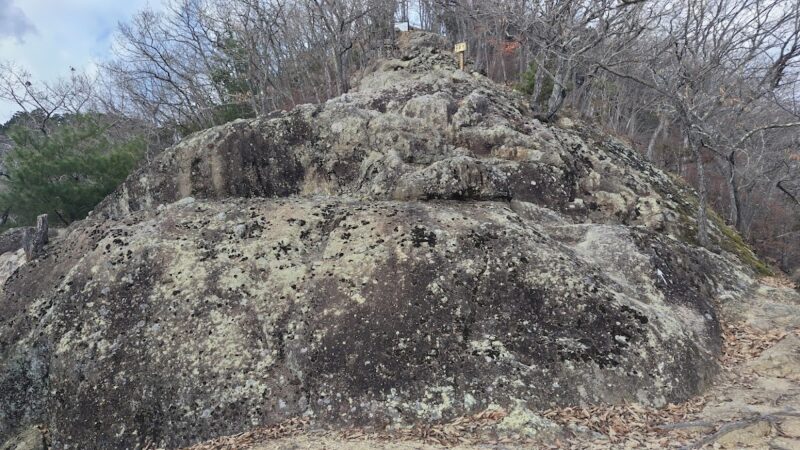
Stone masonry remains throughout the castle, particularly prominent along the edges of baileys and pathways. These stone masonry structures reinforced the earthworks, prevented slope collapse, and physically hindered enemy incursions. The stone masonry of Shirahat Castle is a valuable example of 14th-century castle construction techniques and has attracted attention from researchers.
Dry moats such as horikiri and tatebori have also been identified, demonstrating ingenious methods to prevent enemy incursions along the ridges. These defensive structures maximized the use of the terrain’s undulations, enabling effective defense even with a small number of defending troops.
Even today, the elevation differences of the baileys, traces of earthworks, and parts of the stone walls remain in good condition, allowing us to imagine the castle’s structure in its heyday.
Features of the Castle Layout
The layout (design and arrangement) of Shirahata Castle is a typical example of a medieval mountain castle, making maximum use of the steep mountainous terrain. The interconnected baileys, centered around the main bailey at the mountaintop and arranged along the ridge, represent a rational design that balances defense and mobility.
Furthermore, the placement of baileys in the valleys ensured the securing of water sources and the maintenance of supply lines, providing the necessary functions for a long siege. It can be said that the castle’s ability to repel Nitta Yoshisada’s large army for over 50 days was due to this excellent layout and sufficient logistical preparation.
Highlights of Shirahata Castle
View from the Main Bailey
From the main bailey, at an altitude of 440m, you can enjoy a panoramic view of the Harima Plain and the surrounding mountains. On a clear day, one can see all the way to the Seto Inland Sea, making it easy to understand why Akamatsu Enshin chose this location for his castle. This view served not only a military surveillance function but also a symbolic representation of the lord’s prestige.
Stone Masonry Remains
The stone masonry remaining throughout the castle grounds is a valuable example of 14th-century castle construction techniques. The skillful use of natural stones in the “nozurazumi” (rough-stone masonry) method conveys a sense of simplicity and strength that differs from later stone walls. The stone masonry remaining on the edges of the baileys, in particular, is important evidence of the defensive philosophy and technological level of the time.
Arrangement of the Baileys
The arrangement of the baileys, from the main bailey to the second and third baileys, exhibits a typical structure of a medieval mountain castle. By actually climbing the castle and touring the baileys, one can understand the castle’s defensive system from the defender’s perspective. The elevation differences and pathway arrangements of each bailey are designed to restrict enemy movement and create a favorable battle environment for the defenders.
Experiencing the Stage of History
Visiting Shirahata Castle means standing on the stage of the fierce battle described in the *Taiheiki* (The Chronicle of Great Peace). By observing the local terrain, you can vividly imagine where Nitta Yoshisada’s 60,000-strong army attacked from and how Akamatsu Enshin’s 2,000 soldiers defended against it.
Value as a National Historic Site: “Akamatsu Clan Castle Ruins”
In 1996, Shirahata Castle, along with Okishio Castle Ruins and Kanjōzan Castle Ruins, was designated a National Historic Site as part of the “Akamatsu Clan Castle Ruins.” This designation is a result of the high evaluation of the historical role played by the Akamatsu clan in Harima Province and the academic and cultural value of these castle ruins.
Importance in Medieval History Research
Shirahata Castle is an indispensable historical site for understanding the political and military history from the Nanboku-chō period to the Muromachi period. In particular, Akamatsu Enshin’s actions during the Kenmu Rebellion and the battle for Shirahata Castle were significant events that directly influenced Ashikaga Takauji’s unification of Japan and the establishment of the Muromachi Shogunate, making them invaluable as concrete examples of a turning point in Japanese history.
Value in Castle Research
Built in the first half of the 14th century, Shirahata Castle provides important materials for studying the development process of medieval mountain castles. The stonework techniques, the layout of the baileys, and the structure of the defensive facilities concretely demonstrate the castle-building techniques and tactical thinking of this era, giving it high academic value in castle history research.
Significance as a Regional Cultural Property
Shirahata Castle, as a cultural property symbolizing the history of Kamigori Town and the Harima region, plays an important role in shaping the region’s identity. The preservation activities by local residents and the related events held annually are excellent examples of community development through cultural properties.
Access and Climbing Information for Shirahata Castle
Transportation Access
By Train
- Get off at Kamigori Station on the JR Sanyo Main Line
- Approximately 40 minutes on foot from the station to the trailhead, or take a taxi.
By Car
- Approximately 20 minutes from Tatsuno-Nishi Interchange on the Sanyo Expressway
- Approximately 25 minutes from Sayo Interchange on the Chugoku Expressway
- Parking available near the trailhead (limited number of spaces)
Climbing Route
Climbing Shirahata Castle involves a serious mountain climb with an elevation difference of approximately 380-400m. While the trail is well-maintained, there are many steep sections, and the round trip takes approximately 2-3 hours.
Points to Note When Visiting the Castle
- Wear appropriate clothing and shoes for mountain climbing.
- Carry plenty of drinking water.
- Take precautions against heatstroke in summer and warm clothing in winter.
- Visiting the castle in a group is recommended over visiting alone.
- Avoid visiting the castle in bad weather.
Points to Note When Visiting the Castle
Keeping the following points in mind will make your visit more fulfilling.
- Information board at the trailhead: Check the castle’s history and structure beforehand.
- Layout of each enclosure: Observe the ingenuity of the defensive system.
- Stone masonry remains: See medieval castle construction techniques up close.
- View from the main enclosure: Realize the importance of the strategic location.
- Understanding the entire layout: If possible, visit multiple enclosures.
Nearby facilities
Kamigori Town Local History Museum
- Address: 500-5 Kamigori, Kamigori-cho, Ako-gun, Hyogo Prefecture (2nd floor, Kamigori Town Hall, Building 3)
- Phone: 0791-52-3737
- Extensive exhibits and materials related to Shirahata Castle
- Ideal for gathering information before climbing the castle.
Shirahata Castle and Akamatsu Enshin (Norimura)
The Life of Akamatsu Enshin
Akamatsu Enshin (Norimura, 1277-1350) was a samurai who was active from the late Kamakura period to the Nanboku-cho period. Starting as a local lord in Harima Province, he rose to become a powerful daimyo, the governor of Harima, Bizen, and Mimasaka provinces, after supporting Ashikaga Takauji during the Kenmu War.
Enshin was known as an exceptional military strategist, particularly skilled in siege warfare utilizing mountain castles. His battle against Nitta Yoshisada’s forces at Shirahata Castle is a prime example of his military talent.
The Akamatsu Clan’s Genealogy
The Akamatsu clan was a prestigious samurai family said to be descended from the Murakami Minamoto clan. Thanks to Enshin’s achievements, the Akamatsu clan became the governor of Harima Province and continued to develop as a powerful daimyo under the Muromachi Shogunate, wielding considerable influence primarily in Harima Province.
Although temporarily destroyed during the Kakitsu Rebellion, the Akamatsu clan was restored during the time of Akamatsu Masanori and survived as a powerful force in Harima Province until the Sengoku period. Shirahata Castle is considered the starting point of the Akamatsu clan’s history.
Historical Sites Related to Shirahata Castle
Okishio Castle Ruins
Okishio Castle is a mountain castle that served as the Akamatsu clan’s base for a long time. Along with Shirahata Castle, it is designated a National Historic Site as part of the “Akamatsu Clan Castle Ruins,” and boasts a larger and more complex layout. As a castle symbolizing the Akamatsu clan’s golden age, it is worth visiting along with Shirahata Castle.
Kanjōzan Castle Ruins
Kanjōzan Castle is also one of the “Akamatsu Clan Castle Ruins,” and was an important base that supported the Akamatsu clan’s rule in Harima Province. Visiting all three castle ruins provides a comprehensive understanding of the Akamatsu clan’s territorial management and castle network.
Kamigori Town Local History Museum
This facility exhibits materials related to Shirahata Castle and the Akamatsu clan. Visiting the historical background and structure of the castle before ascending will deepen your understanding and allow for a more fulfilling visit.
How to Enjoy Your Visit to Shirahata Castle
As a History Fan
Shirahata Castle, where you can experience the world of the *Taiheiki* (The Chronicle of Great Peace), is a must-see spot for history buffs of the Nanboku-cho period. Standing on the stage of the battle between Nitta Yoshisada and Akamatsu Enshin, a battle that determined the fate of Ashikaga Takauji, will deepen your understanding of history.
As a Castle Enthusiast
Shirahata Castle, with its typical medieval mountain castle structure, is an ideal study subject for castle enthusiasts. It offers a valuable opportunity to observe 14th-century castle construction techniques in detail, including stonework remains, the arrangement of baileys, and the ingenuity of defensive facilities.
As a Hiking/Mountain Climbing Trip
Climbing to the 440m-high mountain castle can also be enjoyed as a moderately strenuous hike. The view from the summit is magnificent, allowing you to enjoy both historical exploration and nature at the same time.
Experiencing Local Culture
In Kamigori Town, events related to Shirahata Castle and the Akamatsu clan are held annually. Experiencing local history and culture, and enjoying interactions with locals, is one of the attractions of visiting Shirahata Castle.
Summary
Shirahata Castle, built by Akamatsu Enshin as an impregnable mountain castle, left a significant mark on Japanese history. The defense against Nitta Yoshisada’s army of 60,000, repelled by only 2,000 soldiers, had a decisive impact on Ashikaga Takauji’s unification of Japan and the establishment of the Muromachi Shogunate.
Currently preserved as a national historical site, “Akamatsu Clan Castle Ruins,” Shirahata Castle, spread across the magnificent remains on Shirahata Mountain at an altitude of 440m, conveys the structure of a medieval mountain castle and the nature of battles of the time. The remains, including stone walls, baileys, and defensive structures, are valuable cultural assets demonstrating 14th-century castle construction techniques, and hold high value in historical and castle research.
Currently preserved as a national historical site, “Akamatsu Clan Castle Ruins,” Shirahata Castle, through its magnificent ruins spread across Shirahata Mountain at an altitude of 440m, conveys the structure of a medieval mountain castle and the nature of battles of the time. When you visit Kamigori-cho, Ako-gun, Hyogo Prefecture, be sure to try climbing to Shirahata Castle. Climbing the steep mountain path, enjoying the view from the main keep, and experiencing what it was like to stand on the stage of history will surely be an unforgettable memory. You will be able to feel the courage and wisdom of Akamatsu Enshin, and the era in which medieval samurai lived, through this castle ruin.