Complete Guide to Ogo Castle (Hyogo Prefecture): From the Residence of a Hojo Clan Descendant to a Strategic Point in the Battle of Miki
What is Ogo Castle?
Ogo Castle is a mountain castle located in Ogo-cho, Kita-ku, Kobe City, Hyogo Prefecture, dating from the medieval to the Sengoku period. Built on a plateau approximately 20 meters above sea level, at the eastern edge of a river terrace, overlooking the village of Ogo, this castle served as the residence of the Ogo clan, a powerful family in the Harima region, and played a central role in the area for a long time.
Currently, the site of the main keep has been developed into a park with a replica turret, making it an important historical site that tells the history of the region. Located just south of the “Ogo” roadside station, it is easily accessible and is a popular place of relaxation not only for castle enthusiasts but also for local residents.
History of Ogawa Castle
Kamakura Period: Establishment of the Ogawa Clan and Construction of the Castle
The history of Ogawa Castle begins in 1222 when Hojo Tokiharu (Ogawa Tokiharu), grandson of Hojo Tokifusa (brother of Hojo Yoshitoki, regent of the Kamakura Shogunate), obtained the position of jitō (land steward) of Ogawa-sho in Mino District, Harima Province. Tokiharu moved to the Ogawa area and changed his surname from Hojo to Ogawa.
While there are no clear records of the castle’s construction, it is estimated to have been in the early 14th century. The Ogawa clan, descendants of powerful retainers of the Kamakura Shogunate, established their dominance in this region.
Nanboku-cho Period: The Ordeal of the Ogawa Clan
During the Nanboku-cho period, Ogawa Tokiharu became embroiled in the conflict between the Northern and Southern Courts. Tragically, records show that he was attacked by followers of Heisenji Temple in Echizen Province and committed suicide along with his family. However, the Ogawa clan lineage did not die out, and they continued to maintain their power in Harima Province.
Sengoku Period: Under the Bessho Clan
With the arrival of the Sengoku period, the Ogawa clan became subordinates of the Bessho clan, a powerful daimyo family in Harima Province. The Bessho clan, based at Miki Castle, controlled eastern Harima, and Ogawa Castle functioned as one of their important branch castles.
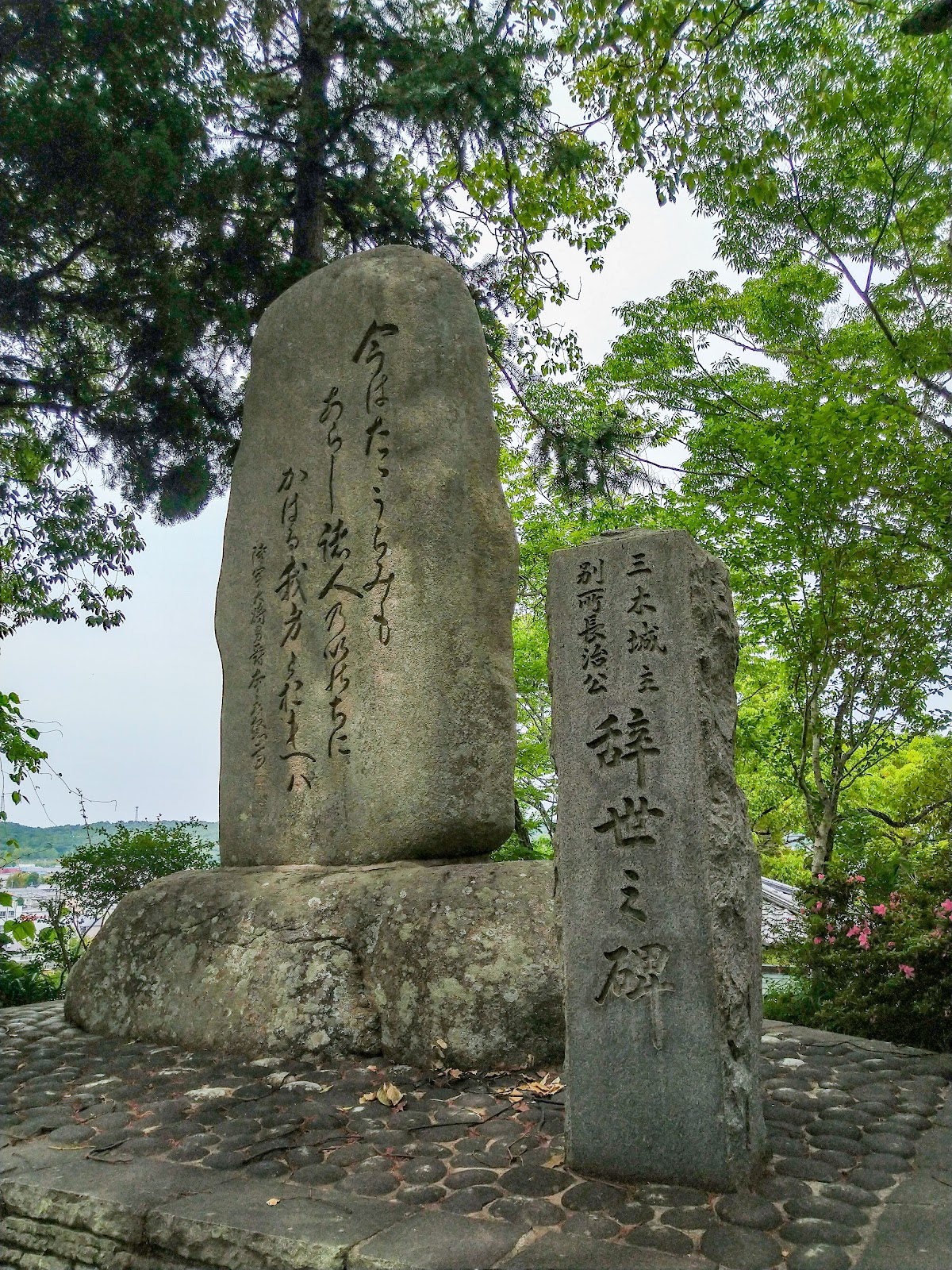
In 1578, when Bessho Nagaharu rebelled against Oda Nobunaga, the Ogawa clan followed suit. The lord of the castle at the time was Ogawa Danjo-no-chu Sadamori, who was Bessho Nagaharu’s uncle by marriage. Sadamori was known as a warrior of both wisdom and courage, and played a crucial role in the defense of Miki Castle.
The Battle of Miki and the Role of Ogawa Castle
During the Battle of Miki, fought from 1578 to 1580, Ogawa Castle occupied a strategically crucial position. During Hashiba Hideyoshi’s siege of Miki Castle, Ogawa Castle functioned as a base to secure supply routes to Miki Castle.
Hideyoshi employed a strategy of “starving out” Miki Castle, successively capturing surrounding subsidiary castles. In 1579, forces led by Hashiba Hidenaga attacked Ogawa Castle, and after a fierce battle, it fell. Ogawa Sadayoshi lost the castle, and the rule of the Ogawa clan came to an end.
The Arima Clan Era
After the fall of Ogawa Castle, it became the residence of Arima Noriyori. The Arima clan were local lords based in Arima County, Settsu Province, and served Oda Nobunaga and Toyotomi Hideyoshi. Arima Noriyori held a fief of 15,000 koku and ruled the Ogawa area from Ogawa Castle until 1601.
During this period, Ogo Castle was developed as a base of operations for the Arima clan, and the castle town is said to have flourished.
Towards Abandonment
In 1601 (Keicho 6), Arima Noriyori was transferred to Sanda Castle. Ogo Castle was maintained for a certain period afterward, but was officially abandoned in 1615 (Genna 1) due to the One Castle Per Province Decree. Thereafter, it lost its function as a castle, and the site of the main keep became farmland.
Structure and Layout of Ogo Castle
Location and Topography
Ogo Castle is a flatland castle built on the eastern edge of a river terrace. Located on a plateau with a relative elevation difference of approximately 20 meters, it boasts an excellent location overlooking the village of Ogo. This topographical feature allowed it to combine defensive advantages with its function as a base for controlling the territory.
Main Keep and Major Remains
The main keep was the central part of the castle and is now maintained as a park. An L-shaped moat encircles the main enclosure, separating it from the surrounding land, and traces of an earthen bridge remain in some sections. This moat was an important structure that enhanced the castle’s defensive capabilities.
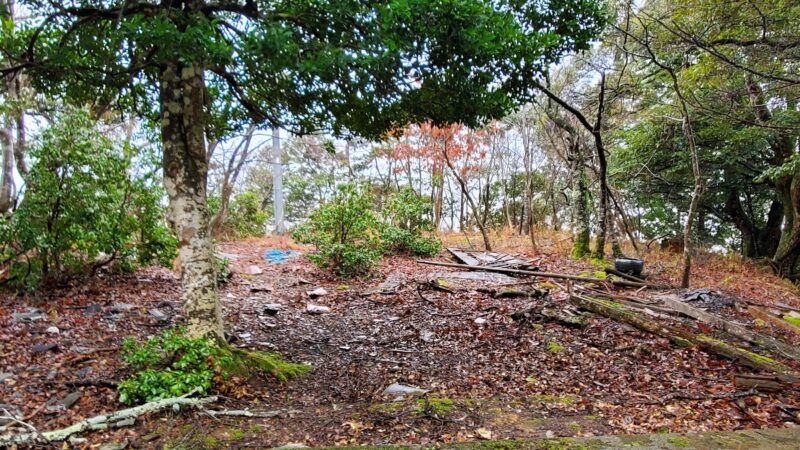
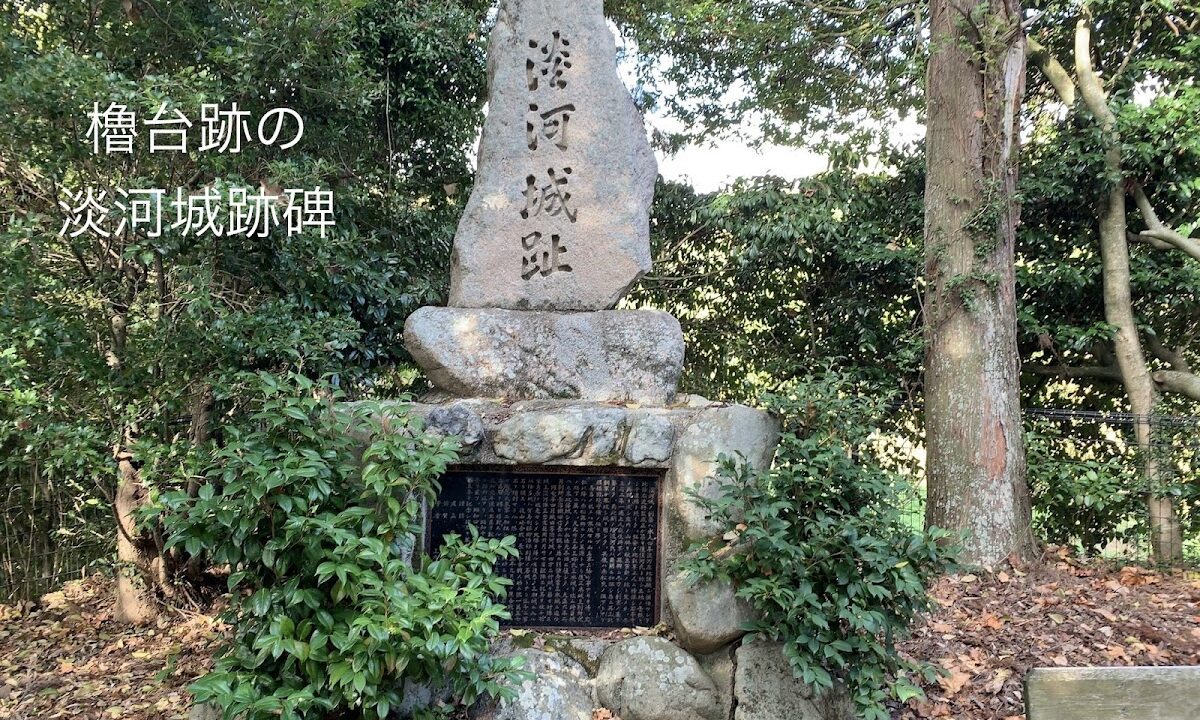
A replica turret has been erected on the site of the main enclosure, allowing visitors to experience the atmosphere of the castle in its heyday. Traces of earthworks also remain in various places, providing valuable information for understanding the structure of medieval castles.
Takekeiji Temple Ruins and Ogawa Family Mausoleum
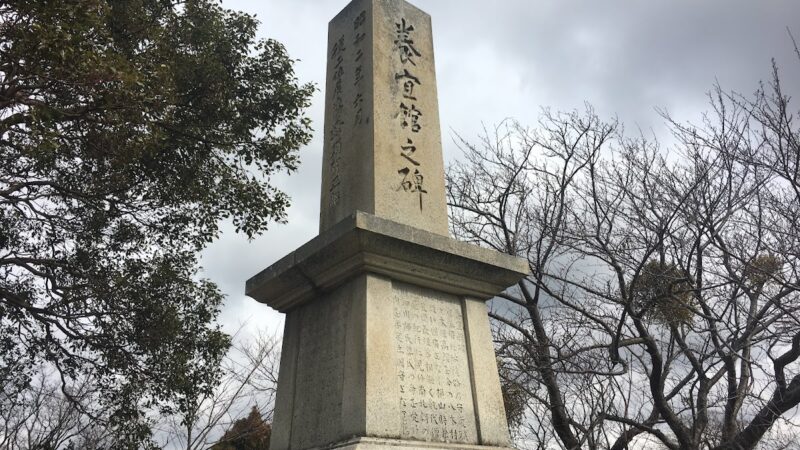
Adjacent to the south of the main enclosure are the ruins of Takekeiji Temple. Takekeiji Temple was the family temple of the Ogawa clan, and the tombs of successive generations of the Ogawa clan remain as the Ogawa Family Mausoleum. The adjacent arrangement of a castle and a temple is a common feature of medieval castles, indicating that the lord’s faith and rule were intertwined.
Tenshudai and Kuruwa Layout
A section known as the Tenshudai (castle tower base) has also been identified at Ogawa Castle. While it is unclear whether a castle tower actually stood there, it is presumed to have been the central defensive structure of the castle. Multiple baileys were arranged, each forming a defensive line.
Highlights of Ogo Castle
Replica Turret and Observation Deck
The replica turret built on the site of the main bailey is one of the biggest highlights when visiting Ogo Castle. From the turret, you can enjoy a panoramic view of Ogo village, experiencing the scenery that the former castle lords must have seen. The view is especially magnificent on a clear day, allowing you to feel the vastness of the Harima Plain.
L-shaped Moat and Earthen Bridge
The L-shaped moat surrounding the main bailey is an important relic for understanding Ogo Castle’s defensive system. The depth and width of the moat reveal the level of civil engineering technology at the time. Traces of an earthen bridge also remain, allowing us to imagine how the entrances to the castle were managed.
Remaining Earthworks
The earthworks remaining in various places are valuable clues for understanding the layout of Ogo Castle. The height and shape of the earthworks reveal defensive ingenuity, making them an interesting subject for castle researchers.
Ogawa Family Mausoleum
The Ogawa family mausoleum, located at the site of the former Chikkeiji Temple, is an important historical site commemorating the history of the Ogawa clan. It is a valuable place to trace the footsteps of the Ogawa clan, who, as descendants of the Hojo clan, continued from the Kamakura period to the Sengoku period.
Access to Ogawa Castle
Access by Car
The most convenient way to access Ogawa Castle is by car. It is approximately 15 minutes from the Sanyo Expressway “Kobe Kita IC” or approximately 20 minutes from the Chugoku Expressway “Yoshikawa IC”. If you head towards the “Ogawa” roadside station, the castle ruins are located just south of it.
The “Ogawa” roadside station has a free parking lot, and the castle ruins can be reached in a few minutes’ walk from there. The path from the parking lot to the castle ruins is well-maintained and easy to walk.
Access by Public Transportation
If using public transportation, you will need to take a bus from either “Sanda Station” or “Midorigaoka Station” on the Kobe Electric Railway Ao Line. Take the Shinki Bus bound for Ogo and get off at the “Ogo Honmachi” bus stop. From there, it’s about a 10-minute walk.
However, since bus service is limited, it’s recommended to check the timetable in advance. Be especially careful on weekends and holidays, as service may be less frequent.
Location
651-1623 Ogo-cho, Kita-ku, Kobe City, Hyogo Prefecture
Nearby Tourist Attractions
Roadside Station “Ogo”
Located just north of Ogo Castle, the Roadside Station “Ogo” sells fresh local produce and specialty products, making it an ideal rest stop. You can also enjoy local delicacies such as Ogo soba noodles.
Miki Castle Ruins
The Miki Castle Ruins, which have a deep connection to Ogo Castle, are a must-see spot for history buffs. It was the main battlefield of the Battle of Miki, where Bessho Nagaharu was besieged, and is worth visiting for understanding the history of Ogo Castle. It’s about a 30-minute drive from Ogo Castle.
Hakogi Millennium House (Hakogi Family Residence)
This is one of the oldest private houses in Japan, designated as a National Important Cultural Property. Located about 20 minutes by car from Ogo Castle, it is a valuable facility where you can learn about medieval life and culture.
Arima Onsen
Arima Onsen, a place associated with the Arima clan, is about 40 minutes by car from Ogo Castle. After visiting the castle ruins, we recommend relaxing in Arima Onsen, one of Japan’s three oldest hot springs.
Points to Note and Advice for Visitors
Clothing and Equipment
The Ogo Castle ruins are maintained as a park, but there are some grassy and dirt areas. We recommend wearing comfortable shoes. Insect repellent spray is useful in the summer.
Visiting Hours
The castle ruins themselves are always open, and there are no time restrictions for visiting. However, we recommend avoiding nighttime visits and visiting during daylight hours. If you want to explore thoroughly, allow about an hour.
Photography
The views from the castle ruins and the replica turret are excellent photo spots. Especially on sunny mornings, the lighting conditions are ideal for taking beautiful pictures. The scenery is particularly beautiful during the cherry blossom season in spring and the autumn foliage season.
Connection with the Community
The Ogawa Castle ruins are an important place for the local residents. When visiting, please be considerate of the lives of the local people and observe proper etiquette. Please be sure to take your trash with you and be quiet during your visit.
The History of Ogawa Castle and Harima
The Position of the Ogawa Clan in Harima Province
The Ogawa clan, as a powerful local family in the Harima region, ruled this area for approximately 350 years, from the Kamakura period to the Sengoku period. Their descent as descendants of the Hojo clan enhanced their authority as local lords and formed the basis for maintaining their influence in the region.
Harima Province has been a crucial transportation hub since ancient times, and was an important region through which the Sanyo Road passed. The Ogawa clan leveraged this geographical advantage to build an economic base by managing local logistics and the movement of people.
Strategic Importance in the Battle of Miki
The role played by Ogawa Castle in the Battle of Miki was far more than that of a mere subsidiary castle. As a crucial point for securing supply routes to Miki Castle, it was a vital base for breaking through Hashiba Hideyoshi’s siege.
Hideyoshi adopted a strategy of thoroughly capturing surrounding subsidiary castles in order to “starve” Miki Castle. The capture of Ogawa Castle was positioned as part of this strategy, and was commanded by Hashiba Hidenaga. The fall of Ogawa Castle cut off the supply routes to Miki Castle, making the defeat of the Bessho clan decisive.
Arima Clan Rule and Regional Development
After Arima Noriyori became the lord of Ogawa Castle, this region entered a new period of development. The Arima clan ruled over 15,000 koku and proceeded with the development of the castle town. Under the stable rule of the Toyotomi regime, the Ogo area is believed to have prospered economically and culturally.
The Arima clan’s rule lasted for approximately 20 years, and Ogo Castle functioned as the Arima clan’s base until their subsequent relocation to Sanda Castle.
Current Status and Challenges of Ogo Castle Research
Archaeological Excavations and Research Results
Several archaeological excavations and surveys have been conducted on Ogo Castle. These investigations have gradually revealed the castle’s layout and structure. Detailed analysis, particularly of the moats and earthworks, is progressing.
Future Research Topics
Many aspects of Ogo Castle research remain unclear. In particular, accurately determining the construction period, the extent of castle renovations in each era, and the specific structure of the castle town are areas for future research.
Furthermore, historical materials concerning the Ogo clan are limited, and many details about their lineage and the achievements of their lords in each era remain unknown. Collecting and analyzing historical documents and legends remaining in the region will be key to future research.
Ogawa Castle and Castle Enthusiasts
Evaluation from Castle Enthusiasts
Ogawa Castle is highly regarded among castle enthusiasts as a valuable historical site where one can learn about castle structures from the medieval to the Sengoku period. While large-scale stone walls and keeps do not remain, its well-preserved earthen castle structure is highly valued.
On castle information websites such as Kojodan, over 200 castle owners (visitors) have provided evaluations, with many positive comments such as “the earthworks and moats are well-preserved” and “the historical background is interesting.”
Members Who Have Registered it as Their Main Castle
Many castle enthusiasts have registered Ogawa Castle as their “main castle” (their favorite castle, or their local castle). Local residents who cherish local history and researchers interested in medieval castles continue to promote the appeal of Ogawa Castle.
Summary
Ogo Castle is a historic castle that was ruled by the Ogo clan, descendants of the Hojo clan, for approximately 350 years, from the Kamakura period to the Sengoku period. From its strategic importance in the Battle of Miki, to its rule by the Arima clan, and finally to its abandonment, it remains a valuable historical site reflecting the changing times and is still cherished by many people today.
Its location on a river terrace, the remains of L-shaped moats and earthworks, and the panoramic view of Ogo village evoke a sense of historical romance from the medieval to the Sengoku period in visitors. Its easy access from the “Ogo” roadside station makes it an attractive and easily accessible destination.
When enjoying a tour of castles in Hyogo Prefecture, be sure to visit Ogo Castle and trace the history of Harima and the footsteps of the Ogo clan. The view from the replica turret and the quietly remaining ruins will surely create unforgettable memories.
Frequently Asked Questions (FAQ)
Q1: Is it free to visit Ogo Castle? A1: Yes, admission to the Ogo Castle ruins is free. The castle ruins have been developed into a park and are open to the public at all times. Free parking is available at the “Ogo” roadside station.
Q2: How long does it take to visit Ogo Castle?
A2: If you want to take your time, allow about an hour. This is enough time to visit the main keep, the replica turret, the moat, the Ogo family mausoleum, and enjoy the views. A quick look around can be done in about 30 minutes.
Q3: Can I get to Ogo Castle by public transport?
A3: While it is accessible by public transport, bus services are limited, so we recommend visiting by car. From Kobe Electric Railway’s “Sanda Station” or “Midorigaoka Station,” take the Shinki Bus and get off at “Ogo Honmachi,” then it’s about a 10-minute walk.
Q4: Can I take pictures at Ogo Castle?
A4: Yes, you can take pictures freely. The views from the replica turret and castle ruins are excellent photo opportunities. Especially on sunny mornings, the lighting conditions are ideal for taking beautiful pictures.
Q5: Are there places to eat near Ogo Castle?
A5: There are restaurants at the “Ogo” roadside station where you can enjoy local delicacies such as Ogo soba. There are also several restaurants in the surrounding area that serve dishes made with local ingredients.
Q6: What is the relationship between Ogo Castle and Miki Castle?
A6: Ogo Castle was an important branch castle of the Bessho clan, lords of Miki Castle. During the Battle of Miki (1578-1580), it functioned as a strategic base to secure supply routes to Miki Castle, but it fell to an attack by Hashiba Hidenaga.
Q7: Did Ogo Castle have a keep?
A7: There are no reliable records indicating that Ogo Castle actually had a keep. The turret currently standing is a replica, built later to convey the atmosphere of the castle ruins. There is a section called the “castle tower base,” but the actual structure remains unknown.
Q8: How do you pronounce “Ōgo” in Ōgo Castle?
A8: “Ōgo” is pronounced “Ōgo.” The castle name is “Ōgo Castle (Ōgojō).” The place name “Ōgo Town” is also pronounced “Ōgochō.”