Sanda Castle (Hyogo Prefecture) Complete Guide: A Thorough Explanation of History and Highlights from the Kuki Navy’s Residence to the Sanda Jinya
Located in Sanda City, Hyogo Prefecture, Sanda Castle was a fortress ruled by the Kuki clan, known for their Kuki Navy. Although small in scale, it served as the center of the domain’s administration as the Sanda Jinya during the Edo period, and remains today as a historically valuable site with remnants such as moats. This article provides a detailed overview of Sanda Castle’s history and highlights, from its construction to its abandonment.
Overview and Basic Information of Sanda Castle
Sanda Castle (Sanda-jo) was a hilltop castle located in the vicinity of Yashiki-cho and Tenjin in Sanda City, Hyogo Prefecture. It was also known as “Kurumase Castle” and “Sanda Old Castle,” and functioned as the “Sanda Jinya” during the Edo period.
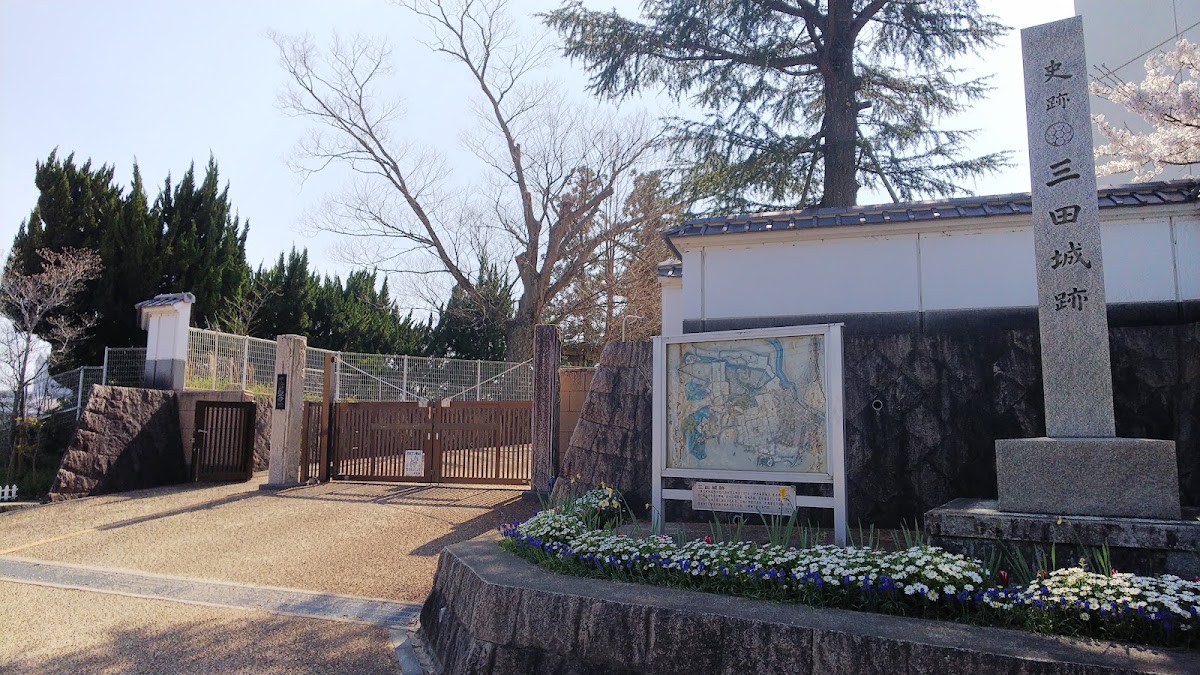
Currently, Sanda Municipal Sanda Elementary School stands on the site of the main keep, and Hyogo Prefectural Arima High School stands on the site of the second keep. While the remnants of the castle are limited, remains such as the inner moat and dry moat still exist. A stone monument marking the Sanda Castle site and an information board with a map of the castle’s layout are installed in front of Sanda Elementary School, allowing visitors to imagine its former appearance.
Location and Access
- Location: Yashiki-cho, Sanda City, Hyogo Prefecture, around Tenjin
- Nearest Station: Approximately 15 minutes on foot from Sanda Station on the JR Fukuchiyama Line and Kobe Electric Railway Sanda Line
- Access by Car: Approximately 10 minutes from Kobe Sanda IC on the Chugoku Expressway
- Parking: No dedicated parking (use nearby public parking)
History of Sanda Castle: From Kurumase Castle to Sanda Jinya
Origin of Construction and Early History
There are various theories regarding the construction period of Sanda Castle, and no definitive records remain. According to the “History of Sanda Castle,” the first builder of Kurumase Castle was Arima Murahide.
One theory suggests that in 1582, when Yamazaki Kataie was the lord of the castle, his retainer, Kurumase Masaemon, laid out the castle’s layout, and thus it came to be called “Kurumase Castle.” Many aspects of Sanda Castle during this period remain unclear, and its detailed structure and scale before the Azuchi-Momoyama period are not known.
The Araki Clan Era
In the latter half of the 16th century, Sanda Castle became the residence of Araki Heitayu, a retainer of Araki Murashige, known as the lord of Itami Castle. Araki Murashige was a warrior who served Oda Nobunaga, but is known for rebelling in 1578 and holed up in Itami Arioka Castle.
During this period, Sanda Castle was one of the important bases maintaining the Araki clan’s sphere of influence in northern Settsu Province.
The Arrival of the Kuki Clan and the Establishment of the Sanda Jinya
The most important turning point in the history of Sanda Castle occurred in 1633 (Kanei 10). The Kuki clan, renowned for their naval forces, were transferred from Toba in Mie Prefecture to Sanda.
The Kuki clan, based in Shima Province (present-day Mie Prefecture), was a prestigious family that served Oda Nobunaga and Toyotomi Hideyoshi, distinguishing themselves as a naval force. Kuki Hisataka, the second son of Kuki Moritaka, the first lord of the Toba Domain, became the first lord of the Sanda Domain, ruling over 36,000 koku.
During the Edo period, the Kuki family was a daimyo without a castle, so Sanda Castle was officially called “Sanda Jinya” (Sanda Fortified Residence). However, the Sanda Jinya, the domain’s administrative center, was constructed incorporating the former Sanda Castle, and although it lacked turrets and stone walls, it possessed a scale comparable to a castle.
The jinya (fortified residence) was located where the current Sanda Elementary School stands, and this became the political and administrative center of the Sanda Domain.
The Kuki Clan’s Rule and the Sanda Domain
The Kuki clan ruled Sanda until the Meiji Restoration. The Sanda Domain controlled 36,000 koku (a unit of land measurement) centered in Arima District, Settsu Province, and successive lords strived for stable administration and improved living conditions for their people.
Notably, despite being a renowned naval family, the Kuki clan governed Sanda, an inland area. Governing a land far from the sea was a new challenge for the Kuki clan, but successive lords implemented locally-rooted policies and contributed to the development of Sanda.
The Meiji Restoration and the Abolition of the Castle
After the Meiji Restoration, the Sanda Domain was abolished due to the abolition of the feudal domains and the establishment of prefectures, and the Sanda Jinya ceased to function. The castle buildings were demolished, and public facilities such as schools were constructed on the site.
Structure and Layout of Sanda Castle
Scale and Arrangement of the Castle
Sanda Castle was built as a flatland castle on a hill along the Mukogawa River. It was a relatively small castle, with a structure centered around the main keep (Honmaru) and the second bailey (Ninokuruwa).
The layout of the Sanda Jinya (fortified residence) during the Edo period was as follows:
- Honmaru: The site of the current Sanda Municipal Sanda Elementary School
- Ninokuruwa: The site of the current Hyogo Prefectural Arima High School
- Moat: A water moat between the Honmaru and Ninokuruwa, and a dry moat on the east side of the Ninokuruwa
Defensive Facilities
While the Sanda Jinya did not have large-scale defensive facilities such as stone walls or a keep, a defensive line of moats was maintained.
The water moat separating the Honmaru and Ninokuruwa still remains today in the form of a river between Sanda Elementary School and Arima High School, allowing us to imagine the layout of the castle at that time. A dry moat was also constructed on the east side of the Ninokuruwa, and a portion of this also still exists.
Building Layout
The Jinya (fortified residence) contained buildings such as the lord’s residence, government offices, and warehouses, but none of these buildings remain today. However, it is said that some of the buildings from Sanda Castle were relocated to the nearby Kinshinji Temple, and these are preserved as historically valuable remains.
Highlights and Existing Remains of Sanda Castle
Stone Monument and Information Board at Sanda Castle Site
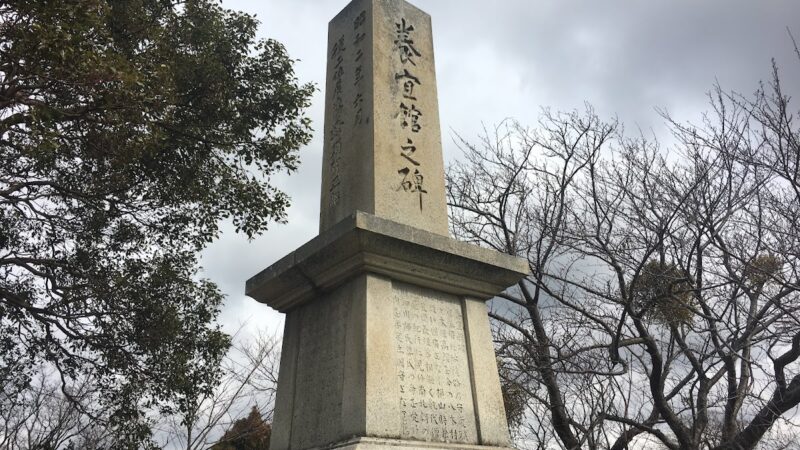
A stone monument marking the “Sanda Castle Site” stands in front of the main gate of Sanda Municipal Sanda Elementary School. This monument is an important landmark indicating the existence of Sanda Castle and is a popular spot for castle enthusiasts and history buffs.
An information board showing the castle layout is also installed next to the monument, allowing for a visual understanding of the layout of the Sanda Jinya during the Edo period. The relative positions of the main keep and second bailey, as well as the arrangement of the moats, are depicted in detail, helping to grasp the overall layout of the castle.
Remains of the Water Moat
Between Sanda Elementary School and Arima High School, the remains of a water moat that separated the main keep and the second bailey can be seen. Although it now resembles a river, it strongly retains the appearance of a former moat and is one of the most important remains of Sanda Castle.
While the moat is not large in scale, it is clear that it functioned as a defensive structure. A stroll around the area allows you to appreciate the topographical features of the castle.
Remains of the Dry Moat
A dry moat remains on the east side of the second bailey. Although it does not hold water, its presence is clearly discernible as a undulation of the terrain, indicating its role as a defensive line.
Relocated Buildings of Kinshinji Temple
Kinshinji Temple, located near Sanda Castle, still has buildings believed to have been relocated from Sanda Castle. In Sanda Castle, where the castle buildings themselves no longer exist, the relocated buildings of Kinshinji Temple are considered valuable remains.
Kinshinji Temple is within walking distance of Sanda Station, and we recommend visiting it along with your Sanda Castle visit.
Sanda Castle Visit Guide
Recommended Sightseeing Route
To efficiently visit Sanda Castle, the following route is recommended:
- Start from Sanda Station: Walk from Sanda Station (JR/Kobe Electric Railway) (approx. 15 minutes)
- Stone Monument in front of Sanda Elementary School: First, get an overview of the Sanda Castle site from the stone monument and information board.
- Visit the Moat: Observe the remains of the moat between Sanda Elementary School and Arima High School.
- Around Arima High School: Check the remains of the second bailey and the dry moat.
- Kinshinji Temple: Visit the relocated building (if time permits).
Estimated Visiting Time
To see the main remains of Sanda Castle, 30 minutes to 1 hour is a good estimate. Including Kinshinji Temple, allow 1.5 to 2 hours.
Points to Note When Visiting
- Entry onto School Grounds: The site of the main keep is now the grounds of Sanda Elementary School, and the site of the second keep is now the grounds of Arima High School. Please refrain from entering these grounds without permission.
- Stone Monuments and Information Boards: These can be viewed from the public road.
- Photography: Please be careful not to include school grounds or students in your photos.
- Parking: There is no dedicated parking lot, so we recommend using public transportation.
Best Season
Sanda Castle is open to visitors year-round, but the cherry blossom season in spring and the autumn foliage season offer particularly beautiful scenery and are ideal times to visit. However, the ruins themselves do not change much with the seasons, so you can feel the historical atmosphere no matter when you visit.
Tourist Attractions Around Sanda Castle
Historical Spots in Sanda City
When visiting Sanda Castle, the following nearby spots are also recommended:
- Kinshinji Temple: A temple said to house buildings relocated from Sanda Castle
- Sanda Furusato Learning Center: A facility where you can learn about the history and culture of Sanda
- Former Kuki Family Residence Museum: A museum related to the Kuki family, the lords of the Sanda Domain
Nature and Leisure Spots in Sanda City
- Arima Fuji Park: A vast nature park popular with families
- Sanda City General Culture Center (Sato no Oto Hall): A facility where cultural events are held
- Sanda Premium Outlets: One of the largest outlet malls in the Kansai region
List of Lords of Sanda Castle
The main lords of Sanda Castle and Sanda Jinya are summarized in chronological order:
Sengoku Period
- Arima Murahide: Built Kurumase Castle (legend)
- Yamazaki Kataie: Lord of the castle around 1582
- Araki Heitayu: Vassal of Araki Murashige, late 16th century
Edo Period (Lords of Sanda Domain)
- Kuki Hisataka: First Lord (entered the domain in 1633)
- Subsequently, the Kuki clan served as lords of the domain for generations, continuing until the Meiji Restoration.
The Kuki clan ruled Sanda for 12 generations, contributing to the development of the Sanda Domain.
Relationship between the Kuki Navy and the Sanda Domain
History of the Kuki Navy
The Kuki clan was a prestigious naval family based in Shima Province. In particular, Kuki Yoshitaka served Oda Nobunaga and Toyotomi Hideyoshi, distinguishing himself in numerous naval battles. He defeated the Mori Navy at the Battle of Kizugawaguchi and is known for his tactics using ironclad ships.
He sided with the Eastern Army in the Battle of Sekigahara and became the lord of the Toba Domain after the war. Later, the Kuki family split into the Toba Domain and the Sanda Domain. The Sanda Domain was established by Hisataka, the second son of Kuki Moritaka, the lord of the Toba Domain.
Inland Domain Administration
It is an interesting historical fact that the Kuki clan, a prestigious family of naval commanders, governed the inland Sanda Domain, far from the sea. While the Kuki clan possessed naval combat skills, in Sanda they demonstrated their land-based governing abilities through the promotion of agriculture and commerce, and flood control projects.
Things to Know Before Visiting Sanda Castle
Historical Background of Sanda City
Sanda City is located in the southeastern part of Hyogo Prefecture and has flourished as a transportation hub since ancient times. It belonged to Arima District in Settsu Province and was an important area along the route to Arima Onsen (hot springs).
During the Edo period, it developed as a castle town of the Sanda Domain, and some of its historical streetscape remains today.
Sanda Castle and Other Castles in Hyogo Prefecture
Hyogo Prefecture boasts numerous famous castles, including Himeji Castle (a World Heritage Site) and Takeda Castle Ruins (a “castle in the sky”). While Sanda Castle is smaller in scale, it holds historical value as the residence of the prestigious Kuki clan and as a typical example of an Edo-period encampment.
Appeal Points for Castle Enthusiasts
- Land Base of the Kuki Navy: A unique feature as an inland castle ruled by a renowned naval family.
- Example of an Encampment: Learn about the scale and structure of Edo-period encampments.
- Existing Moat Remains: Water and dry moats remain, allowing visitors to experience the castle’s layout.
- Easy Access: Conveniently located within walking distance of Sanda Station.
Cultural Property Designation Status of Sanda Castle
Currently, Sanda Castle Ruins are not designated as a national historic site or important cultural property, but they are protected as a historical heritage of Sanda City. Monuments and information boards are installed to raise awareness among citizens and tourists. ## Summary: The Historical Value and Charm of Sanda Castle
Sanda Castle (Sanda Jinya), though small in scale, is a castle of significant historical value as the residence of the prestigious Kuki Suigun (Kuki Navy) and a typical example of an Edo-period Jinya (fortified residence).
Although the site is now a school and the original buildings no longer exist, remnants such as water moats and dry moats remain, allowing visitors to imagine the layout of the castle during the Edo period. The stone monument and information board at the Sanda Castle site are valuable sources of information for learning about the castle’s history.
Its convenient location, within walking distance of Sanda Station, is another attractive feature. When touring castles and exploring history in Hyogo Prefecture, be sure to visit Sanda Castle and experience the footsteps of the Kuki clan and the appearance of an Edo-period Jinya.
Nearby are other attractions such as Kinshinji Temple and other tourist spots in Sanda City, which can be enjoyed in conjunction with a historical walk. Leisure facilities such as Sanda Premium Outlets are also nearby, making it a suitable place for family visits.
Sanda Castle is a hidden historical spot in Hyogo Prefecture, and is definitely worth visiting for castle enthusiasts and history buffs.