Complete Guide to Chudōshiyama Castle (Hyogo Prefecture): A Thorough Explanation of the History and Highlights of this Authentic Mountain Castle in Harima
What is Chudōshiyama Castle?
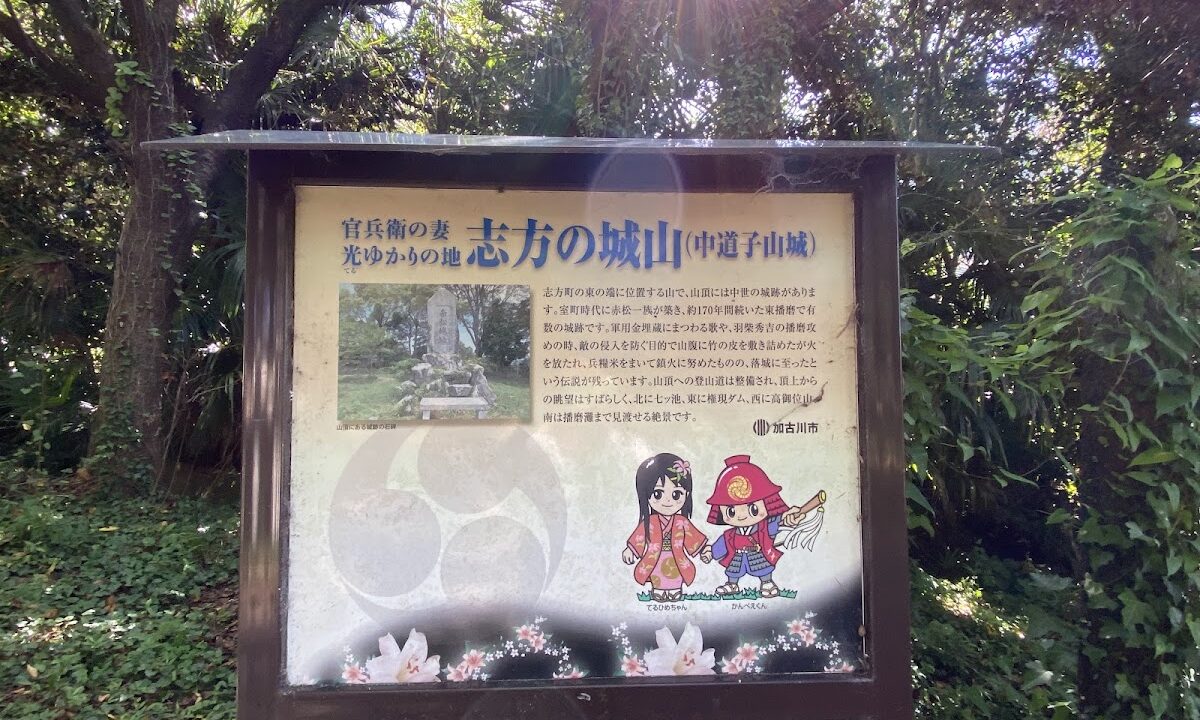
Chudōshiyama Castle is a medieval mountain castle built on the summit of Shiroyama Mountain (271.3m above sea level) in Oka, Shikata-cho, Kakogawa City, Hyogo Prefecture. As an important strategic fortress in eastern Harima Province, it watched over the history of Harima from the Nanboku-chō period to the Sengoku period.
Currently, it is maintained as Shiroyama Park and is part of the Harima Central Hills Prefectural Natural Park, popular with history enthusiasts and hiking lovers alike. The remains of this authentic mountain castle, covering the entire mountain, are well-preserved, with stone walls, moats, and earthworks visible throughout, conveying its former appearance.
It is also known as a scenic spot offering panoramic views of the Banshū Plain below, and on clear days, even Awaji Island can be seen in the distance.
History of Nakadoyama Castle
Construction History and Builder
There are various theories regarding the construction date of Nakadoyama Castle, and it is not certain. The most widely accepted theory is that it was built during the Shitoku era (1384-1386) by Akamatsu Ujinori (Ujinori), the fourth son of Akamatsu Norimura (Enshin). However, there is also a theory that it was built by Takabashi Shigehiro. In any case, it is thought to have been built in the early Muromachi period.
The Akamatsu clan was a powerful shugo daimyo (provincial governor) in Harima Province, and they controlled this entire region. Nakadoyama Castle is presumed to have functioned as a defensive base in eastern Harima and as an important military base for monitoring the Kakogawa River basin.
The Kakitsu Rebellion and the Fall of the Akamatsu Clan
The Kakitsu Rebellion, which occurred in 1441 (Kakitsu 1), was a significant turning point in the history of Nakadoyama Castle. Following the assassination of Ashikaga Yoshinori, the Shogun of the Muromachi Shogunate, by Akamatsu Mitsusuke, the Akamatsu clan was driven out of Harima Province by the Shogunate forces.
It is believed that Nakado-yama Castle also fell or was abandoned at this time. The decline of the Akamatsu clan significantly altered the political landscape of Harima and brought about changes in the regional power structure.
The Era of the Takahashi Clan
After the restoration of the Akamatsu clan, Takahashi Shigehiro, a member of the family, became the lord of Nakado-yama Castle, and the Takahashi clan ruled the area for several generations. In the early Tenbun era (1532-1555), Takahashi Shigekage, the son of Takahashi Shigehiro, returned as lord of the castle and was in charge of its maintenance and management.
In 1538 (Tenbun 7), in order to counter Amago Akihisa (Haruhisa), who had invaded Harima, the castle lord Takahashi Heizaemon, along with Kushihashi Bungo-no-kami, confronted the Amago army at Aga Castle. However, the battle ended in defeat, and records show that Takabashi Heizaemon retreated to Nakado-yama Castle to strengthen its defenses.
This battle is an important historical fact demonstrating that Nakado-yama Castle actually functioned as a military base.
Hashiba Hideyoshi’s Conquest of Harima and the Fall of the Castle
In the Tensho era, Hashiba Hideyoshi (later Toyotomi Hideyoshi), acting on orders from Oda Nobunaga, began his conquest of the Chugoku region. Hideyoshi’s Harima army successively captured castles in the area.
Nakado-yama Castle also became a target of Hideyoshi’s army and eventually fell. With this fall, the history of Nakado-yama Castle as a practical fortress came to an end. Afterwards, the castle was abandoned and lost its function as a mountain castle.
Structure and Layout of Nakado-yama Castle
Overall Composition
Nakado-yama Castle is a large-scale mountain castle utilizing the entire mountain, centered around the summit of Shiroyama Mountain at an altitude of 271.3m. The mountain has a relative elevation of approximately 270 meters, and when viewed from the foot of the mountain, it boasts a majestic appearance.
The basic structure of the castle is a three-directional arrangement of baileys: the main bailey (honmaru) is located at the eastern end of the mountaintop, the second bailey (ninmaru) is on the southern ridge, and the third bailey (sannomaru) is on the western ridge. Each bailey is separated by deep moats, enhancing its defensive capabilities.
Characteristics of the Main Bailey (Honmaru)
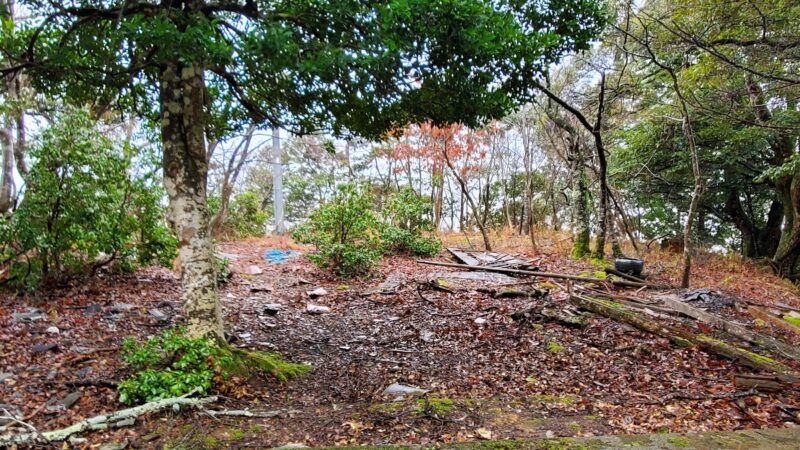
Located in the northeastern part of the mountain, the main bailey is clearly separated from the other baileys by deep moats. As the central part of the castle, the main bailey is the most important space, and it is believed to have housed the lord’s residence and command post.
Traces of stonework can be found around the main bailey, suggesting that it was a strong defensive structure surrounded by stone walls in its heyday. Furthermore, remains believed to be the site of a gate remain, providing valuable clues to understanding the structure of the entrance (koguchi).
Remains of the Second Bailey and the South Ridge
The Second Bailey, located on the south ridge, is the second most important enclosure after the main bailey. From this enclosure, one could see a wide expanse of the Banshu Plain, suggesting it served a surveillance function.
Traces of earthworks remain around the Second Bailey, indicating that the enclosure was surrounded by earthworks to enhance its defensive capabilities.
Defensive Structures of the Third Bailey and the West Ridge
The remains of the Third Bailey, located in the northwest, contain particularly noteworthy structures. These are large double moats. These double moats were a powerful defensive structure designed to prevent enemy intrusion, demonstrating the high level of castle construction technology at Nakado-yama Castle.
The moats were dug deeply into the ridge, and their sheer scale can still be appreciated today. It is thought to have been a defensive line designed to prevent enemy intrusion from the west ridge.
Remains of Stone Walls and Stone Masonry
Remains of old stone walls and stone masonry can be seen throughout the castle grounds. These walls were constructed using a technique called “nozurazumi,” demonstrating typical stone-laying techniques of medieval mountain castles.
The stone walls were mainly placed along the edges of the baileys and around the entrance gates, and combined with earthworks to enhance defensive capabilities. While some sections of the stone walls have collapsed, scattered stones from the time of construction remain, allowing us to imagine the castle’s original scale.
Well Remains and Living Structures
Well remains have also been confirmed within the castle grounds, indicating that water supply was considered during sieges. Securing water was a matter of life and death in mountain castles, and the presence of wells demonstrates a design philosophy prepared for prolonged sieges.
Highlights of Nakado-yama Castle
View from the Main Enclosure
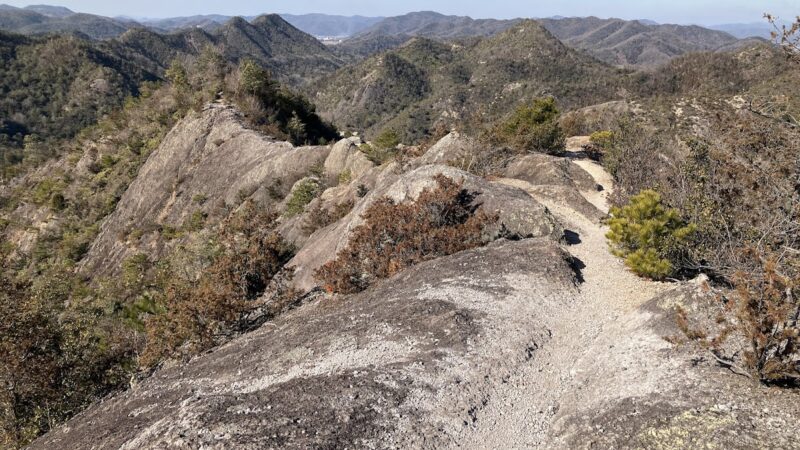
One of the greatest highlights of Nakado-yama Castle is the magnificent view from the main enclosure. You can enjoy a panoramic view of the Banshu Plain below, the flow of the Kakogawa River, and the surrounding townscape.
On clear days, you can even see as far as Awaji Island and the Harima Sea. The excellent view from this vantage point highlights its crucial role as a military surveillance function. The open location was essential for early detection of enemy movements.
The Impressive Double Moat
The large double moat remaining at the site of the third bailey is a representative structure of Nakado-yama Castle. The moat, deeply carved into the ridge, is still awe-inspiring in its depth and scale.
The double moat embodies the concept of multi-layered defense, where an enemy who breached the first moat would be stopped by the second. Standing at the bottom of the moat, one can feel the strength of this defensive structure from its depth and the steepness of the cliffs.
Stone Walls and Stone Masonry Techniques
The stone walls and stone masonry remaining throughout the castle are valuable relics for learning about medieval castle construction techniques. The simple, rough-hewn stone masonry, while utilizing natural stones, skillfully combines them to create a robust structure.
The stonework around the gate is particularly well-preserved, allowing for observation of the gate’s structure. Standing before the stone walls, one can appreciate the skill and effort of the medieval stonemasons.
Earthworks and Enclosure Arrangement
The earthworks surrounding each enclosure are also an important point of interest. These earthworks were defensive structures designed to protect against enemy arrows and firearms, and raising the edges of the enclosures enhanced internal defenses.
The height and width of the earthworks reveal insights into the castle-building techniques and defensive philosophies of the time. The combination of enclosure arrangement and earthworks is a crucial element in understanding the layout of the mountain castle.
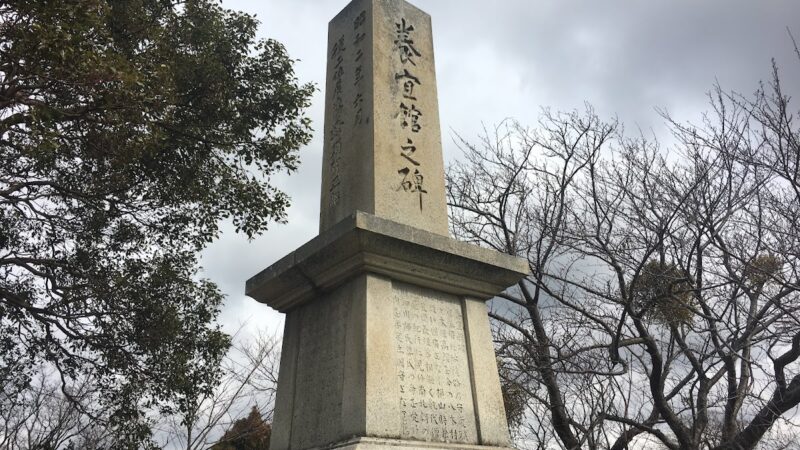
Akamatsu Castle Site Monument
A stone monument inscribed with “Akamatsu Castle Site” stands at the main enclosure on the mountaintop. This monument symbolizes the Akamatsu clan’s connection to Nakado-yama Castle.
Standing before the monument, one can reflect on the importance of the Akamatsu clan in the history of Harima and the role this castle played. ## Access and Visiting Guide
Location
Nakadoyama Castle is located in Oka, Shikata-cho, Kakogawa City, Hyogo Prefecture. It is maintained as Shiroyama Park, and a hiking trail is provided, making it relatively easy to climb.
Access by Car
If accessing by car, there is a parking lot at the foot of the mountain. From Kakogawa city center, take National Route 2 towards Shikata. The trailhead is a short distance from the parking lot.
If using a car navigation system, it is recommended to search for “Shiroyama Park” or “Oka, Shikata-cho, Kakogawa City, Hyogo Prefecture.” Parking is free, but space is limited, so early arrival is recommended on holidays.
Access by Public Transportation
The nearest station is Yakujin Station on the JR Kakogawa Line. While it is possible to walk from the station to Shiroyama, the distance is considerable, so consider taking a taxi.
If using the bus, take the Shinki Bus route towards Shikata and access the castle on foot from the nearest bus stop.
Climbing Route and Estimated Time
The hiking trail is well-maintained, and there are signposts along the way, so you can reach the summit without getting lost. The most common climbing route is from the south side.
The climb from the parking lot to the main keep takes approximately 30-40 minutes at a normal pace. Observing traces of the old road and the remains of the baileys along the way will take longer, but it is worthwhile for understanding the castle’s structure.
Some sections of the trail are steep, so wearing athletic shoes or trekking shoes is recommended.
Points to Note When Visiting
- Clothing: As it is a mountain castle, comfortable clothing and non-slip shoes are essential.
- Season: Bring insect repellent in summer, and don’t forget to take precautions against the cold in winter.
- Drinking Water: There are no vending machines at the summit, so be sure to bring your own drinking water.
- Weather: Be careful as the ground can become slippery during and after rain.
- Time: Plan your visit with plenty of time to descend before sunset.
Estimated Visit Time
If you want to thoroughly explore the entire castle ruins, allow 2-3 hours from ascent to descent. If you only want to see the main remains, 1.5-2 hours is sufficient.
Considering time for photography and enjoying the view, we recommend planning your visit for about half a day.
Nearby Castles and Tourist Spots
Shikata Castle
Shikata Castle ruins are located near Nakado-yama Castle. Shikata Castle is also an important castle in Harima Province, and visiting it along with Nakado-yama Castle is beneficial for understanding the castle network in this region.
Kanki Castle
Kakogawa City also has the ruins of Kanki Castle. Located on the north bank of the Kakogawa River, Kanki Castle is known as a Sengoku period castle in Harima. Like Nakado-yama Castle, it has a history of being attacked by Hashiba Hideyoshi, and is an important castle site for tracing the history of the conquest of Harima.
Zenbo-yama Castle
Zenbo-yama Castle is also known as a mountain castle in the surrounding area. By visiting these castles, you can experience the characteristics of medieval mountain castles in eastern Harima and the regional defense network.
Kakogawa City Tourist Spots
Besides castle ruins, Kakogawa City has many other attractions. The Kakogawa River embankment is suitable for strolling, and you can enjoy cherry blossoms and autumn leaves depending on the season. There are also museums and historical archives scattered throughout the city where you can learn about the region’s history.
Historical Significance of Nakado-yama Castle
Nakado-yama Castle holds an important position in the study of castle history as a typical example of a medieval mountain castle in Harima Province. Built by the Akamatsu clan, a powerful daimyo family of Harima, and a battleground for the siege of Harima during the Sengoku period, this castle is a valuable historical site that tells the story of Harima’s history.
The well-preserved remains convey the castle-building techniques and defensive philosophies of the time, making it a valuable teaching material for studying medieval mountain castles. The fact that defensive structures such as stone walls, moats, and earthworks remain intact is particularly noteworthy compared to other castle ruins.
The development of the site as Shiroyama Park has achieved both the protection of its historical heritage and its use as a place of recreation for citizens. This initiative can be evaluated as a good example of cultural property preservation.
Summary
Nakado-yama Castle (Kakogawa City, Hyogo Prefecture) is one of the leading full-fledged mountain castles in eastern Harima, built on the summit of Shiroyama Mountain at an altitude of 271.3m. From its construction by Akamatsu Ujinori to its conquest by Hashiba Hideyoshi, this castle has witnessed the turbulent history of Harima.
Currently, it is maintained as Shiroyama Park, and the remains such as the layout of the main enclosure, second and third baileys, double moats, stone walls, and earthworks are well preserved. From the summit, you can enjoy a panoramic view of the Banshu Plain, and on clear days, you can even see as far as Awaji Island.
A well-maintained hiking trail allows you to reach the summit in about 30-40 minutes from the parking lot, making it popular not only with castle enthusiasts but also with hiking lovers. Several other castles, such as Shikata Castle, Kanki Castle, and Zenbozan Castle, are scattered in the surrounding area, making it an ideal base for exploring Harima’s castles.
Nakadoyama Castle, where you can fully experience the history of Harima and the charm of a medieval mountain castle, is a historical spot you should definitely visit when visiting Hyogo Prefecture.