Complete Guide to Konosumiyama Castle (Toyooka City, Hyogo Prefecture) | One of the Largest Mountain Castles in Tajima, Flourished as the Base of the Yamana Clan
What is Konosumiyama Castle?
Konosumiyama Castle is a medieval mountain castle located in Izushi-cho, Toyooka City, Hyogo Prefecture. Also known as Konusumi Castle, Konosumi Castle, Tsuruga Castle, and Komori Castle, it functioned as an important base for the Yamana clan in Tajima Province (present-day northern Hyogo Prefecture).
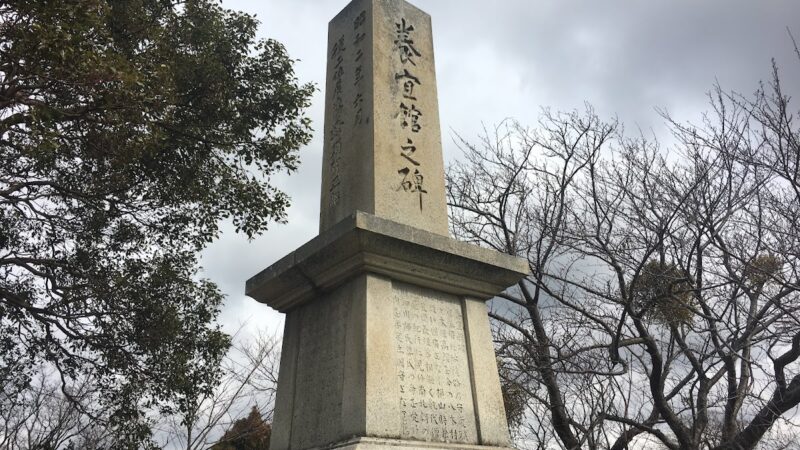
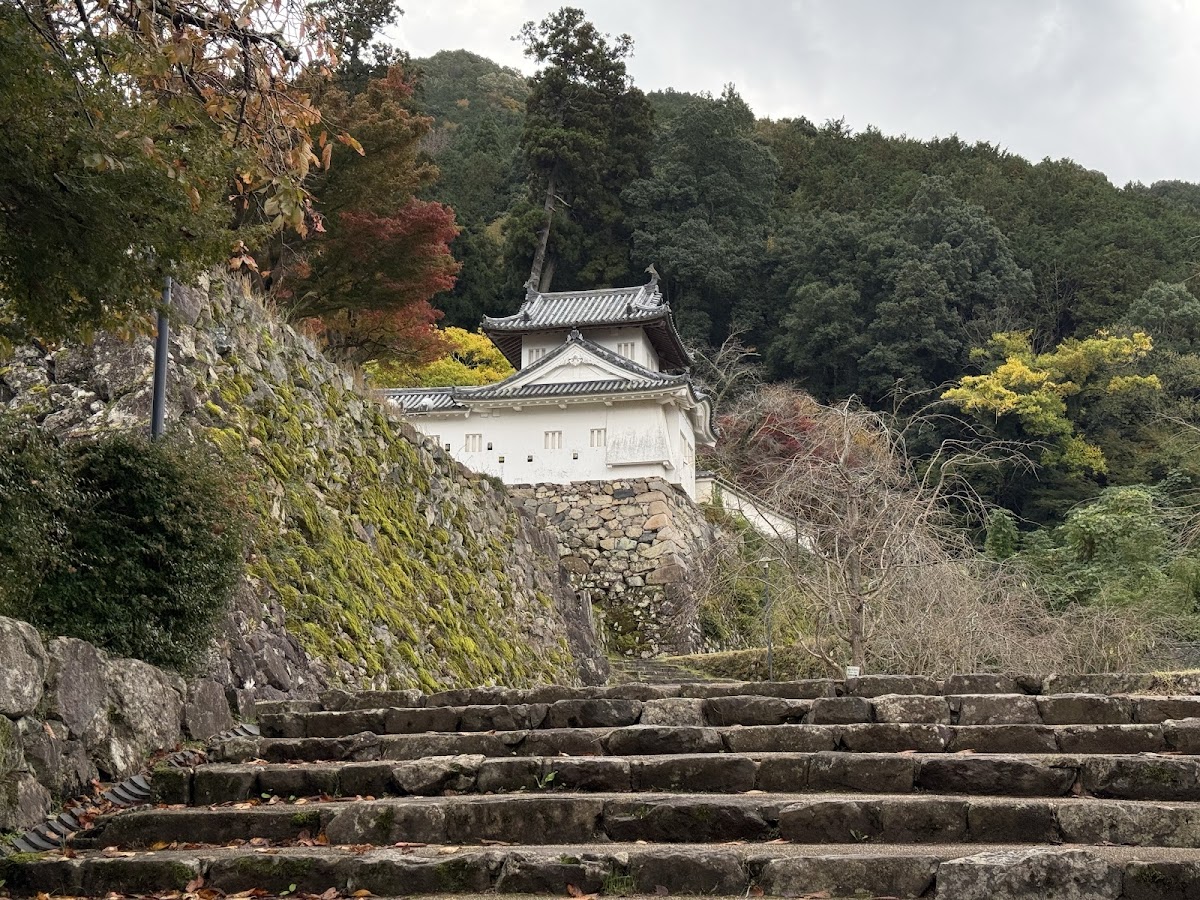
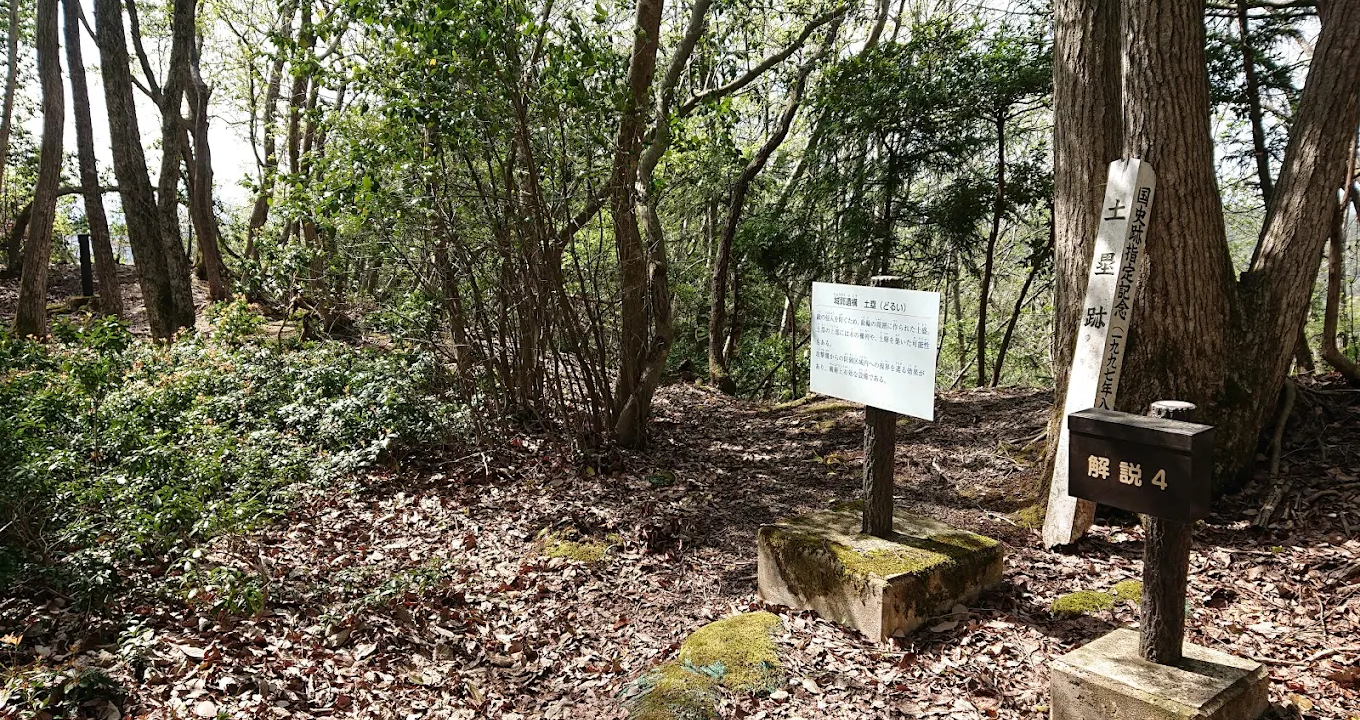
Built on an isolated low hill approximately 140m above sea level and 130m relative height, the castle is located north of Izushi Shrine, boasting a strategic location overlooking the castle town of Izushi. Currently, along with the ruins of Arikoyama Castle, it is designated as a national historic site as the “Yamana Clan Castle Ruins,” and its high historical value is recognized as the largest mountain castle remains in the Tajima region.
The castle ruins retain well-preserved defensive structures such as moats, baileys, and earthworks, making it a valuable legacy for learning about the structure of medieval mountain castles.
History of Kinosumiyama Castle
Construction and the Rise of the Yamana Clan
Kinosumiyama Castle is believed to have been built during the Bunchū era (1372-1374) by Yamana Tokiyoshi, the governor of Tajima Province. The Yamana clan was a powerful daimyo family that rapidly expanded its influence from the Nanboku-chō period to the Muromachi period. At its peak, they controlled one-sixth of Japan, earning them the nickname “Lord of One-Sixth.”
Tokiyoshi consolidated his power in Tajima Province and developed Kinosumiyama Castle as his base. Place names such as “Oyashiki” (lord’s residence), “Ōtemon” (main gate), and “Sōkyōji” (temple) still remain at the foot of the mountain, indicating the former presence of a castle town.
The Ōnin War and Yamana Sōzen
Kinosumiyama Castle first appears on the historical stage during the Ōnin War (1467-1477). In this nationwide civil war, Yamana Mochitoyo (later known as Yamana Sōzen after becoming a monk), the head of the Yamana clan, played a key role as the commander-in-chief of the Western Army.
Records indicate that during the Ōnin War, a total of 26,000 cavalry from the various territories of the Yamana clan gathered at Kinosumiyama Castle. Sōzen marched from this castle to Kyoto, leading an 11-year war. During this period, Kinosumiyama Castle played a crucial role as a hub for the Yamana clan’s power in western Japan.
The Sengoku Period and the Castle’s Fall
After the Ōnin War, the Yamana clan’s power gradually declined. With the arrival of the Sengoku period, power struggles intensified within Tajima Province.
In Eiroku 12 (1569), during the time of the then-lord of the castle, Yamana Suketoyo, Kinosumiyama Castle was attacked by Hashiba Hideyoshi (later Toyotomi Hideyoshi), acting on orders from Oda Nobunaga. The castle fell under the fierce assault of Hideyoshi’s army, and Yamana Suketoyo was forced to commit suicide. This marked the end of the Yamana clan’s approximately 200-year rule over Tajima Province.
After the castle’s fall, control of Tajima shifted to the Oda clan, and Kinosumiyama Castle ceased to serve its purpose. Subsequently, the Yamana clan’s residence was moved to the nearby Arikoyama Castle.
Structure and Highlights of Kinosumiyama Castle
Layout and Defensive System
Kinosumiyama Castle is a mountain castle utilizing the entire isolated hill at an altitude of 140m, boasting the largest remaining structures in the Tajima region. The castle’s structure exhibits typical characteristics of a medieval mountain castle, and the following defensive structures can be observed:
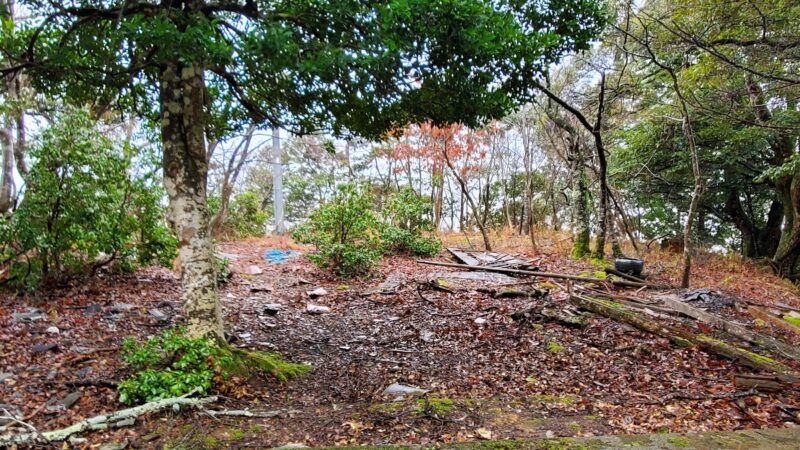
The main enclosure is located near the mountaintop, with multiple enclosures arranged in a stepped pattern. These enclosures are demarcated by earthen ramparts, demonstrating ingenuity in preventing enemy intrusion.
The key to the castle’s defense is the moat. Digged to cut across the ridge, the moat functioned as a crucial defensive line to hinder enemy advances. In particular, a double moat** is constructed on the ridge leading from the residence site known as “Oyashiki” on the western slope to the main enclosure, indicating a robust defensive system.
The Unique Structure of Sukyoji Fort
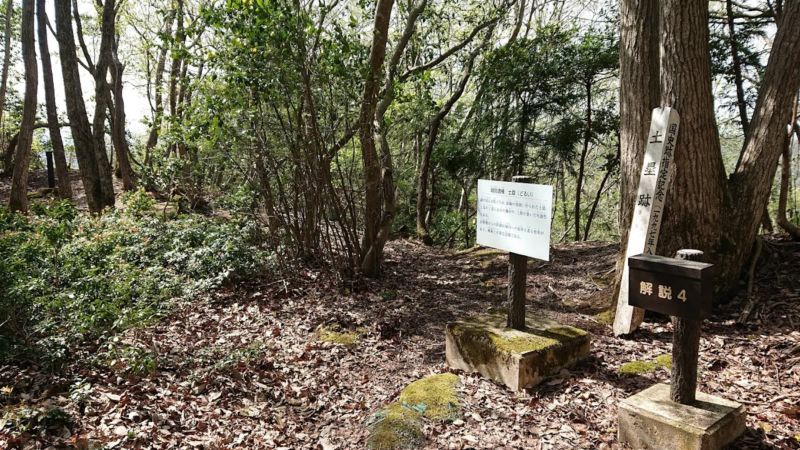
Among the remains of Kinosumiyama Castle, the most noteworthy is the independent fort known as Sukyoji Fort. This fort is located on the south side of the western slope of the castle and features a double moat that cuts off the ridge leading to the main enclosure of Kinosumiyama Castle.
The moat on the side of Sokyoji Fort is bent to the south, creating a vertical moat, and the outer bailey has an earthen embankment facing the vertical moat, giving it a particularly complex structure even within Kinosumiyama Castle. This elaborate defensive system is a valuable relic demonstrating the high level of castle-building technology of the Yamana clan.
Baileys and Earthen Embankments
Various large and small baileys (flat areas) are arranged on the mountaintop, and it is thought that they were used as garrisons for soldiers and storage areas for supplies. These baileys are demarcated by earthen embankments, which enhance defensive capabilities and show ingenuity in efficiently utilizing the space within the castle.
The earthen embankments around the main bailey are built particularly high, serving as the last line of defense. Even today, these embankments remain in relatively good condition, allowing us to appreciate the scale of the castle at that time.
Remains of the Residence and Castle Town
It is said that the residence of the castle lord was located in the area at the foot of the mountain called Oyashiki. Mountain castles served as fortresses during wartime, and in peacetime, government affairs were generally conducted from residences at the foot of the mountains.
Furthermore, place names such as “Otemon” (main gate) and “Sokyoji” (temple) remain in the surrounding area, indicating that a castle town once existed. These place names tell us that Kinosumiyama Castle was not merely a military facility, but a center of politics, economy, and culture in Tajima Province.
Access and Visiting Information for Kono-Sumiyama Castle
Location
Address: 478 Hakamasa, Izushi-cho, Toyooka City, Hyogo Prefecture (North side of Izushi Shrine)
Access Methods
Access by Car:
- Approximately 30 minutes from the “Yoka-Hyono-yama IC” on the Kita-Kinki Toyooka Expressway
- Use the parking lot in Izushi Castle Town (Several public parking lots are available around the Izushi Castle ruins)
- The castle entrance is accessible on foot
Access by Public Transportation:
- Approximately 30 minutes by Zentan Bus bound for “Izushi” from JR San’in Main Line “Toyooka Station,” get off at the “Izushi” bus stop
- Approximately 10 minutes on foot from the bus stop to the castle entrance
Time Required and Difficulty of Climbing
The time required from the castle entrance to the main enclosure is approximately 30-40 minutes one way. It is a mountain castle with a relative elevation of 130m, and although the hiking trail is well-maintained, it requires a certain level of physical fitness.
Estimated Visiting Time: Allow approximately 1 hour 30 minutes to 2 hours, including the ascent and descent. If you wish to carefully observe the remains, it is recommended to allow even more time.
Difficulty Level: Intermediate. Hiking boots, comfortable clothing, and drinking water are recommended.
Precautions During Visit
- As this is a mountain castle, the ground can be slippery depending on the weather. Particular caution is needed during and after rain.
- Remember to use insect repellent in summer and warm clothing in winter.
- Please be careful not to damage the earthworks or moats to protect the remains.
- Cell phone reception is poor in some areas, so avoid visiting alone; it is preferable to visit with others if possible.
Nearby Tourist Attractions
Izushi Castle Ruins: A modern castle built after Kinosumiyama Castle. It is a popular tourist attraction along with the castle town of Izushi.
Arikoyama Castle Ruins: A mountain castle that the Yamana clan used as their base after Kinosumiyama Castle. Along with Kinosumiyama Castle, it is designated a National Historic Site as part of the “Yamana Clan Castle Ruins.”
Izushi Shrine: An ancient shrine located south of Kinosumiyama Castle. Known as the Ichinomiya (first-ranked shrine) of Tajima Province.
Sokyo-ji Temple: A temple associated with Zen master Takuan. Located in the castle town of Kinosumiyama Castle, it has deep ties to the Yamana clan.
Izushi Soba: Izushi is a castle town famous for “Izushi Sara Soba” (soba noodles served on plates). Recommended for a meal after visiting the castle.
Historical Value and Modern Significance of Kinosumiyama Castle
Designation as a National Historic Site
Kinosumiyama Castle, along with the Arikoyama Castle Ruins, is designated a National Historic Site as part of the “Yamana Clan Castle Ruins.” This designation recognizes the historical role played by the Yamana clan during the Muromachi period and the excellent state of preservation of the castle remains.
As a castle of a shugo daimyo (provincial governor) during the Muromachi period, and as a crucial strategic point during the Ōnin War—a turning point in Japanese history—Kinosumiyama Castle holds high academic value.
A Heritage Site Conveying the History of the Tajima Region
Kinosumiyama Castle is an indispensable historical site for understanding the medieval history of Tajima Province. It conveys diverse historical aspects to the present day, including the Yamana clan’s rule, medieval castle construction techniques, and the warfare of the Sengoku period.
For local residents, Kinosumiyama Castle is a source of local pride and a core element of their regional identity. In recent years, preservation activities and the installation of information boards have progressed, and efforts are being made to utilize it as a historical heritage site.
Importance in Castle Research
Kinosumiyama Castle serves as an important sample case for studying the structure of medieval mountain castles. Defensive facilities such as moats, baileys, and earthworks are well-preserved, and much knowledge has been gained through archaeological excavations and surveys.
In particular, the complex defensive structure of the Sōkyōji Fort is attracting attention from castle researchers as a valuable example of the Yamana clan’s castle construction techniques.
The Charm of Visiting Kono-yama Castle
A Mountain Castle Exploration Filled with Historical Romance
The greatest charm of visiting Kono-yama Castle lies in the opportunity to reflect on the Ōnin War, a major turning point in Japanese history. Standing on this site where an army of 26,000 men gathered, you can feel the spirit of the Sengoku period firsthand.
The dramas of historical figures, such as Yamana Sōzen’s determination when he marched to Kyoto and the tragedy of Yamana Suketoyo’s defeat at the hands of Hideyoshi’s army, are etched throughout the ruins.
Well-Preserved Medieval Mountain Castle Ruins
The ruins of Kono-yama Castle are preserved in relatively good condition, making it a valuable spot to experience the structure of a medieval mountain castle. Walking along the moats, you’ll be amazed by their depth and defensive strength.
Observing the height of the earthworks, the arrangement of the baileys, and the ingenuity of the vertical moats—the pinnacle of castle construction techniques—up close is an unparalleled joy for castle enthusiasts.
Historical Walk Combined with Izushi Sightseeing
Kinosumiyama Castle is adjacent to the castle town of Izushi, and combining it with sightseeing such as Izushi Castle ruins and Izushi soba noodles allows for a fulfilling historical walk.
Experiencing the historical flow from medieval mountain castles to early modern flatland castles, and the development of the castle town, all in one day, is a unique charm of Izushi.
The History of the Yamana Clan and Tajima Province
Genealogy and Expansion of the Yamana Clan
The Yamana clan was a prestigious samurai family descended from the Seiwa Genji clan, and rapidly expanded its power from the Kamakura period to the Muromachi period. During the Nanboku-cho period, they served Ashikaga Takauji and achieved great merit, bringing a vast area of San’in and Sanyo regions, including Tajima, Inaba, Hoki, Mimasaka, and Harima, under their control.
At its peak, the Yamana clan is said to have controlled one-sixth of Japan, becoming a powerful force known as the “Lord of One-Sixth.” Kinosumiyama Castle was their base and a symbol of the Yamana clan’s power. ### The Yamana Clan’s Rule in Tajima Province
The Yamana clan ruled Tajima Province for approximately 200 years as its governors. Based at Kinosumiyama Castle, they significantly contributed to the development of Tajima Province through domain management, military control, and cultural promotion.
Merchants and artisans gathered in the castle town, leading to a vibrant economic activity. Temples and shrines, such as Sokyoji Temple, were also protected, and religious culture flourished. The Yamana clan’s rule occupies an important position in the medieval history of Tajima Province.
The Onin War and the Decline of the Yamana Clan
Yamana Sozen played a key role as the commander-in-chief of the Western Army during the Onin War, but the prolonged conflict became a great burden for the Yamana clan. Increased war expenses, stagnation in domain management, and exhaustion of their retainers all contributed to the rapid decline of the Yamana clan after the war.
As the Sengoku period (Warring States period) began, internal conflicts and clashes with other forces intensified, ultimately leading to the loss of Tajima Province to Oda Nobunaga and Hashiba Hideyoshi. The fall of Kinosumiyama Castle symbolized the end of the Yamana clan’s glorious era.
Excavation and Research Findings of Kinosumiyama Castle
Multiple excavation and surveying surveys have been conducted on Kinosumiyama Castle, yielding much knowledge about its structure and historical changes.
The investigations have revealed the precise arrangement of moats and baileys, the structure of earthworks, and the construction methods of vertical moats. Furthermore, excavated artifacts have provided information about the period of castle use and the lifestyle of its inhabitants.
These research findings provide valuable materials for the study of medieval mountain castles, and further investigations are expected to yield new discoveries.
Tips for Enjoying Kinosumiyama Castle
Recommendation for Prior Study
Before visiting Kinosumiyama Castle, acquiring basic knowledge about the history of the Yamana clan and the Ōnin War will greatly enhance your experience. We recommend preparing in advance by using history books, books about castles, and information from the internet.
Photography Tips
The remains of Kono-yama Castle offer numerous photogenic spots. In particular, the moats and earthworks can be photographed with careful angle selection for impressive shots. The view from the mountaintop is also magnificent, offering a panoramic view of the castle town of Izushi.
Seasonal Charms
Kono-yama Castle displays different expressions throughout the seasons: fresh greenery in spring, deep green in summer, vibrant autumn leaves, and snowscapes in winter. The autumn foliage season, in particular, offers a beautiful landscape where the castle ruins and nature intertwine.
Summary
Kono-yama Castle (Toyooka City, Hyogo Prefecture) is a medieval mountain castle built by the Yamana clan as the governors of Tajima Province. It is a historical castle that served as an important base for the Western Army during the Onin War, where an army of 26,000 men gathered. Built on an isolated hill 140m above sea level and 130m above ground, this castle boasts well-preserved defensive structures such as moats, baileys, and earthworks, and is designated a National Historic Site as the largest mountain castle ruin in the Tajima region.
From its construction by Yamana Tokiyoshi until its fall to Hashiba Hideyoshi during the time of Yamana Suketoyo, Kono-yama Castle witnessed a history spanning approximately 200 years, playing a crucial role as the political and military center of medieval Tajima Province. Even today, the complex defensive structure of the Sokyoji Fort and other remains demonstrating the Yamana clan’s advanced castle-building techniques remain, making it of high value for castle research.
Taking advantage of its location adjacent to the castle town of Izushi, Kono-yama Castle, when combined with sightseeing such as Izushi Castle ruins and Izushi soba noodles, is an attractive spot where you can experience the flow of history from the medieval to the early modern period. Why not visit the historically romantic Kono-yama Castle and feel the glory of the Yamana clan and the atmosphere of the Sengoku period?