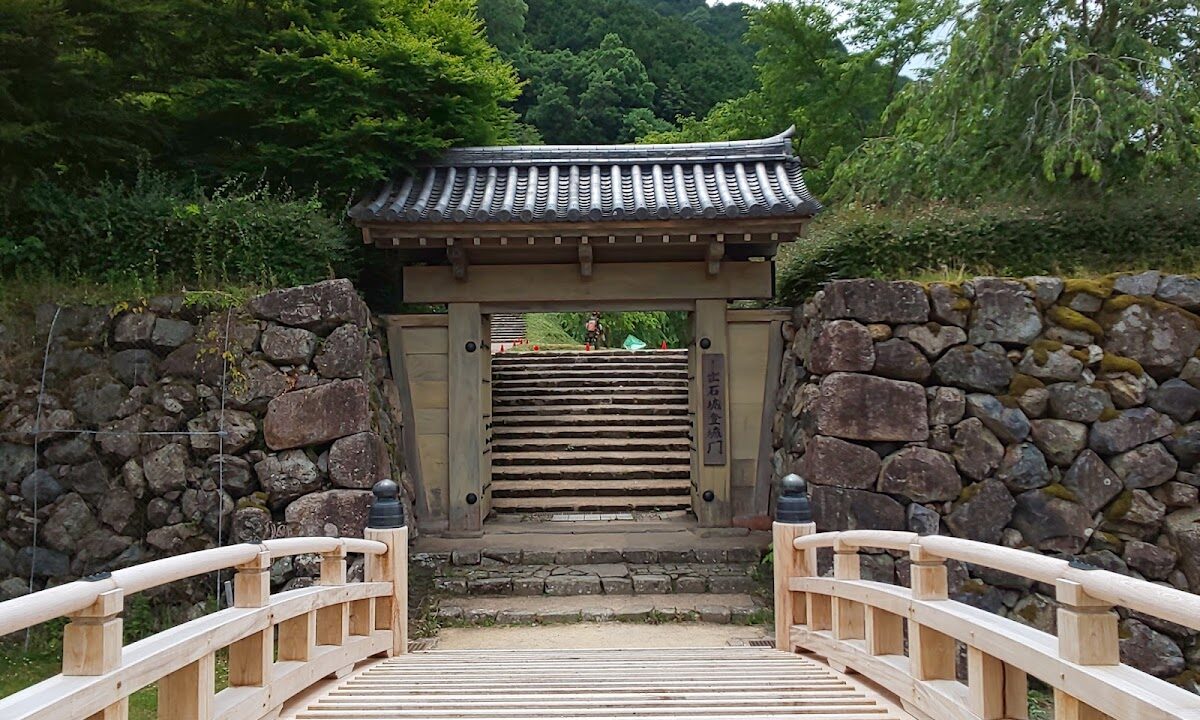
Arikoyama Castle (Hyogo Prefecture) Complete Guide | History, Highlights, Climbing Route, and Access Information
What is Arikoyama Castle?
Arikoyama Castle is a valuable mountain castle built on the summit of Mt. Arikoyama (321 meters above sea level) in Izushi-cho, Toyooka City, Hyogo Prefecture, representing the transitional period from the medieval to the early modern era. Also known as Ariko Castle, Izushi Old Castle, Taka Castle, and Yamana Clan Castle, it played an important role as a base for the Yamana clan in Tajima Province.
Built in 1574 by Yamana Suketoyo, the governor of Tajima Province, this castle was constructed as a new residence, replacing the previous main castle, Kosumiyama Castle. Currently, along with the Kosumiyama Castle ruins, it is designated as a national historic site as the “Yamana Clan Castle Ruins,” and along with Izushi Castle, it is selected as one of the Continued Top 100 Japanese Castles (No. 162).
The main enclosure built on a steep mountaintop, the six terraced enclosures extending to the west, and the numerous stone walls and moats throughout the site, all demonstrate the transition from medieval to early modern castles. These well-preserved remains make it a historical site of high value in castle history research.
History of Arikoyama Castle
The Yamana Clan and Tajima Rule
The Yamana clan was a powerful daimyo family during the Muromachi period, known as the “Sixth-One Lord,” and ruled Tajima Province for a long time. While their power declined during the Sengoku period, they still maintained their position as shugo (provincial governor) in Tajima.
During the Eiroku era (1558-1570), the Yamana clan used Kinosumiyama Castle as their base, but recognizing the need for a more defensible castle, Yamana Suketoyo decided to construct a new residence.
Construction of Arikoyama Castle (1574)
In 1574 (Tensho 2), Yamana Suketoyo began construction of a new castle on Mount Arikoyama. Utilizing the steep mountaintop at an altitude of 321 meters, he completed a castle that combined medieval-style layout with modern elements such as stone walls. This castle served as the headquarters of the Tajima provincial governor and became a symbolic representation of the Yamana clan’s authority.
Six years after its construction, in 1580 (Tensho 8), Hashiba Hideyoshi (later Toyotomi Hideyoshi), a subordinate of Oda Nobunaga, began his conquest of Tajima. Hideyoshi’s younger brother, Hashiba Hidenaga, attacked Arikoyama Castle, and after a fierce battle, it fell. The castle lord, Yamana Suketoyo, surrendered, marking the end of the Yamana clan’s rule in Tajima.
Renovations under the Toyotomi Regime
After its fall, Arikoyama Castle came under the control of Hashiba Hidenaga, and Maeno Nagayasu became the castle lord. It is believed that during this period, parts of the castle were renovated, adding more modern elements. Some of the stone walls and alterations to the layout are presumed to be the result of construction during this time.
Construction and Abandonment of Izushi Castle
In 1604 (Keicho 9), when Koide Yoshihide became the lord of Izushi Domain, construction of Izushi Castle, a new modern castle, began at the foot of the mountain. With the completion of Izushi Castle, which emphasized the functions of a government office during peacetime, Arikoyama Castle ceased its military role and was abandoned.
However, its position as a fortified outpost (an emergency refuge) for Izushi Castle was maintained, and it is believed that a certain level of management continued throughout the Edo period.
Structure and Layout of Arikoyama Castle
Main Enclosure (Honmaru)
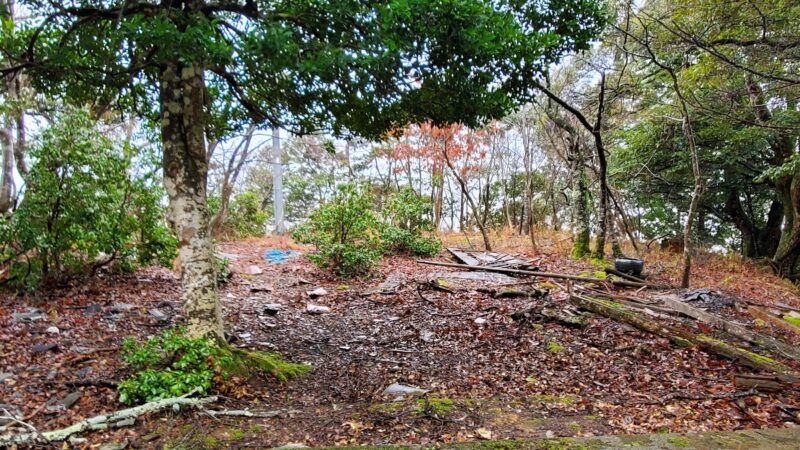
Located on the mountaintop at an altitude of 321 meters, the main enclosure is the core of Arikoyama Castle. Measuring approximately 40 meters east-west and 30 meters north-south, it is surrounded by stone walls. From the main enclosure, one can see not only the castle town of Izushi but also the vast plains of Tajima, providing excellent military visibility.
The stone walls of the main enclosure are approximately 2-3 meters high and built using the nozurazumi technique. This exhibits characteristic stonework techniques from the transitional period between the medieval and early modern eras, making it a valuable historical site in castle architecture.
Arrangement of Enclosures
To the west of the main enclosure, six enclosures are arranged in a stepped pattern. Each enclosure is clearly demarcated by a cliff face, demonstrating defensive measures throughout. These enclosures are also known as “Senjojiki” (Thousand Tatami Mat Area) and are thought to have been used for garrisoning soldiers and storing supplies.
Arrangement of Enclosures
To the west of the main enclosure, six enclosures are arranged in a series. Each enclosure is clearly demarcated by a cliff face, showcasing various defensive features. These enclosures are also known as “Senjojiki” and are believed to have been used for garrisoning and storing supplies. The layout of the baileys cleverly utilizes the terrain, efficiently constructing defensive lines along the ridges. The elevation difference between each bailey is approximately 5-10 meters, creating a structure that makes enemy intrusion difficult.
Moats
The key to the defense of Arikoyama Castle lies in the large moats that divide the ridges. Large moats are constructed on the east side of the main bailey, the southwest ridge of the western bailey, and the ridge extending to the northwest, serving to block enemy intrusion routes.
In particular, the moat east of Senjojiki is a massive structure, approximately 10 meters deep and 15 meters wide, and is one of the highlights of Arikoyama Castle. The impressive view of the cliff face from the bottom of the moat is breathtaking, allowing one to appreciate the high level of castle-building technology of the time.
Stone Walls
On the northern slope of the mountain, there is a section with several layers of stone walls built on a steep incline, known as the “Well Bailey.” This section is believed to have contained a well that served as the castle’s water source, playing a crucial role as a lifeline during sieges.
The stone walls, while primarily constructed using the nozura-zumi (rough-stone masonry) method, also exhibit techniques similar to san-gi-zumi (a type of block masonry) in some sections, reflecting the transitional period to early modern castles. The stone used is locally sourced granite, and the site still retains a strong sense of its original appearance.
Stone Quarries
Several stone quarries, where stone for the castle walls was extracted, have been identified around the castle. These quarries were used during the castle’s construction and renovation, and are valuable historical remains for understanding the stone processing techniques and transportation methods of the time.
Highlights of Arikoyama Castle
Panoramic View from the Main Enclosure
The greatest attraction of Arikoyama Castle is the 360-degree panoramic view from the main enclosure. Below lies the castle town of Izushi, with its red-tiled roofs and the Tatsumi-koro (drum tower) creating a beautiful landscape. On clear days, you can see the mountains of Tajima and even the city of Toyooka, experiencing the view that the former lord of the castle must have gazed upon.
The scenery is particularly exceptional in the early morning when it is shrouded in mist, and in the evening when it is bathed in the setting sun, captivating many visitors. The harmony between the nature of Tajima, which shows different expressions in each season, and the historic castle town is truly worthy of being called a spectacular view.
Diversity of Stone Walls
At Arikoyama Castle, you can observe stone walls from various eras and techniques. From the rough-hewn stonework around the main enclosure, to the stepped stone walls of the well enclosure, and the modern stonework that appears to have been added during renovations, it is a valuable field for tracing the evolution of stone walls.
In particular, the stone walls on the northern slope demonstrate the high level of technical skill required to build on a steep incline, allowing you to appreciate the skills of the stonemasons of the time. You can also observe the ingenuity used to prevent collapse and the traces of drainage systems, learning about the depth of castle architecture.
The Impressive Power of the Great Moat
The great moat on the east side of Senjojiki is one of the most representative remains of Arikoyama Castle. The deeply and sharply excavated moat completely cuts off the ridge, functioning as a formidable defensive structure to prevent enemy incursions. Standing at the bottom of the moat, one is overwhelmed by the height and steep slope of the cliffs on both sides.
This moat was excavated solely by human power, and imagining the scale of labor mobilized and the construction period at the time gives a real sense of the immense power of the Yamana clan.
The Continuous Beauty of the Enclosures
The stepped series of enclosures best exemplifies the characteristics of Arikoyama Castle’s layout. Each enclosure is clearly demarcated and functions as an independent defensive unit. Moving between the enclosures allows one to experience the spatial configuration of a medieval mountain castle.
On the flat surfaces of the enclosures, foundation stones and post holes, believed to be the remains of buildings, can be found in some places, allowing one to imagine the rows of watchtowers and barracks that once stood here.
Well Enclosure and Water Source Remains
The well enclosure on the northern mountainside was a crucial facility protecting the castle’s vital water source. Within the area surrounded by stone walls built on a steep slope, the remains of a well still exist. This is a valuable relic that reveals the ingenuity of securing water sources in mountain castles.
The approach to the well enclosure is steep, reflecting a defensive design. Its structure allowed for defense with a small number of soldiers during a siege, demonstrating the practical design philosophy of medieval castles.
Ascent Route and Estimated Time
Standard Ascent Route (Inari Shrine Course)
The most common ascent route is from Izushi Castle town, via the Arikoyama Inari Shrine. The trailhead is behind the Izushi Castle ruins; you enter the mountain trail after passing through a torii gate.
Estimated Time: Ascent: 40-60 minutes, Descent: 30-40 minutes
Route Overview:
- Pass through the torii gate of Inari Shrine from Izushi Castle Ruins
- Climb the steep stone steps to the main hall of Inari Shrine (approx. 10 minutes)
- From the shrine, enter the mountain path and proceed along the ridge (approx. 20 minutes)
- Pass the well enclosure junction and proceed to the group of enclosures (approx. 10 minutes)
- Arrive at the main enclosure (approx. 10 minutes)
The hiking trail is well-maintained, but there are many steep sections, and the stone steps to Inari Shrine in particular will leave you breathless. Caution is advised after rain as the trail can be slippery.
Physical Fitness and Equipment Guidelines
Climbing to Arikoyama Castle is a serious mountain climb. The elevation difference is approximately 270 meters, and the trail has many steep sections, so a reasonable level of physical fitness is required.
Recommended Equipment:
- Trekking shoes or hiking boots
- Comfortable clothing
- Drinking water (500ml or more)
- Towel, hat
- Work gloves (useful for handholds on rocky terrain)
- Rain gear (in case of changing weather)
- Trekking poles (makes climbing easier)
Notes:
- Insect repellent is essential in summer
- Snow and ice are possible in winter
- Avoid solo climbing; climbing in groups is recommended
- Check the latest trail information locally before climbing
Estimated Visiting Time
The total time required, including time spent at the summit, should be estimated at 2 to 2.5 hours. If you want to enjoy the scenery at the main enclosure and carefully observe each ruin, it is recommended to allocate about 3 hours.
If you are not confident in your physical fitness or have time constraints, you can choose to visit only Izushi Castle and view Arikoyama Castle from a distance.
Access Information
Access by Public Transportation
If using JR:
- Get off at Toyooka Station on the JR San’in Main Line
- Take the Zentan Bus bound for Izushi (approximately 30 minutes)
- Get off at the Izushi bus stop and walk 5 minutes to the trailhead.
Bus Schedule: Buses from Toyooka Station towards Izushi run approximately 1-2 times per hour. It is recommended to check the return bus schedule in advance.
Access by Car
From Osaka:
- Chugoku Expressway “Yoshikawa JCT” → Maizuru-Wakasa Expressway “Kasuga IC” → Kita-Kinki Toyooka Expressway “Yoka-Hyono-yama IC” → Izushi via National Routes 312 and 426 (approx. 2 hours 30 minutes)
From Kobe:
- Bantan Expressway “Wadayama IC” → Izushi via National Routes 312 and 426 (approx. 1 hour)
From Kyoto:
- Kyoto Jukan Expressway “Kyotamba-Wachi IC” → Izushi via National Routes 27 and 312 (approx. 2 hours)
Parking Information
There are several public parking lots in Izushi Castle Town.
Main Parking:
- Izushi Castle Ruins Parking (Free, approx. 50 cars)
- Izushi Town Municipal Parking (Paid, approx. 100 cars)
- Otemae Parking (Paid, approx. 50 cars)
Due to congestion during peak tourist season and weekends, early morning arrival is recommended. The trailhead is a 5-10 minute walk from the parking lot.
Nearby Tourist Attractions
Izushi Castle
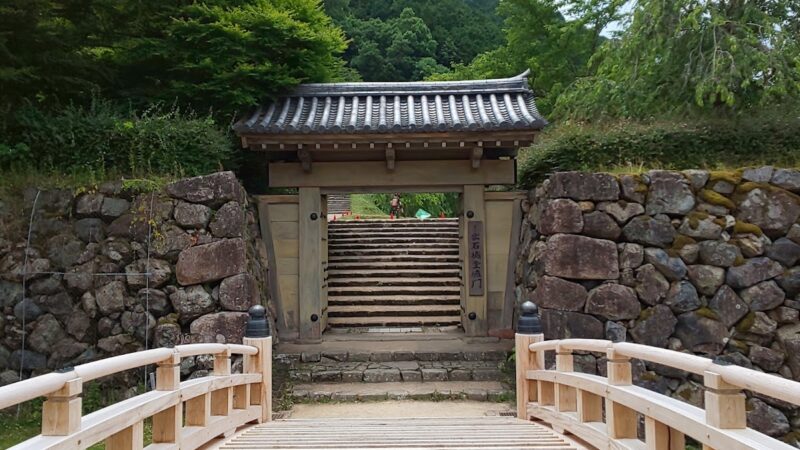
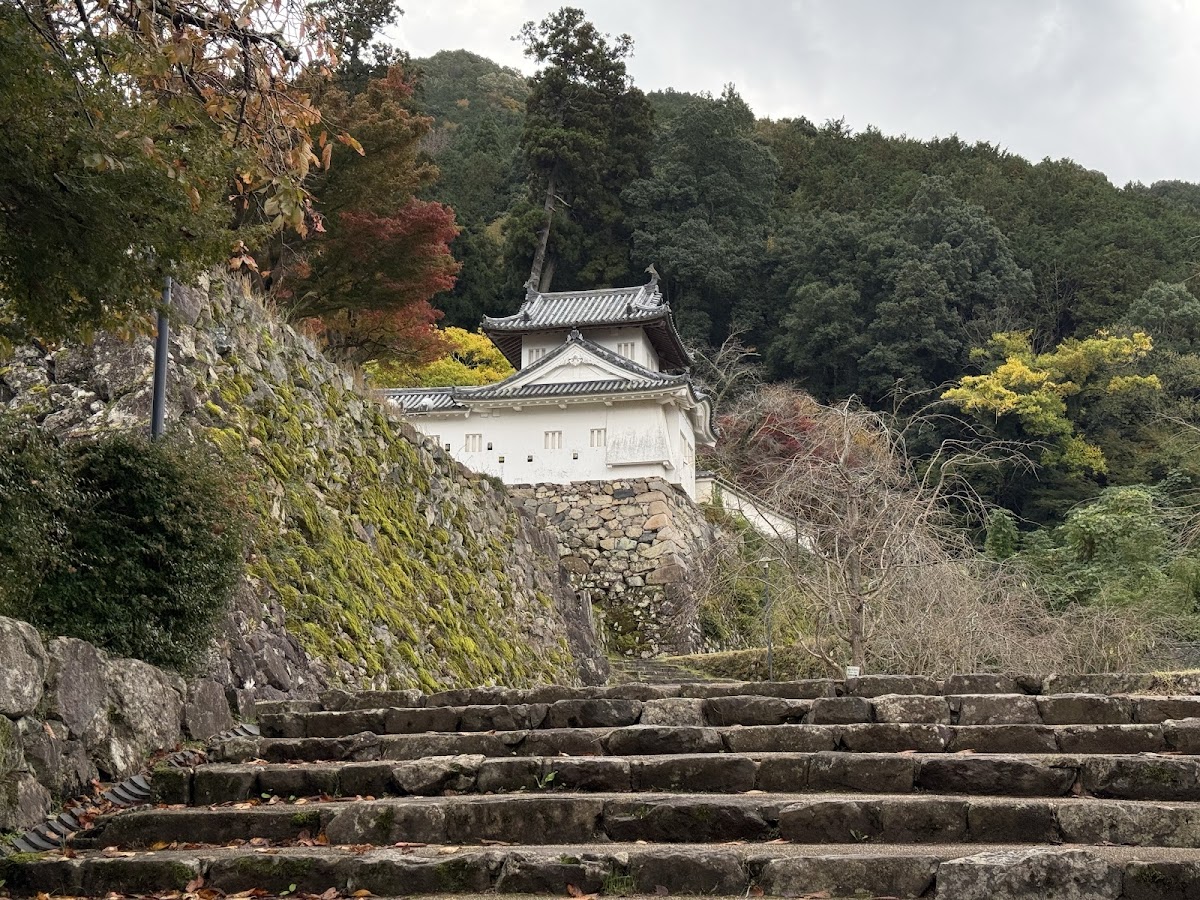
A modern castle built at the foot of Mount Arikoyama, it is selected as one of the Continued Top 100 Japanese Castles along with Arikoyama Castle. The layout of the main keep, second bailey, and third bailey remains, and turrets and gates have been restored. Visiting both Izushi Castle and Arikoyama Castle allows you to understand the changes in castle architecture from the medieval to the early modern period.
Izushi Castle Town
A beautiful castle town known as “Little Kyoto of Tajima,” its grid-like town layout still remains. The area retains a strong Edo-period atmosphere with its rows of white-walled storehouses and old merchant houses. Enjoy a historical stroll while savoring the famous Izushi soba noodles.
Tatsumi-koro Clock Tower
Built in 1871 (Meiji 4), this clock tower is a symbol of Izushi. Along with the Sapporo Clock Tower and the Omihachiman Clock Tower, it is considered one of the “Three Great Clock Towers of Japan,” and continues to tick to this day.
Izushi Eirakukan
Opened in 1901 (Meiji 34), this is the oldest theater in the Kinki region and is designated a National Important Cultural Property. Restored in 2008 (Heisei 20), it still hosts Kabuki performances and other events. It is a valuable facility where you can experience the atmosphere of an Edo-period theater.
Sokyo-ji Temple (Takuan-ji Temple)
A temple associated with the monk Takuan, famous for its beautiful garden. It is also the family temple of the Yamana clan and an important temple for understanding the history of Arikoyama Castle. It is also known as a famous spot for autumn foliage.
Konosumiyama Castle Ruins
This was the main castle of the Yamana clan before Arikoyama Castle, and together with Arikoyama Castle, it forms the National Historic Site “Yamana Clan Castle Ruins.” It retains the appearance of an older mountain castle, allowing visitors to learn about the changes in castle architecture.
Best Season to Visit
Spring (March-May)
The fresh greenery is beautiful, and it’s a suitable season for hiking. Cherry blossoms bloom in early April, and the castle town is enveloped in a vibrant atmosphere. The temperature is mild, making it one of the best times to visit the castle.
Summer (June-August)
The greenery becomes denser, and the view is slightly diminished, but there is a possibility of seeing a sea of clouds in the early morning. However, the temperature is high and there are many insects, so sufficient preparation is necessary. Be sure to take thorough precautions against heatstroke.
Autumn (September-November)
The autumn foliage is beautiful, making it the most popular season. Especially from late October to early November, the autumn foliage is at its peak, and the view from the mountaintop is exceptional. The weather is also stable, making it ideal for climbing the castle.
Winter (December to February)
There is a possibility of snow and ice, so caution is necessary when climbing the castle. However, the air is clear, allowing for distant views, and there is a chance to see the snow-covered mountains of Tajima. Winter climbing is recommended for experienced climbers.
Cultural Property Designation of Arikoyama Castle
National Historic Site Designation
Arikoyama Castle ruins, along with Kinosumiyama Castle ruins, were designated as a National Historic Site in 1937 (Showa 12) as “Yamana Clan Castle Ruins.” It is recognized for its high historical value as a base of operations for the Yamana clan in Tajima, and as a site showing the evolution of castles from the medieval to the early modern period.
Selected as one of the Continued Top 100 Japanese Castles
In 2017, it was selected as one of the “Continued Top 100 Japanese Castles” (number 162) by the Japan Castle Association. It was selected together with Izushi Castle, and visiting both castles together will provide a deeper understanding.
The Continued Top 100 Japanese Castles stamp is located at the Izushi Tourist Center (Izushi Castle Town).
450th Anniversary of the Construction of Arikoyama Castle
2024 marked the 450th anniversary of the construction of Arikoyama Castle. To commemorate this, Toyooka City held commemorative events such as a symposium and special guided tours.
450 years ago, in 1574, Oda Nobunaga was expanding his power in his quest for national unification. The castle has a turbulent history, having fallen just six years later to Toyotomi Hidenaga, the younger brother of Toyotomi Hideyoshi.
Characteristics and Value as a Castle
Arikoyama Castle is a valuable historical site that strongly retains the characteristics of castles from the transitional period between medieval mountain castles and early modern castles. While retaining the basic layout of medieval castles, such as the arrangement of baileys on ridges and large-scale moats, it also incorporates early modern elements such as the extensive use of stone walls, demonstrating a transitional form.
Particularly noteworthy is the fact that, after its construction by Yamana Suketoyo, it underwent renovations by Hashiba Hidenaga and Maeno Nagayasu, resulting in a mixture of remains from different periods and with different technologies within the same castle site. This makes it an extremely important historical site for castle history research, allowing us to observe the evolution of castle technology over a mere 30 years within a single castle site.
Furthermore, it was the last stronghold of the Yamana clan, a powerful shugo daimyo of the Muromachi period, and a historical stage illustrating the process of national unification under the Toyotomi regime. As a castle symbolizing the transition from the Sengoku period to the Azuchi-Momoyama period, its historical value is highly regarded.
Precautions and Manners When Visiting the Castle
Safety Management
- The hiking trail has steep slopes and slippery sections. Please wear appropriate equipment.
- Avoid hiking alone; please hike in groups whenever possible.
- There are sections where cell phone signals do not reach.
- If you are feeling unwell, do not push yourself; have the courage to turn back.
- Before hiking, inform your family or friends of your destination and expected return time.
Preservation of the Ruins
- Do not climb on the stone walls or move stones.
- Damaging the ruins is strictly prohibited.
- Collecting plants or capturing animals is prohibited.
- Always take your trash with you.
- Do not enter areas other than the designated hiking trails.
Photography Manners
- Use of drones requires prior confirmation with the Toyooka City Board of Education.
- Please be considerate of other hikers.
- When using a tripod, choose a location that does not obstruct passage.
Summary
Arikoyama Castle is a valuable medieval mountain castle ruin remaining in Izushi, Toyooka City, Hyogo Prefecture. Built in 1574 by Yamana Suketoyo, Izushi Castle fell just six years later to an attack by Toyotomi Hidenaga, a testament to the turbulent times at the end of the Sengoku period.
From the main enclosure, built on a mountaintop 321 meters above sea level, you can enjoy a panoramic view of the castle town of Izushi and the plains of Tajima. The breathtaking scenery makes the climb worthwhile. The castle boasts well-preserved remains, including stone walls, moats, and baileys, representing the transitional period from the medieval to the early modern era, making it worthy of its designation as a National Historic Site and one of the Continued Top 100 Japanese Castles.
While climbing requires considerable physical fitness and equipment, this representative Tajima mountain castle offers a rich experience of historical romance, stunning views, and the allure of castle ruins. Visiting Izushi Castle in conjunction with sightseeing in the castle town will allow for a deeper understanding of Tajima’s history and culture.
When you visit Izushi, be sure to try climbing to Arikoyama Castle and experience the remains of the Yamana clan’s castle, which has survived for over 450 years.