Tobuki Castle (Tokyo) Complete Guide | History and Remains of a Mountain Castle that Played a Role in the Akigawa River Defense Line as a Branch Castle of the Takiyama Three Castles
What is Tobuki Castle?
Tobuki Castle is a medieval mountain castle located on the border between Tobuki-cho, Hachioji City, Tokyo, and Kamiyotsugi, Akiruno City. It is also known by other names such as Negoya Castle, Shinjo, Nijo Castle, and Nijo Castle, and was built on a hill 218m above sea level (relative height approximately 25-70m) overlooking Tokyo Summerland.
Although small in scale, it is a mountain castle that utilizes the rugged terrain, situated on a cliff on the south bank of the Akigawa River, a natural stronghold. It is believed to have played a part in the castle network centered around Takiyama Castle as a defensive base in Musashi Province during the Sengoku period.
Geographical Characteristics of Tobuki Castle
The location where Tobuki Castle was built is a strategic point overlooking the Akigawa River crossing point. The Akigawa River, flowing north of the castle, was an important transportation route along the ancient Koshu Road, which connected Kai Province (present-day Yamanashi Prefecture) to Musashi Province (present-day Fuchu City). This ancient Koshu Road functioned as a main road connecting Kai and Musashi provinces from ancient times, and remained a militarily crucial route connecting Kofu and Musashi in the Middle Ages.
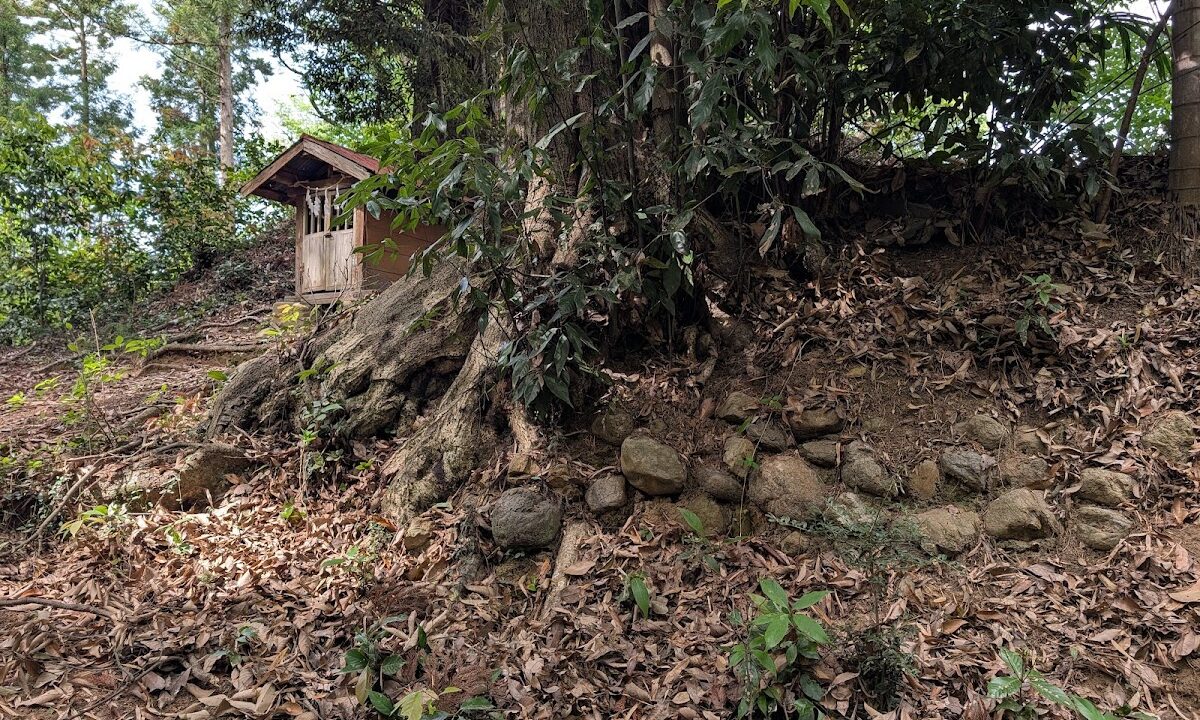
The “Akigawa Hill Hiking Course” still runs along the ridge of the castle ruins; this is a remnant of the ancient Koshu Road, passing east-west in front of a shrine within the castle grounds. The Summerland side is an impassable cliff, functioning as a natural defensive wall.
History of Tobuki Castle
Background and Period of Construction
Regarding the construction period and builder of Tobuki Castle, historical records are scarce, and many details remain unknown. However, based on castle research and geographical conditions, the following historical background has been inferred.
The Muromachi Period Construction Theory suggests that Takiyama Castle was one of the branch castles built by the Oishi clan, a powerful local lord who ruled this region. The Oishi clan, as a prominent local lord in Musashi Province, had Takiyama Castle as their base and several branch castles in the surrounding area. It is believed that Tobuki Castle was part of this branch castle network, responsible for monitoring the Akikawa River crossing point and managing transportation routes.
The Hojo Clan Era and Preparations Against the Takeda Clan
With the arrival of the Sengoku period, the Later Hojo clan expanded their power into western Musashi Province. In 1569, when the Takeda army, led by Takeda Shingen, invaded Odawara Castle, Takiyama Castle was pushed to the brink of collapse. It is presumed that, learning from this crisis, the Hojo clan significantly strengthened their defenses along the Akikawa River to prepare for future Takeda attacks.
As part of this defensive reinforcement, a group of castles including Takatsuki Castle, Tobuki Castle, Ajiro Castle, Musashi-Tokura Castle, and Hinohara Castle were constructed. Tobuki Castle was located midway along this Akigawa defensive line and is thought to have played a crucial role in monitoring and blocking the Takeda forces’ invasion route.
Positioning as one of the Three Castles of Takiyama
Tobuki Castle is also known as one of the “Three Castles of Takiyama” and functioned as a subsidiary castle of Takiyama Castle. Within the defensive network centered on Takiyama Castle, Tobuki Castle likely functioned as a forward base or signal fire station, and was also important as a communication hub for quickly transmitting enemy movements to the main castle.
Abandonment and Present State
While there are no clear records of when Tobuki Castle was abandoned, it is presumed to have been abandoned, like many subsidiary castles, after the Hojo clan was destroyed in Toyotomi Hideyoshi’s Odawara campaign in 1590. Records indicate that the castle had already lost its functionality during the Edo period and was in a state of collapse.
Layout and Remains of Tobuki Castle
Scale and Structure of the Castle
Tobuki Castle is a mountain castle with a long, narrow castle area approximately 880m east-west and 100m north-south. Built on a hill at an altitude of 220m and a relative height of 40-70m, the main enclosure is situated on a cliff approximately 50m high.
The basic structure of the castle is a typical mountain castle style, with multiple enclosures (kuruma) arranged around the main enclosure on the cliff. The layout utilizes the narrow ridgeline, making maximum use of the natural terrain for defense.
Main Remains Existing
The following remains can still be seen at Tobuki Castle:
Enclosures (Kuruwa) Multiple enclosures are arranged around the main enclosure. The southern enclosure, in particular, is relatively well-preserved and is still open to visitors. The third enclosure, where the shrine is located, forms the base of the castle, and the east-west ridge path (now a hiking trail) passes through it.
Dry Moats and Trenches
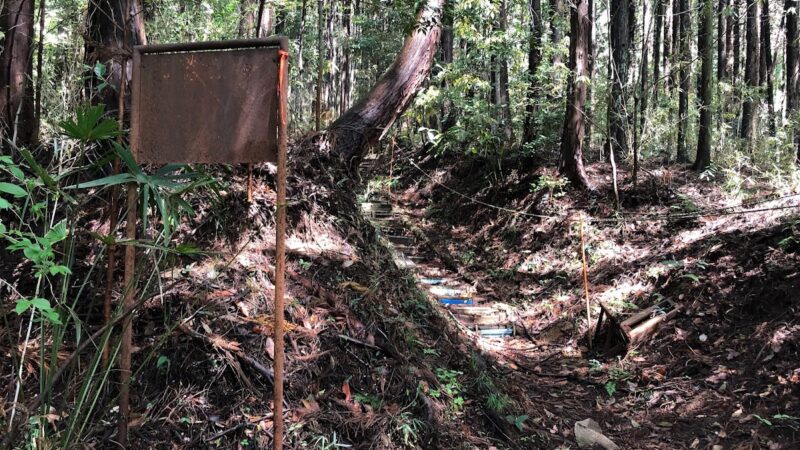
Remains of dry moats and trenches can be found throughout the castle grounds. A clear dry moat can be seen north of the small Hachiman shrine. These functioned as defensive structures to prevent enemy intrusion. Trenches, by dividing the ridge, were an important defensive line to cut off enemy advances.
Earthworks
Earthworks were built around the enclosures, and some are still clearly visible today. The earthworks served as defensive walls and shields against projectiles such as bows and arrows.
Bamboo Groves and Natural Topography
Much of the castle site is covered with bamboo groves, and there is a mix of areas that retain the original topography and areas that have collapsed due to aging. The cliff on the north side functioned as an extremely effective natural defensive wall.
Preservation Status of the Ruins and Access Restrictions
Due to ongoing collapses since the Edo period, many areas of the Tobuki Castle ruins are currently in a dangerous state. The narrow ridges are prone to landslides, and the cliff area on the north side is particularly dangerous. Therefore, only the southern enclosure is currently accessible, and many other areas are off-limits.
While the castle site is a hiking trail, for safety reasons, viewing is recommended only within designated areas. Entering areas unsafely poses a risk of collapse accidents, so extreme caution is necessary.
Access and Visiting Guide to Tobuki Castle
Location and Basic Information
- Location: Around 614 Tobuki-cho, Hachioji City, Tokyo / Kamiyo-tsugi, Akiruno City
- Former Province: Musashi Province
- Castle Classification: Mountain Castle (Hilltop Castle)
- Elevation: 218m
- Relative Height: 25-70m
- Remains: Enclosures, dry moats, earthworks, trenches
Access Methods
Access by Train/Bus
Take the Nishi-Tokyo Bus from JR Itsukaichi Line “Akigawa Station” or “Musashi-Itsukaichi Station” and get off at “Tokyo Summerland”. The castle site is on the hill behind the south side of Summerland. It’s about a 10-15 minute walk to the hiking trail entrance.
Access by Car
Approximately 20 minutes from the Chuo Expressway “Hachioji IC”. There is parking available around Tokyo Summerland, but there is no dedicated parking lot for the castle ruins. Using the Summerland parking lot requires facility use. We recommend using nearby public parking lots.
Landmark
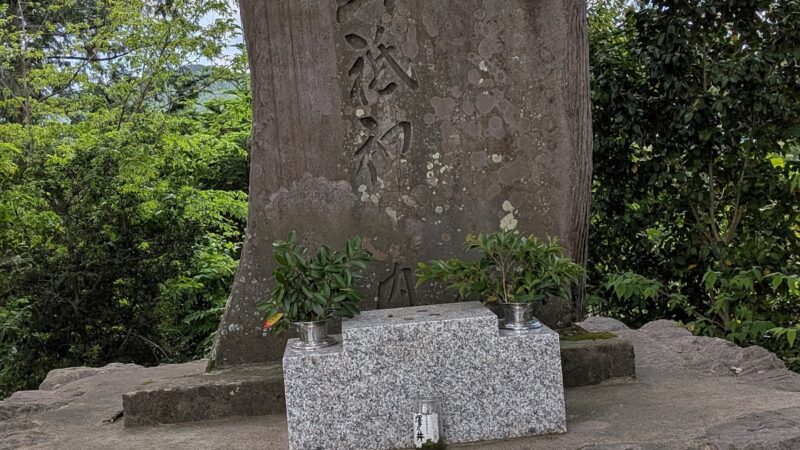
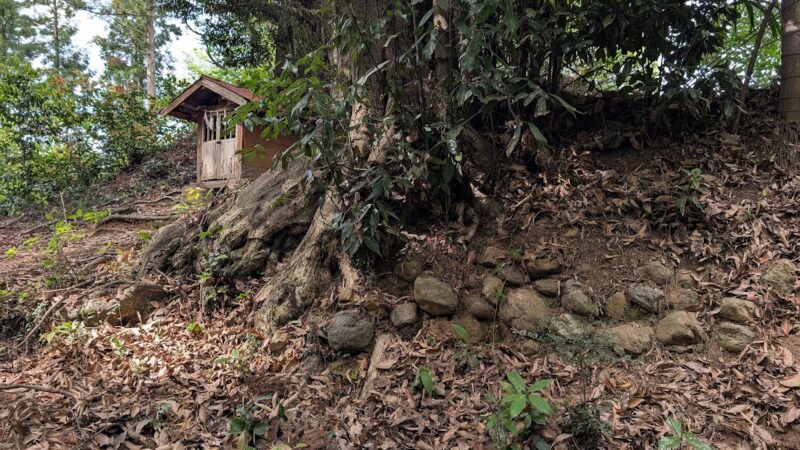
A sign for “Negoya Castle Ruins” is erected next to the employee dormitory at 614 Tobuki-cho, Hachioji City, Tokyo. This sign marks the entrance to the castle ruins. There is a small Hachiman shrine, and a dry moat can be seen to the north of it.
Points to Note When Visiting
- Safety Equipment: Although it is a hiking trail, it is a mountain castle, so appropriate hiking boots and clothing are necessary.
- Entry Restrictions: Due to the many areas at risk of collapse, please strictly follow all “No Entry” signs.
- Avoid Solo Visits: We recommend visiting in groups whenever possible.
- Season: In summer, vegetation grows thick, making the ruins difficult to see. Autumn and winter are the best seasons to visit.
- Photography: Photography of the ruins is permitted, but please avoid taking risky photos in dangerous areas.
Tobuki Castle and the Surrounding Castle Network
Relationship with Takiyama Castle
Tobuki Castle served as a subsidiary castle of Takiyama Castle, forming part of its defense network. Takiyama Castle was a strong mountain castle built by Hojo Ujiteru and served as the Hojo clan’s base for controlling western Musashi Province until their relocation to Hachioji Castle. Tobuki Castle is located approximately 8 km southwest of Takiyama Castle and is thought to have functioned as a forward base to monitor invasions from the Kai region.
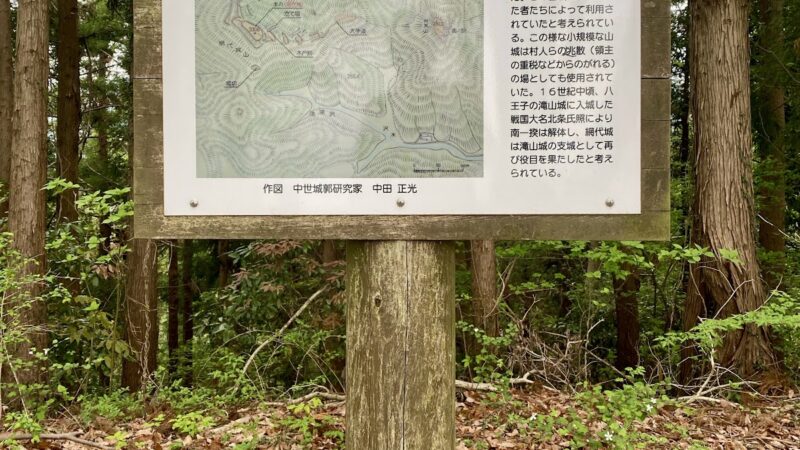
Castles of the Akigawa Defense Line
Tobuki Castle was part of a defense line positioned along the Akigawa River. This defensive line includes the following castles:
- Takatsuki Castle: Located east of Tobuki Castle
- Ajiro Castle: Located west of Tobuki Castle
- Tokura Castle: Further west, another defensive stronghold
- Hinohara Castle: The westernmost mountainous defensive stronghold
It is presumed that these castles coordinated with each other, communicating information via smoke signals and other means to prepare for the Takeda army’s invasion. Tobuki Castle played a crucial role as a midpoint in this defensive line, relaying communication between east and west.
Connection to Hachioji Castle
Around 1587 (Tensho 15), Hojo Ujiteru moved his base from Takiyama Castle to Hachioji Castle. Even after this move, it is believed that the group of branch castles, including Tobuki Castle, continued to function as a defensive network. Hachioji Castle was built as an even more formidable mountain castle than Takiyama Castle, but the importance of forward bases like Tobuki Castle remained unchanged.
Historical Significance of Tobuki Castle
Military Importance
The greatest historical significance of Tobuki Castle lies in its strategic location, situated at a crossing point of the Akigawa River and a strategic stronghold monitoring the old Koshu Road. Controlling the main route from Kai Province to Musashi Province was crucial in preventing invasions by the Takeda clan.
Although a small mountain castle, its geographical location and the rugged natural terrain allowed for effective defense even with a small force. It also likely functioned as a signal fire station, playing a vital role as a communication hub within an information network.
Hojo Clan’s Castle Strategy
Tobuki Castle is an important example for understanding the Hojo clan’s multi-layered defense strategy. The Hojo clan developed a network of branch castles throughout the Kanto region, centered around their main castle, Odawara Castle. These branch castles did not repel the enemy individually, but rather played a role in delaying enemy advances, transmitting information, and buying time for a decisive battle at the main castle.
It is presumed that Tobuki Castle, as part of this strategy, also served the function of monitoring the movements of the Takeda army and quickly transmitting signs of invasion to Takiyama Castle and Hachioji Castle.
Position in Local History
Tobuki Castle is a valuable historical site for understanding the medieval history of western Tokyo. The area encompassing present-day Hachioji City and Akiruno City was the front line where the spheres of influence of the Hojo and Takeda clans met during the Sengoku period. The castle remains in this region are valuable historical assets that convey the tensions and defensive systems of that time.
Current Status and Challenges of Tobuki Castle Research
Limitations of Historical Sources
Contemporary historical sources concerning Tobuki Castle are extremely limited, and many details such as the builder, construction date, and specific battle records remain unknown. The castle’s history is mainly inferred from the study of its layout, geographical conditions, and relationship with surrounding castles.
Challenges in Preserving the Remains
Due to collapses that have continued since the Edo period, many of the remains are being lost. Due to ongoing collapses, many more remains may be lost in the future. Furthermore, the dangerous terrain makes full-scale excavation and preservation work difficult.
Future Research Possibilities
Surveys utilizing cutting-edge technologies such as GPS and drones, comparative studies with surrounding castles, and re-examination of historical documents could shed more light on the history of Tobuki Castle. In particular, research into the entire Akigawa defense line would clarify the specific role of Tobuki Castle.
How to Enjoy Visiting Tobuki Castle
Points for Observing the Remains
In the safely accessible South Enclosure, you can observe the shape of the enclosure’s flat surface and the surrounding earthworks. The dry moat around the Hachiman Shrine remains relatively clear, allowing you to experience the defensive structures of the time. The steepness of the cliffs visible from the hiking trail is important for understanding the characteristics of a mountain castle that utilizes natural terrain.
Nearby Attractions
When visiting Tobuki Castle, we recommend also visiting the surrounding historical sites:
- Takiyama Castle Ruins: A famous castle of the Hojo clan, designated as a national historic site.
- Hachioji Castle Ruins: One of Japan’s 100 Famous Castles, the main castle of Hojo Ujiteru.
- Takatsuki Castle Ruins: The eastern base of the Akigawa defense line.
- Ajiro Castle Ruins: The western base of the Akigawa defense line.
Visiting these castles will give you a deeper understanding of the Hojo clan’s castle network and defense strategies.
Hiking Course Highlights
The Akigawa Hills hiking course is a route that allows you to enjoy history and nature, passing through the Tobuki Castle Ruins. Walking along the old path that retains traces of the ancient Koshu Road, you can imagine the people of the Middle Ages who traveled the same road. The nature is beautiful in every season, and the scenery is especially magnificent during the seasons of fresh greenery and autumn leaves.
Summary
Tobuki Castle is a medieval mountain castle located on the border of Hachioji City and Akiruno City in Tokyo. It served as a subsidiary castle of Takiyama Castle, playing a crucial role in the defense line along the Akigawa River. Though small in scale, it was built at a strategically important location and is believed to have played a vital role in defending against the Takeda clan.
Currently, many remains are at risk of collapse, but it is still possible to observe remnants such as dry moats, earthworks, and trenches, particularly around the southern enclosure. When visiting, please exercise caution regarding safety and avoid entering restricted areas.
Tobuki Castle is a valuable historical site for understanding the Hojo clan’s castle strategy and the Sengoku period history of western Musashi Province. Although many details remain unclear, its geographical location and surviving remains make it a valuable historical heritage site that allows us to sense the tense historical context of the time.
The contrast between this medieval mountain castle quietly standing behind the modern leisure facility Tokyo Summerland is also intriguing, making it a rare place in urbanized Tokyo where one can feel the spirit of the Sengoku period.