Complete Guide to Kunimine Castle (Kanra Town, Gunma Prefecture): The History of the Obata Clan’s Mountain Castle and Red Armor
What is Kunimine Castle?
Kunimine Castle is a medieval mountain castle located in Kanra Town, Kanra District, Gunma Prefecture. It was the residence of the Obata clan, known as important retainers of the Yamanouchi Uesugi clan, the Kanto Kanrei (governor of the Kanto region). With its main enclosure at the summit of a 434-meter-high mountain, it is a large-scale castle complex spanning a vast area of 2 kilometers east-west and 2.5 kilometers north-south, and is considered one of Gunma Prefecture’s representative mountain castles.
During the Sengoku period, it played an important role as a base for Takeda Shingen’s conquest of western Kozuke Province, and the Obata clan gained fame within the Takeda army as the “Red Armor” (Akazonae). Even today, the complex layout, consisting of a mountain castle section, a hill castle section, and a flatland castle section, remains well-preserved and is highly regarded by castle researchers.
History of Kunimine Castle
Construction and the Rise of the Obata Clan
Kunimine Castle is believed to have been built during the Ninji era (1240-1242) by the Obata clan, a powerful local family. The Obata clan was a powerful samurai group that held influence in western Kōzuke Province from the Kamakura period, and in the Muromachi period, they established themselves as important retainers of the Yamanouchi Uesugi clan, the Kantō Kanrei (governor of the Kanto region).
As Kunimine Castle was developed as the Obata clan’s residence, it evolved beyond a mere military base into a center of domain governance. It is thought that the mountain castle section served as a fortified outpost in times of emergency, while the flatland section at the foot of the mountain was used as a daily residence.
The Turbulent Times of the Sengoku Period
In 1551, when Uesugi Norimasa, the Kanto Kanrei (governor of the Kanto region), was defeated in battle against Hojo Ujiyasu and fled Hirai Castle to Echigo Province to seek refuge with Nagao Kagetora (later Uesugi Kenshin), the situation in Kozuke Province changed dramatically.
At that time, the lord of Kunimine Castle, Obata Norishige (Shigesada), had married the eldest daughter of Nagano Narimasa, thus having marital ties with the Nagano clan of Minowa Castle. However, with the downfall of Uesugi Norimasa, Obata Norishige and his son Nobuzane chose to pledge allegiance to Takeda Shingen of Kai Province in 1553.
In response to this decision, Nagano Narimasa, who sided with the Nagao clan of Echigo, seized Kunimine Castle while the Obata clan was away and installed his relative, Obata Kagesada, as its lord. However, Takeda Shingen immediately counterattacked, recaptured the castle, and restored the Obata clan as its lords. From then on, Kunimine Castle functioned as a crucial base for the Takeda clan’s conquest of western Kozuke Province.
The Role of the Red Guard
The Obata clan, who pledged allegiance to Takeda Shingen, played a key role in the “Red Guard,” a particularly elite unit within the Takeda army. The Red Guard was a unit formation where everything from armor to banners was unified in red, considered a symbol of the Takeda army’s most elite forces.
The Obata clan’s Red Guard played a vital role in Takeda Shingen’s invasion of western Kozuke Province, achieving military success in numerous battles. Kunimine Castle was not merely a defensive stronghold, but a forward base for the Takeda clan’s military operations in western Kozuke Province, serving as a central hub for logistics and intelligence gathering.
Changes After the Fall of the Takeda Clan
In 1582, when the Takeda clan was destroyed by the combined forces of Oda and Tokugawa, the Obata clan and Kunimine Castle once again faced a turbulent period. After the fall of the Takeda clan, Kozuke Province came under the influence of Oda Nobunaga, but the situation became fluid again after the Honnoji Incident.
Subsequently, as the Hojo, Tokugawa, and Uesugi clans vied for control of Kozuke Province, the Obata clan became subordinate to the Hojo clan. However, in 1590, when Toyotomi Hideyoshi launched the Odawara campaign, Kunimine Castle, which had sided with the Hojo, was attacked and fell. This brought an end to the approximately 350-year history of Kunimine Castle.
Structure and Layout of Kunimine Castle
A Large-Scale Castle with Three Sections
The most distinctive feature of Kunimine Castle lies in its complex castle structure, composed of three distinct sections: a mountain castle section, a hill castle section, and a flatland castle section. The three-dimensional layout, with an elevation difference of 244 meters, demonstrates a design philosophy that effectively divides the different functions of defense and residence.
The mountain castle section has its main enclosure at the 434-meter-high summit, with multiple enclosures arranged by cutting through the ridge. The defensive line along the ridge, totaling 1.2 kilometers, is structured to gradually prevent enemy incursions.
Defensive Facilities of the Mountain Castle Section
The main enclosure at the summit features a sophisticated structure with a masugata koguchi (square-shaped gate), demonstrating the high level of castle-building technology of the late Sengoku period. Approximately 20 meters east of the main enclosure is the site of the second enclosure, providing a double layer of defense for the main area.
Of particular note are the radial vertical moats descending the slope. These vertical trenches effectively hinder enemy lateral movement and limit attack routes. The systematic placement of multiple vertical trenches reveals the influence of the Takeda-style castle construction techniques.
Multiple trenches are constructed along the ridge, allowing each enclosure to function as an independent defensive unit. This creates a multi-layered defensive system where, even if one enclosure is breached, defense can continue in the next.
Hill Castle and Plain Castle
Below the eastern foot of the mountain castle lies a hill castle area utilizing a gentle slope. This area, known as “Goten-daira,” is believed to have housed the residence and government offices during peacetime. Its gentler slope compared to the mountain castle area made it suitable for building construction and daily life.
The plain castle area is located further down the slope and is believed to have contained the residences of retainers and a town. This area, with its castle town functions, played a crucial role in supporting the economic foundation of the domain’s administration.
Defensive Line by the Outer Moat
A notable feature of Kunimine Castle’s defensive system is the outer moat, which extends from the western foot of Mt. Momijiyama to Shimokawa. This large-scale moat functioned as an outer defensive line for the castle, making it difficult for large enemy armies to surround it.
The scale of the outer moat indicates that Kunimine Castle was not a standalone fortress, but rather designed as the core of a broader defensive system encompassing the surrounding area. This is a good example of how the concept of defense expanded from individual points to a broader area during the Sengoku period.
Highlights of Kunimine Castle
Main Enclosure and Masugata Gate
Located on the mountaintop at an altitude of 434 meters, the main enclosure is the central part of Kunimine Castle and its most important defensive point. A Masugata gate is provided as an approach to the main enclosure, designed to lure intruders into a narrow space and allow for attacks from three sides.
The Masugata Koguchi (square-shaped gate) represents the pinnacle of castle construction techniques from the late Sengoku period, embodying a sophisticated defensive philosophy that differs from simple gates. At the site, traces of earthworks and stonework can be observed, demonstrating the high level of technology at the time.
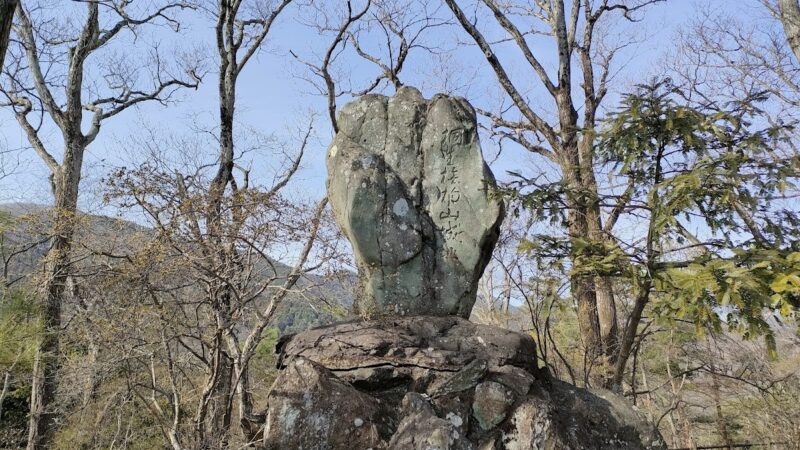
From the main enclosure, one can enjoy a panoramic view of the town of Kanra, as well as the vast plains of western Kozuke Province. This excellent view likely served not only a military surveillance function but also a symbolic representation of the lord’s prestige.
Vertical Moats and Dry Ditches
Particularly impressive among the defensive features of Kunimine Castle are the radial vertical moats descending the slope. These utilize natural valleys while artificially excavating to enhance their defensive effectiveness, strongly reflecting the characteristics of the Takeda-style castle construction.
The vertical moats not only obstructed enemy advances but also functioned as rainwater drainage channels, contributing to the castle’s maintenance. The clearly visible vertical moats today serve as valuable teaching material for studying the defensive techniques of medieval mountain castles.
The trenches built on the ridge served to demarcate each enclosure. Reaching several meters in depth, these trenches not only physically hindered enemy advances but also exerted psychological pressure.
Goten-daira and Residence Site
Goten-daira, located at the eastern foot of the mountain castle, is presumed to be the site of the Obata clan’s residence during peacetime. The flat area formed on the gently sloping ground retains traces of building foundations and earthworks, allowing us to imagine the scale of the former residence.
Fragments of daily life items have also been unearthed at Goten-daira, confirming that this was not merely a military facility but also the lord’s living quarters. The distinction between the fortified outpost on the mountain castle and the residence at Goten-daira represents a typical pattern of castles during the Sengoku period.
Shiroyama Daigongen
Near the main enclosure stands a vermilion torii gate of “Shiroyama Daigongen.” This was enshrined as the castle’s guardian deity and is a valuable relic illustrating the relationship between medieval castles and religious beliefs. Sengoku period warlords often prayed to gods and Buddhas for victory in battle and for the peace and security of their territories, so it was common to have shrines and temples within their castle grounds.
Even today, these are carefully maintained by local people and serve as landmarks for visitors to the castle ruins. The vermilion torii gate stands out against the green of the mountains, providing visitors with an impressive landscape.
Access and Visiting Guide
Location and Basic Information
Address: 1025-2 Kunimine, Kanra-machi, Kanra-gun, Gunma Prefecture, and other locations
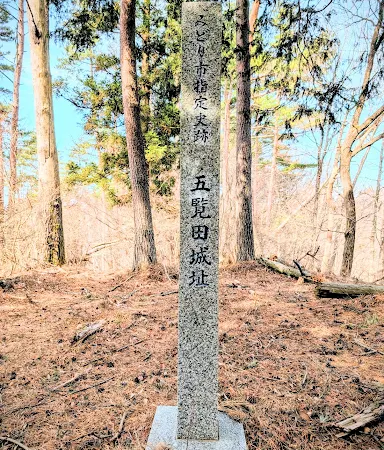
Designation: Kanra Town Designated Historic Site
Visiting: Free (however, hiking equipment is recommended)
Parking: Space for several cars near the trailhead
Access by Car
Approximately 15 kilometers and 25 minutes by car from the Tomioka Interchange on the Joshinetsu Expressway. Take National Route 254 and head west on the prefectural road from the Kanra town center. From the west side of the Akihata area, take the narrow concrete-paved road and proceed east for approximately 800 meters to reach the trailhead.
The road is narrow in some places, so be careful of oncoming traffic. Especially during peak tourist season and on weekends, visitor numbers increase, so visiting earlier in the day is recommended.
Access by Public Transportation
The nearest station is Joshu-Fukushima Station on the Joshin Electric Railway, but it is approximately 8 kilometers from the station to the castle ruins, and public transportation is limited. Taking a taxi is the most practical option, but it is recommended to arrange a taxi in advance.
Ascent Route and Estimated Time
There are guide signs at the trailhead, and a wooden boardwalk is maintained. After passing through the vermilion torii gate of Shiroyama Daigongen, it takes approximately 30 to 40 minutes to reach the main enclosure by climbing the mountain path.
The elevation difference is approximately 130 meters, and the trail is relatively well-maintained, but it can become slippery in rainy weather and during winter, so caution is advised. Wearing hiking boots or trekking shoes is strongly recommended.
If you plan to visit not only the main enclosure but also other remains such as vertical moats and trenches, please allow an additional hour or so. For a thorough visit to the entire site, we recommend allowing 2 to 3 hours.
Notes for Visitors
- Attire: Comfortable clothing and non-slip shoes are essential.
- Items to Bring: Please bring drinking water, a towel, and insect repellent (in summer).
- Safety: There are steep slopes and areas prone to landslides, so please avoid taking unnecessary risks.
- Manners: Please respect the historical site and be careful not to damage the remains.
- Season: Spring to autumn is the best time to visit, but in summer, please remember to take precautions against heatstroke.
- Time: Please plan your visit with ample time to descend before sunset.
Nearby Tourist Attractions
Obata Jinya and Rakuzan-en Garden
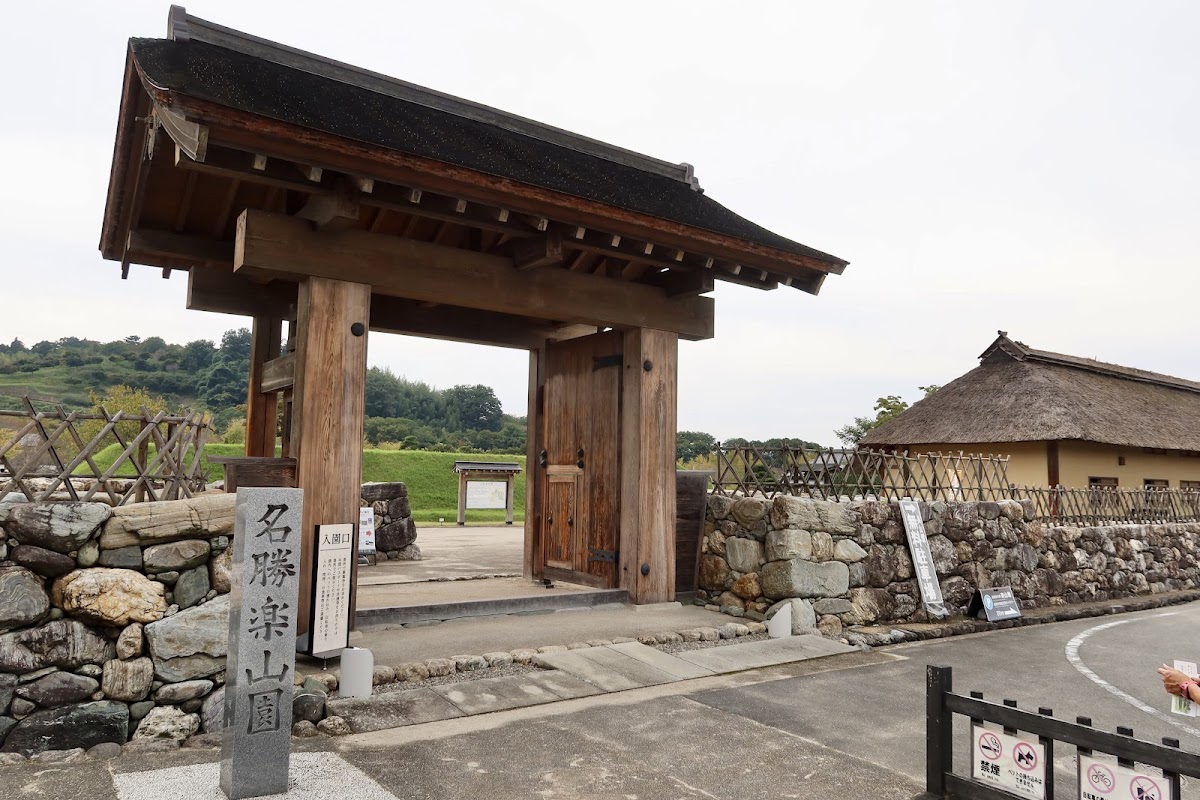
Located about 10 minutes by car from Kunimine Castle, Obata Jinya was the site of the Obata Domain’s administrative office during the Edo period. The adjacent Rakuzan-en Garden is a nationally designated scenic spot and a former daimyo garden, where you can enjoy the beauty of a pond-centered strolling garden.
To understand the history of the Obata clan from the Sengoku period to the Edo period, it is recommended to visit it together with Kunimine Castle.
Kanra Town Historical and Folk Museum
This museum allows you to learn about the history and culture of Kanra Town, and has extensive exhibits on Kunimine Castle and the Obata clan. Visiting before visiting the castle ruins will give you a deeper understanding.
Ogawa Weir
This irrigation canal, built in the early Edo period, adds to the charm of Kanra Town’s landscape. A stone-paved promenade is maintained, making it enjoyable to combine with a historical walk.
Other Famous Castles in Gunma Prefecture
After visiting Kunimine Castle, why not explore other famous castles in Gunma Prefecture? Minowa Castle (Takasaki City) is known as the residence of Nagano Narimasa and has a deep connection to Kunimine Castle. Kanayama Castle (Ota City) is a magnificent mountain castle with impressive stone walls and is selected as one of Japan’s Top 100 Castles. Iwagutsu Castle (Higashiagatsuma Town) is popular as a castle associated with the Sanada clan.
Cultural Value of Kunimine Castle
Kunimine Castle is protected as a designated historical site of Kanra Town and is highly regarded as a representative medieval mountain castle of Gunma Prefecture. Its value lies in the following points:
Large-Scale Complex Castle
The castle complex, spanning a vast area of 2 kilometers east-west and 2.5 kilometers north-south, is important evidence of the power of local powerful families during the Sengoku period. Its three-part structure—mountain castle, hill castle, and flatland castle—is a valuable example for understanding the development process of medieval castles.
Influence of Takeda-style Castle Construction Techniques
The arrangement of the vertical moats and trenches clearly shows the influence of Takeda Shingen’s castle construction techniques. The Takeda clan’s emphasis on Kunimine Castle as a base for their invasion of western Kozuke Province, and the traces of their renovations, provide important historical materials for studying the military history of the Sengoku period.
Good Preservation
Kunimine Castle, having escaped the waves of development, has relatively well-preserved remains. Defensive structures such as earthworks, moats, and vertical trenches remain clearly visible, making it a valuable historical site that allows for a three-dimensional understanding of the structure of a medieval mountain castle.
Importance in Local History
As the residence of the Obata clan and later as a base for Takeda Shingen’s conquest of western Kozuke Province, Kunimine Castle played a central role in the Sengoku period history of western Kozuke Province. It is an indispensable presence when discussing the history of this region.
Summary
Kunimine Castle is a large-scale mountain castle from the Sengoku period located in Kanra Town, Gunma Prefecture. It was built as the residence of the Obata clan, important retainers of the Kanto Kanrei Uesugi clan, and later became a base for Takeda Shingen’s conquest of western Kozuke Province. The Obata clan was known as the “Red Guard” within the Takeda army and achieved military distinction in numerous battles.
The castle, with its main enclosure at the summit of a 434-meter-high mountain, spans a vast area of 2 kilometers east-west and 2.5 kilometers north-south, and is composed of three parts: a mountain castle section, a hill castle section, and a flatland castle section. Well-preserved remains showcasing Sengoku period castle construction techniques, such as radial vertical moats, multiple trenches, and square-shaped gates, are highly regarded by castle researchers.
Currently protected as a designated historical site of Kanra Town, the site has well-maintained hiking trails, making it easily accessible for history enthusiasts and castle fans. The climb to the main enclosure takes approximately 30 to 40 minutes, but the views from the summit and the historical romance are well worth the effort.
For studying the medieval history of Gunma Prefecture and understanding the structure of Sengoku period mountain castles, Kunimine Castle is an essential historical site. The surrounding area is dotted with historical sites associated with the Obata clan, such as the Obata Jinya (fortified residence) and Rakuzan-en Garden, allowing you to enjoy a leisurely historical stroll over the course of a day.