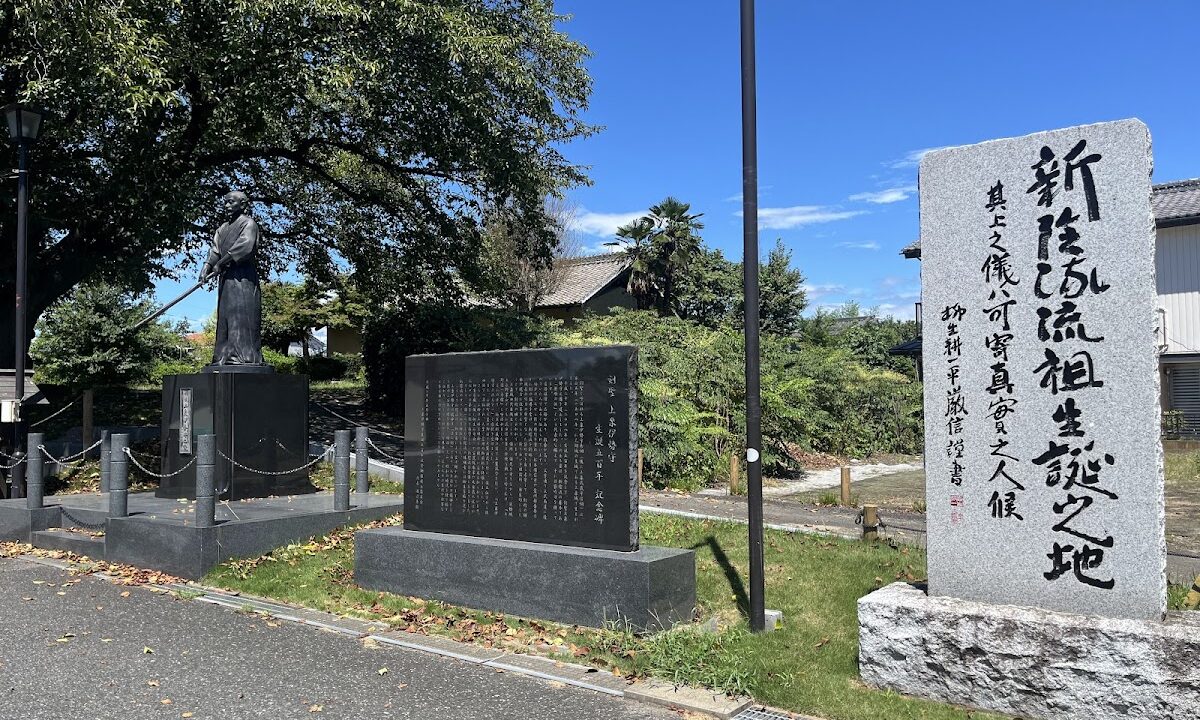
Complete Guide to Kamiizumi Castle (Maebashi City, Gunma Prefecture): A Thorough Explanation of the Castle Ruins Associated with the Sword Saint Kamiizumi Nobutsuna
Located in Maebashi City, Gunma Prefecture, Kamiizumi Castle is known as the birthplace of Kamiizumi Nobutsuna, one of the most important figures in the history of Japanese swordsmanship. While few remains of the castle exist today, the Kamiizumi Gozo (Kamiizumi Village Storehouse), built during the Edo period, stands as a witness to history. This article provides a detailed explanation of Kamiizumi Castle, from its history and highlights to access methods.
What is Kamiizumi Castle?: An Overview of the Castle that Produced the Sword Saint
Kamiizumi Castle was a flatland castle located in Kamiizumi-cho, Maebashi City, Gunma Prefecture. Built utilizing the natural fortifications at the confluence of the Momono-gawa and Fujisawa-gawa rivers, it functioned as the residence of the Kamiizumi clan, a branch of the Ogo clan who ruled the southern foothills of Mount Akagi.
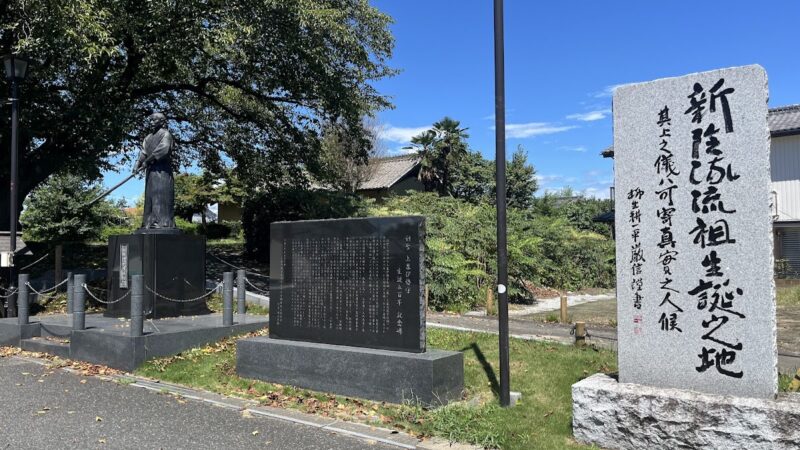
The castle’s most notable feature is that it was the birthplace of Kamiizumi Ise-no-kami Nobutsuna (later Kamiizumi Musashi-no-kami Nobutsuna), known as the “Sword Saint,” in 1508. Nobutsuna left an indelible mark on the history of Japanese swordsmanship as the founder of the Shinkage-ryu school.
Location and Geographical Characteristics of Kamiizumi Castle
Kamiizumi Castle is located on a flat plain at the southern foot of Mount Akagi, in the northeastern part of Maebashi City. Built at the confluence of two rivers, the Momono-gawa and the Fujisawa-gawa, it functioned as a natural moat. This location is thought to have been excellent in both its defensive role in preventing enemy intrusion and its convenience in transporting goods using waterways.
Present-day Kamiizumi-cho has developed into a residential area, and little remains of the former castle, but traces can still be seen in the place names and topography.
History of Kamiizumi Castle: From the Ogo Clan to the Takeda Clan
Establishment of the Kamiizumi Clan and Construction of the Castle
The Kamiizumi clan is believed to be a branch of the Ogo clan, which traces its lineage back to Fujiwara no Hidesato. One theory suggests they were descendants of the Isshiki clan of the Kawachi Minamoto clan, who were dispatched to the Kanto region by the Ashikaga Shogunate to restore the Ogo clan. There are multiple theories regarding the Kamiizumi clan’s origins.
The Kamiizumi clan controlled a portion of the southern foothills of Mount Akagi and built Kamiizumi Castle as a branch castle of Ogo Castle. The castle functioned as an important stronghold within the Ogo clan’s sphere of influence.
The Era of Kamiizumi Nobutsuna: Subordination to the Nagano Clan, Lords of Minowa Castle
Born in Kamiizumi Castle in 1508 (Eisho 5), Kamiizumi Nobutsuna devoted himself to swordsmanship training from a young age. He studied under leading swordsmen of the time, such as Matsumoto Bizen-no-kami and Aisu Ikosai, and eventually founded his own unique swordsmanship system, the Shinkage-ryu. Nobutsuna was not only a skilled swordsman but also a distinguished military commander. The Kamiizumi clan was subordinate to the Nagano clan, lords of Minowa Castle, and Nobutsuna served as a retainer of the Nagano clan. He is said to have possessed a powerful physique, dignified character, and high levels of education, truly embodying the ideals of both military and literary arts.
Takeda Shingen’s Invasion and a Turning Point for the Kamiizumi Clan
During the Eiroku era, Takeda Shingen of Kai Province intensified his invasion of Kozuke Province (present-day Gunma Prefecture). In 1566, the Takeda army captured Minowa Castle, and the Nagano clan was destroyed.
At this time, Kamiizumi Nobutsuna chose to surrender to the Takeda clan. Shingen highly valued Nobutsuna’s bravery and character, and bestowed upon him the character “Nobu,” a character from his own name. As a result, Kamiizumi Hidetuna changed his name to Kamiizumi Nobutsuna. This event demonstrates that Nobutsuna had received a certain level of recognition as a military commander.
Journey of Swordsmanship Training and Later Years
After surrendering to the Takeda clan, Nobutsuna embarked on a journey throughout the country to spread and train in swordsmanship. During this journey, he visited Yagyu Valley in Yamato Province (present-day Nara Prefecture) and taught Shinkage-ryu to Yagyu Tajima-no-kami Munenori (Sekishusai). This swordsmanship, which developed as Yagyu Shinkage-ryu, later became the military strategy instructor for the Tokugawa shogunate and had a significant impact on the history of Japanese swordsmanship.
Nobutsuna is believed to have died in Yagyu Valley, Nara Prefecture, in 1577 (Tensho 5), but there are various theories regarding his birth and death dates, and nothing is definitively known.
Kamiizumi Castle After the Edo Period
With the end of the Sengoku period and the beginning of the Edo period, Kamiizumi Castle was abandoned. Although it lost its function as a castle, the site of the main keep continued to be recognized as an important location.
In 1796 (Kansei 8), the Maebashi Domain constructed a storehouse called “Kamiizumi Gozo” on the site of the former main keep of Kamiizumi Castle. A Gozo was a warehouse for storing tax rice and other goods, and was an important facility for the village. The construction of this Gozo helped to preserve the location of the former main keep of Kamiizumi Castle for future generations.
Kamiizumi Gozo: A Historic Building Designated as a Gunma Prefecture Historic Site
Architectural Characteristics of Kamiizumi Gozo
The Kamiizumi Gozo is a late Edo period storehouse that still stands in Kamiizumi Town today. A ridge beam inscription inside the building reveals that it was constructed by the Maebashi Domain in 1796 (Kansei 8).
It possesses a robust storehouse structure, and various features are visible to protect the contents from fire and dampness. As a typical example of Edo period Gozo architecture and a valuable building indicating the site of the former main keep of Kamiizumi Castle, it has been designated as a Gunma Prefecture Historic Site.
The Role and Historical Value of the Village Storehouse
In Edo period villages, village storehouses played a crucial role in storing tax rice and emergency reserves. The Kamiizumi Village Storehouse served a similar function and was used as a central facility in Kamiizumi Village.
Currently, this storehouse is recognized for its historical value as the only surviving concrete structure that conveys the history of Kamiizumi Castle, and as a valuable example of Edo period rural architecture. The building is well-preserved and serves as important historical material for understanding the architectural techniques and lifestyles of the time.
Kamiizumi Nobutsuna and the Shinkage-ryu School: Contribution to the History of Japanese Swordsmanship
Founding of the Shinkage-ryu School
Kamiizumi Nobutsuna’s greatest achievement was founding the Shinkage-ryu school of swordsmanship. Nobutsuna learned the Kage-ryu school from Aisu Ikosai, but further developed it, adding his own theories and techniques to establish the Shinkage-ryu.
The defining characteristic of the Shinkage-ryu is its philosophy of “Katsujinken” (sword that gives life). This is not simply a style of swordsmanship for defeating an opponent, but a style of swordsmanship that saves lives—a style that avoids unnecessary killing and emphasizes the cultivation of the mind. This philosophy had a significant influence on later Japanese swordsmanship.
Transmission to the Yagyu Shinkage-ryu
During his travels throughout Japan, Nobutsuna visited Yagyu Valley in Yamato Province and taught Shinkage-ryu to Yagyu Munenori (Sekishusai). Munenori developed this into the Yagyu Shinkage-ryu, and his descendants went on to serve as military instructors to the Tokugawa shogunate.
The Yagyu Shinkage-ryu spread widely throughout samurai society during the Edo period and became one of the mainstream styles of Japanese swordsmanship. The Yagyu Shinkage-ryu that continues to this day is a direct descendant of the Shinkage-ryu founded by Kamiizumi Nobutsuna, and its teachings are passed down to the present day.
Recognition as a Sword Saint
Kamiizumi Nobutsuna is remembered as a swordsman so great that he is called a “Sword Saint.” His exceptional skill is undeniable, and his achievement in elevating swordsmanship from a mere martial art to a path of spiritual discipline is highly regarded.
Nobutsuna’s teachings influenced not only the Yagyu Shinkage-ryu school but also many other schools of swordsmanship. In the history of Japanese swordsmanship, Kamiizumi Nobutsuna is considered one of the most important figures.
Kamiizumi Castle Today: Remains and Highlights
Current State of the Castle Site
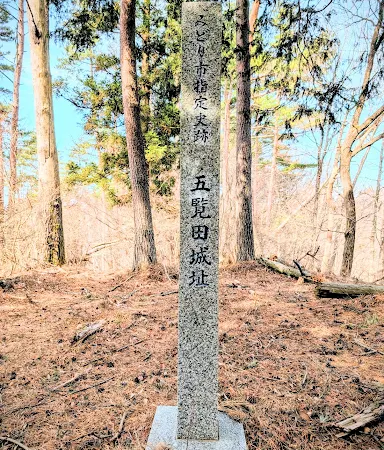
The current site of Kamiizumi Castle has been developed into a residential area, and very few remains of the castle can be seen. Castle structures such as moats, earthworks, and baileys have been lost, making it difficult to find traces of the castle from the surface.
However, traces of the castle’s former existence can be seen in place names, sub-district names, and subtle topographical undulations. Furthermore, the relative positions of the Momono-ki River and Fujisawa River reveal the cleverness of the castle’s location.
Main Highlights
Kamiizumi Gozo
The biggest highlight when visiting Kamiizumi Castle is the Kamiizumi Gozo, a Gunma Prefecture designated historical site. The earthen storehouse, built in 1796 (Kansei 8), stands on the site of the main keep of Kamiizumi Castle and is a valuable structure that conveys the history of the castle to the present day. Its robust construction can be observed from its exterior.
Around the Kamiizumi Town Community Center
Near the Kamiizumi Storehouse is the Kamiizumi Town Community Center, and this area is believed to have been the central part of Kamiizumi Castle. A stroll around the area will give you a sense of the castle’s scale and layout.
Seirinji Temple
Near the Kamiizumi Castle ruins is Seirinji Temple, known as a temple associated with the Kamiizumi clan. It may contain historical materials and legends indicating a connection to the castle lord and Kamiizumi Nobutsuna, making it worth a visit.
Nearby Historical Spots
When visiting Kamiizumi Castle, we recommend also visiting the nearby historical spots.
Ogo Castle
This was the residence of the Ogo clan, the main branch of the Kamiizumi clan. It has a close relationship with Kamiizumi Castle, and visiting both castles will help you understand the Kamiizumi clan’s sphere of influence.
Minowa Castle
This castle was the residence of the Nagano clan, whom Kamiizumi Nobutsuna served, and is a nationally designated historical site. It is a historically significant castle that was captured by Takeda Shingen, and is an important site for understanding the life of Kamiizumi Nobutsuna.
Nittazuka Kofun
This burial mound is located within Kamiizumi town and offers insights into the ancient history of this region.
Access and Visiting Information
Access by Public Transportation
By Train
- The nearest stations are JR Ryomo Line’s “Komagata Station” or “Maebashi Station.”
- It is approximately a 10-minute walk from Jomo Electric Railway’s “Kamiizumi Station.”
- It is also accessible on foot from Jomo Electric Railway’s “Akasaka Station.”
The Jomo Electric Railway is a local railway running through Maebashi city, and Kamiizumi Station is the closest station to the Kamiizumi Castle ruins. The path from the station to the castle ruins is flat and passes through a residential area, with directional signs.
Access by Car
Via Kan-Etsu Expressway
- Approximately 15 minutes from Maebashi IC on the Kan-Etsu Expressway
- Approximately 20 minutes from Maebashi Minami IC on the Kita-Kanto Expressway
There is no dedicated parking lot around Kamiizumi-gozo, but there are spaces for street parking nearby. However, as it is a residential area, consideration must be given to avoid disturbing local residents.
Points to Note During Visits
- Only the exterior of Kamiizumi-gozo can be viewed (the interior is usually closed to the public).
- The castle ruins are in a residential area, so caution is required when entering private property.
- When visiting, please be considerate of the lives of local residents and act quietly.
- Photography is permitted, but please be careful not to include houses or residents in your photos.
Best Time to Visit
Kamiizumi Castle Ruins are open year-round, but the following time is especially recommended:
Spring (March-May)
The weather is mild and ideal for strolling. You can also enjoy the cherry blossoms in the surrounding area.
Autumn (September-November)
Enjoy the beautiful scenery of the southern foothills of Mt. Akagi during the autumn foliage season.
Winter (December-February)
Winter in Gunma Prefecture is harsh, so warm clothing is necessary. However, the clear air makes it a beautiful season for viewing Mt. Akagi.
Nearby Sightseeing When Visiting Kamiizumi Castle
Tourist Spots in Maebashi City
When visiting Kamiizumi Castle, combining your visit with other tourist spots in Maebashi City will make for a more fulfilling trip.
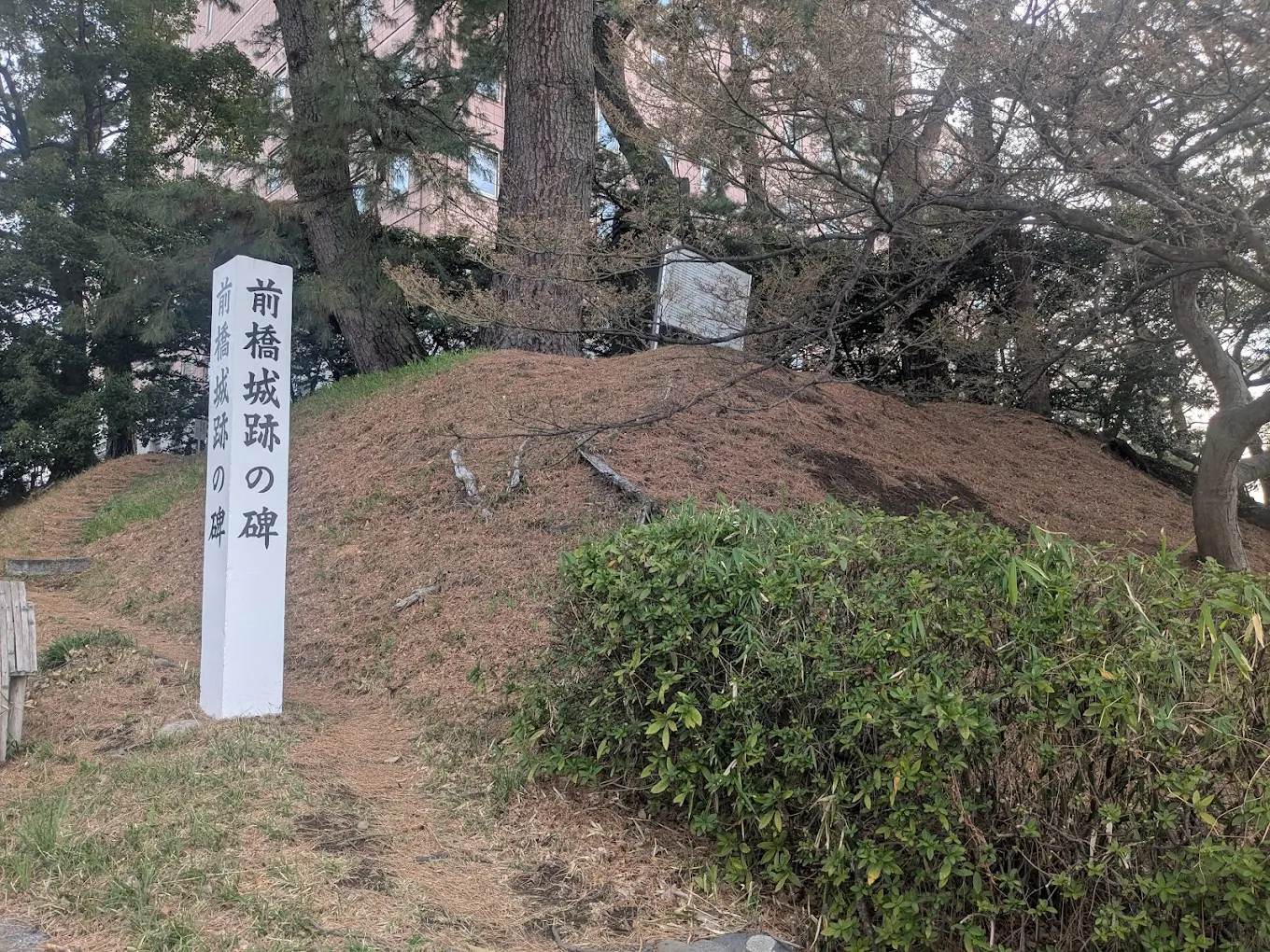
Maebashi Castle Ruins (Maebashi Park)
This is the site of the Maebashi Domain’s castle, now developed as a park. Visiting the base of the Maebashi Domain, where the Kamiizumi-gozo (Kamiizumi Storehouse) was built, allows you to feel the historical connection.
Rinkokaku
This is a guesthouse built during the Meiji era and is a nationally designated important cultural property. You can appreciate beautiful Japanese architecture.
Mount Akagi
Mount Akagi, towering north of Kamiizumi Castle, is a famous mountain representative of Gunma Prefecture. It offers various ways to enjoy yourself, including mountain climbing, hiking, and lakeside recreation.
Gourmet Information
Maebashi City, as the capital of Gunma Prefecture, boasts a diverse range of restaurants.
Joshu Beef
This is a brand of beef that Gunma Prefecture is proud of, and can be enjoyed at yakiniku restaurants and other eateries in Maebashi City.
Yakimanjū
A local Gunma confectionary, characterized by its sweet and savory miso sauce. It can be purchased at Japanese confectionery shops in Maebashi City.
Mizusawa Udon
This is a famous udon noodle dish from Gunma Prefecture, and some restaurants in Maebashi City serve it.
Historical Significance and Cultural Value of Kamiizumi Castle
Importance in the History of Swordsmanship
The greatest historical significance of Kamiizumi Castle lies in the fact that it is the birthplace of Kamiizumi Nobutsuna, one of the most important figures in the history of Japanese swordsmanship. The Shinkage-ryu school of swordsmanship, founded by Nobutsuna, had an immeasurable influence on the development of Japanese swordsmanship.
The Yagyu Shinkage-ryu, which branched off from Shinkage-ryu, served as the military strategist for the Tokugawa shogunate and became the mainstream of swordsmanship in the samurai society of the Edo period. Furthermore, the Shinkage-ryu philosophy of “Katsujinken” (sword that gives life) elevated swordsmanship from a mere killing technique to a path of spiritual discipline, greatly contributing to the formation of the spirituality of Japanese martial arts.
Position in Local History
Kamiizumi Castle is an important historical site that illustrates the state of regional power in Gunma Prefecture (Kozuke Province) during the Sengoku period. As the residence of the Kamiizumi clan, a branch of the Ogo clan, it was one of the control points in the southern foothills of Mount Akagi.
The history of Kamiizumi Castle, including its subjugation to the Nagano clan, lords of Minowa Castle, and its surrender to the invasion of Takeda Shingen, reflects the political changes in Kozuke Province during the Sengoku period. The history of Kamiizumi Castle is a valuable case study for understanding how the small and medium-sized feudal lords of this region survived and perished.
Cultural Value
The Kamiizumi Gozo (local storehouse) is recognized as a cultural property with the status of a Gunma Prefecture designated historical site. It is historically and architecturally important as an example of a local storehouse building from the late Edo period, and as a concrete structure indicating the site of the Kamiizumi Castle main keep.
Although very few remains of the castle itself remain, the existence of the Kamiizumi Gozo ensures that the location and history of Kamiizumi Castle are passed down to future generations. The preservation of such historical buildings is extremely important for passing on the region’s history and culture to the future.
Efforts to Commemorate Kamiizumi Nobutsuna
Commemorative Activities by Maebashi City
Maebashi City conducts various activities to commemorate Kamiizumi Nobutsuna, a great figure from the region. The city’s official website introduces Kamiizumi Nobutsuna’s life and achievements, widely disseminating his legacy.
Furthermore, opportunities to learn about Kamiizumi Nobutsuna are provided in educational settings, helping local children understand the history and culture of their region.
Legacy in the Kendo World
Kamiizumi Nobutsuna, the founder of the Shinkage-ryu school, is still highly respected in the modern kendo world. The Shinkage-ryu and Yagyu Shinkage-ryu schools are still practiced today, and Kamiizumi Nobutsuna’s teachings are passed down through their training.
Many kendo enthusiasts across Japan visit the ruins of Kamiizumi Castle, the birthplace of Kamiizumi Nobutsuna. As one of the sacred sites of swordsmanship, the ruins of Kamiizumi Castle hold special significance for kendo enthusiasts.
Summary: The Significance of Visiting Kamiizumi Castle
Although very few remains of the castle itself exist, Kamiizumi Castle is a historical site worth visiting due to its importance in the history of Japanese swordsmanship, its place in local history, and the existence of a specific historical building, the Kamiizumi Gozo (Kamiizumi Village Storehouse).
By visiting the place where the sword saint Kamiizumi Nobutsuna was born and raised, one can touch upon the origins of the spirit of Japanese martial arts. Furthermore, you can learn about the characteristics of regional communities during the Sengoku period and the appearance of villages during the Edo period.
When you visit Maebashi City, be sure to visit the Kamiizumi Castle ruins and experience the history and culture of the birthplace of a legendary swordsman. Standing before the Kamiizumi storehouse, and reflecting on the castle that once stood here and the birth of a figure who changed the history of Japanese swordsmanship, you will feel the weight and depth of history.
Kamiizumi Castle in Maebashi City, Gunma Prefecture, may not be large in scale, but due to its historical significance, it holds a special place in the history of Japanese castles and martial arts.